
Review · KYOTO
Kyoto: White Miso Cooking Class & Fermented Food Course Lunch
Kyoto’s white miso is mild, sweet, and creamy, quite different from the darker miso many visitors first encounter. In this small class, you work through the process yourself, learn why fermentation matters in Japanese cooking, prepare white miso potage, and finish with a fermented-food lunch.
I like the hands-on work and the small six-person limit. I also like that Miyuki, the miso expert, explains both the food and its place in Japanese life rather than treating miso as just another cooking ingredient.
The main drawback is practical: at $120 per person, this is a serious food experience, not a quick market stop. You also cannot take miso home because of customs rules, and the class needs at least two people to operate.
Key points to know before booking
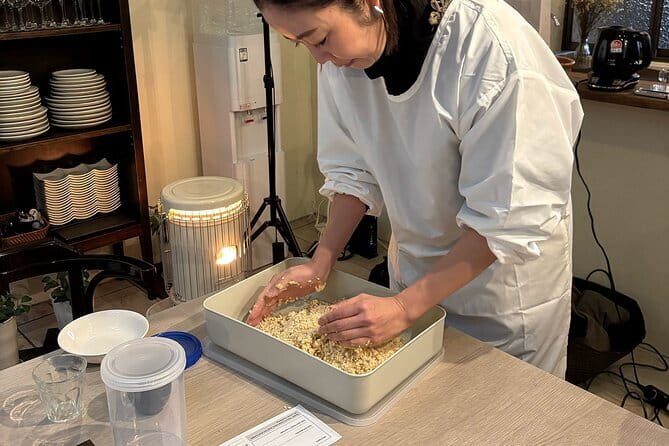
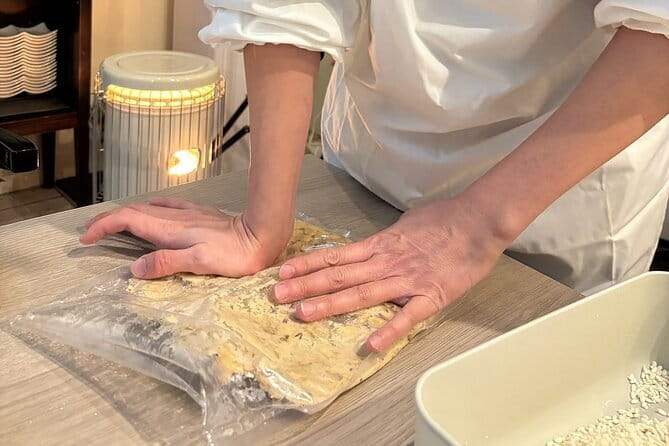
- Make white miso from scratch: You work directly with the ingredients instead of only watching a demonstration.
- Learn from Miyuki: Her instruction covers miso’s history, production, and role in modern Japanese diets.
- Cook tofu miso potage: The class turns your new knowledge into a warm, usable dish.
- Eat a fermented-food lunch: Lunch gives you a fuller idea of how fermentation appears across Japanese cooking.
- Small group of up to six: The size should allow for direct help during the practical work.
- Plan for a morning and early afternoon: The class begins at 9:20 a.m. and lasts about 3 hours 40 minutes.
Why white miso makes a good Kyoto food lesson
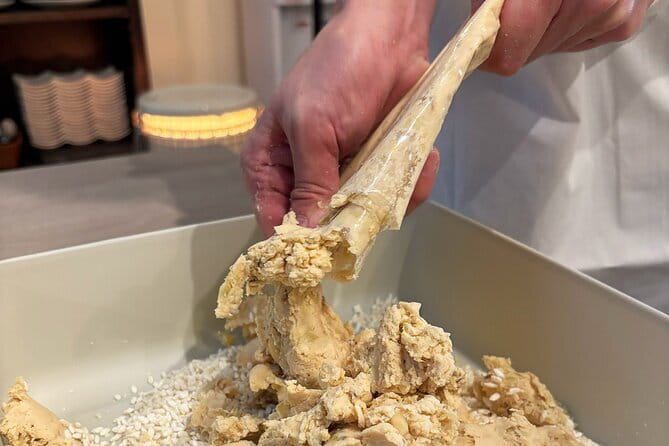
White miso, called shiro miso, is one of the more approachable Japanese seasonings for a first cooking class. Its flavor is generally softer and sweeter than darker miso, which makes it easy to understand in a soup, sauce, or spread.
That softer taste also helps explain why Kyoto developed a strong connection with white miso. You are not simply learning a recipe. You are looking at how a preserved food becomes part of everyday meals, seasonal cooking, and local food customs.
I like this kind of class because it gives you a useful reference point. After tasting white miso in potage, you can better recognize how fermentation changes flavor, texture, and aroma. The lesson is about a food you can encounter again, not an elaborate dish that exists only for one afternoon.
Miso is also a good way to see the practical side of Japanese food traditions. Fermentation preserves ingredients, changes their taste, and adds depth to simple meals. The class focuses on that process without requiring you to already know Japanese cooking.
More Lunch Experiences in Kyoto:
- Cooking Class and Lunch at a Tuscan Farmhouse with Local Market Tour from Florence
★ 5.0 · 4,831 reviews - Paris Cooking Class and Lunch with Wine plus Market Visit Option
★ 5.0 · 1,024 reviews - Austrian Apple Strudel Cooking Class including Lunch in Salzburg
★ 5.0 · 929 reviews
Arriving at 和想日々 Kyoto at 9:20 a.m.
You meet at 和想日々 Kyoto, inside the Kyoto Food and Lifestyle Research Institute at 416 Higashitakechō, Nakagyo Ward, Kyoto 604-0085. The listed start time is 9:20 a.m., so you will want to allow enough time to find the building and reach the activity room before the class begins.
The setting is useful for this type of lesson. Rather than meeting at a large tourist attraction or moving between several sights, you go to one food-focused location and settle into the work. The activity ends at the same place, which keeps the day simple.
Your mobile ticket is accepted for the booking. Confirmation is sent within 48 hours, subject to availability. Because the class requires at least two participants, check your booking details before arranging a tightly timed afternoon plan.
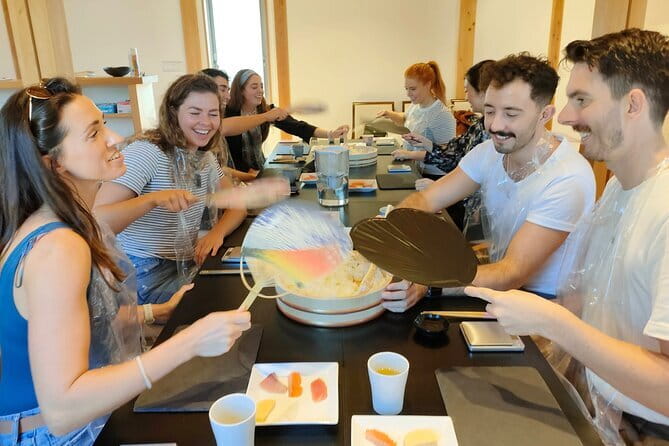
The maximum group size is six. That matters here. Making miso involves physical handling and step-by-step instruction, so a large crowd would make it harder to see what is happening or ask questions. This format is better suited to you if you prefer a workshop where the instructor can keep an eye on each person’s progress.
Miyuki’s introduction to miso and fermentation
Miyuki leads the class and explains the background before the practical work begins. Her role goes beyond showing you what to do. She covers the origins of miso, the way it developed as a staple of Japanese food, and the place fermentation can have in a modern diet.
The class also gives you a chance to ask questions in a relaxed setting. One useful part of this sort of introduction is learning how Japanese cooks think about fermentation as a normal part of food preparation rather than a fashionable add-on.
You should expect the lesson to connect ingredients with process. The point is not just that miso tastes good. You learn why it changes over time and why small differences in ingredients and treatment affect the final paste.
Several comments about this class point to Miyuki’s gentle teaching style and clear presentation. That is important for beginners. Miso making can sound technical at first, but a calm guide makes the process easier to follow and less intimidating.
The hands-on white miso session
The central part of the morning is your own white miso preparation. You take part in the work instead of standing back while an instructor makes a batch.
This is where the class earns its value. You can read about fermentation in a cookbook, but handling the ingredients gives you a much clearer sense of the process. You see the texture, feel the mixture change under your hands, and understand why making miso requires patience and care.
The practical work can be more physical than you expect. One account of the class describes the mixing as a workout, so do not assume this is a purely gentle demonstration. That effort is part of the lesson. The finished food is not magic. It comes from ordinary ingredients, careful preparation, and time.
You will not be able to take miso home because of customs regulations. This is the most important expectation to set before you book. The class is about learning and tasting, not filling your suitcase with a jar for later.
That limitation does not make the activity pointless. You still leave with a better understanding of how to make miso at home and how to use it in cooking. The practical knowledge may be more useful than a souvenir that could be confiscated or spoiled.
More Food and Drink Tours in Kyoto:
- Nishiki Market Food Tour with Cooking Class
★ 4.9 · 42 reviews - Nishiki Market, Private Sushi class & Sake Tasting in Townhouse
★ 5.0 · 6 reviews - Small Group Cooking Class & Market Food Tour in Florence
★ 5.0 · 1,574 reviews - Pasta Making & Wine Tasting with Dinner in Frascati from Rome
★ 5.0 · 1,326 reviews
Cooking white miso potage with tofu
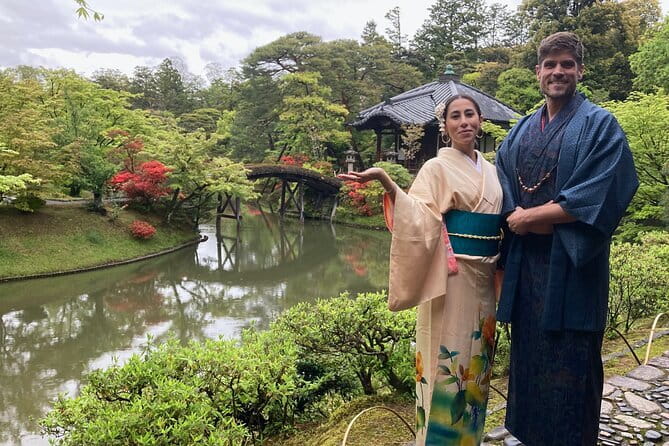
After working with the miso, you cook and taste white miso potage. The dish is described as tofu miso potage, giving you a warm example of how the paste works in a complete recipe.
This step is especially helpful because it moves the class from production to use. You are not only learning how to make an ingredient. You are seeing how it can become a creamy soup suited to regular meals.
Potage also makes a good teaching dish for white miso. Its smooth texture allows the delicate sweetness of the miso to remain noticeable, rather than burying it under strong spices or many competing ingredients.
I would pay attention here to balance. White miso can taste mild and sweet, so the lesson gives you a chance to consider how much to use and how it changes the soup. You can then apply the same idea to your own cooking, even if you do not reproduce the exact dish.
The potage is likely to be one of the more accessible parts of the experience for anyone new to fermented foods. If you are unsure about strong miso flavors, a creamy soup offers an easier introduction than tasting the paste alone.
A fermented-food lunch after the workshop
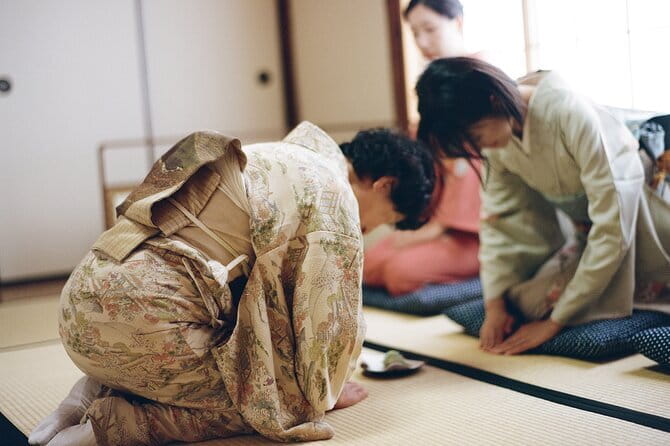
The activity ends its food portion with a fermented-food lunch. This gives you more than a single taste of white miso. You get to see how fermentation can appear in a wider meal.
The lunch is presented as nourishing and supportive of gut health, but it is best to view that language in practical terms. You are trying a range of fermented foods and learning how they fit into Japanese eating habits. The main benefit is a broader understanding of flavor and preparation.
Lunch also gives the morning a natural finish. After the hands-on work and cooking, you sit down to eat what you have been studying. That makes the lesson feel like a complete food experience rather than a short craft workshop.
The meal is one reason the three-hour-forty-minute schedule makes sense. You are not rushing through a quick lesson before moving on to another attraction. The extra time allows for explanation, preparation, tasting, and conversation.
If your main goal is simply to eat lunch, this is not the most efficient way to do it. You are paying for instruction and participation as much as for the food. If you want to understand Japanese fermentation, the lunch adds real value.
What the $120 price buys you
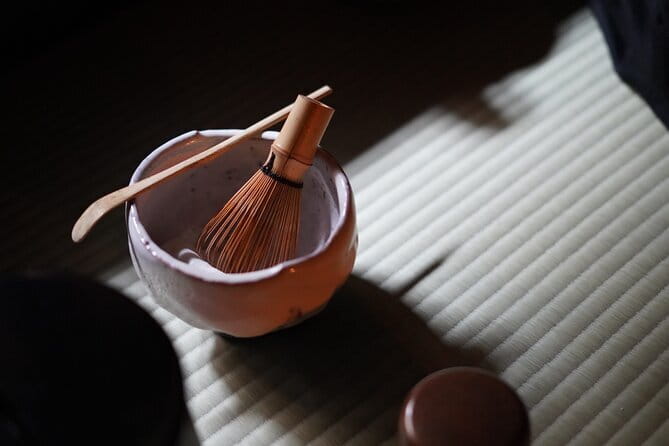
At $120 per person, this class costs more than an ordinary Kyoto meal. The value depends on how much you want to take part.
You are paying for a small-group workshop, expert instruction, your own hands-on miso preparation, a cooked potage dish, and a fermented-food lunch. The class also takes nearly four hours, which makes it a substantial part of your day.
I think the price is easier to justify if you enjoy cooking, food history, or learning a skill you can repeat at home. The strongest part is not the amount of food on the table. It is the access to a specialist and the chance to work through a traditional process yourself.
The price is harder to justify if you are trying to cover as many Kyoto sights as possible. The class begins in the morning and occupies most of the period until early afternoon. You should choose it instead of another activity, not treat it as a ten-minute add-on.
The maximum of six people improves the value. You get a more personal setting than a large demonstration, and the instructor has a better chance to correct your technique or answer questions.
Who will get the most from this class
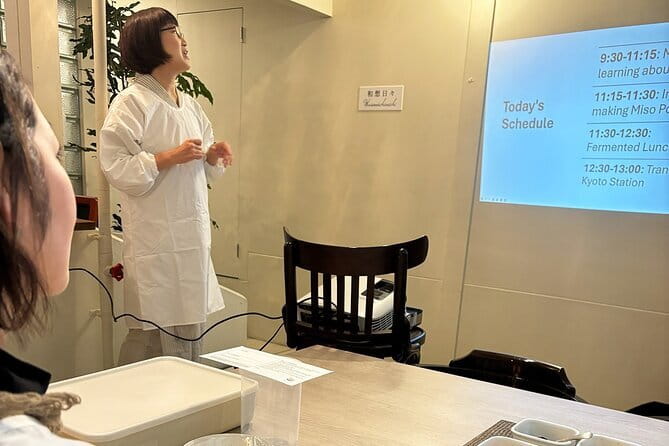
This is a strong pick for you if you enjoy food that has a story behind it. It suits home cooks, fermentation fans, and anyone who wants a cultural activity with actual participation.
It also works well as an introduction to Japanese food traditions. You do not need to be an expert cook. The class is designed around guidance from Miyuki, and the process is explained as you go.
The experience could suit a couple or small group particularly well because the minimum is two people and the maximum is six. A solo booking may depend on whether another participant joins, so check confirmation before building an important day around it.
Families and children are harder to assess from the available details because no age policy is provided. If that matters to you, ask the provider before booking rather than assuming the class is suitable for every age.
You may also want to choose this activity early in your Kyoto stay. That gives you time to notice white miso and other fermented foods in restaurants and shops afterward. The lesson becomes more useful when you can recognize its ideas during the rest of your trip.
Timing, group size, and cancellation facts
The activity lasts approximately 3 hours 40 minutes and begins at 9:20 a.m. It finishes back at the meeting point. No separate ending location is involved.
The class requires at least two participants. If that minimum is not reached, the provider can cancel up to 72 hours, or four days, before departure and issue a full refund. The information gives both time frames, so you should watch for the provider’s confirmation before the activity date.
For your own cancellation, the booking is non-refundable and cannot be changed for any reason. That makes travel insurance or a flexible schedule worth considering, especially if your Kyoto plans are still uncertain.
Confirmation arrives within 48 hours, subject to availability. The mobile ticket is convenient, but it does not remove the need to confirm the meeting address and start time.
Should you book the white miso class?
Book this experience if you want a small, hands-on food lesson and you care about how Japanese ingredients are made. The combination of Miyuki’s instruction, white miso preparation, tofu miso potage, and a fermented-food lunch gives you a full morning with a clear focus.
I would skip it if your main aim is a cheap meal, a short activity, or a souvenir you can carry home. You cannot take the miso through customs, and the $120 price reflects teaching and participation rather than lunch alone.
For the right person, this is a thoughtful Kyoto choice. You work with a traditional ingredient, taste the result, and leave with a practical understanding of fermentation that can follow you home.
FAQ
Where does the white miso class take place?
The class meets at 和想日々 Kyoto, at 416 Higashitakechō, Nakagyo Ward, Kyoto 604-0085, inside the Kyoto Food and Lifestyle Research Institute.
What time does the activity begin?
The listed start time is 9:20 a.m.
How long does the experience last?
The activity lasts approximately 3 hours 40 minutes.
What will I learn during the class?
You will learn about the history and production of miso, make white miso by hand, and learn about the role of fermentation in Japanese food.
What food will I prepare?
You will cook and taste white miso potage, described in the experience details as tofu miso potage.
Is lunch included?
Yes. The activity includes a fermented-food lunch after the cooking portion.
Can I take the miso home?
No. You will not be able to take miso home because of customs regulations.
How many people can join the class?
The class requires a minimum of two participants and accepts a maximum of six people.
What happens if the minimum number is not reached?
The activity may be canceled up to 72 hours, or four days, before departure if fewer than two people book. You will be offered a different date or experience, or receive a full refund.
More Hands-On Workshops in Kyoto
- Ramen Cooking Class at Ramen Factory in Kyoto
★ 5.0 · 1,937 reviews - Kyoto: Ramen Cooking Class at a Ramen Factory with Souvenir
★ 4.9 · 532 reviews - Kyoto: Ramen, Gyoza, and Onigiri Cooking Class
★ 5.0 · 445 reviews - The Original Small-Group Sushi Making Class in Kyoto
★ 5.0 · 436 reviews
More Food Experiences in Kyoto
- Arashiyama’s Best Vegan Ramen & Gyoza Class
★ 4.5 · 6 reviews - Athens: Food Market Visit and Cooking Class with Wine
★ 4.9 · 1,087 reviews - Undiscovered Charleston: Half Day Food, Wine & History Tour with Cooking Class
★ 5.0 · 948 reviews - Vietnamese Food Cooking Class in Hanoi with Market Experience
★ 5.0 · 778 reviews
Just added around Kyoto
- Private Cooking Class Udon in Kyoto Japan★ 5.0 · 23 reviews
- Private Plant-Based Japanese Cooking Class – Kyoto Edition★ 5.0 · 15 reviews
- Private Kyoto Sushi Cooking Class & Tea Ceremony with Emika★ 5.0 · 66 reviews
- Private Guided Traditional Buddhist Cooking in Japan★ 5.0 · 16 reviews
- Kyoto Wagashi(Japanese sweets) Cooking Class near Fushimiinari★ 5.0 · 60 reviews
- Nishiki Market, Private Sushi class & Sake Tasting in Townhouse★ 5.0 · 6 reviews
- Private Kyoto Cooking Class with Aki in a Beautiful Wooden House★ 5.0 · 12 reviews
- Private Kyoto Market Tour and Authentic Cooking Class with Aki★ 5.0 · 15 reviews
Cooking Classes, compared.
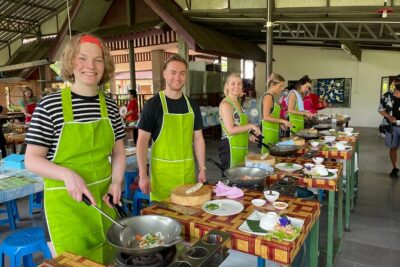
Half-Day Thai Cooking Class at Organic Farm in Chiang Mai
Read our review →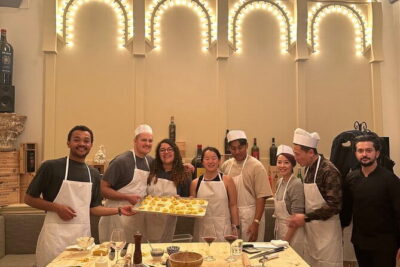
Florence: Pasta Cooking Class with Unlimited Wine
Read our review →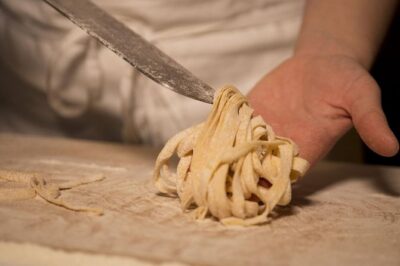
3 in 1 Cooking Class near Navona: Fettuccine, Ravioli & Tiramisu
Read our review →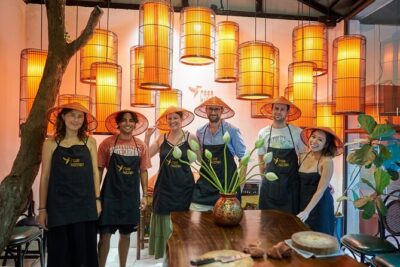
Hanoi Cooking Class: Culture, Local Market & Meaning CSR Impact
Read our review →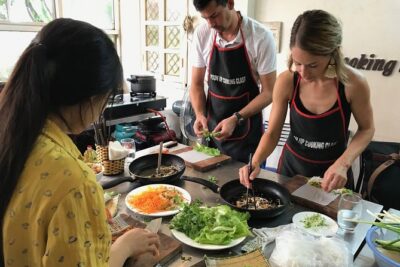
5 Traditional Dishes Hanoi Cooking Class with Market Trip
Read our review →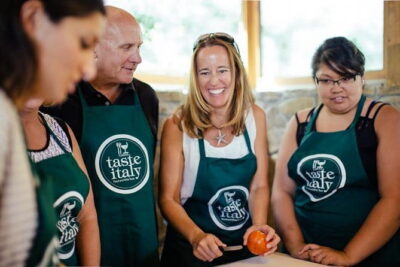
Cooking Class and Lunch at a Tuscan Farmhouse with Local Market Tour from Florence
Read our review →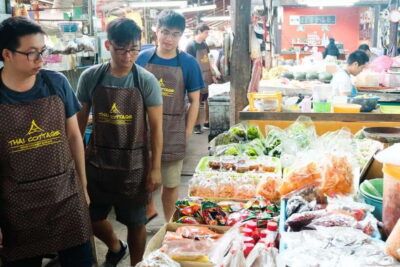
Chiang Mai: Cooking Class, Market & Thai Herbs Garden Tour
Read our review →Browse the lists this tour appears in