
Review · KYOTO
Kyoto Ramen Spoon Painting & Michelin Cooking Class
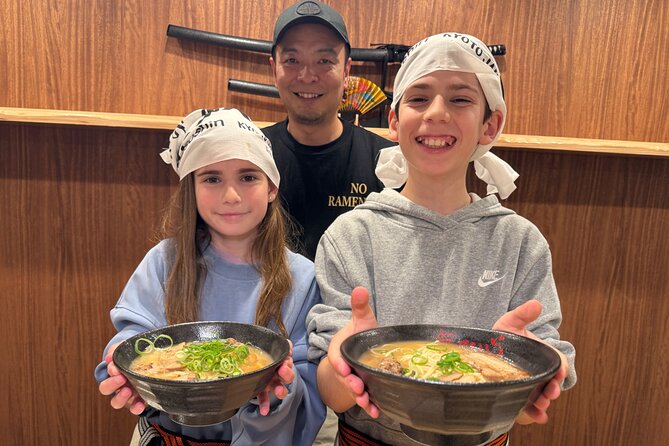
The clever idea here is simple: you make a ramen souvenir, then make the meal to use it with. At Musoshin Ramen Academy, Chef Shin or Chef Amiru leads you through ramen preparation in a working restaurant setting, with the food supplied from Musoshin’s own kitchens.
I like the hands-on cooking and the chance to learn why ramen takes so much work before it reaches your bowl. I also like the small maximum of 12 people, which gives the class a personal feel. The main catch is that you do not make the noodles from scratch, and your painted spoon must be kiln-fired overnight, so you cannot take the finished version home immediately.
Key points
- Paint before you cook: Create a ceramic ramen spoon as a personal Kyoto souvenir.
- Cook with restaurant ingredients: Musoshin supplies handmade noodles, broth, soy sauce, and roast pork.
- Choose pork or vegetarian ramen: Vegetarian and vegan options are available when requested.
- Learn from working chefs: Shin and Amiru explain the ingredients, method, and background of the dish.
- Eat what you prepare: Your ramen is served at the end, along with a ramen bowl, spoon, and apron for the class.
- Small-group format: The maximum is 12 people, useful for questions and individual help.
A ramen class with a souvenir built in
Kyoto has no shortage of cooking classes, but this one keeps its focus pleasingly narrow. You are not trying to prepare an entire Japanese menu in 90 minutes. You are learning how one bowl of ramen comes together, then eating the result while the steps are still fresh in your mind.
The class takes place at Musoshin Ramen Academy, run by Musoshin Ramen. The restaurant began in Kyoto in 2022 and now has six restaurants in Kyoto and Toronto. Its Toronto location has received Michelin nominations for three consecutive years, and the class uses the same recipe.
That does not mean you are attending a formal Michelin-starred restaurant service. It means the cooking lesson is linked to a real ramen business with a recipe and production system behind it. You get more than a generic packet of noodles and a seasoning sachet.
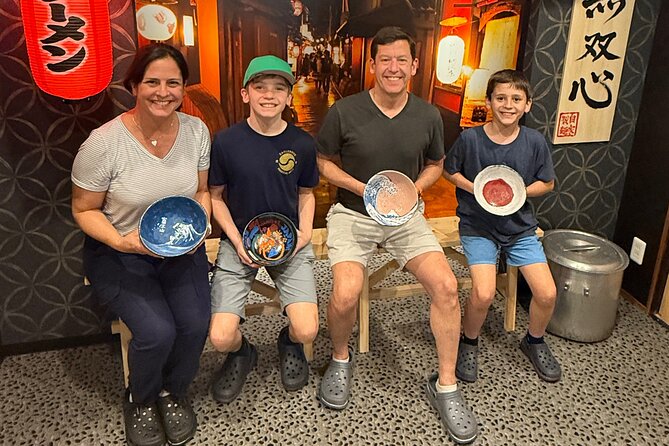
The experience starts with spoon painting. You decorate a ceramic ramen spoon upstairs, then move downstairs to prepare the food. The spoon is baked in a kiln overnight. That delay is worth knowing before you book, especially if you are leaving Kyoto the next morning.
More Sushi and Japanese Classes in Kyoto:
- Ramen Cooking Class at Ramen Factory in Kyoto
★ 5.0 · 1,937 reviews - Sushi Making in Kyoto! Same-day bookings welcome!
★ 5.0 · 713 reviews - Kyoto: Ramen Cooking Class at a Ramen Factory with Souvenir
★ 4.9 · 532 reviews
What Musoshin puts into the bowl
The most interesting part of this class is the attention paid to the ingredients. Musoshin says it makes its ramen components in-house, including the noodles, soup, ramen soy sauce, and roast pork.
The noodles are made each morning and rested overnight for use the next day. The soup cooks for 12 hours. The soy sauce and roast pork are also handmade. In class, you are not expected to reproduce all of that from raw ingredients in a short session. Instead, the restaurant brings its prepared components and teaches you how to handle and assemble them.
That is a sensible approach. Making a serious ramen broth alone can take half a day, and fresh noodle production requires equipment and practice. The class gives you an honest look at the process without pretending that a 90-minute lesson can turn you into a ramen master.
You will get a better sense of how the parts work together: broth, seasoning, noodles, pork or other toppings, and the final arrangement in the bowl. Several people who took the class found this especially useful because it showed how much preparation happens before the customer sees the finished dish.
Painting your ceramic ramen spoon

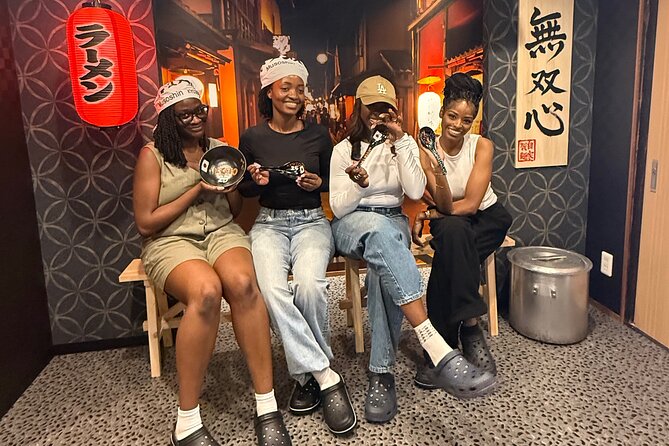
The spoon activity gives the class a craft element without taking over the food lesson. You paint a ceramic spoon upstairs, then it is sent to the kiln overnight. The result is a useful keepsake rather than a standard Kyoto trinket.
You should not expect a fine ceramics workshop with a long lesson in Japanese pottery. This is a short, relaxed painting session tied to the ramen theme. That makes it a good fit for families and for anyone who wants something creative between temple visits.
The spoon is also the part children can enjoy most easily. One family found the class particularly engaging for a child, with Shin taking time to interact gently and help. The instructors are described as energetic and patient, so the mood seems informal rather than strict.
There is one practical wrinkle. If you are in Kyoto only briefly, you may not be able to collect the fired spoon. One participant did not realize the kiln step happened overnight and could not paint it in time for their departure. Ask about collection or delivery arrangements when booking if the finished spoon matters to you. The supplied details confirm the overnight firing, but do not promise a shipping service.
Cooking downstairs with Shin or Amiru
After painting, the class moves into the restaurant kitchen. The chef explains the ramen’s ingredients, method, and background, then guides you through the preparation. Chef Shin is one of the named instructors, and Chef Amiru has also led the class.
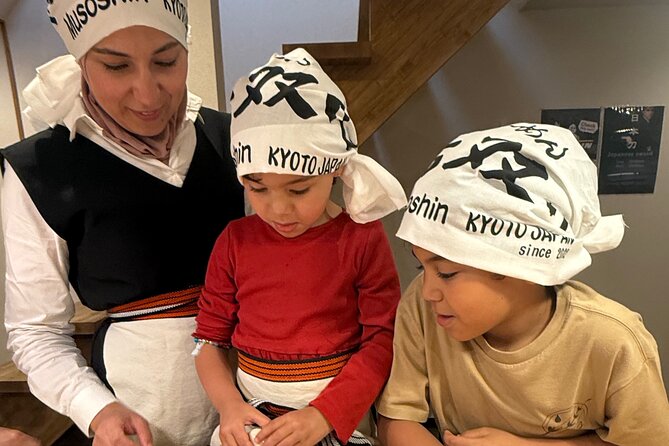
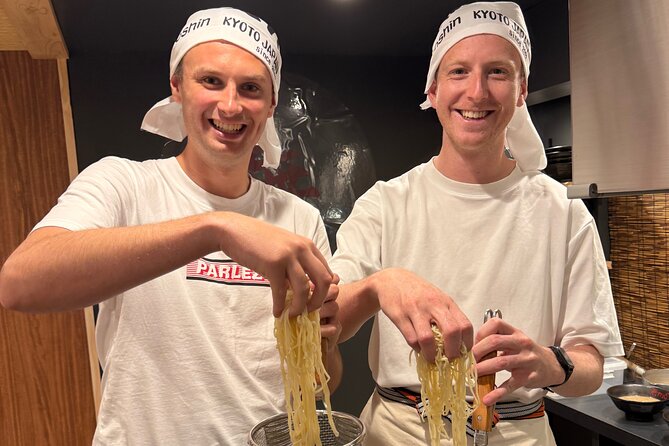
The teaching style is practical. You handle the ingredients rather than simply watching a chef work. You prepare the components brought from the restaurant, assemble your bowl, and learn how the arrangement affects the final taste.
Shin appears to be very hands-on. He is the chef-owner of the ramen business and still takes part directly in classes. That matters because you can ask about the food from someone involved in the recipe and restaurant, rather than receiving only a memorized presentation.
The atmosphere also seems to lean cheerful and energetic. One class included plenty of humor and step-by-step instruction, while another praised the patience and warmth of both the chef and assistant. That is useful if you feel nervous about cooking in front of other people. This is not a silent demonstration where you are left to guess what happens next.
The class has a maximum of 12 people. That is not private, but it is small enough to keep the cooking manageable. You should have a better chance of getting help with your bowl or asking about an ingredient than in a large tourist workshop.
More Hands-On Workshops in Kyoto:
- Kyoto: Ramen, Gyoza, and Onigiri Cooking Class
★ 5.0 · 445 reviews - The Original Small-Group Sushi Making Class in Kyoto
★ 5.0 · 436 reviews - Kyoto: Japanese Washoku Bento Small Group Cooking Class
★ 5.0 · 380 reviews - Kyoto Ramen and Gyoza Cooking Class with Professional Chefs
★ 5.0 · 282 reviews
Your ramen choices and dietary needs
The experience offers pork broth and vegetarian preparations. Vegetarian and vegan options were accommodated in the class, and one participant with allergies received careful handling.
Still, you should state your dietary needs clearly when booking or before the class begins. The available information confirms vegetarian and vegan options, but it does not list every ingredient, allergen protocol, or substitute. Do not assume that every allergy can be handled without checking.
This is a strong point for mixed groups. One person can enjoy a meat ramen while another has a plant-based bowl, allowing families and friends with different diets to take the class together.
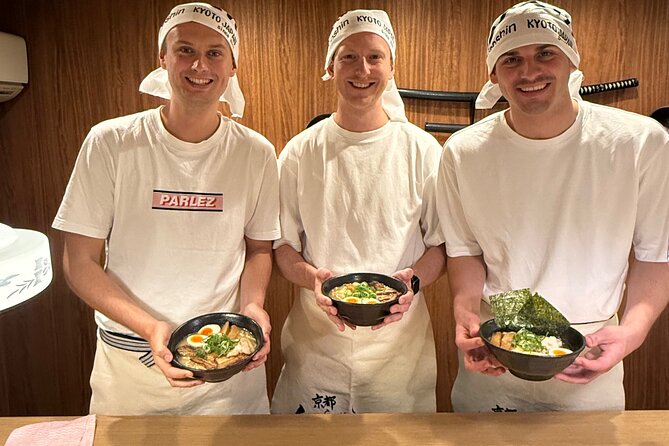
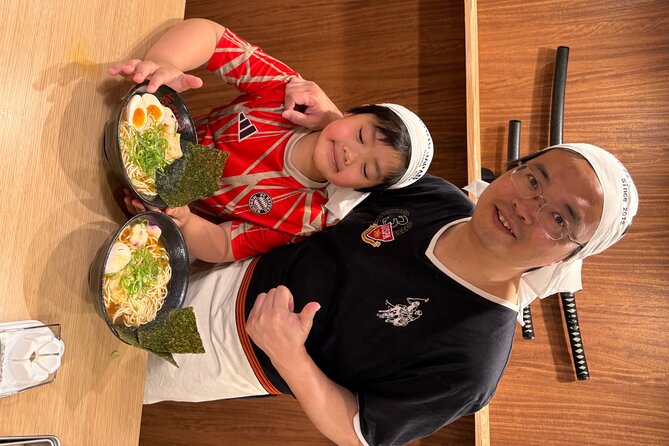
The food is the payoff at the end. You sit down with the ramen you helped prepare, rather than receiving a small tasting portion. The experience includes a ramen bowl, a ramen spoon, an apron, and part of the ramen ingredients. The exact meaning of part of the ramen is not fully detailed, but the class clearly includes a complete prepared bowl to eat.
Why the meal matters
Ramen is easy to treat as fast comfort food. This class slows it down enough to show the labor behind it. A 12-hour soup, rested noodles, handmade soy sauce, and prepared roast pork all change how you understand the bowl in front of you.
I particularly like the idea of arranging the ramen yourself. Even when the restaurant has done the long preparation, your own handling affects the final presentation and balance. You see how the noodles, broth, and toppings become one dish.
Several people considered the ramen the best part of the experience, with some calling it the best ramen they had eaten in Japan. That is subjective, of course, and you should not book solely on a promise of a perfect bowl. Still, the repeated praise for the flavor, including the vegetarian version, suggests that the cooking lesson is backed by a serious meal rather than a token result.
One fair criticism is that the class does not include noodle-making. If your main goal is to knead dough, roll noodles, or use a noodle machine, this is not the right choice. The noodles are made by Musoshin and supplied for the workshop. The focus is on broth, components, cooking, and assembly.
Location, timing, and the confusing temple information
The meeting point is listed as 440-5 Nishigomonchō in Kyoto’s Higashiyama Ward, postal code 605-0816. The experience lasts about 1 hour and 30 minutes, starts and ends at the same meeting point, and is near public transportation.
The published itinerary also lists Kiyomizu-dera Temple, Kennin-ji Temple, and Sanjusangendo Temple. Based on the described activity, you should not assume this 90-minute ramen class includes visits to all three temples. The detailed experience centers on spoon painting and cooking at Musoshin Ramen Academy, and the meeting and ending point are the same. Confirm the schedule if those temple stops are important to your plans.
This matters because Kyoto sightseeing days are easy to overpack. Kiyomizu-dera, Kennin-ji, and Sanjusangendo each deserve more than a quick pass, and fitting three temple visits around a 90-minute food class requires careful timing. Treat the ramen class as a stand-alone activity unless the operator confirms otherwise.
Give yourself enough time to find the meeting point. One person found the location hard to locate but still felt the class was worth the effort. The supplied information confirms public transportation nearby, but does not provide a station name or walking directions. Use the mobile ticket and allow a buffer rather than arriving at the last minute.
Is $65.89 a fair price?
At $65.89 per person, this is more than paying for a bowl of ramen. You are paying for a 90-minute guided class, ingredients from a working ramen restaurant, the meal, spoon painting, use of a bowl and apron, and a ceramic souvenir that is kiln-fired afterward.
The value is strongest if you want an activity rather than just lunch. You get a story to take home, some practical ramen knowledge, and a craft item tied directly to what you cooked. The price also makes more sense for families, couples, and food-focused visitors who enjoy doing something together.
It is less compelling if you only want a cheap meal or a full noodle-making workshop. A bowl of ramen alone costs less, and this class does not teach every stage of noodle production. The experience earns its price through the combination of cooking, craft, instruction, and restaurant-quality ingredients.
With 97 percent recommending it and a 4.9 rating from 34 reviews, the class has a strong record. Ratings are not a guarantee of your own experience, but the praise is consistent in the areas that matter most: the ramen, the warmth of the instructors, the spoon painting, and the family-friendly approach.
Who will enjoy this class most?
I would choose this for:
- Ramen fans who want to understand the parts of a bowl, not just eat it.
- Families with children looking for a short activity with both cooking and art.
- Vegetarians and vegans traveling with meat-eating companions, provided needs are communicated in advance.
- Food-focused visitors who value restaurant experience and ingredient quality.
- Short-stay visitors who want a compact class rather than a half-day cooking program.
- Souvenir hunters who prefer something personal and usable over a mass-produced gift.
I would hesitate if your priority is making noodles from flour, taking home the finished spoon the same day, or visiting temples as part of the class. Those are the three main points to clarify before committing.
The mobile ticket is convenient, and free cancellation is available up to 24 hours before the start time. Changes or cancellations inside that window are not accepted for a refund, so keep the local cut-off time in mind when arranging your Kyoto schedule.
Should you book Musoshin Ramen Academy?
Book it if you want a friendly, compact food experience with a real meal at the end. The strongest reasons are the restaurant-made ingredients, the personal spoon souvenir, and the chance to work with chefs such as Shin or Amiru in a group capped at 12.
I would especially recommend it to families and mixed-diet groups. The vegetarian and vegan options make the class more flexible, and the painting gives children something to do while the cooking lesson adds substance for adults.
Skip it if you want to make ramen entirely from scratch, especially the noodles, or if you need the ceramic spoon finished before leaving Kyoto. For everyone else, $65.89 buys more than lunch. It buys a practical look at how a respected ramen shop builds its bowl, plus a meal you helped put together and a souvenir with a story behind it.
FAQ
Where does the ramen class meet?
It meets at 440-5 Nishigomonchō, Higashiyama Ward, Kyoto, 605-0816, Japan. The activity ends back at the meeting point.
How long does the experience last?
The experience lasts approximately 1 hour and 30 minutes.
How many people can join the class?
The maximum group size is 12 travelers.
Who teaches the cooking class?
The class is run by Musoshin Ramen Academy. Named instructors include Chef Shin and Chef Amiru.
Are vegetarian or vegan ramen options available?
Yes. Vegetarian and vegan options are available, and dietary needs should be communicated in advance.
Do you make the ramen noodles yourself?
No. Musoshin makes its noodles at the restaurant. The class uses ingredients brought from the restaurant and focuses on preparing and assembling the ramen.
Can you take the painted spoon home immediately?
No. The ceramic spoon is baked in a kiln overnight, so it is not finished immediately after painting.
What is the cancellation policy?
You can cancel up to 24 hours before the experience start time for a full refund. Cancellations or changes made less than 24 hours before the start time are not accepted for a refund.
Just added around Kyoto
- Private Plant-Based Japanese Cooking Class – Kyoto Edition★ 5.0 · 15 reviews
- Private Kyoto Sushi Cooking Class & Tea Ceremony with Emika★ 5.0 · 66 reviews
- Private Cooking Class Udon in Kyoto Japan★ 5.0 · 23 reviews
- Private Guided Traditional Buddhist Cooking in Japan★ 5.0 · 16 reviews
- Kyoto Wagashi(Japanese sweets) Cooking Class near Fushimiinari★ 5.0 · 60 reviews
- Nishiki Market, Private Sushi class & Sake Tasting in Townhouse★ 5.0 · 6 reviews
- Private Kyoto Cooking Class with Aki in a Beautiful Wooden House★ 5.0 · 12 reviews
- Private Kyoto Market Tour and Authentic Cooking Class with Aki★ 5.0 · 15 reviews
Japanese & Sushi Cooking Classes, compared.
Sushi Making Tokyo Roll and Authentic Japanese Sushi Class
Read our review →
Tokyo: Roll and Authentic Sushi Making Class in Asakusa
Read our review →
Ramen Cooking Class at Ramen Factory in Kyoto
Read our review →
Tokyo: Sushi Making Class in a Happi Coat near a Famous Spot
Read our review →
Sushi Making Tokyo! Popular Maki Sushi & Japanese Sushi(+Recipe!)
Read our review →
Sushi Making Osaka Roll and Authentic Japanese Sushi Class
Read our review →
Tokyo Sushi Making Class in Tsukiji with Professional Chef
Read our review →
Ramen & Gyoza Cooking Class in Tokyo with Local Supermarket Visit
Read our review →Browse the lists this tour appears in