
Review · PERU
Cusco: 3-Hour Peruvian Cooking Class
Cusco’s food comes into focus at the market, where potatoes, peppers, fruit, and other local ingredients move from stall to cooking lesson. I like the market visit because it gives the dishes a real setting, and I like the hands-on cooking, especially the chance to make both ceviche and a pisco sour. The main catch is that the first person booked chooses the meat dish, so your preferred main course is not guaranteed.
The class costs $49 per person and lasts three hours, with a group capped at 10. That is a fair price for a market tour, ingredients, instruction, cooking supplies, and a meal, but ask for the vegetarian option or fruit juice before you arrive if needed. A few dishes may be prepared early, which can mean cool rice or potatoes at the main course.
Key points at a glance
- Central Market first: You begin by looking at Peruvian produce and learning how ingredients connect to local cooking.
- A four-part menu: The lesson covers ceviche, one main dish, a pisco sour, and chocolate fondue with local fruit.
- Your main course is decided early: The first booking chooses between lomo saltado and ají de gallina.
- Small, bilingual group: Up to 10 people can join, with instruction in English or Spanish.
- Named instructors: Miguel and Yil have led sessions, adding food facts, knife tips, and cultural background.
- A practical price: At $49, the experience combines shopping, teaching, food, and dinner in one three-hour program.
Starting at ChocoMuseo near Plaza Regocijo
The class takes place inside ChocoMuseo, on the corner of Plaza Regocijo. Look for the green and orange flags hanging from the balconies. That detail matters because the meeting point is easy to miss if you are simply scanning the square for a restaurant sign.
You meet here before heading to the Peruvian Central Market. The class is offered in English and Spanish, and the group is limited to 10 participants. That size should give you a better chance to ask questions and handle ingredients yourself, rather than watching a chef work from across a crowded room.
The three-hour schedule works well as an afternoon or evening activity. You get a market visit, a cooking session, and a sit-down meal without giving up a full day of sightseeing around Cusco. The exact start time varies, so check availability when booking.
Book at least 24 hours ahead. The kitchen needs time to obtain the ingredients, and a last-minute reservation may be canceled if the staff cannot prepare properly.
More Hands-On Workshops in Peru:
- Cusco: Peruvian Cooking Class, Cocktails & Local Market Tour
★ 4.9 · 512 reviews - Cooking class and market tour with a local chef
★ 5.0 · 186 reviews - Market Tour, Tasting of 35 Fruits, and 4-Course Peruvian Cooking Class in Lima
★ 5.0 · 86 reviews
Seeing Peruvian ingredients at the Central Market
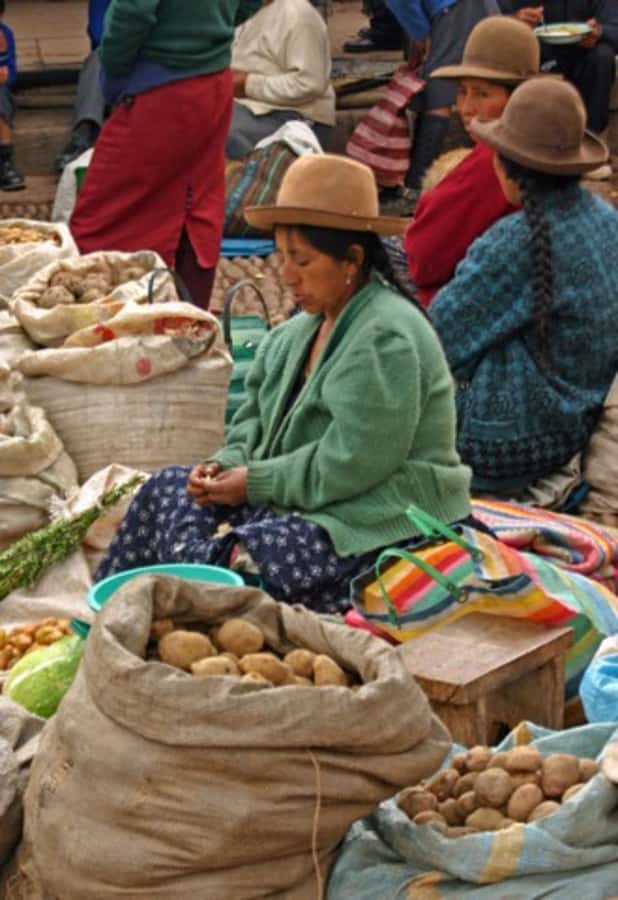
The market visit is more than a quick shopping stop. Your instructor helps you look at the produce that will become dinner and explains how ingredients fit into Peruvian food and culture.
Peru has a remarkable range of potatoes, peppers, fruits, and other crops, and the market gives you a useful introduction before you start cooking. You may try local fruits and learn about the ingredients you are selecting. That tasting element helps you connect a name on a recipe sheet with an actual flavor.
The teaching style appears to be one of the strongest parts of the class. Miguel has guided participants through the origins of the ingredients, while Yil has mixed food facts with stories about Cusco and local culture. You are not simply handed a basket and sent back to the kitchen.
I especially like this order: market first, cooking second. By the time you begin chopping, you understand more about what you are using and why those ingredients matter. It also gives you a better feel for Peruvian cooking than a lesson held entirely in a kitchen.
Keep your expectations sensible. This is a short market orientation, not a full food tour with several tastings at different stalls. Its purpose is to prepare you for the class and give context to the meal.
Preparing ceviche from the start
Ceviche is the starter, and it is a natural choice for a Peruvian cooking lesson. You learn how the ingredients come together rather than merely receiving a finished plate.
The class provides the ingredients and cooking supplies, so you do not need to shop independently or bring equipment. Your instructor leads you through the process, with time for practical questions and basic kitchen technique.
The hands-on format is useful if you want to recreate the dish at home. The instruction has included simple knife skills, which can be more valuable than a long lecture. You leave with a method you can remember, not just an attractive meal you ate once.
Ceviche also sets the tone for the class. It is a dish where freshness and balance matter, so the market visit has a clear purpose. You can see how the early discussion of produce connects with what ends up on your plate.
If you do not eat seafood, ask about substitutions before booking. The supplied information confirms vegetarian alternatives for the main dish, but it does not specify every possible ceviche replacement.
Choosing between lomo saltado and ají de gallina
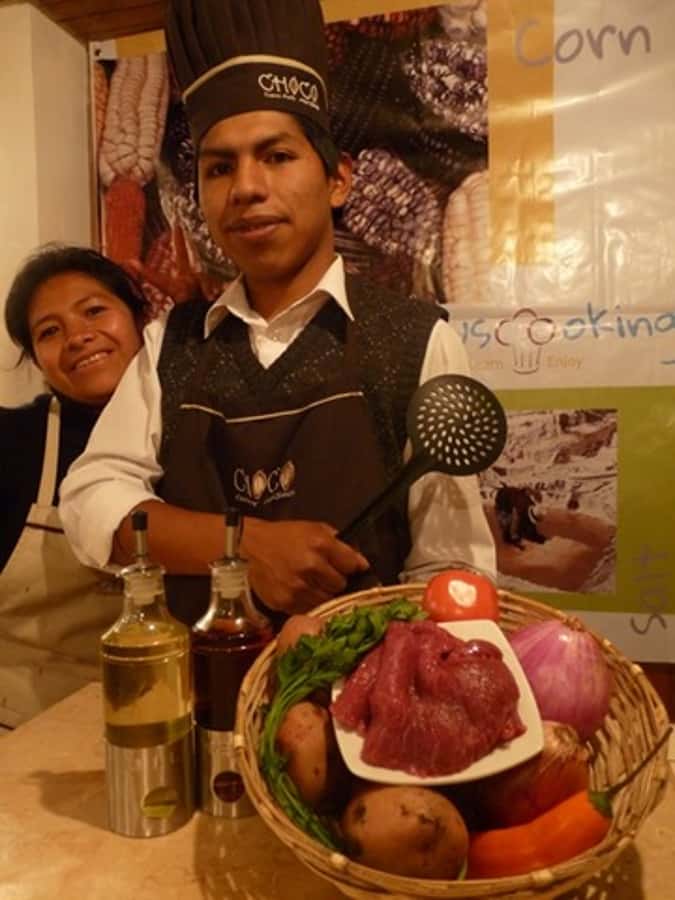
The main course is either lomo saltado or ají de gallina. Lomo saltado is sautéed beef with a savory Peruvian style, while ají de gallina is chicken in a yellow pepper sauce.
The first participant booked chooses which main course the entire class prepares. You can tell the provider your preference, but your choice is not guaranteed unless you are the first booking. This is the most important detail to settle before paying, especially if one dish is the reason you want the class.
Lomo saltado should appeal to you if you want a lively sautéed beef dish and an active cooking step. Ají de gallina offers a different lesson, centered on chicken and a creamy yellow pepper sauce. Both give you a taste of familiar Peruvian home cooking, but they are not interchangeable in flavor or texture.
The main course is generally served with rice and potatoes. One practical weakness is timing. If those sides are prepared well before the group sits down, they may arrive cool. You can ask the instructor about serving order, but the kitchen’s timing may depend on how quickly the whole group works.
That small issue does not ruin the meal, but it is worth knowing. A cooking class is partly about learning kitchen rhythm, and group cooking can mean one item waits while another is finished.
A few more cooking classes around Peru worth a look
- 3-hour Tuscan Cooking Class with Wine & Oil Tasting
★ 4.5 · 36 reviews - Lake Atitlan Maya Kitchen: 3-Hour Cooking Class
★ 4.8 · 17 reviews - 3 hours Khao Lak Cooking Class and Market Visit
★ 5.0 · 15 reviews - Kathmandu: About 3-hour Cooking Class Experience near Thamel
★ 5.0 · 3 reviews
Mixing a classic pisco sour
The pisco sour is part of the lesson and part of the final meal. You learn how to prepare this famous Peruvian drink rather than simply ordering one at the table.
That makes the beverage a useful souvenir in its own way. After the class, you can try to repeat the recipe at home and explain what you learned about pisco to friends. Some sessions have included a Chicha Pisco Sour, which adds a local twist to the drink.
The standard package includes one pisco sour and water. Wine is available to purchase, but other alcoholic drinks are not included. If you do not drink alcohol, request fresh fruit juice instead. The activity allows that swap on request, but it is best to mention it before the class begins.
The drink portion may be one of the more social parts of the evening, but the cooking remains the main focus. You should not book this as a tasting tour or a bar crawl. You are learning one drink as part of a larger meal.
Ending with chocolate fondue and local fruit
Dessert is chocolate fondue with local fruits. It is a simple finish, but it gives you another chance to taste Peruvian ingredients in a relaxed way.
The chocolate connection makes sense at ChocoMuseo, though the class is not limited to chocolate. You have already worked through a savory starter, a main course, and a drink. Fondue lets the final course feel playful without adding another difficult recipe at the end of a busy lesson.
Local fruit matters here. You may have encountered some of it at the market, then see it again alongside the chocolate. That creates a neat link between the first and last parts of the class.
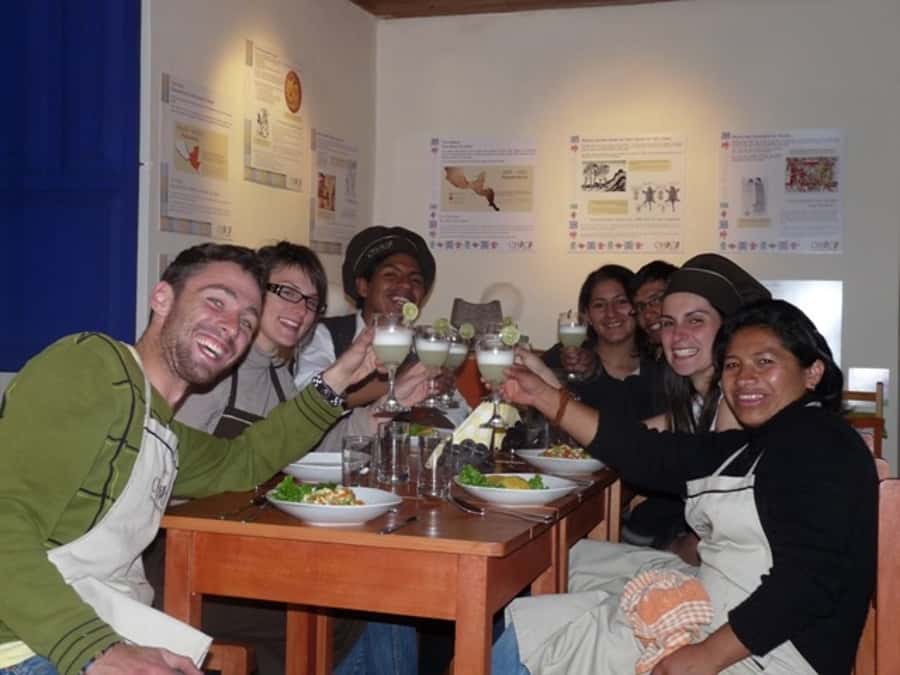
The meal is eaten after the preparation in a friendly setting. You do not need to rush away as soon as the final dish is ready. The class is designed to end with everyone sitting down to enjoy the food they prepared.
The supplied information describes the included meal in two ways, as a four-part menu and as a dinner with a three-course meal plus a pisco sour. For your purposes, expect ceviche, a main course, dessert, and the drink, with water included.
What the teaching is really like
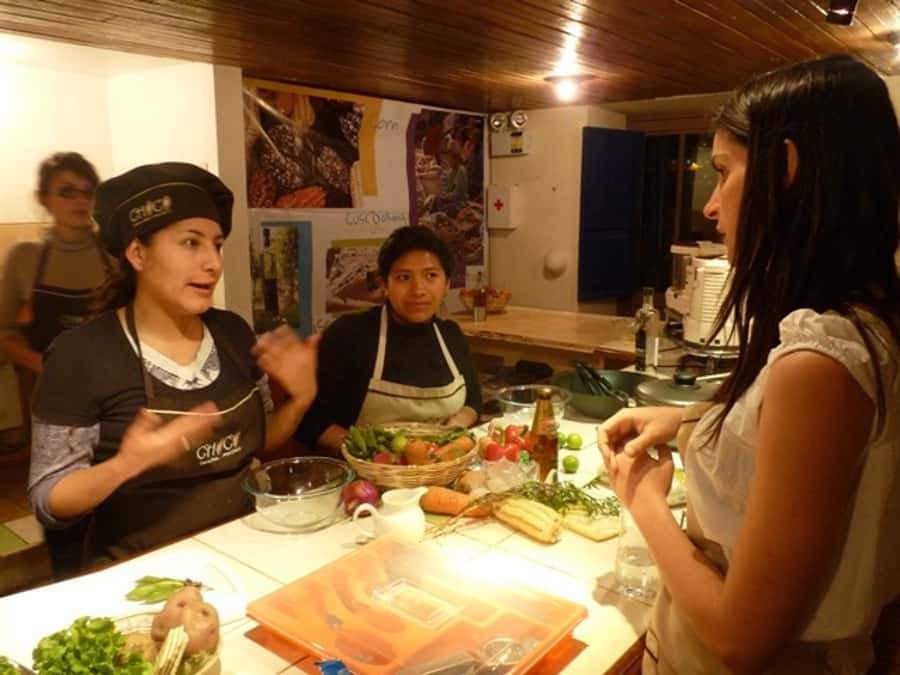
The instructor leads you through the menu step by step. The class is not only about recipes. You also learn about produce, potatoes, cooking methods, and the place of food in Cusco culture.
Miguel has been praised for explaining ingredients, preparation, and plating while adding cultural details. Yil has also led a session that combined market facts, fruit tasting, and a Chicha Pisco Sour. You may not have either instructor on your date, but their approach gives you a good idea of the class’s intended style.
The best part for me is the mix of useful technique and local context. You can learn how to hold a knife more effectively, then hear why a particular pepper or potato matters. That keeps the session from feeling like a generic international cooking class.
The small group helps. With no more than 10 people, you should have a reasonable chance to participate in chopping, mixing, seasoning, and plating. The exact amount of individual work can vary, since several people are preparing the same menu together.
You should also expect some group pacing. If one person works more slowly, or if one course must wait for another, the final meal may not arrive at its ideal temperature. The cool rice and potatoes reported by one participant are a useful reminder that the class is hands-on rather than a restaurant kitchen running on a fixed schedule.
Is $49 a good value in Cusco?
At $49, you are paying for more than a restaurant dinner. The price covers the market tour, all ingredients, cooking instruction, supplies, the meal, a pisco sour, and water.
I see good value here if you want an activity that combines food and culture. A separate meal would give you less insight into how the dishes are made, while a cooking class without the market would miss part of the local setting. This experience joins the two.
The value is strongest for you if you plan to cook Peruvian food again. Knife skills, the ceviche method, the main course, and the pisco sour all have practical use beyond Cusco. If you only want to eat and do not enjoy preparation, a restaurant may be a better fit.
Wine costs extra, and gratuity is not included. Other alcoholic drinks are also outside the package. These are small costs, but budget for them if you want something beyond the included pisco sour and water.
The reserve-now-and-pay-later option gives you some flexibility, and free cancellation is available up to 24 hours before the class for a full refund. Still, the provider asks you to reserve at least 24 hours ahead because the ingredients must be arranged.
Who should book this cooking class?
I would choose this class if you want a small-group food activity that does more than put a plate in front of you. It suits curious cooks, couples, families with an interest in food, and anyone who wants a break from museums and monuments.
It is also a good choice if you want a compact evening plan near Plaza Regocijo. Three hours is long enough to feel substantial but short enough to fit around other Cusco plans.
You should think twice if you require a specific main course. Because the first booking controls the choice between lomo saltado and ají de gallina, you may not get the dish you prefer. Contact the provider early if you need vegetarian food, fruit juice instead of pisco, or a particular menu adjustment.
This is not the right pick if you expect a polished restaurant kitchen, a large number of tastings, or a private chef. The class is social and practical, and small timing issues can occur.
Should you book the Cusco cooking class?
Book it if you want to understand Peruvian food through the ingredients, not just the finished dishes. The Central Market visit, hands-on recipes, knife practice, local fruit, and pisco sour make the $49 price reasonable.
I would reserve early, state your dietary needs, and ask which main course has been selected. If you can accept a shared class and the chance that rice or potatoes may cool while the group finishes cooking, this is a tasty and useful addition to a Cusco stay.
FAQ
Where does the cooking class meet?
The class meets inside ChocoMuseo on the corner of Plaza Regocijo. Look for the green and orange flags hanging from the balconies.
How long does the experience last?
The class lasts three hours. Starting times vary, so check availability for your preferred date.
Which main dish will I prepare?
The class prepares either lomo saltado, sautéed beef, or ají de gallina, chicken in yellow pepper sauce. The first participant booked chooses the main dish for the group, so your preference is not guaranteed.
Is the class available in English?
Yes. Instruction is available in English and Spanish.
Can I request vegetarian food or a nonalcoholic drink?
Yes. Vegetarian alternatives can be requested for the meat dish, and the pisco sour can be replaced with fresh fruit juice upon request. Tell the provider before the class.
What is included in the price?
The $49 price includes a guided Central Market visit, ingredients, cooking instruction, cooking supplies, the meal, one pisco sour, and water. Gratuity, wine, and other alcoholic drinks are not included.
Just added around Peru
- Lima: Market Tour and Cooking Class with Pisco Sour★ 5.0 · 3 reviews
- Lima: Cooking Workshop and Water Circuit Tour★ 5.0 · 16 reviews
- Lima: Market Tour, 35 Fruits Tasting & Cooking Class★ 5.0 · 3 reviews
- Lima: 4-Course Peruvian Cooking Class in Miraflores★ 5.0 · 4 reviews
- Lima: Demo Cooking Class with Lunch at Cala Restaurant★ 4.1 · 4 reviews
- Cusco: Peruvian Cooking Class & Market Tour★ 4.9 · 19 reviews
- Cooking Class Typical Food in Arequipa★ 3.9 · 3 reviews
- Cooking class and market tour with a local chef★ 5.0 · 186 reviews
Cooking Classes, compared.
Half-Day Thai Cooking Class at Organic Farm in Chiang Mai
Read our review →
Florence: Pasta Cooking Class with Unlimited Wine
Read our review →
3 in 1 Cooking Class near Navona: Fettuccine, Ravioli & Tiramisu
Read our review →
Hanoi Cooking Class: Culture, Local Market & Meaning CSR Impact
Read our review →
5 Traditional Dishes Hanoi Cooking Class with Market Trip
Read our review →
Cooking Class and Lunch at a Tuscan Farmhouse with Local Market Tour from Florence
Read our review →
Chiang Mai: Cooking Class, Market & Thai Herbs Garden Tour
Read our review →Browse the lists this tour appears in