Review · UBUD
Balinese Cooking class with traditional morning market visit
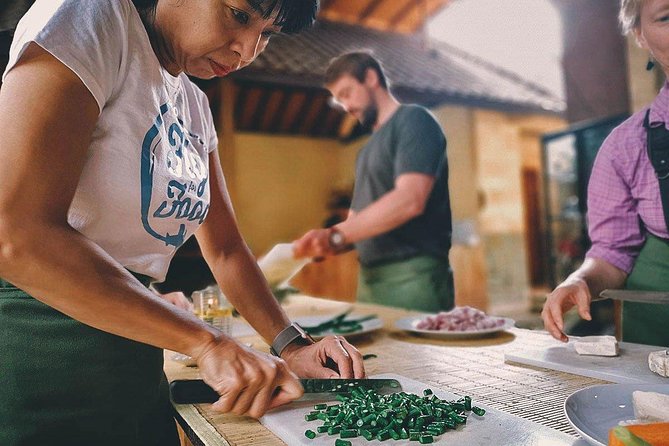
Ubud’s best food lesson starts before you reach the kitchen. You visit a local morning market, taste unfamiliar fruit, study Balinese herbs and spices, and help choose the ingredients that will become your lunch. Then, in Laplapan village, local instructors such as Wayan, Dewa, and Putu guide you through cooking and the making of canang, the small offering baskets seen throughout Bali.
I like the small maximum of eight people, which gives you a real chance to chop, grind, stir, and ask questions. I also like the full cultural mix: market shopping, offering-making, cooking, and a sit-down meal all fit into one outing.
The one thing to consider is the six-hour length. Hotel pickup, market traffic, and the cooking session make this more than a quick kitchen demonstration, so it may take up much of your morning and afternoon.
Key points at a glance
- The morning market comes first: Learn about local fruit, vegetables, meat, herbs, and spices before cooking with them.
- Laplapan adds a village setting: The class takes place in traditional village surroundings near Ubud, rather than in a city restaurant.
- Canang-making is part of the lesson: You learn how Balinese offerings are assembled and why they are part of daily life.
- You cook a substantial meal: The menu includes starters, main courses, and dessert, with some sessions preparing five or more dishes.
- Small groups keep it hands-on: The maximum is eight people, and the class is designed for active participation.
- Transport is included: Air-conditioned pickup and return transport are provided, along with cooking equipment and taxes.
Why the market visit matters
A cooking class can easily become a tidy kitchen exercise with pre-measured ingredients. This one begins in a working local market, which gives you a better sense of how Balinese food starts.
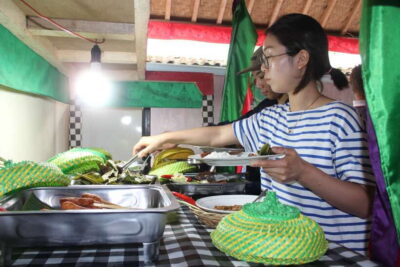
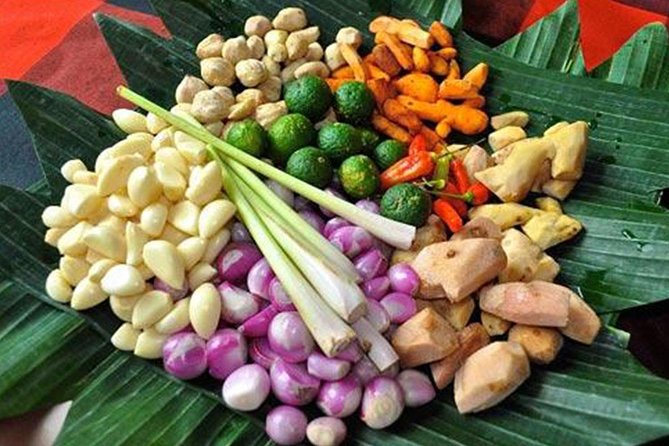
You can expect to see vegetables, herbs, fruit, meat, and spices arranged for daily shopping. The guide explains unfamiliar ingredients and, when appropriate, lets you smell or taste them. Several people found this part especially useful because it made the names and flavors easier to remember once the cooking began.
The market visit is not simply a shopping stop. It gives you a look at the ingredients that shape Balinese cooking: fresh aromatics, spice mixtures, vegetables, and local produce. You also get a chance to ask what is local and what may have come from elsewhere.
Keep your expectations sensible. The market portion is described as brief, so it is not a long tour of every stall or a detailed lesson in Balinese commerce. Its value is in orientation. You learn enough to recognize the main ingredients and understand what goes into the dishes later.
The early start also matters. Morning markets are the right place to see fresh food being sold, and beginning early leaves time for the cooking class, offering lesson, and shared meal. If you prefer a slow late breakfast, this may feel like a demanding schedule.
More Market Tour Cooking Classes in Indonesia
- Ubud: Cooking Class with Transfers and Optional Market Visit
★ 4.9 · 824 reviews - Balinese Ubud cooking school (9 Dish Cooking and Market Tour)
★ 5.0 · 540 reviews - Ubud: Balinese Cooking Class and Market Tour
★ 4.8 · 531 reviews
The ride from Ubud to Laplapan
Pickup is offered from your hotel, with air-conditioned transport to the market and cooking workshop. That is a practical plus in Bali, where a private transfer can save you from arranging separate rides between several stops.
The route may also work as a gentle introduction to the area. One driver, Awan, was praised for explaining places along the way, while other accounts describe dependable pickup and helpful drivers, including transport from as far away as Sanur. The exact pickup area and timing should be confirmed when you book, since the available information does not give a single universal schedule.
After the market, you continue to Laplapan, a traditional village near Ubud. The setting is part of the appeal. You are not just walking into a standard cooking studio, but heading to a local village environment with a welcoming host team and a kitchen surrounded by greenery.
The vehicle is a useful part of the package, but remember that a six-hour experience includes transport time. If you are staying outside central Ubud, the ride can make the day longer. That is not a problem for most food-focused visitors, but it is worth planning around.
Making canang before the cooking begins
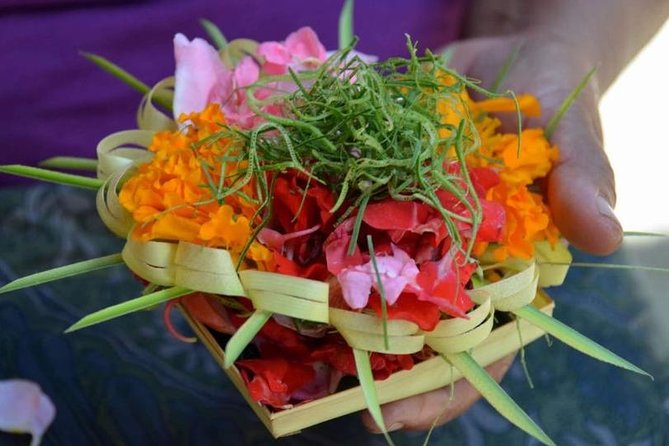
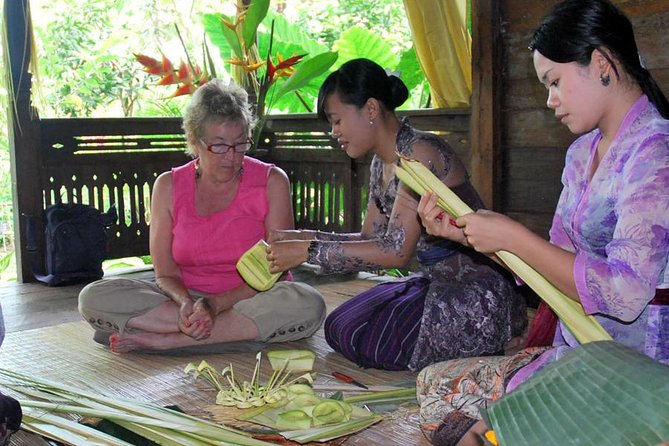
Before the food preparation, you learn how to make canang, a Balinese votive offering basket. You may also be shown other equipment used in the offering process.
This is one of the most worthwhile parts of the experience because it connects food and daily life. Balinese offerings are not a museum topic here. You handle the materials, follow the steps, and learn something about a practice you will notice around homes, shops, temples, and roads during your stay.
The lesson also gives the morning a better balance. You are not rushing from market to kitchen. Instead, you get a short cultural activity before putting on an apron and preparing lunch.
The offering activity is hands-on, but it is not the main focus of the day. If your first priority is cooking technique, you may wish the kitchen time were longer. If you want a broader look at Balinese culture, this is exactly the kind of added activity that makes the class more than a recipe lesson.
A hands-on Balinese kitchen session
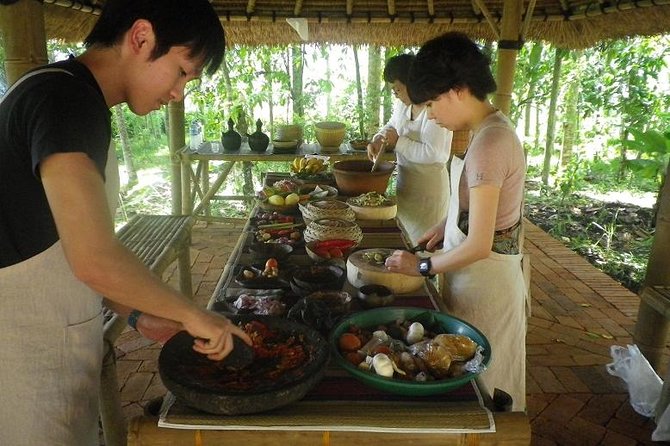
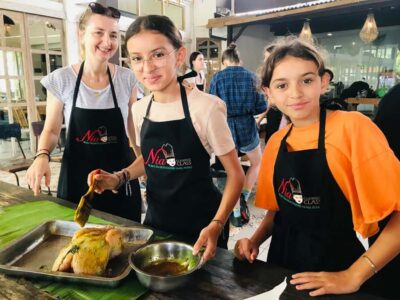
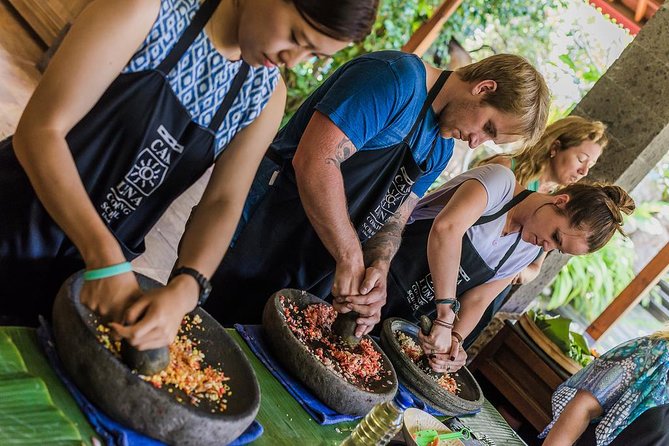
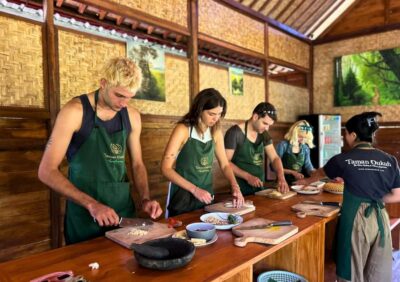
The cooking class is built around participation. You prepare starters, main dishes, and an authentic dessert with help from the local chef and assistants. The teaching style appears friendly and relaxed, with Wayan often praised for being patient, funny, and clear in her explanations.
The instructors may prepare some ingredients in advance so the class can move at a steady pace. That is a good compromise. You still get plenty of chopping, seasoning, mixing, and cooking, but you do not lose half the session to repetitive preparation.
Expect to work with traditional techniques rather than simply watching a chef perform. You can ask questions as you go, compare methods with the other people at your station, and take part in the shared work. Solo visitors can meet other people in the group, while families can cook together rather than splitting up for separate activities.
The menu may vary, but the amount of food is generous. One class included nine dishes, while another was described as a five-course set. The safest expectation is a substantial menu covering several courses, not one simple recipe.
You should also expect a social class. The cooking is shared, and the instructors encourage everyone to take a role. If you want a private chef lesson where every dish is prepared entirely for you, this may not be the right format. If you like learning by doing and do not mind working alongside others, the group approach is a strength.
Same place, a different menu:
- Ubud: Balinese Cooking Class at an Organic Farm
★ 5.0 · 1,786 reviews - Ubud Cooking Class Bali with Balinese Chef
★ 5.0 · 1,609 reviews - From Ubud: Authentic Cooking Class in a Local Village
★ 4.9 · 1,325 reviews - PRIVATE Authentic Balinese Cooking Class in Ubud at Putu’s Home
★ 5.0 · 644 reviews
The meal is the payoff
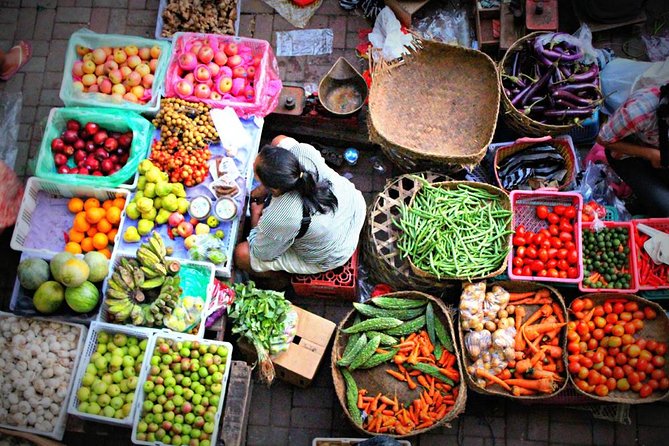
At the end, you sit down and eat what you have prepared. That sounds simple, but it changes the class from a demonstration into a complete food experience.
You can taste how the spices work together, see which techniques affected the texture, and ask final questions while the dishes are still fresh. The meal also gives the group a natural pause after the work in the kitchen.
The food is repeatedly described as plentiful and delicious, but the more useful point is that you eat a range of dishes rather than one finished plate. Starters, main courses, and dessert let you compare different preparations and flavors.
Some sessions provide recipes to take home. That detail is particularly valuable if you want the class to continue after Bali. A recipe booklet or written recipes give you a better chance of recreating the meal, though the supplied information does not promise this for every booking.
Dietary needs may be accommodated. One session adapted the menu for vegetarian requirements, and another class adjusted for dietary restrictions. Still, you should tell the operator in advance rather than assume a change can be made on the day.
Group size and teaching style
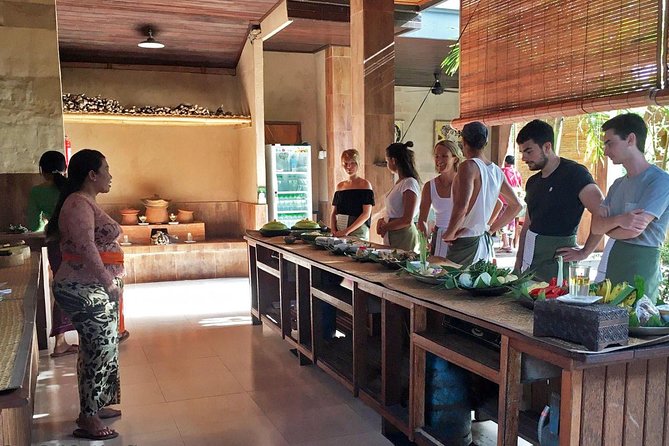
The stated maximum is eight people. That is small enough for personal attention without turning the activity into a costly private lesson.
A small group matters in a cooking class. You need space at the work area, access to tools, and enough time to ask why an ingredient is used. With too many people, one person often chops while everyone else watches. The eight-person limit should reduce that problem.
The instructors named in the experience include Wayan, Dewa, and Putu. Their roles may vary by date, but the teaching approach is consistent in the available descriptions: friendly instruction, clear explanations, patience, and humor.
Families are welcome, and the class has worked well for children aged six, eight, and nine. That does not mean every child will enjoy six hours of activity, but the format gives younger participants something concrete to do. Adults should expect to supervise children around cooking equipment.
Solo visitors also fit the format. You can join a small group, take part in the meal, and meet other people without needing to arrange a private booking.
What the $35 price gives you
At $35 per person, this is strong value if you make use of the full program. The price includes the cooking class, equipment, air-conditioned vehicle, and taxes. You are paying for transport, market interpretation, cultural instruction, a multi-dish meal, and several hours of teaching rather than only a recipe demonstration.
The meal itself is part of the value. You are not buying lunch separately after the class, and the menu can include several dishes. The market visit and offering lesson add cultural context without requiring separate bookings.
Group discounts are available, which may help families or larger parties, though the maximum remains eight people. Personal expenses are not included, so budget separately for anything you choose to buy at the market or elsewhere.
The price is less attractive if you are mainly looking for a short cooking lesson. A six-hour program may feel long for someone with limited time in Ubud. For a food-focused day that combines several activities, it is a fair package.
Practical details before you book
Confirmation is received at booking, and a mobile ticket is offered. Pickup is included, but you should make sure your hotel location is covered and check the pickup instructions before the day begins.
Wear clothes that are comfortable for cooking and walking around a market. The information does not give a formal dress code, but a market and kitchen call for practical clothing rather than anything delicate.
Tell the operator about dietary requirements ahead of time. Vegetarian adaptations have been made, but advance notice gives the kitchen a better chance to plan.
The tour has free cancellation up to 24 hours before the start time. Cancelling or changing within 24 hours does not qualify for a refund, and the cutoff uses local Bali time.
Who should book this experience
I would choose this class if you want food to be your way into Balinese culture. The market, canang lesson, village setting, and cooking session give you more context than a class that begins and ends at a countertop.
It suits curious eaters, families with older children, solo visitors, couples, and anyone who wants practical recipes to try at home. The small group and friendly instructors also make it a comfortable option if you are new to cooking classes.
You may want something else if you dislike early starts, group activities, or long outings. It is also not ideal if you want a tightly scheduled professional culinary course. The tone is social and welcoming, with several cultural stops woven around the food.
Should you book it?
Yes, if you can spare six hours and want more than a meal. At $35, the combination of transport, market visit, offering-making, hands-on cooking, and a substantial lunch offers good value.
Book it for the cultural details as much as the food. The market helps you understand the ingredients, the canang lesson gives you a glimpse of daily Balinese practice, and the shared meal lets you taste the results. Confirm pickup and dietary needs in advance, then arrive ready to work, eat, and learn.
FAQ
How long does the Balinese cooking experience last?
The experience lasts approximately six hours, including hotel pickup, the market visit, cultural activities, cooking, and the final meal.
Is hotel pickup included?
Yes. Pickup is offered, and air-conditioned transport to the market and workshop is included.
How many people can join the class?
The maximum group size is eight people.
What happens at the morning market?
You visit a local fresh food market and learn about the vegetables, herbs, meat, fruit, and spices used in Balinese cooking. You also choose ingredients for the class and may taste some local produce.
Do I learn how to make Balinese offerings?
Yes. Before cooking, the class teaches you how to make canang and other equipment used in the offering process.
Is the meal included?
Yes. You sit down and eat the dishes prepared during the cooking class, including starters, main courses, and dessert.
Can I cancel for a full refund?
Yes, if you cancel at least 24 hours before the experience starts. Cancellations or changes made less than 24 hours before the start time are not refunded.
More Shopping Trips in Indonesia
- Hanoi Cooking Class: Culture, Local Market & Meaning CSR Impact
★ 5.0 · 5,147 reviews - 5 Traditional Dishes Hanoi Cooking Class with Market Trip
★ 5.0 · 4,890 reviews - Cooking Class and Lunch at a Tuscan Farmhouse with Local Market Tour from Florence
★ 5.0 · 4,831 reviews - Chiang Mai: Cooking Class, Market & Thai Herbs Garden Tour
★ 4.9 · 4,824 reviews
More Balinese Cooking Classes in Indonesia
- Seminyak: Balinese Cooking Class & Market Tour
★ 4.9 · 458 reviews - Balinese Farm Cooking Class by Pemulan Bali
★ 5.0 · 410 reviews - Learn to cook Indonesian food at Gili Cooking Classes Trawangan
★ 5.0 · 352 reviews - Balinese Cooking Class in Seminyak
★ 5.0 · 281 reviews
Just added around Indonesia
- Nia Balinese Cooking Class★ 5.0 · 202 reviews
- Nia Bali Seminyak Cooking Class★ 5.0 · 127 reviews
- Cooking class in the comfort of your own personal villa. Yes, I’ll come to you!★ 5.0 · 80 reviews
- Balinese Cooking Class at Organic Farm★ 5.0 · 51 reviews
- Small-Group Farm Tour & Balinese Cooking Class in Ubud with Kadek★ 5.0 · 16 reviews
- From Ubud: Authentic Bali Farm Cooking School & Organic Farm★ 5.0 · 122 reviews
- PRIVATE Balinese Cooking Class in Ubud with Dewa with Transfers★ 5.0 · 213 reviews
- Balinese Authentic Cooking Class in Ubud★ 5.0 · 239 reviews
Balinese & Indonesian Cooking Classes, compared.
Ubud: Balinese Cooking Class at an Organic Farm
Read our review →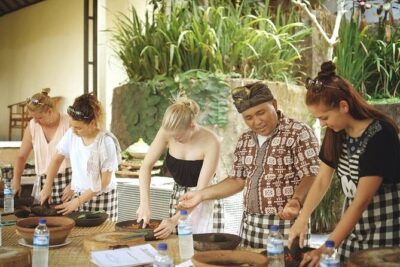
PRIVATE Authentic Balinese Cooking Class in Ubud at Putu’s Home
Read our review →
Balinese Ubud cooking school (9 Dish Cooking and Market Tour)
Read our review →