

Review · KYOTO
Japanese Cuisine Cooking Class in Kyoto
The most appealing part of this Kyoto class is the meal you build yourself: one soup and five side dishes, made with ingredients tied to Kyoto cooking. I like the hands-on lesson with clay-pot rice and miso, and I like that the class takes place in a machiya exhibition room near Toji Temple rather than in a large cooking school.
I also appreciate the careful attention to dietary needs and the chance to ask about Japanese utensils, ingredients, and food customs. The main drawback is the fixed Tuesday schedule, and the class may not suit you if you want a meat-heavy menu or a full restaurant-style cooking lesson.
Key points at a glance
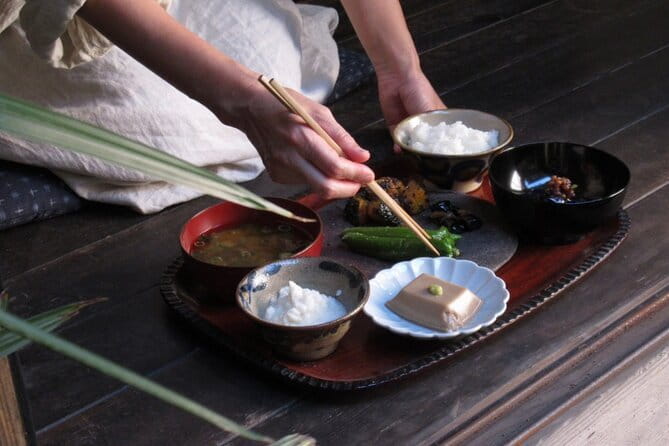
- Clay-pot rice and homemade miso: You learn two basic parts of a Japanese meal, not just a few decorative dishes.
- One soup and five side dishes: The menu gives you a useful look at the balance of a traditional Japanese table.
- Mostly vegan ingredients: Fish and eggs may be used, but you can request a fully vegan meal in advance.
- Near Kyoto Station and Toji Temple: The meeting point is about a five-minute walk from Kyoto Station, at 411-2 Kujōchō.
- Small and private format: Only your group participates, creating room for questions and personal guidance.
- English and Japanese instruction: You can ask about cooking, food culture, and tools in English during the class.
A Kyoto cooking lesson built around a complete meal
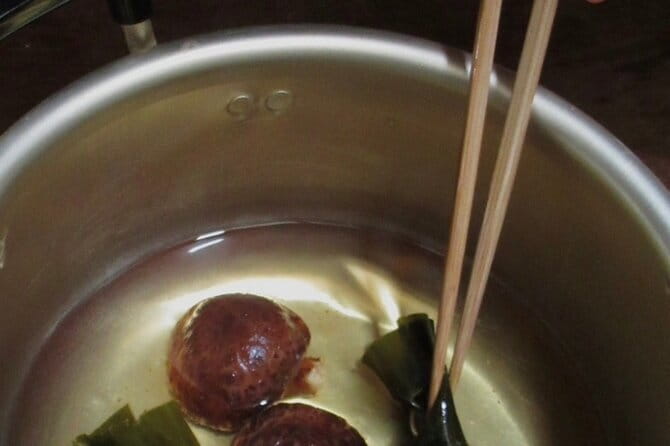
Many cooking classes teach one famous dish and send you home with a recipe. This one takes a broader approach. You help prepare rice, soup, and several side dishes, then put them together as a complete Japanese meal.
That matters because Japanese home cooking is often about balance rather than one large centerpiece. Rice supplies the base, soup adds warmth, and small side dishes bring different colors, textures, and flavors. The format gives you a clearer idea of how everyday Japanese food works than a lesson focused only on sushi or tempura.
I like that the menu centers on vegetables and home-style food. Most ingredients are vegan, though fish and eggs may be included. If you need a fully vegan meal, send that request before the class rather than waiting until you arrive.
The class is led by Iku, also referred to as Ikumi in the class information. The instructor has worked as a chef and nutritionist and previously ran a French restaurant serving home-style meals on Yakushima, a World Heritage site. That background helps explain the class focus: practical cooking, careful presentation, and food that is meant to be healthy as well as satisfying.
More Sushi and Japanese Classes in Kyoto:
- Ramen Cooking Class at Ramen Factory in Kyoto
★ 5.0 · 1,937 reviews - Sushi Making in Kyoto! Same-day bookings welcome!
★ 5.0 · 713 reviews - Kyoto: Ramen Cooking Class at a Ramen Factory with Souvenir
★ 4.9 · 532 reviews
Finding the machiya near Kyoto Station
The class begins at 11:30 am at 411-2 Kujōchō, in Kyoto’s Minami Ward. The venue is about a five-minute walk from Kyoto Station and near Toji Temple, one of Kyoto’s best-known landmarks.
That location is useful if you are staying near the station or using Kyoto as a base for day trips. You do not need private transportation, and the activity ends back at the same meeting point. Public transportation is nearby, and the short walk from the station keeps the morning simple.
The setting is a Kyoto machiya exhibition room with a kitchen. A machiya is a traditional urban townhouse, so the venue gives the class a more local feel than a modern hotel demonstration room. The information provided does not describe the building’s exact design or seating, so you should not expect a full architectural tour. The value is mainly in having a small kitchen setting for a focused lesson.
If you plan to visit Toji Temple on the same day, the class location makes that easy to combine. Keep your temple visit separate from the three-hour cooking schedule, since the class itself is centered on preparation, eating, and conversation.
Starting with rice in a clay pot
The lesson includes a demonstration of rice cooked in a clay pot. This is a useful choice because rice is the foundation of many Japanese meals, yet the method can feel unfamiliar if you usually use an electric rice cooker.
You will not simply watch the instructor cook everything. With help from the group, you make the rice along with the soup and side dishes. The class information says utensils, recipes, and writing implements are provided, so you can take notes while learning and keep the recipes for later use.
The clay-pot method also connects the food to traditional Japanese kitchen tools. You can ask about how the pot is used, why it matters, and how Japanese cooking equipment differs from what you use at home. The instructor welcomes questions about utensils as well as ingredients and culture.
One practical point: the class description does not promise that every participant will handle every step individually. Some portions are demonstrations, and the exact division of tasks may depend on the size of your private group. You should expect a mix of watching, taking notes, tasting, and trying parts of the cooking yourself.
Making miso and understanding fermentation
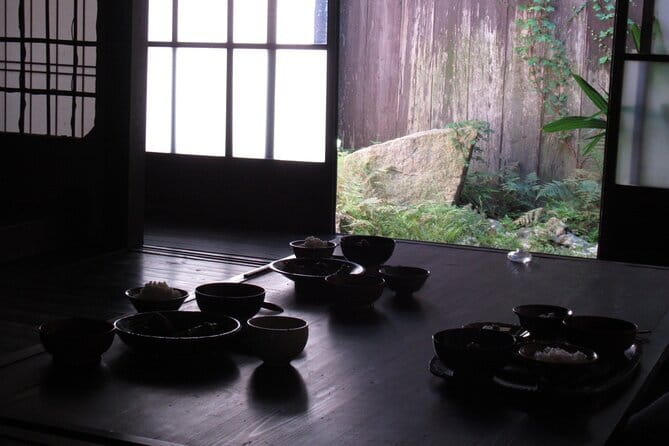
Miso is another important teaching point. The class includes a demonstration of how to make miso, a fermented food that appears in many Japanese kitchens.
You may not leave with a large batch of miso to age at home. The information promises instruction about making it, not a separate take-home fermentation project. Still, learning how miso fits into soup and other dishes adds useful context to the meal.
I especially like this part for anyone trying to understand Japanese flavor. Miso brings salt, depth, and savory character, and it is a better subject for a cooking class than a quick explanation beside a restaurant table. You can ask questions about the ingredient and how it is used in Japanese food.
The class also has a nutrition angle. Since the instructor is a chef and nutritionist, the focus is not only on following steps. You can ask why ingredients are combined, how the meal is balanced, and how to recreate the recipes at home.
More Hands-On Workshops in Kyoto:
- Kyoto: Ramen, Gyoza, and Onigiri Cooking Class
★ 5.0 · 445 reviews - The Original Small-Group Sushi Making Class in Kyoto
★ 5.0 · 436 reviews - Kyoto: Japanese Washoku Bento Small Group Cooking Class
★ 5.0 · 380 reviews - Kyoto Ramen and Gyoza Cooking Class with Professional Chefs
★ 5.0 · 282 reviews
Preparing one soup and five side dishes
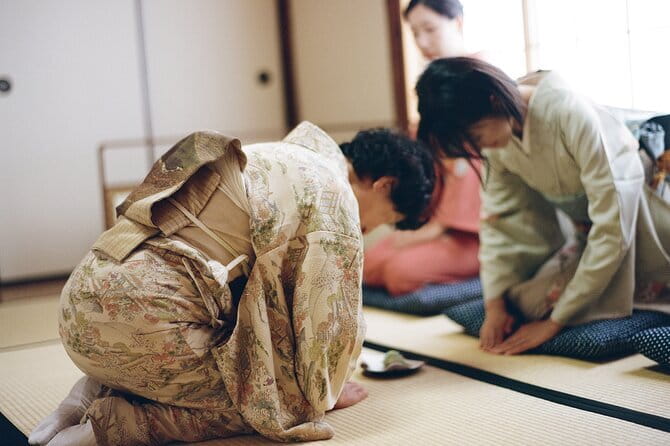
The finished meal includes one soup and five side dishes. That is a generous spread for a three-hour class, though the exact dish names and full menu are not provided in advance.
The emphasis is on vegetable-based cooking. One description identifies the menu as miso soup and five additional dishes based on vegetables. Fish and eggs may also be used, so you should treat the class as mostly vegan rather than automatically vegan.
This broad menu is the heart of the experience. Instead of leaving with one recipe, you get a working picture of how several small dishes share a table. The format also gives you more chances to compare flavors and cooking methods.
You will help prepare the food, plate it, and then eat what you have made. The presentation is part of the lesson. Japanese cooking often gives attention to color, arrangement, and the relationship between the dish and the plate. The class information says the food is beautifully presented, and the cooking format includes time for plating before the meal.
Do not expect a fast-paced professional kitchen. The class is designed for overseas visitors, with explanations in English and Japanese and time for questions. That makes it a better choice for learning than for anyone who wants to race through recipes and finish early.
Eating together, then finishing with matcha
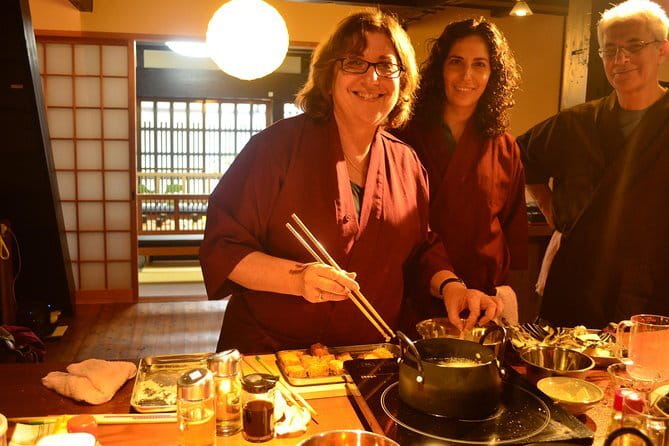
After cooking and plating, you eat the meal at the same venue. This gives the class a natural rhythm: demonstration, preparation, plating, and a shared table.
The meal is not an extra tasting added at the end. It is the result of the work you have just done. That makes the food more useful to remember, since you can connect each dish with the method and ingredients used to prepare it.
Matcha tea is served after the meal. The tea provides a calm finish and gives you one more chance to ask about Japanese food customs. The class information does not promise a formal tea ceremony, so think of matcha as a closing drink rather than a separate cultural performance.
The class is also suited to conversation. You can ask questions about Japanese cuisine, tools, and culture throughout the session. One particularly nice detail from the class experience is the personal exchange around cooking: the instructor has been described as interested in participants’ own cooking experiences, not simply focused on delivering a fixed speech.
What the small private format means
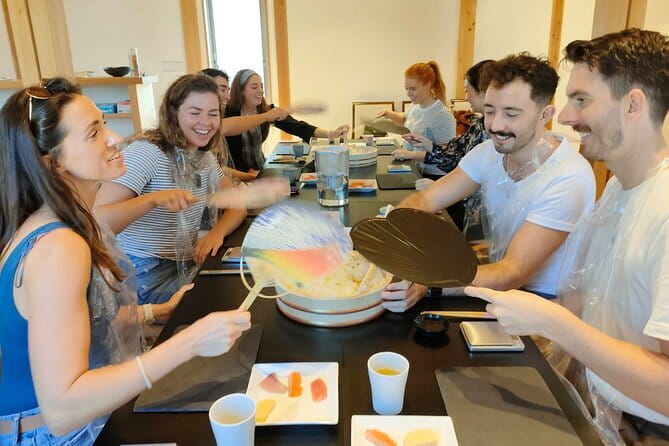
This is described as a private activity, with only your group taking part. That makes the experience a good match for families, couples, or friends who want a quieter lesson.
A small format also helps if you have food restrictions or many questions. You can explain your needs before the class and discuss them directly with the instructor. One class group included only three people, which gives you a useful sense of the intimate scale, though the maximum group size is not stated.
Private does not mean fully customized. The core menu remains one soup and five side dishes, and the class is held on Tuesdays at 11:30 am. You should choose it for the established Japanese meal and teaching style, not because you expect to design every dish yourself.
The bilingual format is another strength. Instruction is given in English and Japanese, so you can follow the cooking and ask questions without relying only on gestures or printed recipes. The exact balance between the two languages may vary during the session.
Is $71.67 a fair price?
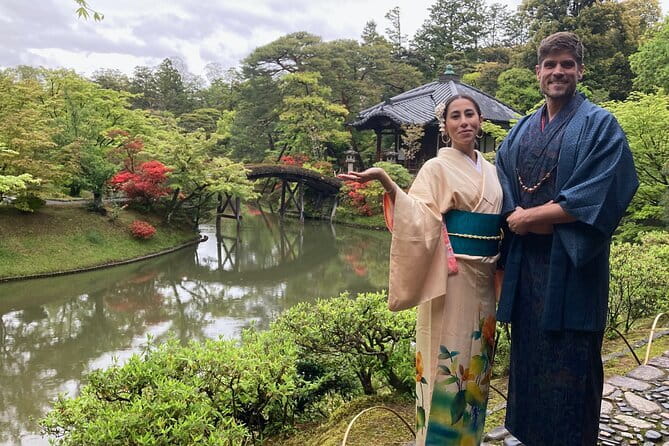
The listed price is $71.67 per person. For about three hours, that covers the cooking instruction, ingredients, meal, matcha, utensils, recipes, writing materials, and taxes and fees.
I see the value in the complete format. You are not paying only for a demonstration or only for lunch. You receive instruction in several parts of a Japanese meal, then eat the finished food. Recipes and writing supplies also make the class more useful after your trip.
The price is less compelling if your main goal is simply to eat inexpensive Japanese food. Kyoto has many cheaper meals, and this activity requires a three-hour commitment. You are paying for the teaching, the private setting, the ingredients, and the chance to ask questions.
Compared with a large group workshop, the private arrangement may justify the cost for families and small parties. It also removes some of the uncertainty around dietary needs. Still, the menu is mostly vegetable-based and the class runs only once a week, so check that the format fits your interests before booking.
Who should book this class?
I would recommend this experience to you if you want to understand Japanese home cooking rather than collect a single flashy recipe. It suits people who enjoy asking questions, taking notes, and eating a meal built from several small dishes.
It is also a strong choice for vegetarians and many vegans, provided you explain your needs ahead of time. The food is mostly vegan, but fish and eggs may be used unless you request a completely vegan diet.
Families may like the private setup, especially if children or older relatives would benefit from a slower pace. The class does not describe special child pricing or a separate children’s menu, so confirm any age-related needs before booking.
You should think twice if you want sushi rolling, a market visit, a formal tea ceremony, or a class centered on meat and seafood. None of those elements is promised. This is a home-style meal lesson with a focus on vegetables, rice, soup, miso, and side dishes.
The Tuesday schedule is the other key limitation. If your Kyoto plans are tight, the fixed day may make this hard to fit. The time is also set at 11:30 am, so you will need to keep the middle of your day free.
Booking and practical details
Confirmation is provided at the time of booking. The ticket is mobile, so you can keep the booking on your phone.
The meeting point is 411-2 Kujōchō, Minami Ward, Kyoto, 601-8473, Japan. The activity ends at the same place, and private transportation is not included. The location is near public transportation and about a five-minute walk from Kyoto Station.
Service animals are allowed. If you have allergies, contact the provider in advance. Do the same if you need a fully vegan meal, since the standard menu may include fish or eggs.
Free cancellation is available if you cancel at least 24 hours before the 11:30 am start time. Cancellations or changes made within 24 hours are not accepted for a refund, and the cut-off follows Kyoto local time.
Should you book it?
Book this class if you want a personal, food-focused look at Kyoto cooking, especially if you enjoy vegetables, miso, rice, and small side dishes. The clay-pot rice, fermentation lesson, private format, and complete meal give the three hours a clear purpose.
Skip it if you want a flexible schedule, a famous specialty dish, or a menu built around meat and seafood. For the right person, $71.67 is fair because the price includes instruction, ingredients, lunch, matcha, recipes, and a small setting near Kyoto Station. Just request dietary adjustments early and make sure Tuesday works for your itinerary.
FAQ
Where does the Japanese cooking class take place?
The class takes place at 411-2 Kujōchō, Minami Ward, Kyoto, 601-8473, Japan. The venue is a Kyoto machiya exhibition room near Toji Temple, about a five-minute walk from Kyoto Station.
What time does the class start?
The class starts at 11:30 am.
How long does the cooking class last?
The experience lasts approximately three hours.
Is the class held every day?
No. The class takes place every Tuesday.
What food will I prepare?
You will help prepare rice, soup, and several side dishes. The completed meal includes one soup and five side dishes. The menu is mainly based on vegetables.
Is the class vegan?
Most ingredients are vegan, but fish and eggs may also be used. If you want a completely vegan meal, send a request in advance.
Is instruction available in English?
Yes. The class is conducted in both English and Japanese.
What is included in the price?
The price includes all fees and taxes, cooking utensils, recipes, and writing implements. The prepared meal and matcha tea are part of the class experience.
Can I cancel for a full refund?
Yes, if you cancel at least 24 hours before the experience start time. Cancellations or changes made less than 24 hours before the start are not accepted for a refund.
Just added around Kyoto
- Private Cooking Class Udon in Kyoto Japan★ 5.0 · 23 reviews
- Private Plant-Based Japanese Cooking Class – Kyoto Edition★ 5.0 · 15 reviews
- Private Kyoto Sushi Cooking Class & Tea Ceremony with Emika★ 5.0 · 66 reviews
- Private Guided Traditional Buddhist Cooking in Japan★ 5.0 · 16 reviews
- Kyoto Wagashi(Japanese sweets) Cooking Class near Fushimiinari★ 5.0 · 60 reviews
- Private Kyoto Market Tour and Authentic Cooking Class with Aki★ 5.0 · 15 reviews
- Nishiki Market, Private Sushi class & Sake Tasting in Townhouse★ 5.0 · 6 reviews
- Private Kyoto Cooking Class with Aki in a Beautiful Wooden House★ 5.0 · 12 reviews
Japanese & Sushi Cooking Classes, compared.
Sushi Making Tokyo Roll and Authentic Japanese Sushi Class
Read our review →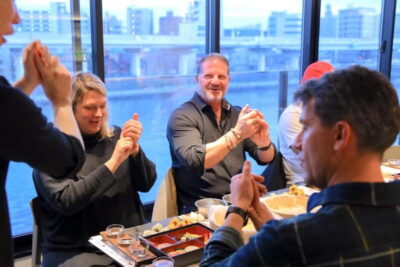
Tokyo: Roll and Authentic Sushi Making Class in Asakusa
Read our review →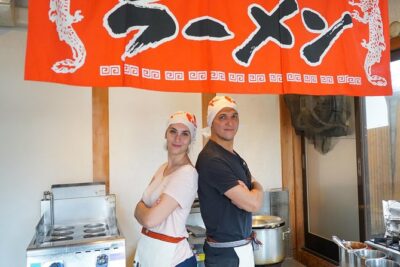
Ramen Cooking Class at Ramen Factory in Kyoto
Read our review →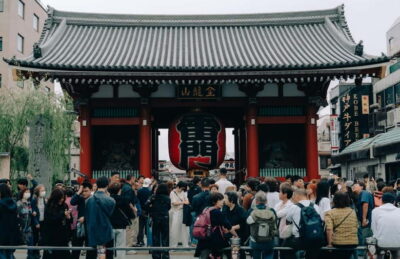
Tokyo: Sushi Making Class in a Happi Coat near a Famous Spot
Read our review →
Sushi Making Tokyo! Popular Maki Sushi & Japanese Sushi(+Recipe!)
Read our review →
Sushi Making Osaka Roll and Authentic Japanese Sushi Class
Read our review →
Tokyo Sushi Making Class in Tsukiji with Professional Chef
Read our review →
Ramen & Gyoza Cooking Class in Tokyo with Local Supermarket Visit
Read our review →Browse the lists this tour appears in