
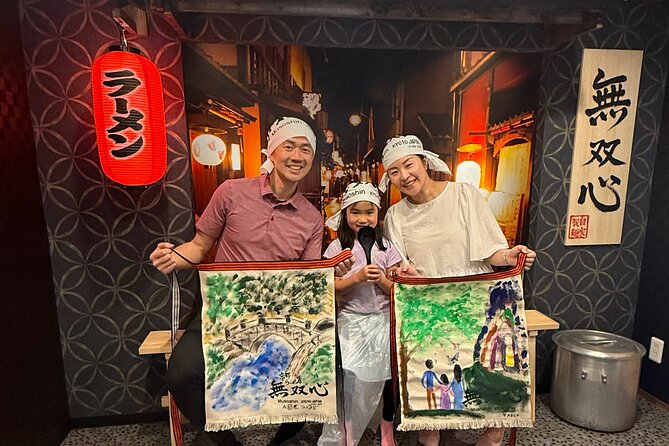
Review · KYOTO
Kyoto Ramen Bowl Painting and Michelin Cooking Class
The unusual heart of this Kyoto experience is that you do not simply eat ramen. Chef Shin teaches you to make it, then you paint the bowl that holds your meal. The class uses ingredients from the nearby Musoshin Gion shop, giving the lesson a real restaurant connection rather than a generic cooking-school feel.
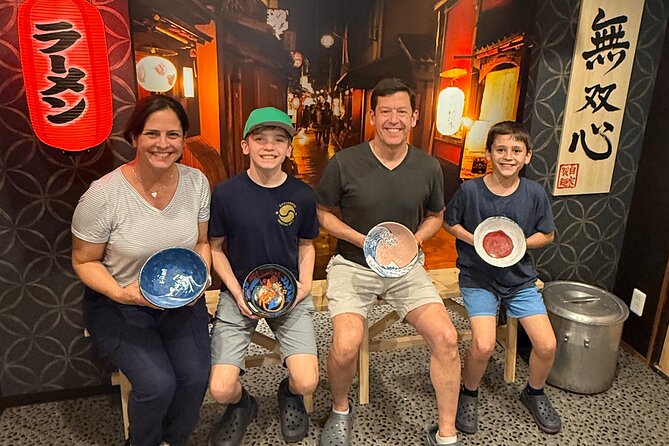
I like the small maximum of 12 people and the choice of vegetarian or vegan ramen. I also like the bowl souvenir: you can take it home unfired, or have it baked for later use. The main catch is that the class lasts about 90 minutes, and the bowl must be collected the next morning or later if you choose the oven option.
Key points
- Chef Shin leads the ramen lesson, with plenty of room for questions about the recipe and cooking process.
- The class takes place at Musoshin Ramen Academy, run by the same restaurant group behind locations in Kyoto and Toronto.
- Vegetarian and vegan ramen are available, making this more flexible than many Japanese cooking classes.
- You paint a ramen bowl upstairs, creating a useful souvenir rather than buying another ordinary trinket.
- A baked bowl requires a second visit, so plan to remain in Kyoto until the next morning or arrange your schedule around pickup.
- The listed price is $78.18 per person, covering a hands-on meal, bowl painting, and a bandana souvenir.
What makes this Kyoto ramen class different
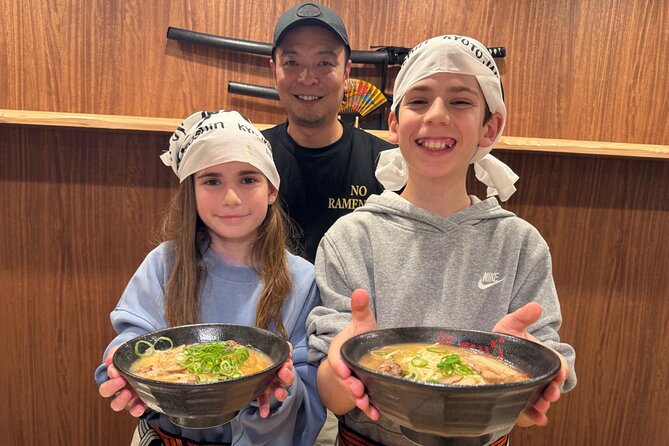
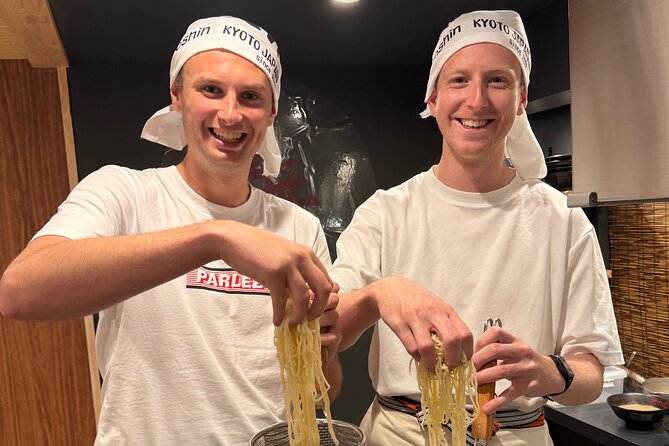
Many food activities in Japan focus on watching a chef work, then eating the result. This one puts you in the middle of the process. On the first floor, you prepare ramen under instruction from Musoshin’s chef. On the second floor, you paint the bowl itself.
That combination gives the experience a nice rhythm. The cooking answers the practical question of how ramen comes together. The painting adds a slower, personal part that connects the meal to Japanese tableware. You leave with more than a full stomach, at least if you choose the baked-bowl option.
Musoshin Ramen Academy is operated by Musoshin Ramen. The business has three locations in Kyoto and three in Toronto. Its Toronto location has received three Michelin nominations, which helps explain the class’s Michelin-linked presentation. The lesson is not just a cooking demonstration attached to a sightseeing company. It comes from a ramen restaurant with its own shops and recipes.
Chef Shin is the key personality here. The available comments describe him as the owner and chef who hosts the class, talks with the group, and answers questions about both the recipe and his love of food. That matters in a class this short. A clear, personable teacher can make 90 minutes feel focused rather than rushed.
More Sushi and Japanese Classes in Kyoto:
- Ramen Cooking Class at Ramen Factory in Kyoto
★ 5.0 · 1,937 reviews - Sushi Making in Kyoto! Same-day bookings welcome!
★ 5.0 · 713 reviews - Kyoto: Ramen Cooking Class at a Ramen Factory with Souvenir
★ 4.9 · 532 reviews
Cooking ramen with ingredients from Musoshin Gion
The ingredients used in the class come from the nearby Musoshin Gion shop. They are described as ingredients prepared by the chef the day before, which gives the lesson a direct link to the restaurant’s working kitchen.
You should expect instruction rather than a free-form cooking session. Chef Shin guides you through making the ramen and explains the recipes. The supplied information does not give a full step-by-step menu, ingredient list, or details on which components you prepare yourself, so it would be wrong to promise that you will make every part from scratch.
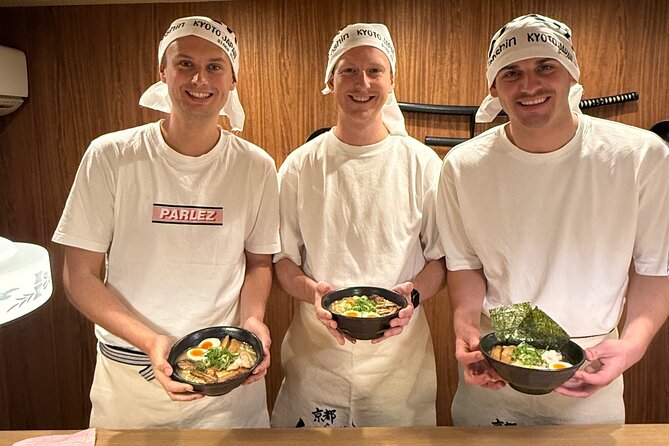
What you can count on is a hands-on lesson followed by eating the ramen you prepared. That is an important difference from a ramen tasting. You get to see how the pieces fit together, then judge the final bowl with your own appetite as the critic.
The restaurant connection also adds value. You are not learning a random home recipe assembled for tourists. You are working with ingredients tied to Musoshin’s Gion operation and a chef who knows the shop’s food from the inside.
The class is also friendly to different diets. Ramen often presents a problem for vegetarians and vegans because of meat-based broths and toppings. Here, vegetarian and vegan ramen can be requested, making the activity a more practical choice for a mixed group. Be sure to select or communicate the needed option when booking if the reservation system provides that choice.
Painting your bowl on the second floor
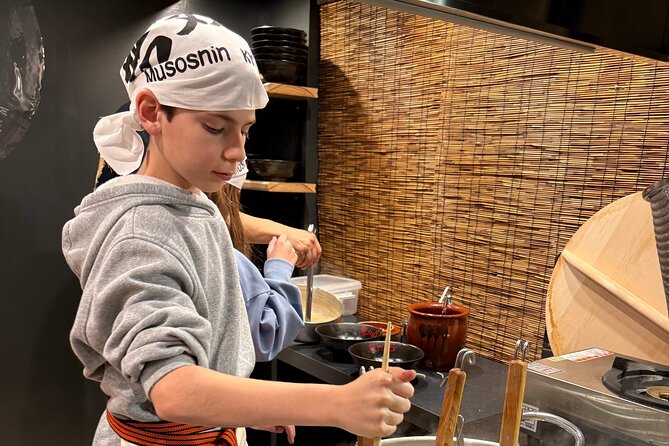
After the cooking portion, you go upstairs to paint a ramen bowl. This is the part that gives the class its strongest souvenir value.
You can take the painted bowl home as it is. The free alternative is to place it in a special oven so the design is baked onto the bowl. If you choose that option, you collect the finished bowl the next morning or later.
That second visit is the main planning detail to take seriously. If Kyoto is only a brief stop and you leave the city immediately after the class, the oven option may not suit you. In that case, taking the painted bowl home without baking is simpler. The information does not state how the unfired bowl is packaged or how long the firing takes, so ask the staff about handling and pickup before you commit.
For a longer Kyoto stay, the baked option is appealing. It turns a short activity into a useful household object with a clear connection to your time in Japan. You can use the bowl for meals, rather than placing it in a drawer with a pile of unneeded souvenirs.
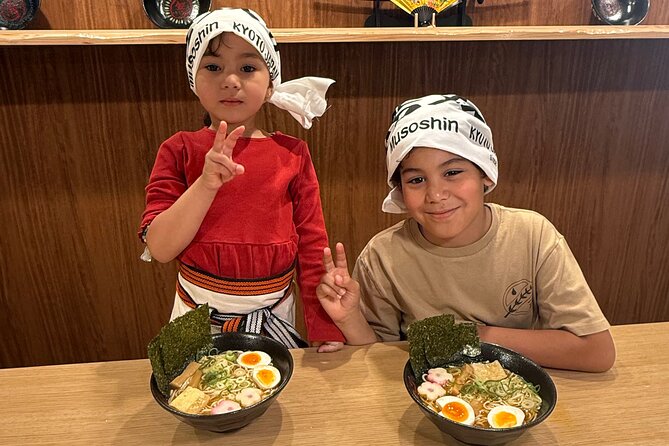
The painting section may also work well for families. A 12-year-old took part successfully with parents, and the activity offers a change of pace from temple visits and crowded streets. Younger children may need help with the cooking or painting, but the group size is small enough for the instructor to keep an eye on the room.
Understanding the 90-minute format
The advertised duration is about one hour and 30 minutes. That is long enough for a proper introduction, cooking, eating, and bowl painting, but not long enough for a slow, technical chef’s course.
I would think of this as a compact cultural activity rather than professional culinary training. You get a taste of restaurant technique, a meal, and a craft project in one sitting. If your main goal is to master ramen broth at home, you may want more detail than this format can provide. If your goal is to understand the food, meet the chef, and do something distinctly Japanese, the timing makes sense.
The class size, capped at 12 people, helps. It is not a private lesson, but it is small enough to avoid the feel of a large demonstration. Chef Shin can answer questions, and participants have a chance to take part rather than simply watch from the back.
The exact balance between cooking and painting is not specified. If one part matters more to you, ask at the start how the session is structured. That is especially sensible if you need to leave at a fixed time.
More Hands-On Workshops in Kyoto:
- Kyoto: Ramen, Gyoza, and Onigiri Cooking Class
★ 5.0 · 445 reviews - The Original Small-Group Sushi Making Class in Kyoto
★ 5.0 · 436 reviews - Kyoto: Japanese Washoku Bento Small Group Cooking Class
★ 5.0 · 380 reviews - Kyoto Ramen and Gyoza Cooking Class with Professional Chefs
★ 5.0 · 282 reviews
The Kyoto setting near Higashiyama
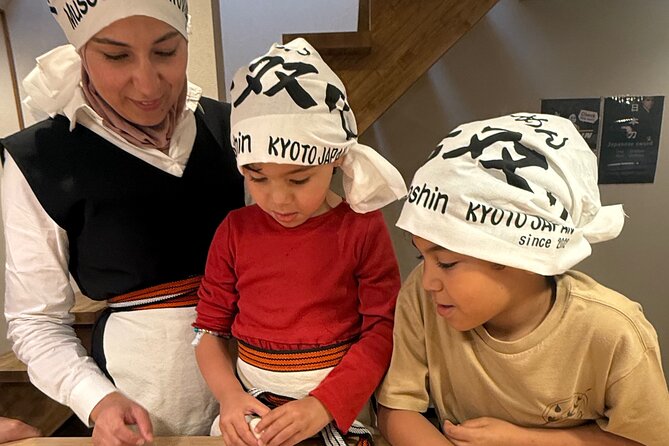
The meeting point is 440-5 Nishigomoncho in Kyoto’s Higashiyama Ward, postal code 605-0816. The activity is near public transportation, and it returns to the same meeting point.
This location puts the class in a part of Kyoto commonly used for temple sightseeing and traditional streets. The listed itinerary names Kiyomizu-dera, Kennin-ji, and Sanjusangendo Temple. The information does not clearly explain whether these are included guided stops, suggested nearby points, or route markers connected to the booking. The cooking class itself is at the Nishigomoncho meeting point, so do not assume that temple admission, guiding, or visits are included.
That uncertainty matters because the class lasts only about 90 minutes. You can sensibly pair it with sightseeing in Higashiyama, but allow time to reach the meeting point and confirm exactly what is covered. Kiyomizu-dera and Kennin-ji are useful landmarks when planning the day, while Sanjusangendo is another major temple in the broader area. None should be treated as part of the class unless the provider confirms it.
The return to the starting point is convenient. You do not need to coordinate a separate end location after eating. Since the class includes food, painting materials, and possibly a bowl to carry, returning to the meeting point also makes the logistics easier.
Is $78.18 a fair price?
At $78.18 per person, this is more expensive than simply ordering ramen at a restaurant. That comparison misses the point, though. The price covers instruction, a prepared meal that you make yourself, bowl painting, a bandana souvenir, and the option to have the bowl fired at no extra cost.
The value depends on how much you want the activity rather than just the food. If you want a quick lunch, buy ramen elsewhere. If you want a cooking lesson with a restaurant chef plus a handmade souvenir, the price is easier to justify.
The baked bowl adds the most lasting value, provided you can return for pickup. A bandana is a pleasant extra, but the bowl is the souvenir that gives the experience a longer life. The vegetarian and vegan options also improve the value for groups with different diets, since everyone can take part in the same class.
The strongest value comes for people who enjoy food, crafts, and small-group activities. You are paying for participation and conversation, not for a luxury meal or a full culinary qualification.
Who will enjoy this most
I would recommend this class to several kinds of visitors:
- Food lovers who want to understand how a ramen restaurant approaches its recipes.
- Families looking for a hands-on activity that works for adults and older children.
- Vegetarians and vegans who often have fewer choices in Japanese cooking classes.
- Couples and friends who want a shared souvenir with a personal design.
- Visitors staying overnight in Kyoto who can return for a fired bowl.
- First-time Japan visitors who want an activity tied to a familiar Japanese food rather than a formal museum visit.
It may be less suitable if you want a long, technical cooking lesson, dislike craft activities, or leave Kyoto on the same day. It is also not the best pick if you are looking for an expansive sightseeing tour. The temple names connected with the itinerary should not lead you to expect a full temple tour.
Practical planning for your day
The class uses a mobile ticket, and confirmation is provided at booking. The group maximum is 12 people, so you should still arrive with enough time to find the address without rushing.
Wear something comfortable for cooking and painting. The information does not specify dress rules, protective clothing, or whether bags can be stored, so keep your outfit practical and avoid bringing anything you would worry about around food or paint.
Plan the class as one fixed block in your day. Because the end point is the meeting point, you can arrange a nearby meal or sightseeing afterward, but do not make a tight connection based only on the 90-minute estimate. Cooking classes can run slightly over when questions, dietary requests, or bowl painting take longer.
The cancellation rule is reasonable but firm. You receive a full refund if you cancel at least 24 hours before the start time. Cancellations or changes made less than 24 hours ahead are not accepted for a refund, and the cut-off uses Kyoto local time.
Should you book the Musoshin ramen experience?
Book it if you want a compact, personal activity that combines restaurant ramen, a chef-led lesson, and bowl painting. The class has a clear identity, good dietary flexibility, and a useful souvenir. Chef Shin’s direct involvement is a major reason to choose it over a generic cooking workshop.
Think twice if you are passing through Kyoto for only one day and cannot return for the fired bowl. You can still take the painted bowl home, but confirm how that works. Also clarify the role of the listed temple stops before booking, since the available details do not establish that they are included visits.
For most food-loving visitors with 90 minutes to spare, the class offers good value at $78.18. It is not merely a ramen lunch, and it is not an all-day tour. It is a focused Kyoto memory you can eat, paint, and, with a second pickup, use at home.
FAQ
Where does the ramen and bowl-painting class meet?
It meets at 440-5 Nishigomoncho, Higashiyama Ward, Kyoto, 605-0816, Japan.
How long does the experience last?
The activity lasts approximately one hour and 30 minutes.
Where does the experience end?
It ends back at the meeting point.
Is the class available for vegetarians and vegans?
Yes. The ramen can be changed to vegetarian or vegan ramen.
Who teaches the ramen class?
Chef Shin, who is also described as the owner and chef, hosts the class and teaches participants how to make the ramen.
Can I take the painted bowl home?
Yes. You can take the painted bowl home as it is, or use the free oven option to have it baked.
When can I collect the baked bowl?
You can collect the baked bowl the next morning or later.
What is the cancellation policy?
You can cancel at least 24 hours before the start time for a full refund. Cancellations or changes made less than 24 hours before the experience are not accepted for a refund.
Just added around Kyoto
- Private Cooking Class Udon in Kyoto Japan★ 5.0 · 23 reviews
- Private Plant-Based Japanese Cooking Class – Kyoto Edition★ 5.0 · 15 reviews
- Private Kyoto Sushi Cooking Class & Tea Ceremony with Emika★ 5.0 · 66 reviews
- Private Guided Traditional Buddhist Cooking in Japan★ 5.0 · 16 reviews
- Kyoto Wagashi(Japanese sweets) Cooking Class near Fushimiinari★ 5.0 · 60 reviews
- Nishiki Market, Private Sushi class & Sake Tasting in Townhouse★ 5.0 · 6 reviews
- Private Kyoto Cooking Class with Aki in a Beautiful Wooden House★ 5.0 · 12 reviews
- Private Kyoto Market Tour and Authentic Cooking Class with Aki★ 5.0 · 15 reviews
Japanese & Sushi Cooking Classes, compared.
Sushi Making Tokyo Roll and Authentic Japanese Sushi Class
Read our review →
Tokyo: Roll and Authentic Sushi Making Class in Asakusa
Read our review →
Ramen Cooking Class at Ramen Factory in Kyoto
Read our review →
Tokyo: Sushi Making Class in a Happi Coat near a Famous Spot
Read our review →
Sushi Making Tokyo! Popular Maki Sushi & Japanese Sushi(+Recipe!)
Read our review →
Sushi Making Osaka Roll and Authentic Japanese Sushi Class
Read our review →
Tokyo Sushi Making Class in Tsukiji with Professional Chef
Read our review →
Ramen & Gyoza Cooking Class in Tokyo with Local Supermarket Visit
Read our review →Browse the lists this tour appears in