
Review · KYOTO
Kyoto Uji and Nara Tour with Sushi Making Experience
Kyoto and Nara pack centuries of temples, shrines, food, and local traditions into one long day. This tour gives you a taste of all four, beginning with Byodoin Temple and Uji matcha before heading to Nara for hands-on sushi making, the Great Buddha, Kasuga Taisha, and the famous deer of Nara Park.
I like the mix of sightseeing and participation. You are not just looking at temple roofs all day: you learn to prepare matcha, make your own lunch, and then eat what you made. I also like the air-conditioned bus, which saves you from piecing together several train rides and keeps the route manageable.
The tradeoff is pace. Six stops in about 10 hours means you will see a lot, but you will not study every site at leisure. Add summer heat, crowds, traffic, and plenty of walking, and this is best for someone who values range over a slow, scholarly visit.
Key points to know before booking
- Byodoin begins the day with Kyoto’s most recognizable pond view: The Phoenix Hall and its reflection are the visual centerpiece, while the temple’s image on the 10-yen coin gives the visit an easy bit of context.
- Uji matcha is prepared, not simply sampled: At Mitsuboshien Kanbayashi Sannyu Main Shop, you take part in a traditional matcha-making session lasting about 45 minutes.
- Lunch is an activity as well as a meal: At Umemori Sushi School Nara Campus, you make sushi with an instructor and eat your own work.
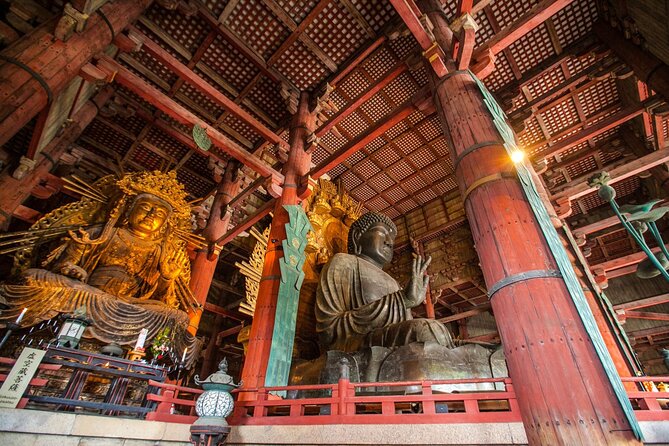
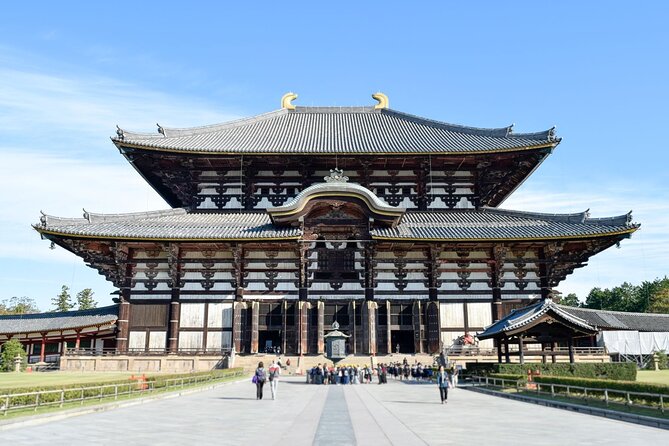
- Todaiji supplies the biggest historical spectacle: The Great Buddha is about 15 meters tall and sits inside one of the world’s largest wooden structures.
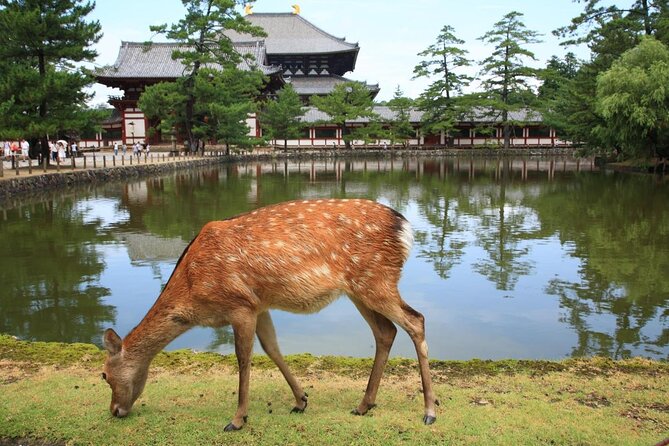
- Nara Park adds an informal finish: Deer roam freely, making this the least structured and most playful stop of the day.
- The schedule rewards punctual walkers: Meet 15 minutes early, wear good shoes, and do not count on the bus waiting for late arrivals.
Why this Kyoto and Nara route works

At $103, this is a strong value if you want transportation, admissions, lunch, and two food activities handled in one booking. Byodoin and Todaiji entrance fees are included, as are the matcha and sushi sessions. You also avoid paying separate fares while moving between Kyoto, Uji, and Nara.
The value is less clear if you already know the region well or prefer to linger. A self-guided day could give you more time at one or two temples, and you would have greater control over lunch. Here, you are paying for organization and range. The bus links several places that would otherwise require careful planning, and an English-speaking guide provides orientation along the way.
The tour lasts about 10 hours and can have up to 40 people. That is a fairly large group, though the bus keeps the long transfers simple. The day begins at 8:00 a.m. from the listed meeting location in Kyoto and ends back there. Final departure details may change, so check the information sent before the tour rather than relying only on the original time.
More Sushi and Japanese Classes in Kyoto:
- Ramen Cooking Class at Ramen Factory in Kyoto
★ 5.0 · 1,937 reviews - Sushi Making in Kyoto! Same-day bookings welcome!
★ 5.0 · 713 reviews - Kyoto: Ramen Cooking Class at a Ramen Factory with Souvenir
★ 4.9 · 532 reviews
Byodoin Temple and the Phoenix Hall
Byodoin is a smart first stop because it gives you a beautiful introduction to Uji without asking you to spend the whole morning inside a crowded urban center. The temple sits beside a pond, and its Phoenix Hall is designed to be admired across the water. When the surface is calm, the reflection helps explain why this image appears on the Japanese 10-yen coin.
You have about 1 hour and 10 minutes here, with admission included. That should allow time for the main grounds, photographs, and a measured look at the architecture. It is enough for a highlights visit, but not an extended study of every building.
One detail matters when you plan your expectations: entry to the interior of Phoenix Hall is not included. The tour covers the main Byodoin admission, but the special interior visit costs extra. If entering the hall is important to you, check the arrangements and availability rather than assuming it is part of the standard visit.
The pond setting is the main reward. Bring a camera, but also give yourself a few minutes to simply look across the water. This is one of those places where a hurried group can make a peaceful site feel rushed.
Preparing matcha in Uji
Uji is closely associated with high-quality matcha, so the tea session gives the day a local connection that a quick temple stop alone would miss. At Mitsuboshien Kanbayashi Sannyu Main Shop, you spend about 45 minutes learning how to prepare matcha in a traditional style.
This is not just a drink break. You handle the preparation yourself, which makes the visit more memorable and gives you a practical link to Uji’s tea culture. The experience fee is included, so you do not need to budget separately for the activity.
The session is also a useful change of rhythm. After walking around Byodoin, you get a seated, guided activity before the group moves on to lunch and Nara. Still, 45 minutes passes quickly. You should expect an introduction and hands-on preparation rather than a long tea ceremony or a detailed course on tea production.
If you have allergies or dietary restrictions, provide that information when booking. Beverages beyond what is included are not covered, so bring some spending money if you want additional drinks during the day.
Making sushi for lunch in Nara
The sushi lesson is the tour’s most unusual feature. At Umemori Sushi School Nara Campus, an instructor teaches you the basics, and the session lasts about 1 hour and 30 minutes. You then eat the sushi you make for lunch.
That setup gives you a more active meal than the usual group-tour restaurant stop. You get a simple introduction to sushi preparation, a chance to work with your hands, and a meal built into the schedule. Lunch is included, which helps the $103 price make sense.
Keep your expectations practical. This is a group class during a tightly planned day, not a private cooking lesson. The experience is meant to be accessible and fun, not a professional sushi course. The quality of the meal may also depend on your own taste and on how much time the class has to work with.
The tour specifically asks you to report allergies and dietary restrictions at booking. Do not wait until lunchtime to raise the issue. Beverages are not included, so those are an extra cost.
Same place, a different menu:
- Kyoto: Ramen, Gyoza, and Onigiri Cooking Class
★ 5.0 · 445 reviews - The Original Small-Group Sushi Making Class in Kyoto
★ 5.0 · 436 reviews - Kyoto: Japanese Washoku Bento Small Group Cooking Class
★ 5.0 · 380 reviews - Kyoto Ramen and Gyoza Cooking Class with Professional Chefs
★ 5.0 · 282 reviews
Kasuga Taisha’s lantern-lined setting

Kasuga Taisha is one of Nara’s major Shinto shrines and part of the UNESCO-listed Historic Monuments of Ancient Nara. Your visit lasts about 45 minutes, and there is no separate admission fee for this stop.
The shrine is known for its sacred atmosphere and lanterns. Even with limited time, you can get a sense of why it matters as a place of worship, not only as a photo stop. The setting also provides a useful contrast with the Buddhist architecture at Byodoin and Todaiji.
Forty-five minutes is enough to see the main area and take photographs, but it is not enough for a slow exploration of every path and building. Stay aware of the meeting time. The bus cannot wait for a long detour, and traffic later in the day can put pressure on the schedule.
Todaiji and the Great Buddha
Todaiji is likely to be the day’s grandest stop. Inside the Great Buddha Hall, you see a colossal Buddha about 15 meters tall. The hall itself is the real shock: it is one of the largest wooden structures in the world.
The tour includes Todaiji admission and allows about one hour. That gives you time to enter the hall, see the Great Buddha, take in the scale of the building, and walk through the main grounds. You will want to look up often. The size of the statue and the timber interior are difficult to appreciate in a quick photograph.
This is a place where a guide can add useful context, especially if you are unfamiliar with Japanese Buddhism or the role of major temple complexes. The English guide can also help keep the group moving through a busy site.
One hour is not generous. If you want a quiet, detailed visit, you may wish you had more time. On the other hand, the tour’s purpose is to connect several major places in one day, and Todaiji delivers a powerful impression even on a short visit.
Meeting Nara’s free-roaming deer
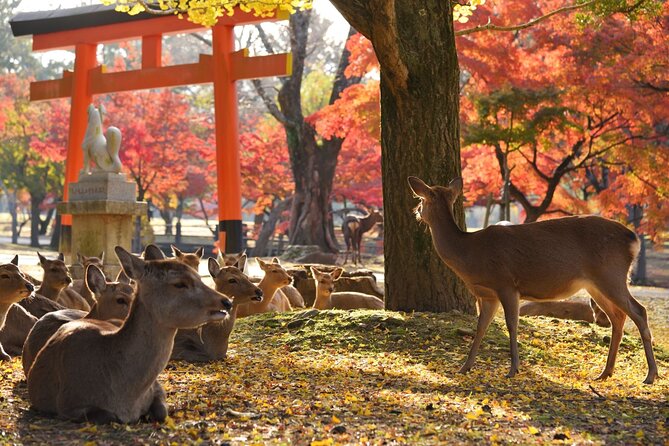
Nara Park gives you 30 minutes for one of Japan’s most recognizable encounters: deer moving freely through a public park. This is a welcome change after the formal spaces of temples and shrines.
The short stop is mainly for seeing the deer and taking photos. The animals are a memorable part of Nara, but keep your attention on your belongings and your surroundings. The tour information places responsibility for valuables with you, and anything left on the bus may be disposed of, so check your seat and bags before leaving each stop.
Half an hour can feel brief, especially if the park is busy or the deer are spread out. Treat it as a focused photo and orientation stop rather than a long park walk. You will also have just visited Todaiji, so the two stops work well together.
Walking, heat, traffic, and group pace
The tour covers a lot of ground, and good walking shoes are essential. You will move through temple grounds, shrine paths, park areas, and bus stops. Even though the vehicle handles the long connections, this is not a seated sightseeing day.
The air-conditioned bus is a real advantage in warm weather. It gives you a place to cool down between sites and removes the strain of navigating multiple train connections. The tradeoff is that road traffic can delay the route. On busy weekends, holidays, and event days, visits may be shortened or arrival times pushed later.
The group can include up to 40 people. That size may feel efficient on the bus but less personal at busy sites. The English guide can offer local suggestions and practical help, yet the amount of explanation you receive may vary with traffic, group movement, and the guide assigned that day.
Arrive at least 15 minutes early. The bus follows its schedule and will not wait for late arrivals. A missed departure means no refund, so the early start is not the moment to cut things close.
Who should book this day tour
I would choose this tour if you have limited time in Kyoto and want a structured introduction to Uji and Nara. It suits first-time visitors who want the major sights without planning transport, admissions, lunch, and activities separately.
It is also a good fit if you like variety. In one day, you see a pondside temple, prepare tea, make sushi, visit a major Shinto shrine, enter a huge Buddhist hall, and watch deer in a public park. That range is the main selling point.
I would be more cautious if you dislike fixed schedules, large groups, or quick visits. You may find the day stressful if you need long breaks, want detailed historical interpretation, or prefer to decide spontaneously how long to stay. The route is full, and traffic can make it feel even tighter.
The activity is generally suitable for most people, but it requires walking and punctuality. Weather can also affect operations. If poor weather or a natural disaster forces cancellation, you are offered another date or a full refund. The experience also requires a minimum number of participants, so a cancellation for that reason comes with the same choice of an alternative or refund.
Final verdict: a high-value day with a fast rhythm
Book this tour if your priority is seeing the headline sights of Uji and Nara while adding two hands-on Japanese food experiences. The included bus, lunch, entrance fees, matcha session, and sushi class provide solid value at $103, especially for a first visit.
Skip it if your ideal day means sitting quietly at one temple, taking long meals, or exploring Nara without a clock. This route is busy by design. Pack light, wear comfortable shoes, arrive early, and accept that you are collecting strong first impressions rather than mastering every site.
FAQ
How long does the Kyoto, Uji, and Nara tour last?
The tour lasts about 10 hours. The listed start time is 8:00 a.m., and the activity ends back at the meeting point.
What is included in the price?
The price includes an air-conditioned vehicle, lunch, an English-speaking guide, Byodoin admission, Todaiji admission, the sushi-making experience, and the matcha-making experience.
Is the interior of Byodoin’s Phoenix Hall included?
No. The standard tour includes admission to Byodoin Temple, but the fee for visiting the interior of Phoenix Hall is not included.
Is transportation provided between Kyoto, Uji, and Nara?
Yes. The tour uses an air-conditioned bus for the route and returns to the original meeting point.
Do I need to arrive before the 8:00 a.m. departure?
Yes. You should arrive at least 15 minutes early. The bus departs on schedule and does not wait for late arrivals.
How much walking is involved?
The tour includes walking through temple and shrine grounds, Nara Park, and other sightseeing areas. Good walking shoes are recommended.
Can I mention allergies or dietary restrictions?
Yes. You should provide information about allergies or dietary restrictions when you book the tour.
Can I cancel for a full refund?
You can receive a full refund if you cancel at least 24 hours before the local start time. Cancellations or changes made within 24 hours are not refunded or accepted.
Just added around Kyoto
- Private Cooking Class Udon in Kyoto Japan★ 5.0 · 23 reviews
- Private Plant-Based Japanese Cooking Class – Kyoto Edition★ 5.0 · 15 reviews
- Private Kyoto Sushi Cooking Class & Tea Ceremony with Emika★ 5.0 · 66 reviews
- Private Guided Traditional Buddhist Cooking in Japan★ 5.0 · 16 reviews
- Kyoto Wagashi(Japanese sweets) Cooking Class near Fushimiinari★ 5.0 · 60 reviews
- Private Kyoto Market Tour and Authentic Cooking Class with Aki★ 5.0 · 15 reviews
- Nishiki Market, Private Sushi class & Sake Tasting in Townhouse★ 5.0 · 6 reviews
- Private Kyoto Cooking Class with Aki in a Beautiful Wooden House★ 5.0 · 12 reviews
Japanese & Sushi Cooking Classes, compared.
Sushi Making Tokyo Roll and Authentic Japanese Sushi Class
Read our review →
Tokyo: Roll and Authentic Sushi Making Class in Asakusa
Read our review →
Ramen Cooking Class at Ramen Factory in Kyoto
Read our review →
Tokyo: Sushi Making Class in a Happi Coat near a Famous Spot
Read our review →
Sushi Making Tokyo! Popular Maki Sushi & Japanese Sushi(+Recipe!)
Read our review →
Sushi Making Osaka Roll and Authentic Japanese Sushi Class
Read our review →
Tokyo Sushi Making Class in Tsukiji with Professional Chef
Read our review →
Ramen & Gyoza Cooking Class in Tokyo with Local Supermarket Visit
Read our review →Browse the lists this tour appears in