
Review · OSAKA
Osaka Home Feast Cooking and Sake Experience
Osaka’s best food lesson may begin not at a famous restaurant, but in a neighborhood supermarket. This three-hour evening experience takes you shopping for Japanese ingredients, then into a small cooking studio for takoyaki, wasabi tuna, ponzu chicken, and sake.
I like the supermarket stop, which gives you a look at everyday Japanese food beyond restaurant menus. I also like the friendly, home-drinking setup, where you cook, snack, and eat together rather than simply watch a demonstration. The main consideration is that the class starts at 4:30 pm and is capped at seven people, so it may feel too social for anyone wanting a quiet, private lesson.
Key points to know
- Shop before you cook: Walk to a nearby Japanese supermarket and help think up creative fillings for Osaka-style takoyaki.
- Make a full izakaya spread: Prepare crispy takoyaki, wasabi-marinated tuna, and chicken with green onion, mayonnaise, and ponzu.
- Pair food with sake: Sip handpicked sake during the cooking and meal, with beer and soft drinks also available.
- Learn from a local guide: The English-speaking host leads the shopping and cooking, with guides such as Chie and Nina named in past bookings.
- Small-group format: The maximum group size is seven, though a booking may sometimes be run as a private experience for one person.
- Recipes go home with you: A downloadable recipe pack lets you try the dishes again after returning home.
Starting at Minamimorimachi at 4:30 pm
Your evening begins outside the FamilyMart on the south side of Minamimorimachi Station, at 2-chome 3-10 in Osaka’s Kita Ward. The meeting point is near public transportation, and the activity returns there at the end.
The 4:30 pm start is well chosen for an Osaka food evening. You have time to reach the meeting point after a day of sightseeing, then finish with a substantial meal rather than trying to fit in another dinner. Allow a little extra time to find the station exit and the exact convenience store location.
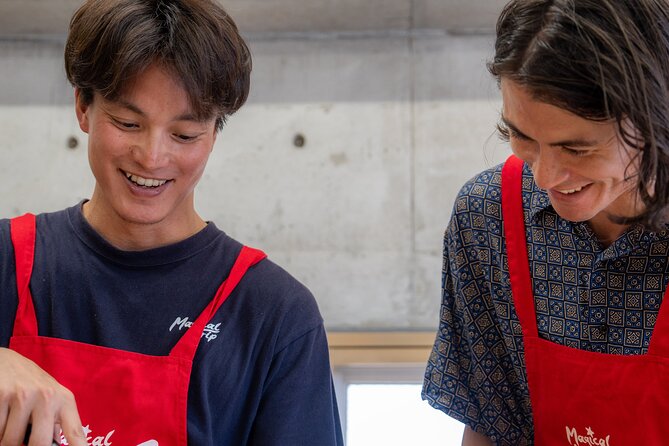
Your guide is English-speaking, but the experience is not built around a formal lecture. It is meant to feel like cooking with a friendly local. Chie has led an especially engaging version of the class, adding background about Japan and answering questions about the country. Nina has also hosted the activity, including a booking where she ran the class for one participant.
Guide names can change, so do not book with the expectation that you will meet a particular person. The important point is the local, conversational format. If you enjoy asking questions while doing something with your hands, this setup should suit you better than a large demonstration class.
More Drink Tastings in Osaka:
- Osaka Sake Tasting with Takoyaki Cooking
★ 5.0 · 156 reviews - Osaka Cooking Class and Sake Tasting with Local Supermarket Visit
★ 5.0 · 79 reviews - Osaka: Cooking Class & Sake Tasting with Local Market Visit
★ 4.8 · 31 reviews
A supermarket walk before the cooking begins
The first real stop is a nearby Japanese supermarket. This is a smart touch. You are not simply handed a tray of premeasured ingredients. Instead, you see the sort of products Japanese shoppers buy and get a chance to think about how familiar and unfamiliar ingredients fit into a home meal.
The guide helps you look for ingredients and brainstorm takoyaki fillings. Osaka’s round, batter-based snack is usually associated with octopus, but this class encourages more playful choices. The exact fillings are not fixed in the information provided, so consider the planning itself part of the fun rather than expecting a set market tour or a particular shopping list.
A supermarket also gives you useful cultural details that a restaurant cannot. One past participant noticed the local custom of shoppers handling their own bags, a small everyday difference that becomes more interesting when you are standing in the store and taking part in the routine.
Do not expect a long food-market visit. The supermarket stop is a working part of the class, designed to lead into the cooking. Its value is practical: you see ingredients in their normal retail setting, ask questions, and get a clearer sense of what you might search for in a Japanese grocery store back home.
Cooking in a cozy studio with an izakaya menu
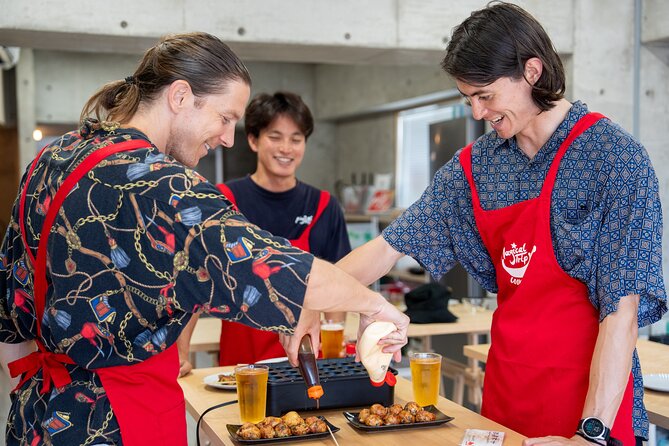
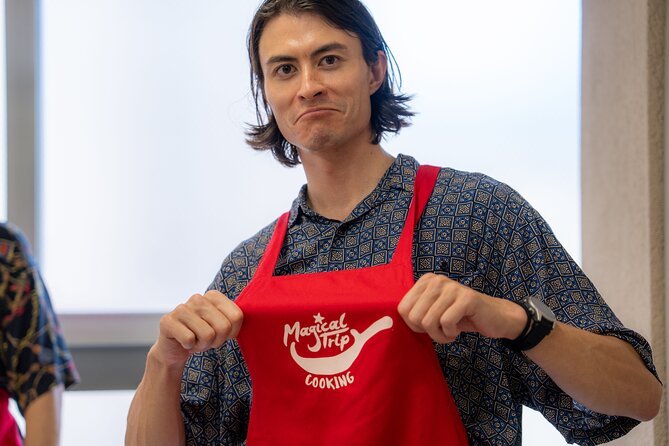
After shopping, you head to a cooking studio and put on a MagicalTrip apron. The meal follows the relaxed spirit of an izakaya, the Japanese-style place where people share small dishes with drinks. Here, you are helping make the food instead of ordering it from a menu.
The evening includes several dishes, so you get more than one cooking technique. The menu features:
- Mugen Cabbage as an early bite
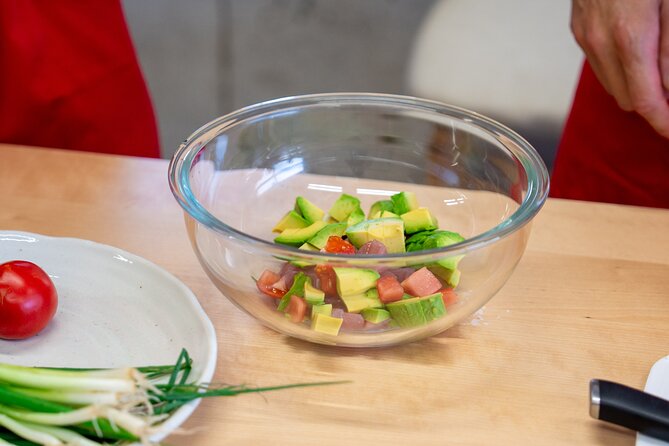
- Wasabi Tuna Salad
- Crispy takoyaki
- Chicken with green onion, mayonnaise, and ponzu
- Handpicked sake pairings with the finished meal
The early snacks matter. Mugen Cabbage and the wasabi tuna give you something to taste while the main dishes are still being prepared. That keeps the evening moving and lets you start learning flavors before the more hands-on takoyaki work begins.
Wasabi-marinated tuna brings a sharp, fresh note to the spread. The chicken combines green onion, mayonnaise, and ponzu, a Japanese citrus-based sauce with a bright, salty tang. These are useful home-cooking ideas because they are not all built around hard-to-find restaurant techniques. You can use the recipes as a starting point for casual meals and drinks with friends.
Learning to make Osaka-style takoyaki
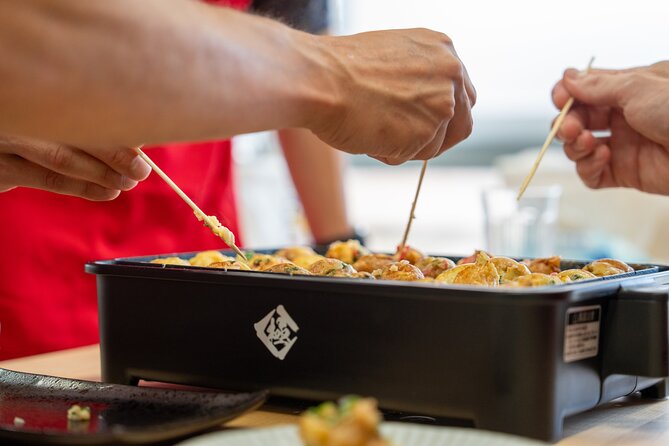
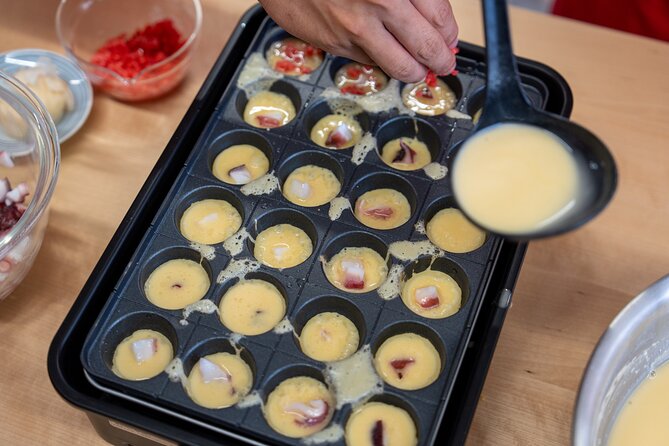
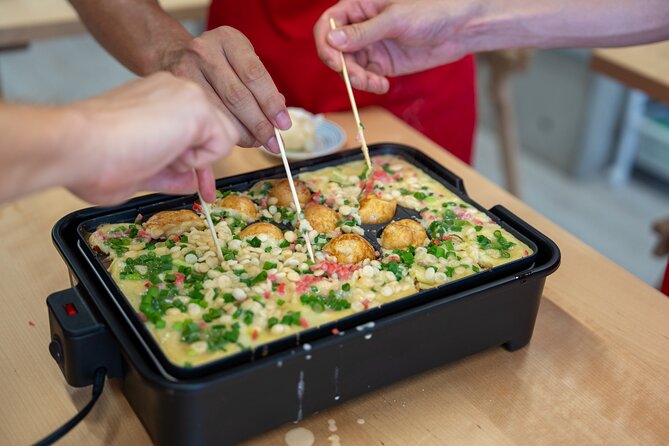
Takoyaki is likely to be the most memorable part of the lesson. The goal is a crisp outside with a tender center, formed in a special pan and turned as the batter cooks. The class gives you a chance to work through that process instead of merely eating the finished snack from a street stall.
The exact lesson pace will depend on group size and the people in your class. With up to seven participants, you may have room to ask questions and get guidance without the slower rhythm of a large cooking school. If you are the only person booked, as happened for Nina’s participant, the format can become much more personal.
The supermarket stage adds meaning here. You have already thought about possible fillings, so takoyaki becomes more than a recipe you copy. You are making choices about what goes inside and seeing how an everyday Osaka snack can be adapted.
There is one practical limitation: the available information does not promise that you will prepare every possible filling or learn a professional chef’s full technique. Think of the class as a social home-cooking lesson. You will make a satisfying version of the dish and learn enough to recreate the experience, but this is not a certification course.
More Food and Drink Tours in Osaka:
- Eat Osaka: Street Food Cooking in an Authentic Kitchen!
★ 5.0 · 87 reviews - Osaka Street Food Festival :Takoyaki&Okonomiyaki for Families
★ 5.0 · 13 reviews - Osaka: Okonomiyaki Cooking Class with Beer or Soft Drink
★ 4.9 · 9 reviews - Okonomiyaki&Takoyaki for Families:Osaka Street Food Festival
★ 5.0 · 4 reviews
Sake, beer, and the taku-nomi mood
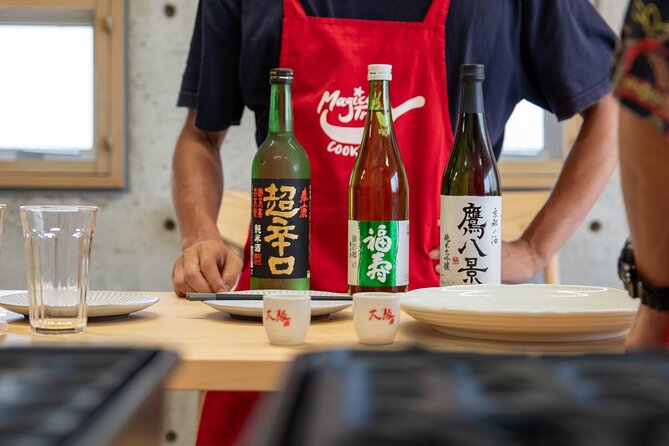
Drinks are part of the experience rather than an afterthought. You can sip handpicked sake while cooking and pair it with the finished food. Beer and soft drinks are also available, which helps if you do not drink sake or want a nonalcoholic option.
The evening aims for a taku-nomi feeling, meaning relaxed drinking at home. That idea shapes the whole class. The food is made for sharing, the dishes arrive as a spread, and the mood is informal instead of polished and restaurant-like.
This is where the experience earns much of its value. You are not just learning three recipes. You are learning how Japanese home-style food, small plates, and drinks work together in a social setting. The sake pairing also gives you a reason to slow down and notice how different foods taste with a drink.
The details of the sake selection are not specified, so do not book expecting a formal tasting led by a sake expert or a named brewery visit. The appeal is the pairing within the meal. If you want a serious lesson in sake production, this is not the right format. If you want to understand how sake fits into a casual Japanese evening, it should be a better match.
Eating what you made
Once the dishes are ready, you sit down to eat the full spread. This shared meal is the payoff for the shopping and preparation. You have seen the ingredients, handled the cooking, and then get to judge the results at the table.
I like that the menu mixes small starter-style dishes with the more distinctive takoyaki and a filling chicken dish. It gives you different textures and flavors without making the meal depend on one recipe going perfectly.
The friendly format also leaves space for conversation. One version of the class included a broad discussion about Japan, with the guide answering questions while the food was prepared. That can be especially useful if you are visiting Osaka early in your trip and want to ask about customs, eating habits, or daily life.
Still, keep your expectations realistic. The class lasts about three hours, so the meal is part of the scheduled activity, not an unlimited night of drinking. The group may include people with different cooking speeds and interests. You will get a shared social experience, not a private restaurant table with complete control over the pace.
What the $91.04 price includes in practical terms
At about $91.04 per person, this costs more than simply ordering takoyaki and chicken in Osaka. The price makes more sense when you count the full evening: a local guide, the supermarket visit, cooking instruction, the food you prepare, drinks during the class, the shared meal, and the recipe pack.
You are also paying for access to a private-feeling home setting. A restaurant can serve you Osaka specialties, but it cannot give you the same look at ingredients, preparation, and the small decisions behind the dishes.
Value depends on how you spend your time in Osaka. If you mainly want the cheapest possible meal, this is not the economical choice. If you would otherwise book a cooking class, food tour, and sake-focused evening separately, this combines several interests in one short activity.
The small maximum of seven helps the price feel more reasonable. A class with a large crowd can make hands-on cooking feel like an assembly line. Here, you have a better chance to ask questions and receive help, though the actual group size varies by date.
Who should book this Osaka food experience?
I would recommend it most strongly for you if you like food, conversation, and practical cultural details. It suits first-time visitors who want an easy way to learn about Osaka food, couples looking for a shared evening, and solo visitors who would enjoy company around a table.
It is also a good pick for people who want recipes they can use after Japan. The downloadable recipe pack gives the class a life beyond the evening, especially if you enjoy inviting friends over and serving small dishes with drinks.
Families and younger participants need to consider the cooking and sake-centered format carefully. The provided details do not specify age rules, child pricing, dietary substitutions, or allergy arrangements, so ask the provider before booking if those points affect your decision.
You should also choose another activity if your priority is a formal chef-led course, a long market tour, or an in-depth sake education. This experience is more relaxed and social. Its strength is the combination of shopping, cooking, eating, and conversation.
Timing, group size, and cancellation details
The activity lasts about three hours and begins at 4:30 pm. It ends back at the same FamilyMart meeting point, which makes it easier to plan your next stop without arranging a separate return transfer.
A mobile ticket is provided, and booking confirmation is received at the time of booking. The activity is near public transportation, but the supplied details do not give a walking time from the station exit to the convenience store, so arrive early enough to locate the meeting point without rushing.
The maximum is seven participants. Free cancellation is available if you cancel at least 24 hours before the local start time. Cancellations made less than 24 hours before the start, or changes made within that period, are not accepted for a refund.
Should you book the Osaka Home Feast Cooking and Sake Experience?
Book it if you want to do more than eat Osaka food. The supermarket visit, creative takoyaki planning, relaxed cooking studio, and shared sake meal give you a useful look at casual Japanese food culture in one evening.
I would make this a strong choice for a solo visitor, a food-loving couple, or anyone who values a local conversation as much as the recipes. The main caution is simple: this is a friendly home-style class, not a formal culinary school or a specialist sake seminar.
For about $91.04, you get a three-hour activity with food, drinks, instruction, and recipes to take home. If that mix matches your travel style, the class offers a good way to spend an evening in Osaka without simply sitting down and ordering from a menu.
FAQ
Where does the Osaka Home Feast Cooking and Sake Experience start?
It starts at the FamilyMart on the south side of Minamimorimachi Station, at 2-chome 3-10, 1F, in Osaka’s Kita Ward.
What time does the activity begin?
The start time is 4:30 pm.
How long does the experience last?
The activity lasts approximately three hours.
Where does the experience end?
It ends back at the original meeting point.
How many people can join the class?
The activity has a maximum group size of seven participants.
What food will I prepare?
You will prepare dishes including Mugen Cabbage, Wasabi Tuna Salad, crispy takoyaki, and chicken with green onion, mayonnaise, and ponzu.
What drinks are available?
The experience includes handpicked sake pairings. Beer and soft drinks are also available.
Can I cancel for a full refund?
Yes. You can receive a full refund if you cancel at least 24 hours before the experience start time. Cancellations and changes made less than 24 hours before the start are not accepted for a refund.
More Sake Tastings in Osaka
- Ramen and Sushi Cooking Class with Sake Pairing Set in Tokyo
★ 5.0 · 291 reviews - Tokyo: Sushi and Ramen Cooking Class with Sake Pairing Set
★ 5.0 · 81 reviews - Tokyo: Sushi Cooking Class with Sake Tasting
★ 4.8 · 55 reviews - Nishiki Market, Private Sushi class & Sake Tasting in Townhouse
★ 5.0 · 6 reviews
Just added around Osaka
- Osaka Street Food Festival :Takoyaki&Okonomiyaki for Families★ 5.0 · 13 reviews
- Three Types of Ramen Cooking Class in Osaka★ 5.0 · 119 reviews
- Takoyaki DIY Cooking in the Heart of Osaka★ 5.0 · 7 reviews
- SUSHI Making Experience at Restaurant★ 5.0 · 8 reviews
- Sushi Making Osaka Omakase Cooking Class in Japan★ 5.0 · 4 reviews
- Cooking Class for Ramen and Gyoza in a Quiet Old Osaka House★ 5.0 · 3 reviews
- Sushi and Japnese foods cooking class in Osaka★ 5.0 · 51 reviews
- Ramen and Gyoza Cooking Class in Osaka Dotonbori★ 5.0 · 73 reviews
Cooking Classes, compared.
Half-Day Thai Cooking Class at Organic Farm in Chiang Mai
Read our review →
Florence: Pasta Cooking Class with Unlimited Wine
Read our review →
3 in 1 Cooking Class near Navona: Fettuccine, Ravioli & Tiramisu
Read our review →
Hanoi Cooking Class: Culture, Local Market & Meaning CSR Impact
Read our review →
5 Traditional Dishes Hanoi Cooking Class with Market Trip
Read our review →
Cooking Class and Lunch at a Tuscan Farmhouse with Local Market Tour from Florence
Read our review →
Chiang Mai: Cooking Class, Market & Thai Herbs Garden Tour
Read our review →Browse the lists this tour appears in