
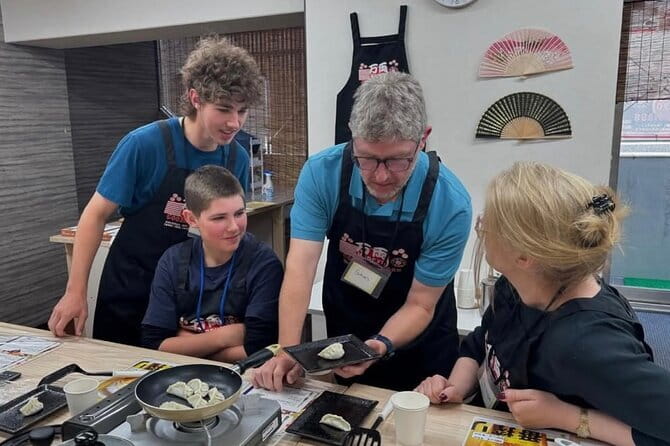
Review · KYOTO
Ramen Gyoza Onigiri Japanese Cooking Class in Kyoto
This Kyoto class packs three useful Japanese cooking lessons into about 90 minutes: ramen broth, gyoza, and onigiri. Chef Nori and his team keep the pace brisk, explain the steps in English, and leave you with a full lunch made by your own hands.
I like the range of dishes and the practical focus. You learn the part most home cooks cannot simply buy, the soup for ramen, and you practice the hands-on skills of folding gyoza and shaping rice balls. The small group, capped at eight, also means you should have a fair chance to follow along.
The main catch is dietary flexibility. There are only regular and vegetarian menus, and the vegetarian option replaces pork with tofu but keeps the other ingredients. This class cannot accommodate vegan, pescatarian, gluten-free, halal, kosher, or other special diets.
Key points to know before booking
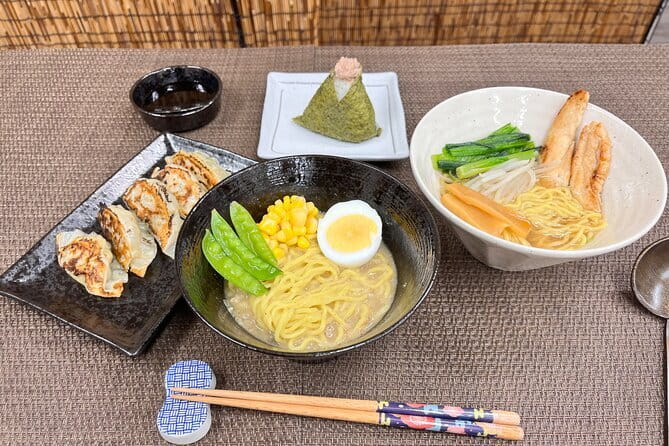
- Three Japanese staples in one sitting: Prepare ramen broth, gyoza, and onigiri instead of focusing on one dish.
- The broth is the main lesson: You do not make noodles, but you learn how to build ramen soup with ingredients available at home.
- Chef Nori leads a friendly English-speaking team: Instructions are clear, paced for beginners, and mixed with plenty of humor.
- You eat the whole meal you prepare: Come hungry, because the portions add up quickly.
- The group is limited to eight people: This keeps the class personal and makes it easier to see demonstrations and ask questions.
- Diet rules are strict: Choose regular or vegetarian, with no vegan, pescatarian, gluten-free, halal, or kosher option.
What you actually cook in 90 minutes
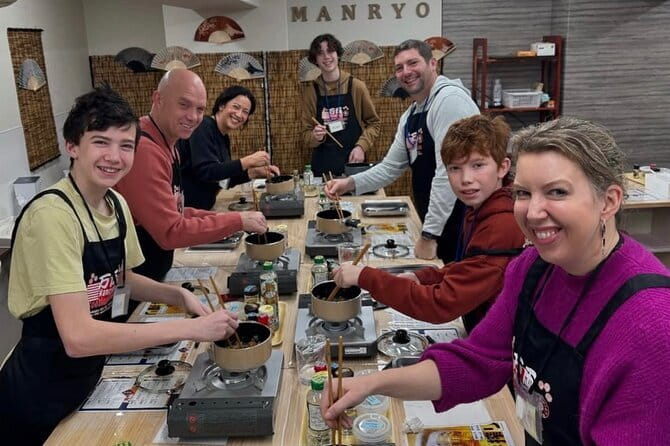
The appeal here is simple: you make several familiar Japanese foods without giving up half a day. The class lasts about an hour and a half, so the instructors need a tight plan. The session is organized around preparation, cooking, shaping, and eating, with little wasted time.
You begin with ramen broth. This is a smart choice for a short class. Ramen noodles are widely available, but a good soup base is harder to reproduce at home. The instructors show you how to use ordinary ingredients and seasonings to make a satisfying broth without requiring a specialized kitchen.
You should understand the distinction before booking: you do not make the noodles. The class concentrates on the soup, which is the most useful part for many home cooks. You can buy noodles later and use the technique again in your own kitchen.
The class has included two ramen styles in the hands-on meal, according to the experience details shared by participants. Since the exact broth varieties may depend on the session, I would treat the class as a lesson in ramen soup technique rather than a fixed tasting menu with guaranteed named styles.
Next comes gyoza. The key skill is wrapping the dumplings. This is the sort of task that looks easy until the filling starts pushing out of the wrapper. The instructors guide you through the folding method, and you get to practice instead of simply watching someone else do it.
That hands-on part matters. You are not just sampling a Kyoto dish or taking notes while a chef works. You handle the wrappers, fill them, and learn a method you can repeat at home. Your first dumpling may look a little rough. That is part of the fun, and the final meal does not require restaurant-perfect pleats.
The last major preparation is onigiri, the Japanese rice ball. You learn how to shape it by hand, another simple skill that becomes much easier once someone shows you the right pressure and form. Onigiri is practical home food, not just a decorative side dish, so it gives the class a useful everyday element.
The cooking ends with lunch. You sit down and eat what you made, including the ramen, gyoza, and onigiri. The meal is a real benefit of the format. At the posted price of $92.47 per person, you are paying for instruction, ingredients, a guided activity, and a substantial meal rather than only a demonstration.
More Sushi and Japanese Classes in Kyoto:
- Ramen Cooking Class at Ramen Factory in Kyoto
★ 5.0 · 1,937 reviews - Sushi Making in Kyoto! Same-day bookings welcome!
★ 5.0 · 713 reviews - Kyoto: Ramen Cooking Class at a Ramen Factory with Souvenir
★ 4.9 · 532 reviews
Why the ramen broth lesson is worth your time
Many cooking classes focus on dishes that are difficult to repeat once you return home. This one makes a sensible choice by teaching broth with ingredients and seasonings you can usually find outside Japan.
The instructors explain how to put the soup together and how the seasonings affect the finished bowl. You will not leave knowing every detail of professional ramen production, but you should have a workable foundation for making a better bowl with store-bought noodles.
I especially like that the class does not pretend to cover everything. There is no noodle-making lesson squeezed into the schedule. Instead, the team spends its time on a part of ramen that gives you a practical return for the effort.
The class also provides recipes, so the meal can become more than a one-time Kyoto memory. You can use the instructions to make the dishes for family or friends later. That home-cooking angle gives the experience more value than a meal you simply watch being prepared.
Gyoza folding and onigiri shaping
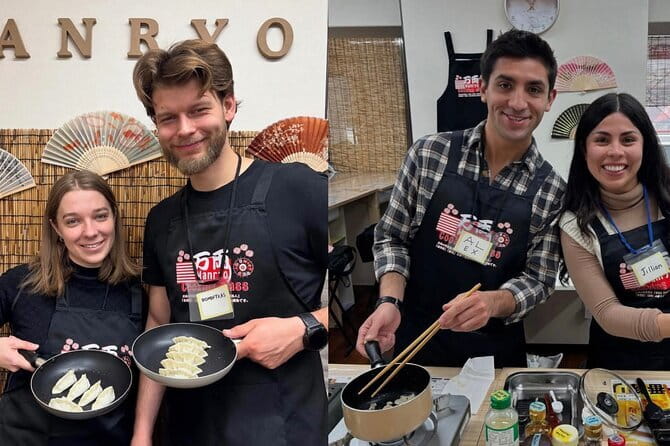
Gyoza and onigiri give the class its most tactile moments. Both depend on technique, but neither requires advanced cooking experience. You learn by doing, with the instructors showing the method and helping you keep up.
Gyoza wrapping is likely to appeal most if you enjoy small, careful tasks. The class does not only teach what goes into the filling. It shows you how to close the dumplings, a skill that can be repeated with other fillings at home.
Onigiri is less fussy, but it still rewards proper handling. The point is to form a rice ball that holds together without crushing it. It is an easy lesson to remember, and the finished food makes the final lunch feel varied.
The combination works well. Ramen teaches broth and seasoning. Gyoza teaches filling and wrapping. Onigiri teaches shaping. You leave with three different types of kitchen practice rather than three versions of the same task.
A friendly small-group format with Chef Nori
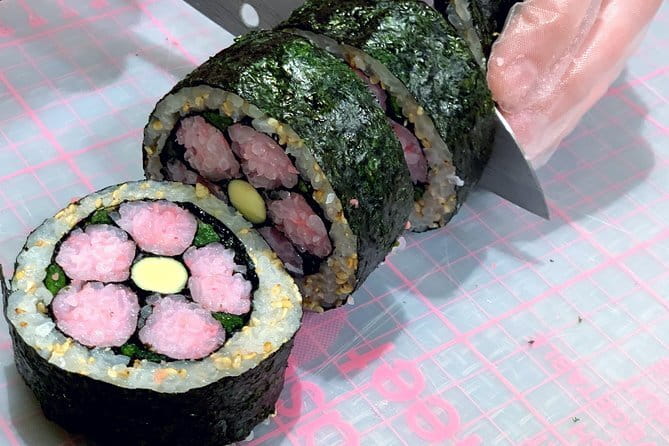
The class is limited to a maximum of eight people. That number is small enough to make a difference, especially when the instructor is demonstrating a hand skill such as folding dumplings or shaping rice.
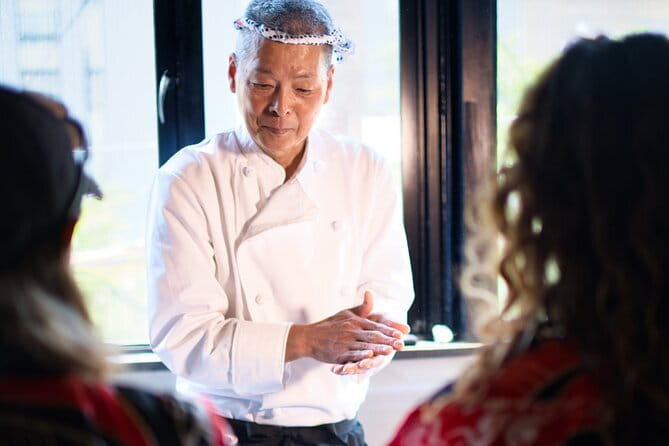
Chef Nori leads the class with a team of English-speaking assistants. The tone is friendly and relaxed, but the pace is well organized. One useful point from the class structure is that the team has to cover a lot in 90 minutes, so you should expect clear instructions and steady movement from one task to the next.
Nori also gives a short introduction to ramen before cooking begins. That small bit of context helps you understand what you are making instead of treating the lesson as a string of unrelated recipes.
The teaching style suits beginners. You do not need to arrive with Japanese cooking experience. The instructors explain the steps, demonstrate the techniques, and keep the mood light. English is used throughout, and the class has been praised for clear explanations even when the team is joking around.
Do not expect a slow, private lesson with long one-to-one coaching. Eight people is still a group, and the 90-minute schedule is full. Still, the small cap gives this class an advantage over large cooking demonstrations where you might spend more time watching than working.
More Hands-On Workshops in Kyoto:
- Kyoto: Ramen, Gyoza, and Onigiri Cooking Class
★ 5.0 · 445 reviews - The Original Small-Group Sushi Making Class in Kyoto
★ 5.0 · 436 reviews - Kyoto: Japanese Washoku Bento Small Group Cooking Class
★ 5.0 · 380 reviews - Kyoto Ramen and Gyoza Cooking Class with Professional Chefs
★ 5.0 · 282 reviews
What the meal is like at the end
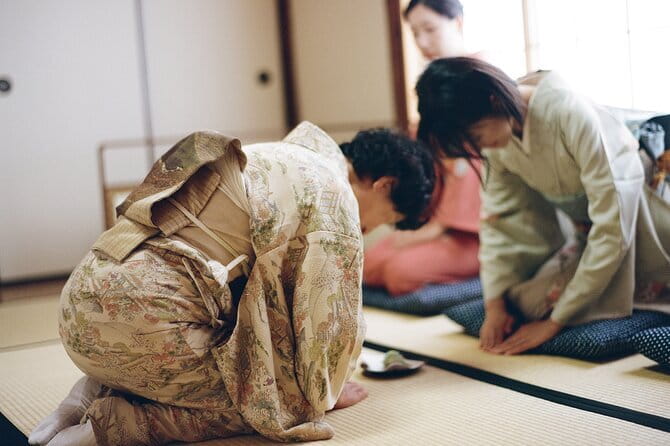
You eat everything you prepare after the cooking is finished. That means the class doubles as lunch, so it can fit neatly into a day of sightseeing in Kyoto.
The amount of food is generous enough that you should arrive hungry. Ramen alone can be filling, and the gyoza and onigiri add more to the table. If you have a light appetite, pace yourself during preparation and remember that the meal comes at the end.
The final lunch also gives you a useful check on your work. You can taste the broth, see how the dumpling wrapping held up, and enjoy the onigiri while the instructions are still fresh in your mind.
This is not a formal restaurant meal. The pleasure comes from eating food you just prepared with the group. I find that makes the dishes easier to remember, and it gives the session a social feel without requiring extra evening plans.
Vegetarian rules and important food limits
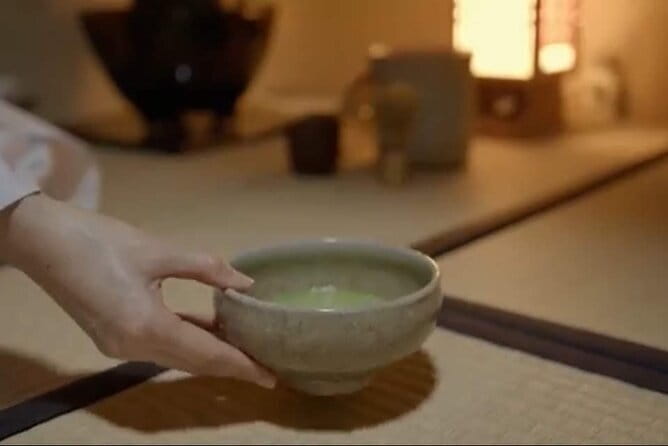
The vegetarian menu replaces pork with tofu. It is not a vegan menu, and the other ingredients remain the same. If you avoid animal products completely, this class is not suitable.
The provider also states that it cannot accommodate pescatarian, gluten-free, halal, kosher, or other special diets. This is the most important practical issue for many people, so check the menu choice carefully before paying.
You have only two menu options: regular or vegetarian. Do not assume that a request sent after booking can change the ingredients. If your diet falls outside those two choices, choose another cooking experience.
Children under 13 are not accepted. For families with older children, the format can work well because the dishes involve visible, hands-on tasks and the final meal is substantial. Each child still needs to meet the age requirement.
Location, timing, and value at $92.47
The meeting point is Manryo Japanese Cooking Class at Life Building B1, 841 Choshoji Monzencho, Sakyo Ward, Kyoto 606-8366. The activity finishes back at the meeting point, and it is near public transportation.
The mobile ticket is convenient for a day of sightseeing, though you should read the post-booking email carefully for the meeting instructions. Arriving on time matters because the class has several dishes to cover in a short window.
At $92.47 per person, the price is not the cheapest way to eat ramen in Kyoto. That is not the right comparison. You are paying for an English-speaking lesson, ingredients, small-group instruction, three dishes, recipes, and lunch.
I consider the price reasonable if you want an activity rather than just a meal. It is also better value for people who will use the recipes later. If your main goal is an inexpensive lunch, a ramen shop will cost less and take less time. If you want to learn a few repeatable skills and enjoy a social class, the fee makes more sense.
The class has attracted more than ten bookings in the past month and is currently rated five out of five from 44 ratings, with 100 percent recommending it. Those figures suggest strong demand, but I would still judge the experience by its format: fast, hands-on, food-focused, and beginner-friendly.
Who should book this Kyoto cooking class
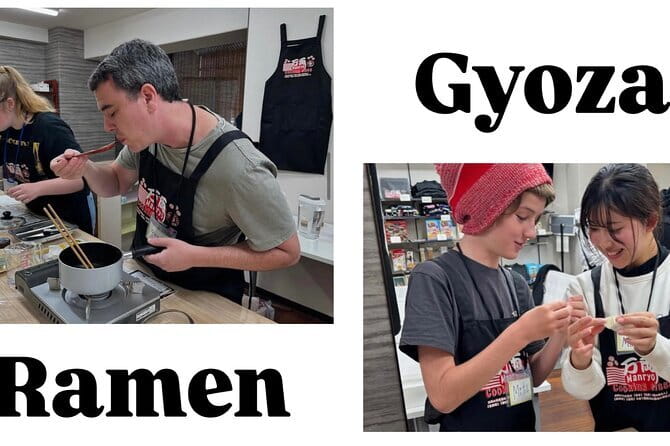
I would recommend this class to first-time visitors who want a compact food activity. It is also a good fit for couples, friends, and families with children aged 13 or older who like doing something together rather than sitting through a demonstration.
It suits you particularly well if:
- You want to learn several Japanese dishes in one session.
- You like practical recipes that can be made at home.
- You are curious about ramen broth, not just ramen toppings.
- You want a full lunch included in the activity.
- You enjoy a friendly group setting with some humor.
- You have no complicated dietary restrictions.
I would skip it if you want to make noodles from scratch, take a long specialist lesson, or book a fully private class. The session teaches ramen broth, not noodle production, and the group can include up to eight people.
You should also skip it if you are vegan, pescatarian, gluten-free, halal, kosher, under 13, or dependent on other special dietary arrangements. The menu rules are firm.
Should you book it?
Book this class if you want a busy, useful 90 minutes that ends with a generous Japanese lunch. The strongest parts are the three-dish format, the focus on homemade ramen broth, the chance to practice gyoza and onigiri techniques, and the friendly instruction from Chef Nori and his team.
The decision is less favorable if you mainly want a cheap meal or need dietary flexibility. For everyone else, this is a practical Kyoto activity that gives you something to eat now and recipes to use later. Arrive hungry, read the booking email, and choose the correct menu before you go.
FAQ
How long does the cooking class last?
The class lasts approximately 1 hour and 30 minutes.
Where does the class meet?
It meets at Manryo Japanese Cooking Class, Japan, 606-8366 Kyoto, Sakyo Ward, Choshoji Monzencho, 841 Life Building B1.
Where does the activity end?
The activity ends back at the meeting point.
What dishes will I make?
You will make ramen broth, gyoza, and onigiri, also known as Japanese rice balls. The class does not include making ramen noodles.
Will I eat the food I prepare?
Yes. Lunch is included, and you will eat the dishes you make after cooking.
Is the class taught in English?
The instructors are English-speaking and provide instructions in English.
How many people can join the class?
The activity has a maximum of eight participants.
Is there a vegetarian menu?
Yes. You can choose a regular menu or a vegetarian menu. The vegetarian menu replaces pork with tofu, while the other ingredients remain the same.
Can the class accommodate vegan, pescatarian, gluten-free, halal, or kosher diets?
No. The class cannot accommodate those diets or other special dietary requirements. Children under 13 are also not accepted.
What is the cancellation policy?
You can cancel at least 24 hours before the start time for a full refund. Cancellations or changes made less than 24 hours before the start time are not accepted for a refund.
Just added around Kyoto
- Private Cooking Class Udon in Kyoto Japan★ 5.0 · 23 reviews
- Private Plant-Based Japanese Cooking Class – Kyoto Edition★ 5.0 · 15 reviews
- Private Kyoto Sushi Cooking Class & Tea Ceremony with Emika★ 5.0 · 66 reviews
- Private Guided Traditional Buddhist Cooking in Japan★ 5.0 · 16 reviews
- Kyoto Wagashi(Japanese sweets) Cooking Class near Fushimiinari★ 5.0 · 60 reviews
- Nishiki Market, Private Sushi class & Sake Tasting in Townhouse★ 5.0 · 6 reviews
- Private Kyoto Cooking Class with Aki in a Beautiful Wooden House★ 5.0 · 12 reviews
- Private Kyoto Market Tour and Authentic Cooking Class with Aki★ 5.0 · 15 reviews
Japanese & Sushi Cooking Classes, compared.
Sushi Making Tokyo Roll and Authentic Japanese Sushi Class
Read our review →
Tokyo: Roll and Authentic Sushi Making Class in Asakusa
Read our review →
Ramen Cooking Class at Ramen Factory in Kyoto
Read our review →
Tokyo: Sushi Making Class in a Happi Coat near a Famous Spot
Read our review →
Sushi Making Tokyo! Popular Maki Sushi & Japanese Sushi(+Recipe!)
Read our review →
Sushi Making Osaka Roll and Authentic Japanese Sushi Class
Read our review →
Tokyo Sushi Making Class in Tsukiji with Professional Chef
Read our review →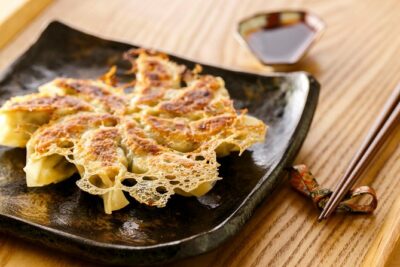
Ramen & Gyoza Cooking Class in Tokyo with Local Supermarket Visit
Read our review →Browse the lists this tour appears in