
Review · PERU
Vegan Peruvian Cooking Class Cocktails and Local Market in Cusco
The most useful part of this Cusco experience is that it takes you from the market stall to the cooking table. You begin at San Pedro Market, looking at Peruvian fruits, grains, roots, bread, and superfoods, then use those ingredients in a hands-on class. I especially like the three-course menu and the chance to make two pisco-based drinks, though you should confirm your dietary needs with the chef at the start because the class may also run as a general cooking class with vegan options.
I also like the small maximum of 10 people, which gives the chef room to explain techniques and answer questions. The $69 price is fair for four hours when you count the market visit, food, equipment, cocktails, bottled water, and recipes. One practical drawback is the meeting point: San Pedro Market has several entrances, so look for the clearly marked green Door 1 at the lower part of the main entrance.
Key points before you book
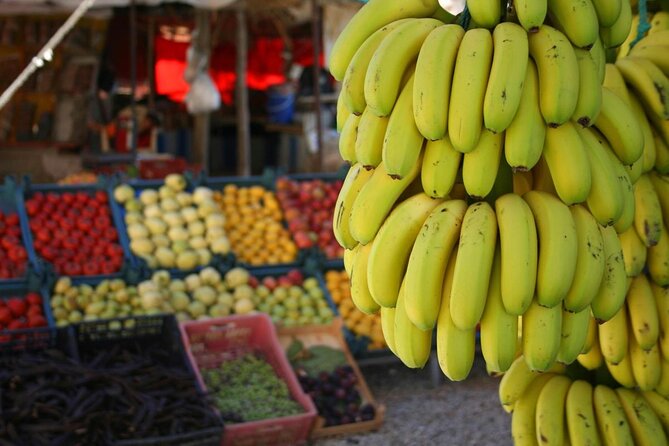
- Begin at San Pedro Market: Learn about Peruvian produce, grains, roots, fruits, bread, and local food traditions before cooking.
- Make three vegan Peruvian dishes: Prepare ceviche, causa limeña, and a quinoa tamal from start to finish.
- Mix two cocktails: The class includes drinks such as pisco sour and chicha morada, with non-alcoholic replacements available for people under 18.
- Expect a small group: The class accepts no more than 10 people, and solo bookings may sometimes run with only one participant.
- Receive the recipes afterward: You can try the dishes again at home instead of leaving the techniques in Cusco.
- Meet at Door 1: Start at Mercado Central de San Pedro, Thupaq Amaru 477, and allow a moment to find the correct entrance.
From San Pedro Market to the cooking studio
This is not just a class held in a kitchen. The food story begins at Mercado Central de San Pedro, where you get a close look at the ingredients that shape Peruvian cooking.
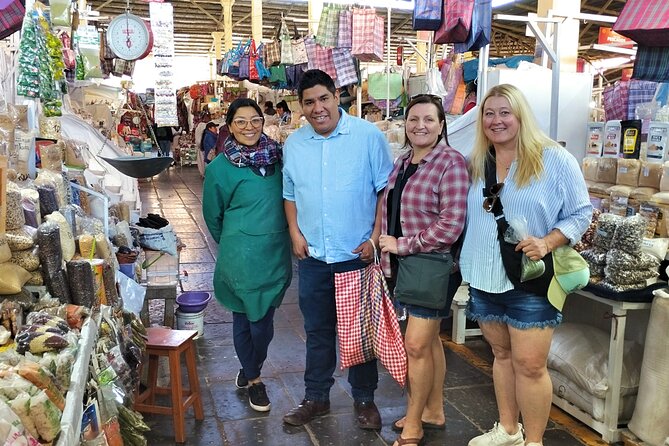
The market visit is useful because it gives context to the dishes you later prepare. You might see several kinds of passion fruit, grains such as quinoa, Andean root vegetables, spices, vegetables, and traditional Peruvian bread. The point is not simply to pass through and take pictures. Your guide explains what the ingredients are and how they fit into local food traditions.
That guidance matters if your Spanish is limited. One solo participant found the market much easier to understand with Chef Jesus along, particularly when asking about unfamiliar fruits and produce. The class has also been led by Chef Jorge and Chef Alvaro, so the exact chef may vary by date.
The market can be a little confusing as a meeting place. The provided address is Thupaq Amaru 477, but the practical landmark is the lower green entrance marked Door 1. I would arrive a few minutes early rather than wander around the market trying to spot a guide.
After the market, you walk to the cooking studio in central Cusco. The class takes place in a more polished kitchen setting, a useful change from the crowded market aisles. You get the ingredients, cooking equipment, and cocktail tools needed for the session, so you do not need to bring anything beyond an appetite and perhaps a way to save notes.
More Market Tour Cooking Classes in Peru:
- Cusco: Peruvian Cooking Class, Cocktails & Local Market Tour
★ 4.9 · 512 reviews - Cooking class and market tour with a local chef
★ 5.0 · 186 reviews - Market Tour, Tasting of 35 Fruits, and 4-Course Peruvian Cooking Class in Lima
★ 5.0 · 86 reviews
A plant-based take on three Peruvian classics
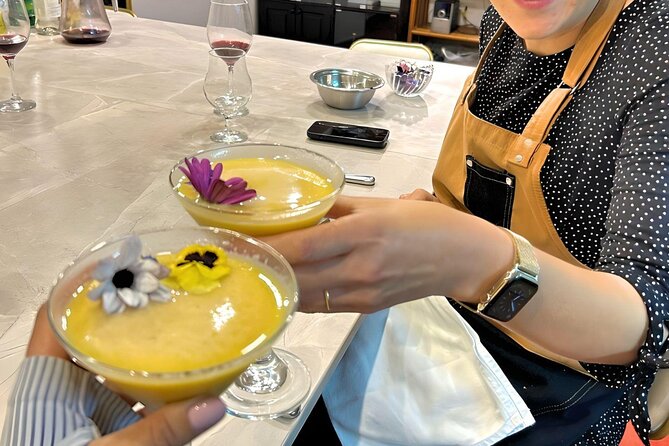
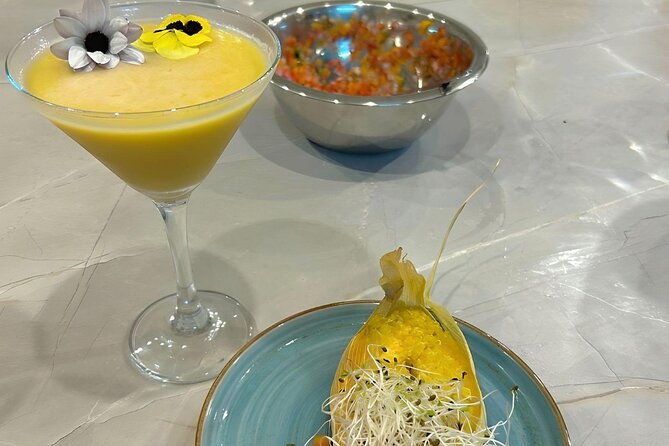
The core of the class is the food. You prepare three dishes that show different sides of Peruvian cooking: ceviche, causa limeña, and a quinoa tamal.
The vegan ceviche is the most obvious example of how the class adapts a famous Peruvian dish. Traditional ceviche is built around seafood, but here the focus shifts to fresh plant ingredients, acidity, seasoning, and texture. That makes the dish useful for a vegan cook because you learn the structure of ceviche without relying on fish.
Causa limeña gives you another classic to work with. The dish is centered on seasoned potato, with a filling and presentation that make it suitable for a meal or party table. The class uses vegan mayonnaise, allowing you to keep the familiar creamy element without animal products.
The quinoa tamal brings an Andean ingredient into the menu. Quinoa is one of Peru’s best-known grains, and learning to use it in a tamal gives you something different from the usual quinoa salad. It also connects the cooking lesson to the agricultural products introduced at the market.
You prepare each dish during the class and eat as you go. That format helps you judge texture and seasoning while the instructions are still fresh. It also means the meal can become quite large. One couple found there was so much food that they could not manage dessert at the end, although they took it away for later.
The menu is presented as fully vegan, and several participants with plant-based diets found the class worked well for them. Still, one account raised a fair concern: the experience may sometimes operate as a broader Peruvian cooking class where vegan alternatives are arranged. If strict vegan preparation is essential to you, state that clearly when you arrive and ask how the day’s menu will be handled.
The same advice applies to allergies and other food restrictions. The provider says these can be accommodated, but the chef needs to know at the beginning. Do not wait until a dish is already being prepared.
Two cocktails, from pisco sour to chicha morada
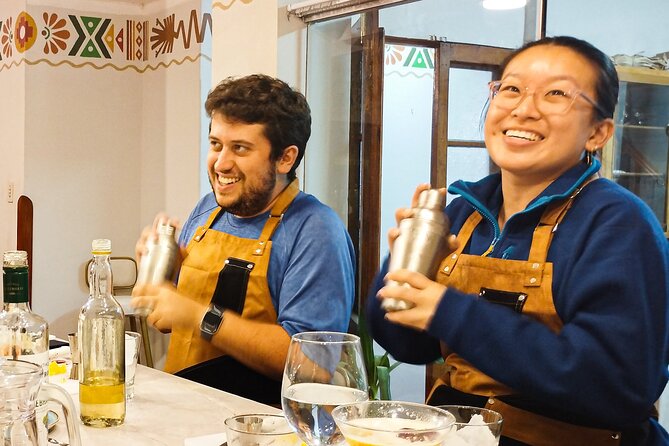
The drinks add a social touch to the class and help explain why this costs more than a basic cooking lesson. You prepare two cocktails using pisco and fresh fruit, along with other representative Peruvian ingredients.
A pisco sour has a familiar sweet, sour, and spirit-based balance. Making it yourself shows how the drink is assembled rather than simply placing one on the table. Chicha morada offers a different direction, with a traditional Peruvian fruit drink that gives the class more local character. Another participant made a whisky sour without alcohol, so the exact drink may depend on the group and the chef.
The listing describes the cocktails as alcoholic, and Peruvian law permits alcohol from age 18. Anyone under 18 receives bottled water instead of pisco. If you do not drink alcohol, mention that before mixing begins so the chef can explain the available replacement.
I like the drink portion because it prevents the class from feeling like a long cooking demonstration. You are not only chopping and assembling food. You are also learning a small piece of Peru’s drink culture, then sitting down to enjoy the results.
Keep your own tolerance in mind. Two cocktails over four hours may sound modest, but Cusco’s high elevation can make alcohol feel stronger for some people. That is a general travel precaution rather than a special rule of this activity, but it is sensible to pace yourself and use the included bottled water.
What the four-hour pace feels like
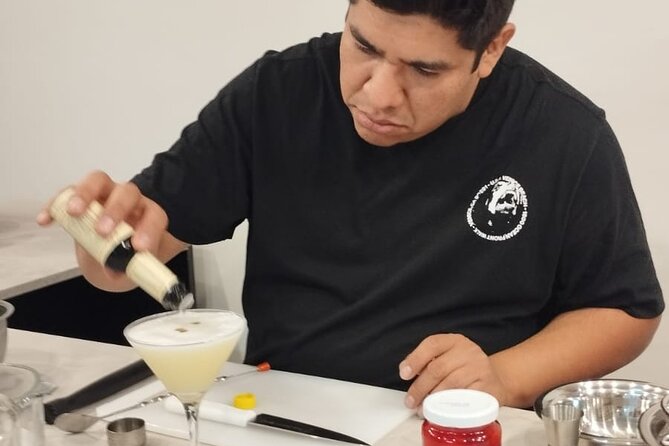
The experience lasts about four hours, which is long enough for a market visit and three dishes without forcing the whole lesson into a rushed demonstration.
The first part is spent at San Pedro Market. You look at ingredients and hear about their uses before moving to the studio. The cooking section then takes up most of the remaining time, with the dishes and cocktails prepared under the chef’s direction.
This format suits you if you want to participate. It is not designed as a quick tasting stop where food arrives already finished. You should expect to wash, cut, mix, shape, season, and follow instructions. The reward is that the recipes make more sense when you have handled each stage yourself.
A small group helps here. The maximum is 10 people, and at least one solo booking went ahead with only one participant. That can make the experience feel more like a private lesson, though you should not assume a private class will always be available. If the group is full, the small cap should still give you a reasonable chance to ask questions.
The pace also works well for first-time cooks. Chef Jorge is described as clear and patient, while Chef Jesus has led both the market visit and kitchen work in English. The exact teaching style depends on who leads your session, but the strongest part of the experience is the direct instruction rather than a lecture from the sidelines.
More Vegan Cooking Classes in Peru:
- Oaxacan Vegetarian Cooking Class
★ 5.0 · 235 reviews - Marrakech: Moroccan Cooking Class for vegetarians and vegan
★ 4.9 · 156 reviews - Hoi An: Vegetarian Cooking Class w Local Family and transfer
★ 4.9 · 145 reviews - Oaxaca: Vegetarian Cooking Class
★ 4.8 · 139 reviews
The value of $69 in Cusco
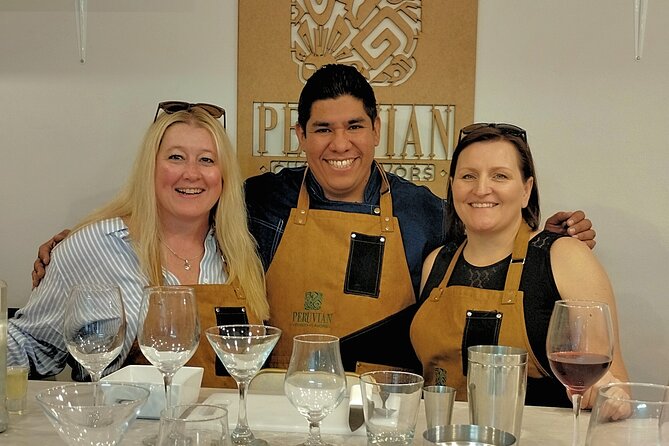
At $69 per person, this is not the cheapest way to eat in Cusco. It is also more than a simple market walk. The value comes from combining several activities into one half-day experience.
Your fee covers:
- The San Pedro Market visit
- All class ingredients
- Three dishes
- Two class cocktails
- Cooking and cocktail equipment
- Bottled water
- Recipes sent after the class
If you priced these pieces separately, the class would likely feel more reasonable. You are paying for instruction, a prepared meal, drinks, equipment, and access to a local market with a guide who can explain what you are seeing.
The recipes are important for me when judging the price. A meal disappears quickly, but written instructions let you repeat the experience at home. The menu is also more useful than a generic international cooking class because it includes dishes tied to Peru: ceviche, causa limeña, quinoa tamal, pisco, and chicha morada.
The value is strongest for people who already enjoy cooking or who want an activity with more substance than a restaurant meal. If you only want to sample food and move on, you may find four hours too long. If you want to understand the ingredients and make the food yourself, the price is easier to justify.
What is especially good about the teaching
The class benefits from guides who can connect cooking to local food culture. Chef Jesus, in particular, has been described as able to explain both Peruvian culinary traditions and the ingredients found in the market. Chef Jorge has also led sessions that covered the market, cocktails, and the three dishes in a clear step-by-step way.
I would not treat the chef’s name as guaranteed unless it appears on your booking confirmation. The experience has involved Jorge, Jesus, and Alvaro, and schedules can change. Still, the teaching approach appears to be central to the experience, not an afterthought.
You should feel free to ask questions. The market section is a good time to ask about unfamiliar fruit, grains, roots, or bread. In the kitchen, ask why a particular ingredient is used, how to replace it at home, and which steps matter most for texture.
The recipes are intended to help you recreate the food later. That is useful, but do not expect the class to turn you into a professional Peruvian cook in four hours. You will learn a practical set of dishes and techniques, not every detail of the country’s cooking.
Who will enjoy this class most
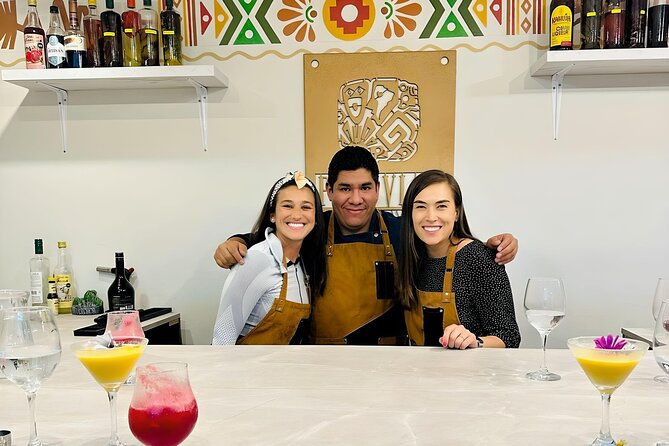
I would recommend this experience most strongly to:
- Vegans who want a food activity built around plant-based dishes
- Vegetarians who want to learn Peruvian recipes
- Curious cooks who prefer hands-on lessons to passive sightseeing
- Solo visitors who like meeting a small group or may value one-on-one instruction
- Couples and friends looking for a shared half-day activity
- People who want recipes they can use after returning home
It is also a good choice if you want to see San Pedro Market with help. The market is more rewarding when someone can explain ingredients and answer questions, especially if you do not speak much Spanish.
You may want to skip it if you dislike group cooking, do not drink and do not want cocktail preparation, or prefer a short food tasting. You should also check the vegan arrangements in advance if cross-contact or strict plant-based preparation is a serious concern.
Practical details that can save you trouble
The tour starts and ends at Mercado Central de San Pedro. Since the activity returns to the same meeting point, it is easy to plan around other central Cusco activities, but the exact end time is approximate because the class lasts about four hours.
The maximum group size is 10. Confirmation arrives at booking, and service animals are allowed. The market meeting point is near public transportation, though the information provided does not specify a particular route or stop.
Free cancellation is available if you cancel at least 24 hours before the start time. Inside that window, the payment is not refunded and changes are not accepted. The cut-off follows local time in Peru.
I would also book this a little ahead if your dates are fixed. The activity averages booking about 21 days in advance, which suggests it is wise not to leave it until the last day of your Cusco stay.
Should you book this Peruvian cooking class?
I would book it if you want food to be part of your understanding of Cusco, not just something you order after sightseeing. The market visit, hands-on kitchen work, three plant-based dishes, two cocktails, and recipes create a useful four-hour package.
The biggest reason to choose it is the combination of market knowledge and cooking practice. You see ingredients in their local setting, then learn how to turn them into ceviche, causa limeña, and quinoa tamal. The main caution is the vegan wording. Tell the chef about your diet or allergies at the start and confirm that the preparation matches your needs.
At $69, this is a good value for a small group, especially if you would otherwise pay separately for a market tour, a cooking lesson, drinks, and lunch. Look for the green Door 1 at San Pedro Market, arrive ready to participate, and leave room for a generous meal.
FAQ
Where does the cooking class begin?
It begins at Mercado Central de San Pedro, at Thupaq Amaru 477, Cusco 08002, Peru.
Where does the experience end?
The activity ends back at the San Pedro Market meeting point.
How long does the class last?
The experience lasts approximately four hours.
What dishes will I prepare?
You will prepare vegan ceviche, causa limeña, and a quinoa tamal.
Are cocktails included?
Yes. The class includes two alcoholic cocktails and the equipment needed to make them. Pisco and fresh fruits are among the ingredients used.
Can people under 18 attend?
Yes. Under Peruvian law, alcohol is available from age 18. Participants under 18 receive non-alcoholic drinks, with pisco replaced by bottled water.
Can the class accommodate allergies or food restrictions?
The provider says allergies and food restrictions can be accommodated. Tell the chef at the beginning of the class so the menu can be handled correctly.
More Shopping Trips in Peru
- #1 Rated Cooking Classes with Local Market Tour & Pickup
★ 5.0 · 69 reviews - Cusco: Peruvian Cooking Class & Market Tour
★ 4.9 · 19 reviews - Lima: Market Tour and Cooking Class with Pisco Sour
★ 5.0 · 3 reviews - Lima: Market Tour, 35 Fruits Tasting & Cooking Class
★ 5.0 · 3 reviews
More Food Experiences in Peru
- Cooking Class Typical Food in Arequipa
★ 3.9 · 3 reviews - Small Group Cooking Class & Market Food Tour in Florence
★ 5.0 · 1,574 reviews - Athens: Food Market Visit and Cooking Class with Wine
★ 4.9 · 1,087 reviews - Undiscovered Charleston: Half Day Food, Wine & History Tour with Cooking Class
★ 5.0 · 948 reviews
Just added around Peru
- Private Andean Cooking Class, Pachamanca★ 5.0 · 54 reviews
- Cusco Cooking Class by ChocoMuseo in Cusco★ 5.0 · 29 reviews
- Lima: Market Tour and Cooking Class with Pisco Sour★ 5.0 · 3 reviews
- Lima: Cooking Workshop and Water Circuit Tour★ 5.0 · 16 reviews
- Lima: Market Tour, 35 Fruits Tasting & Cooking Class★ 5.0 · 3 reviews
- Lima: 4-Course Peruvian Cooking Class in Miraflores★ 5.0 · 4 reviews
- Lima: Demo Cooking Class with Lunch at Cala Restaurant★ 4.1 · 4 reviews
- Cusco: Peruvian Cooking Class & Market Tour★ 4.9 · 19 reviews
Vegan & Vegetarian Cooking Classes, compared.
Marrakech: Moroccan Cooking Class for vegetarians and vegan
Read our review →
Hoi An: Vegetarian Cooking Class w Local Family and transfer
Read our review →
Jaipur Market Tour & Vegetarian Rajasthani Home Cooking Class
Read our review →
Ramen & Dumpling Cooking in Tokyo with Chef/Vegan possible
Read our review →
Hoi An/Da Nang: Vegetarian Cooking Class & Basket Boat Ride
Read our review →
Browse the lists this tour appears in