
Review · KYOTO
Kyoto: Japanese Washoku Bento Small Group Cooking Class
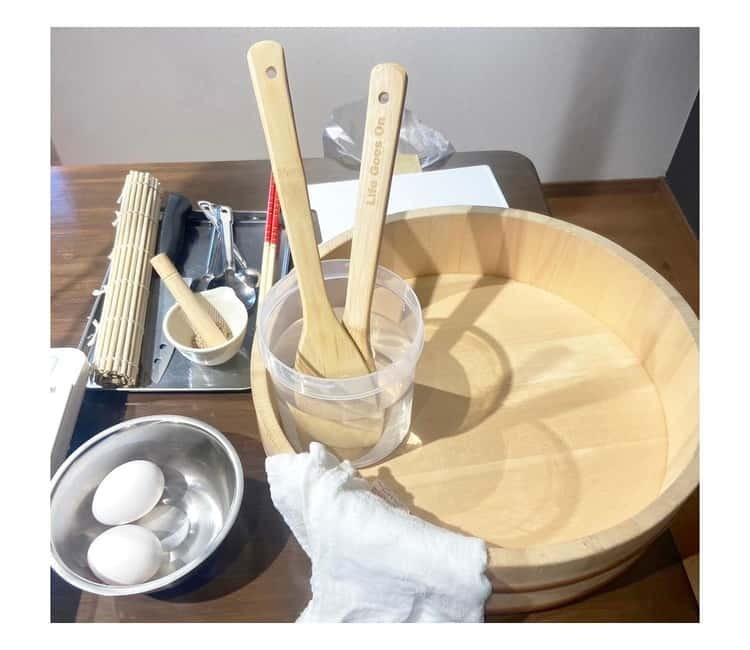
A bento box is much more than lunch packed into a pretty container. In this Kyoto class, you learn how separate dishes come together through washoku, Japanese cooking built around seasonal ingredients, balanced flavors, and careful presentation. You make sushi rolls, tempura, tofu salad, and a Japanese rolled omelet, then eat the full meal you prepared.
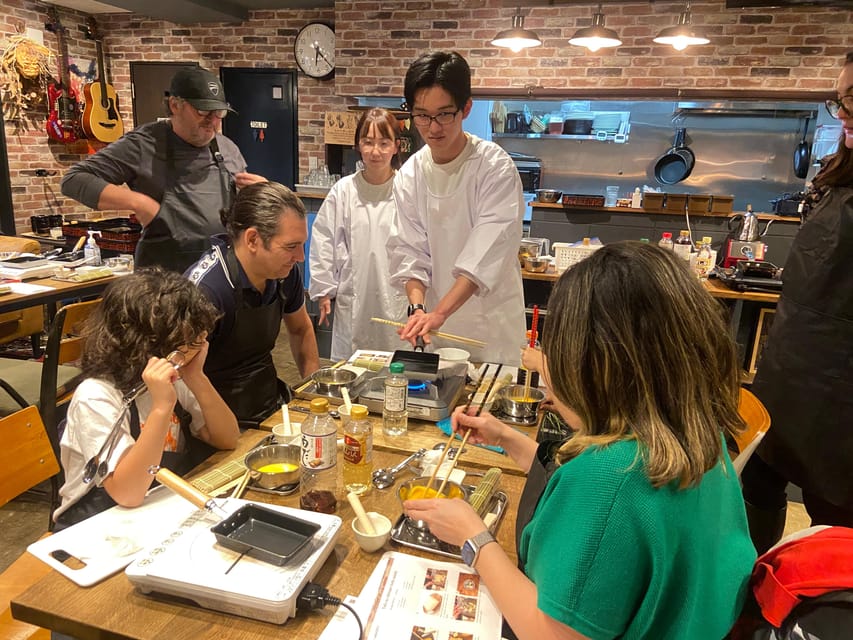
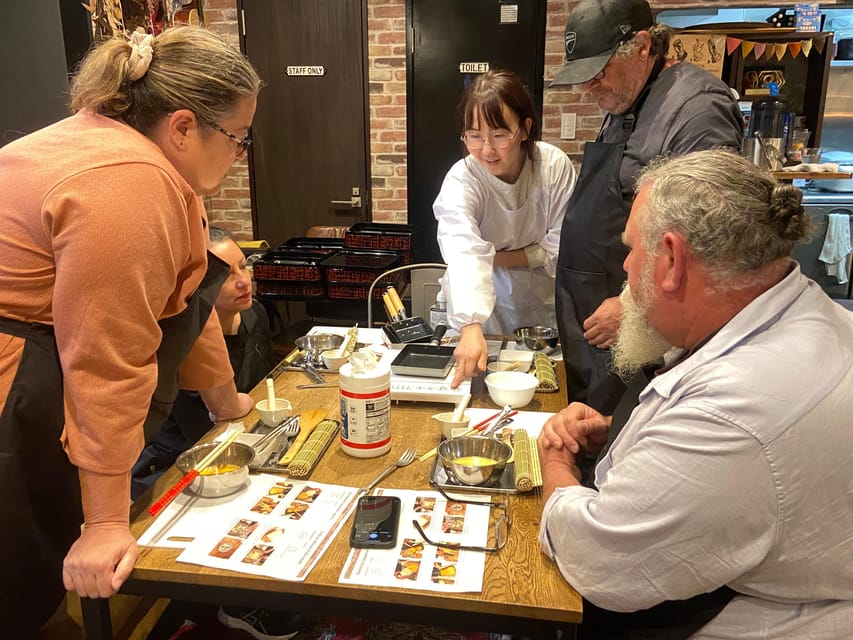
I like the five-person limit, which gives the chef time to correct your knife grip and answer questions. I also like the useful mix of techniques: dashi stock, tempura frying, sushi rolling, and omelet making are skills you can repeat at home. The main drawback is strict timing. Arrive more than 15 minutes late and your booking is automatically canceled, with no same-day refund or schedule change.
Key points to know before booking
- Four dishes make a full meal: Prepare sushi rolls, tempura, tofu salad, and Japanese rolled omelet.
- Small groups keep it hands-on: The class is limited to five participants, rather than being a large demonstration.
- Several chefs may lead the class: Ai, Rie, and Miyu are among the instructors praised for clear English and patient teaching.
- The class meets near Saiin Station: Start at Kyoto Laundry Cafe, about five minutes from the Hankyu Railway station.
- Expect plenty of food: The finished bento is filling, so arrive ready to eat.
- It costs $58 per person: For 150 minutes of instruction, ingredients, equipment, and four dishes, that is a reasonable price for a practical Kyoto activity.
Why a bento class works so well in Kyoto
Many food tours give you a taste and move on. This one asks you to slow down and understand how the food is made. You do not simply eat tempura or admire a bento behind glass. You learn the small choices that shape the meal, from making dashi to cutting ingredients and arranging separate portions.
That makes this a good pick early in your Japan trip. You gain a clearer sense of everyday Japanese food before spending the rest of your holiday ordering meals in restaurants. You may also recognize techniques and ingredients later, which makes menus less mysterious.
The class focuses on washoku, a style of cooking that values fresh, seasonal ingredients and a pleasing balance of taste, color, and texture. The bento format shows those ideas in a compact way. Each item has its own role, but the meal works best when the pieces are enjoyed together.
I especially like that the food is practical rather than overly elaborate. Sushi rolls, tofu salad, tempura, and rolled omelet are familiar enough to enjoy, yet each introduces a different cooking method. You finish with four dishes and several skills, not just one recipe.
More Sushi and Japanese Classes in Japan:
- Sushi Making Tokyo Roll and Authentic Japanese Sushi Class
★ 5.0 · 3,971 reviews - Tokyo: Roll and Authentic Sushi Making Class in Asakusa
★ 4.9 · 1,957 reviews - Ramen Cooking Class at Ramen Factory in Kyoto
★ 5.0 · 1,937 reviews
Meeting the chef near Saiin Station
Your meeting point is Kyoto Laundry Cafe, a short walk from Saiin Station on the Hankyu Railway. The cafe is not necessarily the cooking venue itself. On the day of the class, the chef comes to collect you there and takes you to the cooking location.
This arrangement is simple, but you need to pay attention. Use Google Maps rather than Instagram Maps, and allow enough time to find the cafe. Since the chef picks up the group, a late arrival can affect the whole session. More than 15 minutes late means automatic cancellation, and same-day refunds or schedule changes are not available.
Saiin is useful for visitors staying outside central Kyoto because the station is on the Hankyu line. Still, do not treat the meeting point as a place where you can casually wander in several minutes late. Plan to arrive early, locate the cafe, and wait at the stated meeting point.
Once everyone is together, the small group format becomes a real advantage. With a maximum of five people, the chef can watch each stage and keep the class moving without turning it into a lecture. Some groups have been as small as three people, while families and couples can also book together.
Learning the Japanese approach to knife work
The class begins with basic preparation and cooking methods, including Japanese knife handling. You are not expected to arrive with professional skills. The chef demonstrates how to handle the knife, prepare ingredients, and work in a more controlled Japanese style.
This part matters because Japanese cooking often depends on neat, even preparation. Cutting is not just a chore before the real cooking starts. The size and shape of an ingredient affect how it cooks, how it feels in your mouth, and how it looks in the bento.
You get direct practice instead of watching the chef do everything. Ai, Rie, and Miyu have each been praised for patient explanations and encouraging instruction. That matters if you are nervous around unfamiliar utensils or have little cooking experience.
The pace should feel active, but not frantic. You move between preparation, cooking, and assembly, with explanations of the dishes and their place in Japanese food culture along the way. Families with older children have enjoyed working through the recipes together, though the activity is not designed for very young children.
Making dashi, the quiet foundation of the meal
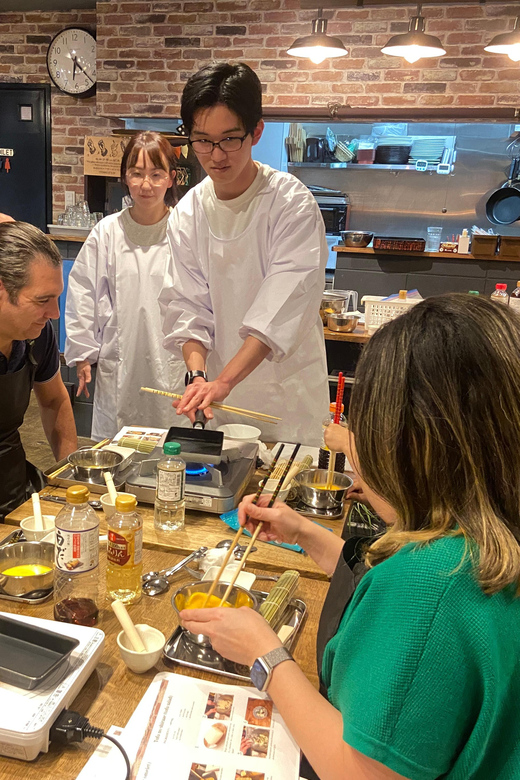
Dashi is one of the most useful things you learn here. This Japanese stock adds a savory base to many dishes, and the chef explains how to prepare it as part of the class.
The lesson is valuable because dashi can seem hard to understand when you only encounter it in finished soup or sauces. Here, you see how it fits into Japanese cooking and how it supports the other flavors rather than overpowering them.
The instructors also explain ingredients and food traditions as you work. That turns the stock lesson into more than a recipe. You begin to understand why Japanese dishes can taste light while still having depth.
This is one of the skills you are most likely to use after returning home. One participant continued making dashi and dashimaki tamago for lunch after the class, using the recipe and process learned in Kyoto. Recipes are sent after the activity, so you do not have to rely on memory alone.
More Hands-On Workshops in Japan:
- Tokyo: Sushi Making Class in a Happi Coat near a Famous Spot
★ 4.9 · 1,377 reviews - Sushi Making Osaka Roll and Authentic Japanese Sushi Class
★ 5.0 · 1,220 reviews - Tokyo Sushi Making Class in Tsukiji with Professional Chef
★ 5.0 · 1,177 reviews - Ramen & Gyoza Cooking Class in Tokyo with Local Supermarket Visit
★ 5.0 · 823 reviews
Frying tempura without losing the crispness
Tempura gives the class a change of pace. You learn how to prepare and fry it, including the technique needed to produce a light, crisp result.
Frying can be the most intimidating part for home cooks, especially when working with hot oil. The chef demonstrates the process and guides you through it, so you can focus on the timing and handling rather than guessing.
The class does not promise that every piece will look restaurant-perfect. That is part of the point. You get to try the method yourself and understand what the chef is watching for.
If you have food restrictions, raise them before booking or as early as possible. A shrimp substitution was made for one participant, but you should not assume every allergy or dietary need can be handled. The activity is also listed as unsuitable for people with diabetes.
Rolling sushi and shaping the bento
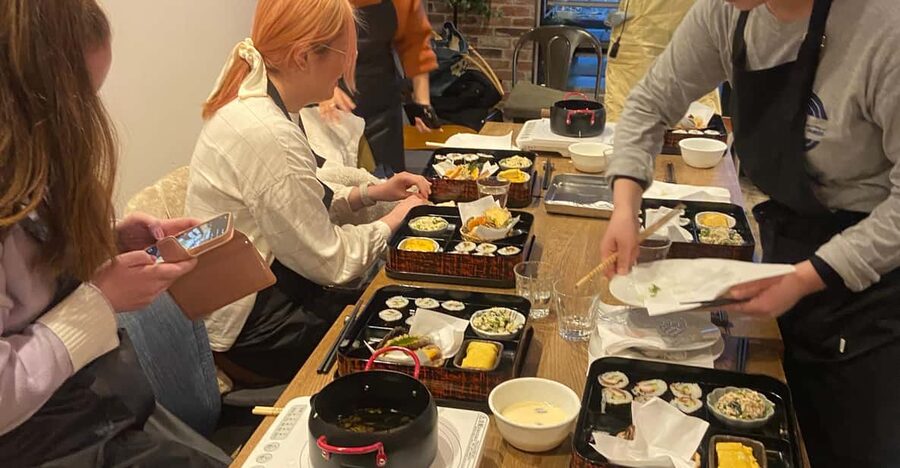
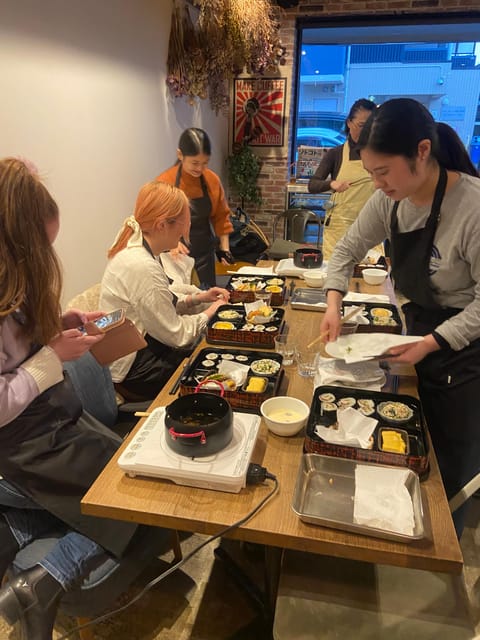
Sushi rolls are another hands-on part of the meal. You prepare and roll them, then place them with the other dishes in your bento.
The bento format gives the class a clear goal. Instead of making unrelated recipes, you are building a portable Japanese meal with separate sections. The finished box should look colorful and balanced, with different textures and flavors sharing space without blending into one dish.
The presentation lesson is useful even if you never pack a bento at home. It shows why Japanese meals often pay attention to arrangement and proportion. A simple rolled omelet looks more appealing when cut and placed carefully beside sushi and tempura.
The class also includes background about the history of bento boxes. That context helps explain why the format remains important in Japan, from everyday lunches to meals prepared for outings and special occasions. You learn how the different elements are cooked and eaten in Japanese homes today.
Dashimaki tamago and the challenge of the rolled omelet
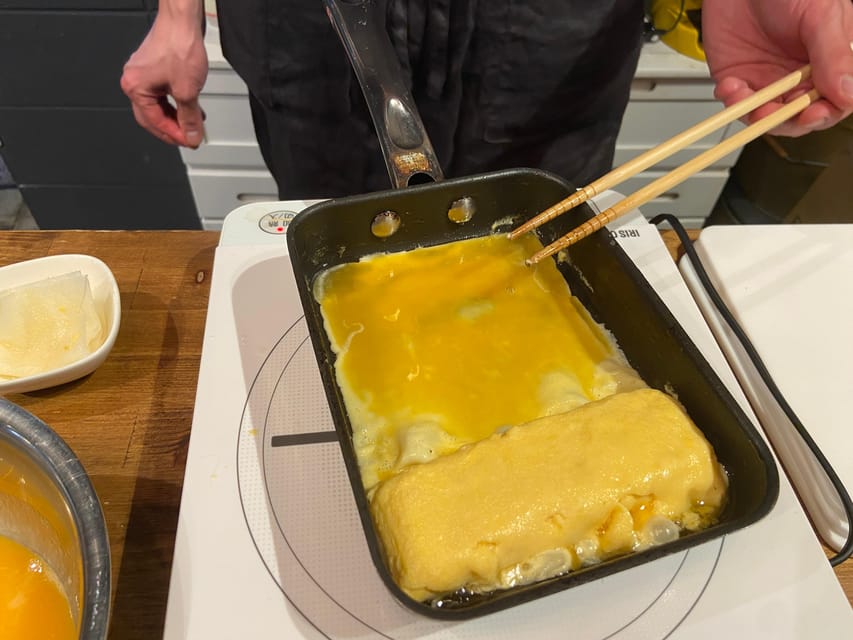
The Japanese rolled omelet, often called dashimaki tamago, is one of the most memorable parts of the class. It looks simple, but rolling the layers neatly takes practice.
The dashi gives the omelet a softer, more savory character than a plain egg dish. You learn to cook it in stages and roll it into shape, with the chef showing you how to keep the layers together.
This is a good example of the class at its best. The dish is familiar enough to understand, but the technique is different from making an ordinary omelet. It also travels well as a home recipe because it needs no unusual presentation once you understand the basic method.
Do not worry if your first attempt is imperfect. The point is to learn the process, and the chefs are there to correct and encourage you. The class is designed for participation, not for producing identical dishes for a photograph.
Tofu salad and the balance of flavors
The tofu salad adds a lighter element to the meal. It gives you another way to work with texture and seasoning, alongside the crisp tempura, soft omelet, and sushi.
This balance is central to washoku. A bento works because the meal has contrast. You are not eating four heavy fried or rice-based dishes. The tofu salad helps keep the box varied and gives you a clearer sense of how Japanese meals are assembled.
You also learn about flavorings as you cook. The instructor explains the ingredients and how they fit into Japanese cuisine, rather than handing you a list of steps without context.
That makes the class helpful for curious eaters who want to understand Japanese food beyond ramen, sushi restaurants, and convenience-store snacks. You leave with a broader picture of home-style cooking.
Sitting down to eat what you made
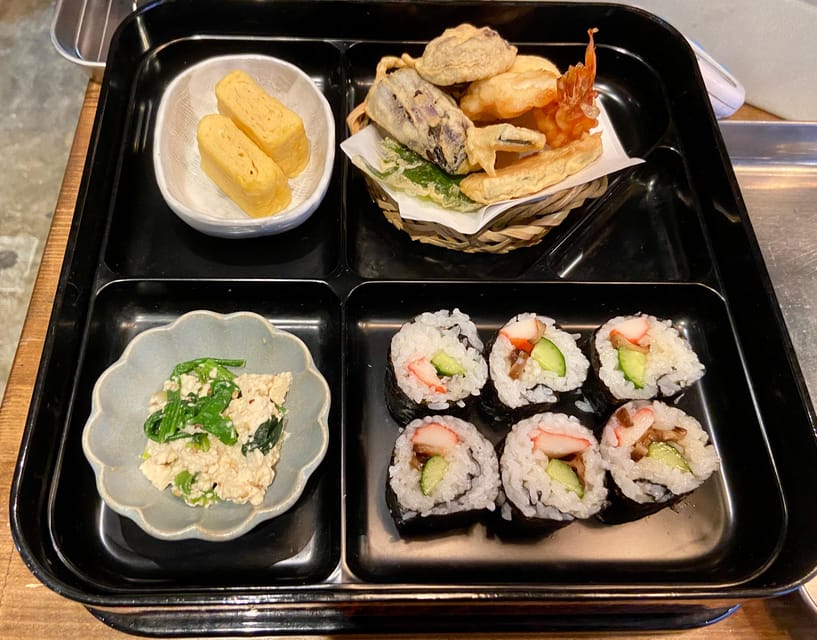
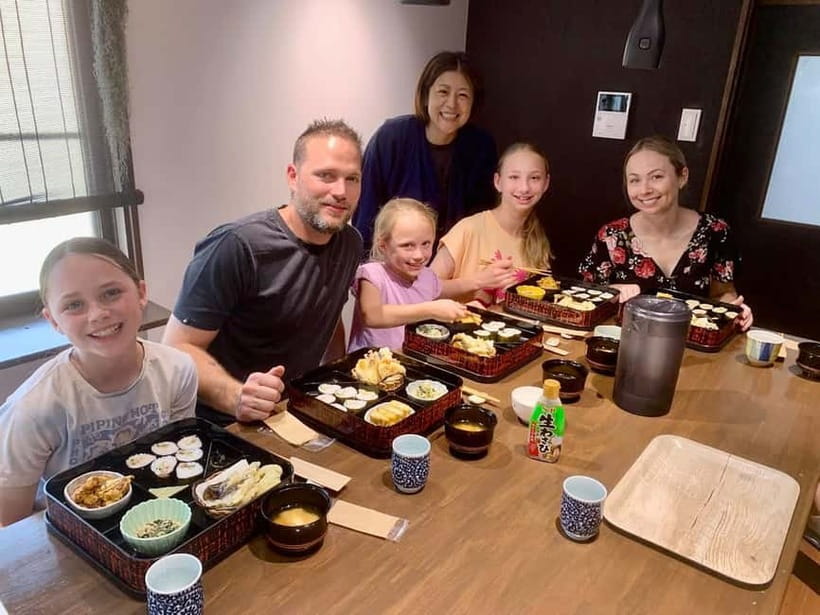
After the cooking, you sit together and eat the bento. This shared meal is not a rushed taste at the counter. It is the reward for the work and a chance to compare the different dishes you prepared.
Plan to arrive hungry. The class produces a generous amount of food, and the finished meal is repeatedly described as filling. You may not want to schedule another substantial lunch or dinner immediately afterward.
The meal also gives you time to talk with the chef and the other people in the group. Since the class is limited to five, conversation feels more personal than it would in a large workshop. The setting has been described as relaxed and family-style, which suits the subject.
The English support is another strong point. Ai, Rie, and Miyu have led classes in English and Japanese, and the instruction includes explanations of both cooking technique and Japanese culture. If you have detailed questions, the small group gives you a better chance to ask them.
Is $58 a fair price for 150 minutes?
At $58 per person, this is not the cheapest meal you can buy in Kyoto. But the price includes the chef, ingredients, cooking instruction, apron, equipment, four dishes, and the meal you eat at the end.
I consider that solid value for a focused two-and-a-half-hour activity. You are paying for food plus guided practice in several techniques. A short restaurant meal might cost less, but it would not teach you how to make dashi, fry tempura, or roll an omelet.
The value is strongest if you enjoy cooking or want something you can carry home as a skill. It is less compelling if you mainly want a quick cultural show or a passive food tasting. This class asks you to work, handle ingredients, and stay involved.
The included recipes improve the value. You can repeat the dishes later instead of leaving Kyoto with only a memory and a full stomach. The course also fits well into a trip because the 150-minute length is long enough to feel substantial without taking an entire day.
Who should book this Kyoto cooking class?
I would recommend it to first-time visitors who want a friendly introduction to Japanese cuisine. It is also a strong choice for couples, families with older children, solo visitors who like meeting people, and anyone who wants a break from sightseeing.
You do not need advanced cooking ability. The chef demonstrates the techniques and helps as you go. The small group is particularly useful for beginners because you can ask questions without trying to attract attention in a crowded room.
This may not suit you if you use a wheelchair, have diabetes, or are traveling with very young children. The activity is listed as unsuitable for children under four, with additional restrictions for younger children and babies. Check your own needs carefully before reserving.
You should also think about your schedule. The meeting point is near Saiin Station, not at one of Kyoto’s main sightseeing sites, and the chef cannot wait indefinitely. Build in extra time for transport and finding Kyoto Laundry Cafe.
Should you book it?
Book this class if you want to understand Japanese food by making it yourself. The combination of dashi, tempura, sushi, tofu salad, and dashimaki tamago gives you a wide lesson in 150 minutes, and the small group keeps the work personal.
I would choose it early in a Kyoto visit, especially if you like cooking and want recipes to use back home. Skip it if you prefer a quick tasting, have strict dietary or access needs that have not been confirmed, or cannot arrive early at the meeting point.
For most visitors who enjoy hands-on activities, $58 is a fair spend for a filling meal, four practical dishes, and a better sense of how washoku works.
FAQ
Where does the cooking class meet?
The meeting point is Kyoto Laundry Cafe, located about five minutes from Saiin Station on the Hankyu Railway.
Is Kyoto Laundry Cafe the cooking venue?
Kyoto Laundry Cafe serves as the meeting point. The chef comes to pick up participants there on the day of the class.
How long does the activity last?
The class lasts 150 minutes, or two and a half hours.
How many people can join the class?
The activity is a small group class limited to five participants.
Which dishes do you make?
You make sushi rolls, tempura, tofu salad, and a Japanese rolled omelet. The class also teaches how to make dashi stock.
Is food included in the price?
Yes. Ingredients and four dishes are included, and you eat the bento you prepare during the class.
What languages does the instructor speak?
The class is offered in English and Japanese.
What equipment is provided?
Aprons and other cooking equipment are included.
Can I cancel for a full refund?
You can cancel up to 24 hours in advance for a full refund.
What happens if I arrive late?
If you arrive more than 15 minutes after the scheduled meeting time, the reservation is automatically canceled. Same-day refunds or schedule changes are not available for late arrivals.
Just added around Japan
- Ramen Making from Scratch with Tokyo Mom(Vegan Option Available)★ 5.0 · 39 reviews
- Shibuya Tokyo: Sushi Making Class (Vegan/Vegetarian/Halal)★ 4.7 · 29 reviews
- Vegan/Vegetarian Ramen and Gyoza by Bentoya cooking★ 5.0 · 59 reviews
- Ramen & Dumpling Cooking in Tokyo with Chef/Vegan possible★ 5.0 · 107 reviews
- Tokyo Haneda: Bento & Ramen Gyoza Cooking Class in a Local home★ 5.0 · 9 reviews
- Hands-on Japanese Cooking in a Shinjuku Home Kitchen with Satoru★ 5.0 · 19 reviews
- Near Fushimiinari: Kyoto Home Cooking Class & Supermarket tour★ 5.0 · 100 reviews
- Japanese Home Cooking Class & Walk in Todoroki Temple Tokyo★ 5.0 · 88 reviews
Japanese & Sushi Cooking Classes, compared.
Sushi Making Tokyo Roll and Authentic Japanese Sushi Class
Read our review →
Tokyo: Roll and Authentic Sushi Making Class in Asakusa
Read our review →
Ramen Cooking Class at Ramen Factory in Kyoto
Read our review →
Tokyo: Sushi Making Class in a Happi Coat near a Famous Spot
Read our review →
Sushi Making Tokyo! Popular Maki Sushi & Japanese Sushi(+Recipe!)
Read our review →
Sushi Making Osaka Roll and Authentic Japanese Sushi Class
Read our review →
Tokyo Sushi Making Class in Tsukiji with Professional Chef
Read our review →
Ramen & Gyoza Cooking Class in Tokyo with Local Supermarket Visit
Read our review →Browse the lists this tour appears in