
Review · KYOTO
Kyoto: Sushi Making Experience in Kawaramachi
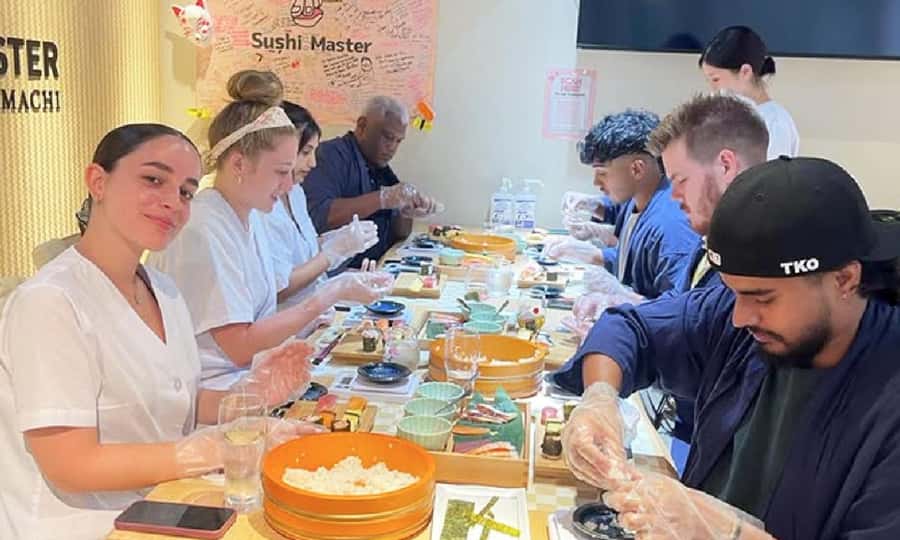
The best part of this Kyoto experience is that you do not just watch a chef work. You make 12 pieces of sushi yourself, then sit down and eat the results. A short lesson on Japanese cuisine and sushi gives the hands-on work some useful context, rather than turning the class into a simple food assembly line.
I like the central Kawaramachi location, which is only about five minutes from Hankyu Kyoto-Kawaramachi Station, and the clear 90-minute format. I also like the choice between classic nigiri and decorative temari sushi. The main limitation is dietary: only shellfish allergies can be accommodated, with octopus and squid substitutions. Vegetarian, vegan, and halal meals are not offered.
Key points at a glance
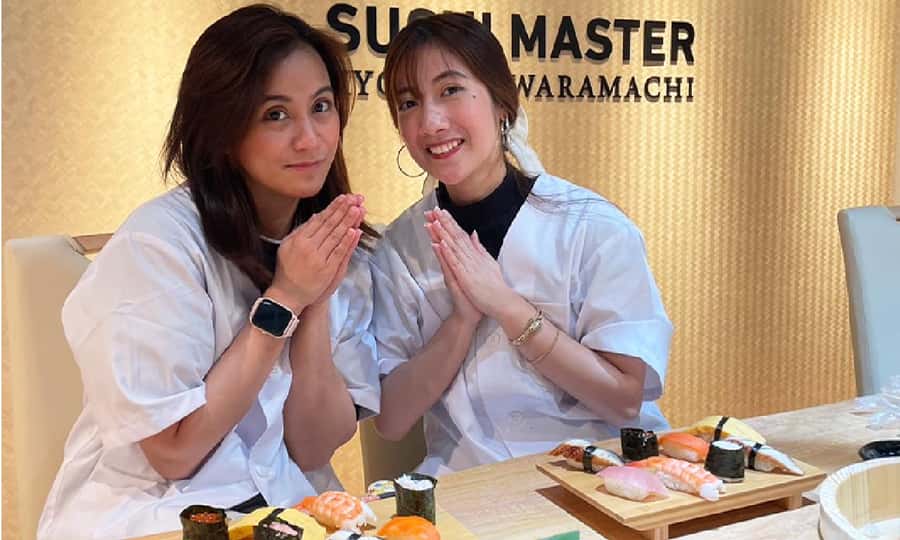
- Two sushi courses: Choose 9 pieces of nigiri with 3 gunkan-maki, or 10 pieces of temari sushi with 2 gunkan-maki.
- A 90-minute schedule: The class combines a history lesson, sushi preparation, and time to eat what you make.
- English-speaking staff: You can follow the instruction without needing Japanese.
- A useful Kyoto location: The class is about five minutes from Kyoto Kawaramachi Station, close to shops and the wider Kawaramachi area.
- Food and a souvenir included: Ingredients, the sushi meal, and a special gift are covered in the $40 price.
- Important diet restriction: Shellfish allergies can be handled, but vegetarian, vegan, and halal requests cannot.
Making sushi in the heart of Kawaramachi
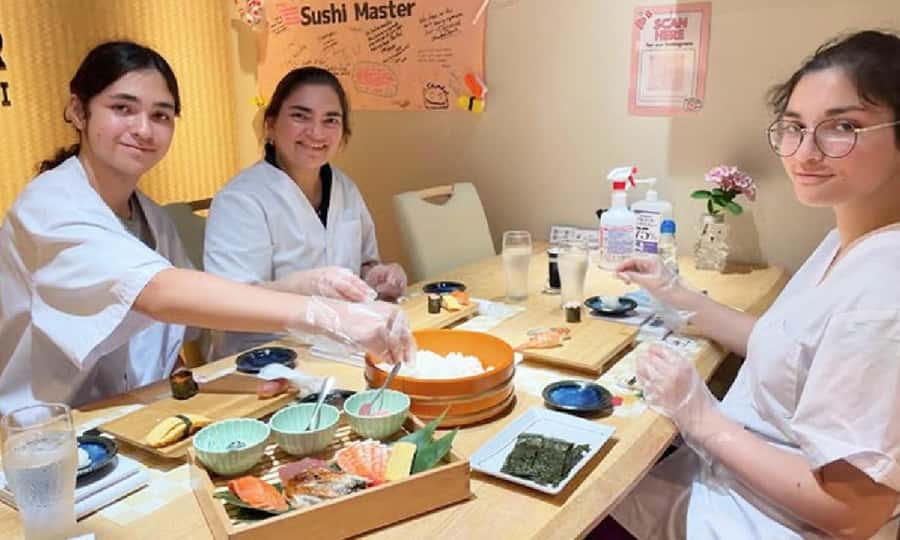
Kawaramachi is one of Kyoto’s easiest areas for fitting an activity into a busy day. The class is about a five-minute walk from Kyoto Kawaramachi Station on the Hankyu Kyoto Line, so you can reach it without arranging a hotel transfer or spending much of your sightseeing time on transport.
That location matters. You can schedule the class between shopping, an afternoon walk, or other plans in central Kyoto. Shops are close by, making it simple to continue your day after the 90-minute session. You need to arrive at the class yourself because pickup and drop-off service is not provided.
The exact meeting point can vary by the option you book, so check your confirmation rather than assuming every course begins in the same room. The activity ends back at the meeting point, which keeps the logistics simple.
The setting is designed for participation, not for a formal restaurant meal. You arrive, meet the English-speaking staff, and prepare to work with sushi ingredients under guidance. That makes this a good choice if you want an activity with a clear start and finish, rather than an open-ended cooking lesson.
More Sushi and Japanese Classes in Kyoto:
- Ramen Cooking Class at Ramen Factory in Kyoto
★ 5.0 · 1,937 reviews - Sushi Making in Kyoto! Same-day bookings welcome!
★ 5.0 · 713 reviews - Kyoto: Ramen Cooking Class at a Ramen Factory with Souvenir
★ 4.9 · 532 reviews
The opening lesson: sushi beyond raw fish
The class begins with a lecture on the history of Japanese cuisine and sushi. This is a short introduction rather than a full food-history course, but it gives the practical work a better frame.
Sushi is more than fish placed on rice. Its appeal comes from the relationship between the rice, seasoning, shape, topping, and presentation. By learning a little about the tradition before making your own pieces, you have a better idea of what the techniques are trying to achieve.
I like this order. If you started with tools and ingredients, the class could feel like following instructions without much meaning. The opening talk gives you a reason to pay attention to the details that follow, especially when shaping rice or placing toppings.
The staff speak English fluently, which is important in a hands-on class. You can ask for clarification while your hands are busy, and you do not have to rely only on watching someone from across the room. The information provided does not specify individual instructor names, but the class is presented as being led by friendly English-speaking Japanese staff.
Do not expect a long lecture. The real point is to get you working quickly. If you are visiting Kyoto with children, friends, or family, the short introduction should help keep the pace moving.
Choosing between nigiri and temari sushi
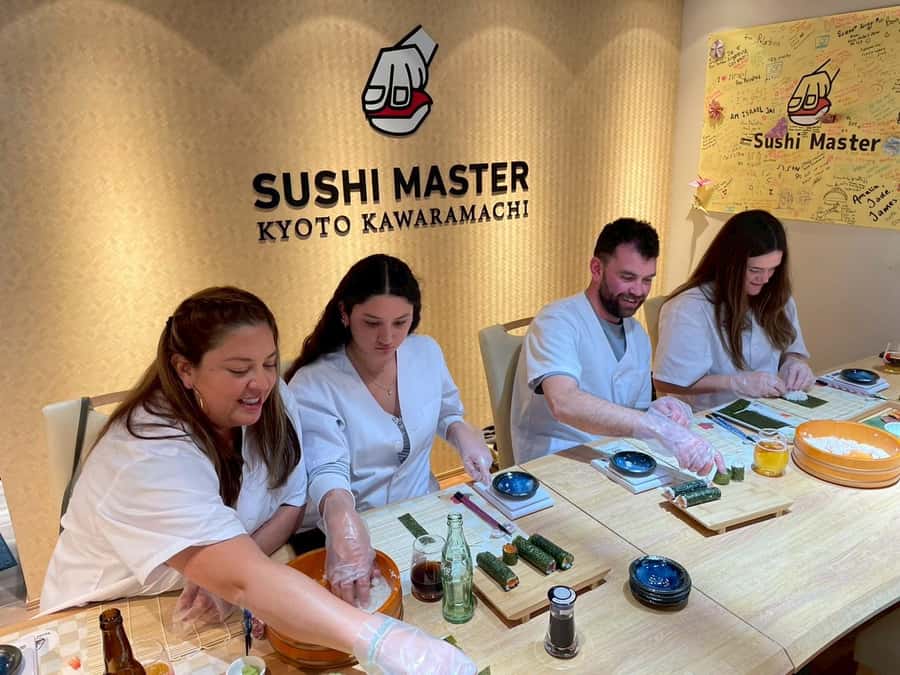
You have two course options, and the choice changes the character of the activity.
The Sushi Making Experience Course includes 9 pieces of nigiri sushi and 3 pieces of gunkan-maki. Nigiri is the familiar style in which seasoned rice is shaped and paired with a topping. Gunkan-maki has a seaweed band around the rice, creating a small cup-like form for its topping.
This option is the better fit if you want to practice a classic sushi shape. It also gives you a mix of two different styles, so the class is not limited to one repeated motion. You will make 12 pieces in total.
The Temari Sushi Making Course includes 10 pieces of temari sushi and 2 pieces of gunkan-maki. Temari sushi is rounded and compact, with a more decorative look than standard nigiri. It can be an appealing choice if presentation matters to you or if you like the idea of creating small, colorful pieces.
This course also includes 12 pieces altogether. The difference is not the amount of food, but the style of sushi you make. Since the available information does not specify the exact fish, toppings, or decoration for either option, choose based on the technique you want to try rather than expecting a particular menu.
Both courses are designed for beginners. You do not need prior cooking or sushi-making experience. Skilled staff guide you through the techniques, so the class is about learning by doing rather than proving that you already know your way around a sushi counter.
The hands-on part: shaping, filling, and making mistakes
After the lesson, you move into the practical portion. You make your selected pieces with guidance from the staff, using the ingredients supplied for the experience.
This is where the class earns its place in a Kyoto itinerary. Eating sushi at a restaurant is easy, but shaping it yourself gives you a different connection to the meal. You notice how much control is needed to make a neat piece, and you get a better sense of the small steps behind food that often arrives at the table looking effortless.
Do not worry about producing perfect sushi. The appeal is in taking part. Your pieces may not look identical, and that is part of the fun. The staff are there to show you authentic techniques and help you through the process, not to turn the session into a test.
The 90-minute schedule keeps the activity manageable. It is long enough for a short cultural lesson, hands-on preparation, and a meal, but not so long that it takes over your day. You can place it into a morning or afternoon plan without committing to a full-day cooking program.
The class may suit groups especially well because everyone has a clear task. Friends can compare their shapes, families can work side by side, and solo visitors can focus on the technique without needing to make conversation the main event. The supplied information does not state the group size, so you should not book expecting a private lesson unless your selected option specifically says so.
Same place, a different menu:
- Kyoto: Ramen, Gyoza, and Onigiri Cooking Class
★ 5.0 · 445 reviews - The Original Small-Group Sushi Making Class in Kyoto
★ 5.0 · 436 reviews - Kyoto: Japanese Washoku Bento Small Group Cooking Class
★ 5.0 · 380 reviews - Kyoto Ramen and Gyoza Cooking Class with Professional Chefs
★ 5.0 · 282 reviews
Sitting down to eat what you made
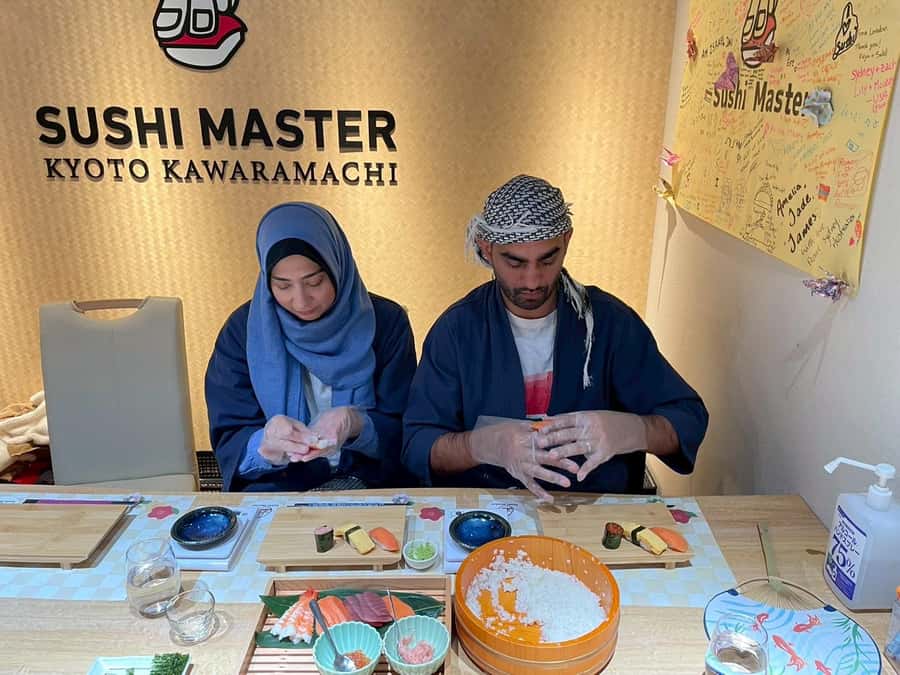
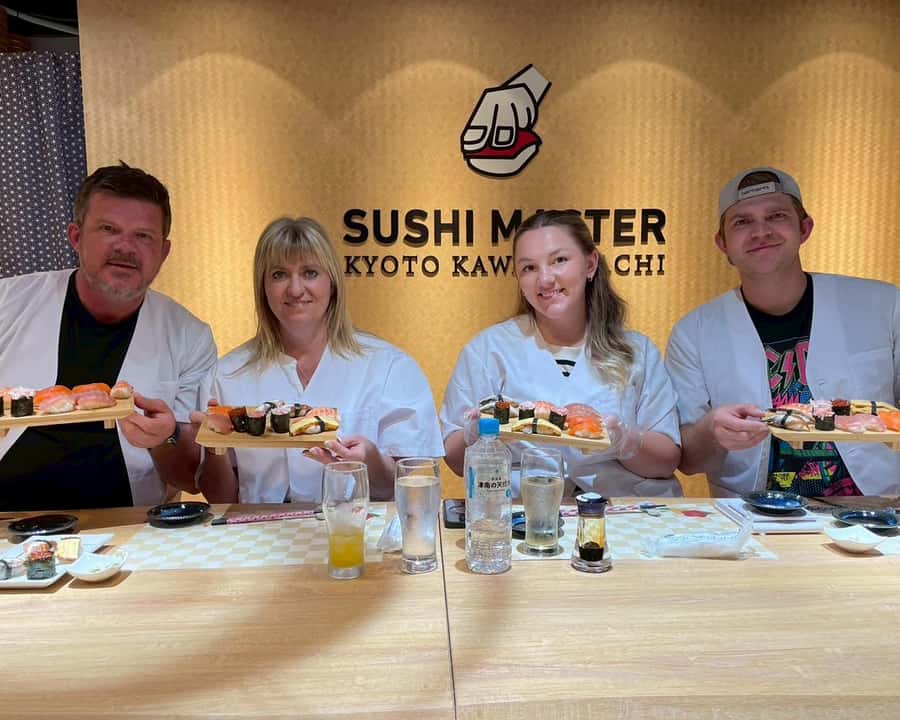
Once the preparation is finished, you eat the sushi you have made. The meal is included in the price, along with the ingredients used during the activity.
This is a practical benefit, not just a fun ending. You do not have to find another lunch or dinner immediately after class, and you get to taste the result while the process is still fresh in your mind. It also makes the experience feel complete: introduction, preparation, and meal all happen in one place.
Drinks are not included. Soft drinks and alcohol can be ordered during the class, but you should budget extra if you want something to drink with the meal. This is a small cost point, though worth noting because the advertised $40 price covers the sushi experience rather than every item you might order.
The number of pieces is generous for a short class. Each course includes 12 pieces, divided between the main sushi style and gunkan-maki. The information does not state the portion size of the rice or toppings, so I would treat this as a hands-on meal rather than a promise of a large restaurant-style feast.
What the $40 price really covers
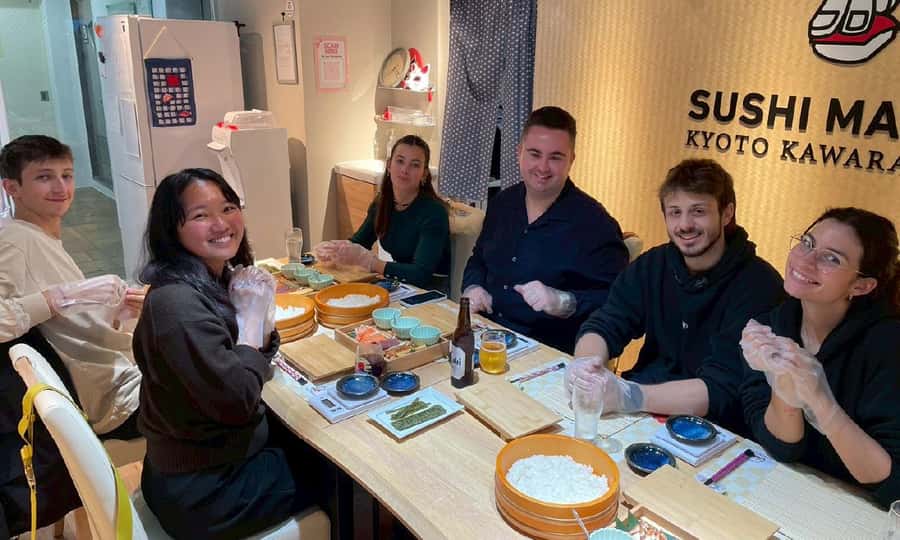
At $40 per person, you are paying for more than the food. The price includes the ingredients, the sushi you make and eat, English-language instruction, the cultural introduction, and a special gift to take home.
That is solid value if you want a structured activity in central Kyoto. A regular meal might cost less, but it would not include the instruction or the chance to prepare the food yourself. A longer cooking course might offer more recipes, but it would also take more time and may cost more.
The strongest value comes from the combination of location and length. You can reach the class easily by train, spend 90 minutes there, eat afterward, and continue exploring Kawaramachi. For a short trip, that compact format can be more useful than a half-day experience on the edge of the city.
The souvenir adds a small physical reminder of the class. The exact gift is not specified, so do not book based on expectations of a particular item. Think of it as an extra keepsake rather than a major part of the price.
You can reserve now and pay later, which helps if your Kyoto schedule may change. Cancellation is allowed up to 24 hours in advance for a full refund. Those terms give you some flexibility, but you should still confirm the meeting point and course selection before the day.
Dietary restrictions need careful attention
This is the most important practical warning. The class can accommodate shellfish allergies, with octopus and squid substituted. It does not offer special dishes for vegetarians, vegans, or people following a halal diet.
If you have a shellfish allergy, state it when booking and confirm the substitution details. The information specifically mentions octopus and squid, so do not assume that every ingredient or topping is automatically suitable without checking.
If you are vegetarian, vegan, or halal, this experience is not a good match based on the stated policy. Do not book hoping that the staff can create an unlisted alternative on the day. The class is built around its set sushi courses, and those dietary options are not available.
Other allergies are not addressed in the supplied information. If you have a food allergy beyond shellfish, contact the provider before paying and ask whether it can be managed. That is safer than relying on an informal request once the class begins.
Who will enjoy this class most
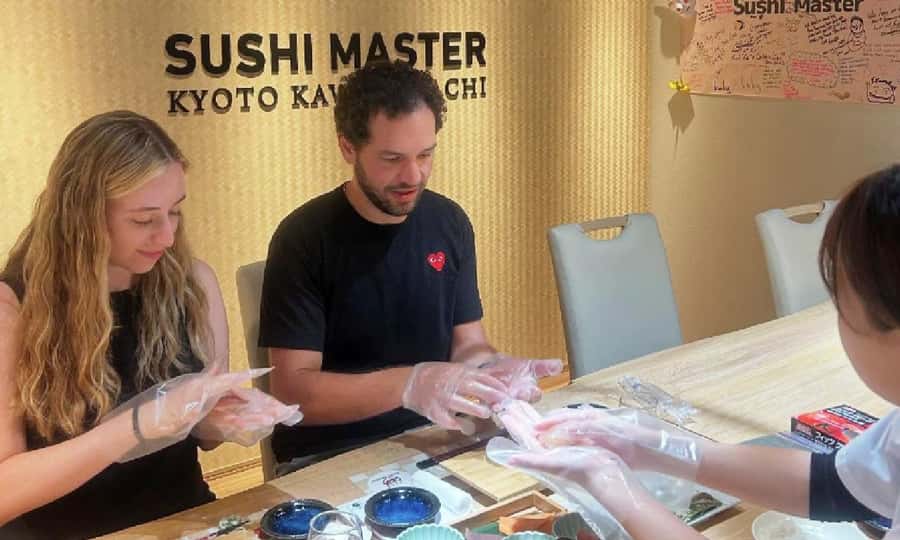
I would recommend this for first-time sushi makers, couples, families, and friends who want an easy cultural activity in central Kyoto. It works particularly well for people who enjoy their meals more when they understand how they are made.
The class is also a good pick if you have limited time. The 90-minute format leaves room for temples, shopping, a river walk, or another meal afterward. Its proximity to Kawaramachi Station makes it easier to combine with other plans than an activity that requires a long bus ride.
The nigiri course suits you if you want to practice a classic sushi form. The temari course may be more appealing if you prefer rounded, decorative pieces. Both include gunkan-maki, so either choice gives you some variety.
You may want to skip it if you are looking for a quiet, high-end sushi dinner, a private chef experience, or a wide choice of dishes. This is a participatory class with a fixed course, not a restaurant tasting menu. It also is not suitable for vegetarian, vegan, or halal diners.
Final call: book or pass?
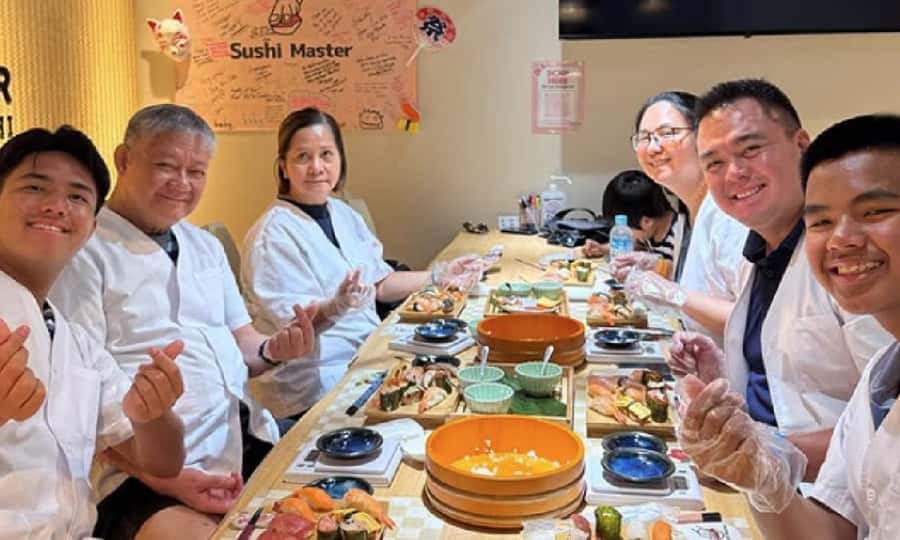
Book this experience if you want to make your own sushi, eat it afterward, and learn a little about Japanese food without giving up half a day. The $40 price is reasonable for the ingredients, meal, English instruction, central location, and souvenir.
Before booking, choose your course carefully and check the dietary policy. I would pick nigiri if you want classic sushi technique, and temari if you care more about shape and presentation. If your diet fits the set menu and you like hands-on activities, this is an easy Kyoto addition. If you need a special diet or want a fully customized meal, pass and choose a different food experience.
FAQ
How long does the sushi-making experience last?
The session lasts 90 minutes. It includes a lecture on Japanese cuisine and sushi, hands-on sushi preparation, and time to eat the sushi you make.
Where is the class located?
The class is in Kawaramachi, Kyoto, about a five-minute walk from Kyoto Kawaramachi Station on the Hankyu Kyoto Line.
What sushi courses can I choose from?
You can choose the Sushi Making Experience Course, with 9 pieces of nigiri sushi and 3 pieces of gunkan-maki, or the Temari Sushi Making Course, with 10 pieces of temari sushi and 2 pieces of gunkan-maki.
Is the class suitable for beginners?
Yes. The experience is designed for all skill levels, and staff guide you through the sushi-making techniques.
Is the class taught in English?
Yes. The staff speak English fluently, and English is the listed language for the activity.
Are drinks included?
No. Soft drinks and alcohol can be ordered during the class, but drinks are not included in the activity price.
Can the class accommodate dietary restrictions?
The class accommodates shellfish allergies, with octopus and squid available as substitutes. It does not offer special dishes for vegetarian, vegan, or halal diets.
Just added around Kyoto
- Kyoto: Wagashi (Japanese sweets) Cooking near Fushimiinari★ 5.0 · 40 reviews
- Kyoto: Small-Group Authentic Sushi Making Workshop★ 5.0 · 137 reviews
- Kyoto Udon & Tempura Cooking Class with Professional Chefs★ 3.8 · 3 reviews
- Kyoto: Cooking class, learning how to make authentic sushi★ 4.2 · 9 reviews
- Kyoto Home Cooking Class &Supermarket tour near Fushimiinari★ 5.0 · 31 reviews
- Kyoto: Morning Japanese Bento Cooking Class★ 5.0 · 149 reviews
- Authentic Japanese Cooking Experience at Izakaya restaurant★ 4.2 · 5 reviews
- Gyoza Cooking Class in Kyoto: Traditional Japanese Dumplings★ 5.0 · 12 reviews
Japanese & Sushi Cooking Classes, compared.
Sushi Making Tokyo Roll and Authentic Japanese Sushi Class
Read our review →
Tokyo: Roll and Authentic Sushi Making Class in Asakusa
Read our review →
Ramen Cooking Class at Ramen Factory in Kyoto
Read our review →
Tokyo: Sushi Making Class in a Happi Coat near a Famous Spot
Read our review →
Sushi Making Tokyo! Popular Maki Sushi & Japanese Sushi(+Recipe!)
Read our review →
Sushi Making Osaka Roll and Authentic Japanese Sushi Class
Read our review →
Tokyo Sushi Making Class in Tsukiji with Professional Chef
Read our review →
Ramen & Gyoza Cooking Class in Tokyo with Local Supermarket Visit
Read our review →Browse the lists this tour appears in