
Review · KYOTO
Kyoto: Sushi Making Class with Sushi Chef
Kyoto’s sushi class turns lunch into a hands-on lesson. You begin with a practice sushi model, then shape real nigiri and make a roll with a special tool. The fish is bought fresh each morning at Kyoto Central Wholesale Market, and the class ends with you eating the plate you made.
I like the small maximum of eight people, which gives the chef time to correct your technique. I also like the practical extras: dining etiquette, knife talk, tea or water, Japanese-style dashi soup, and photos and video taken while you work. The main drawback is that you do not prepare the rice or cut the fish yourself, so serious cooking enthusiasts may want a more advanced class.
Key points to know before booking
- Market-fresh fish: Fish is purchased early each morning at Kyoto Central Wholesale Market and prepared before class.
- Beginner-friendly practice: You first work with a sushi sample toy before handling real ingredients.
- Two classic forms: You make nigiri sushi and a sushi roll using a special tool.
- Small-group teaching: The class is limited to eight participants, with instruction in English or Japanese.
- A ready-made souvenir: Photos and videos are taken during the class and shared afterward.
- Useful caution: Strong fragrances are not allowed, and the activity is not suitable for people with food allergies.
From practice sushi to a real lunch
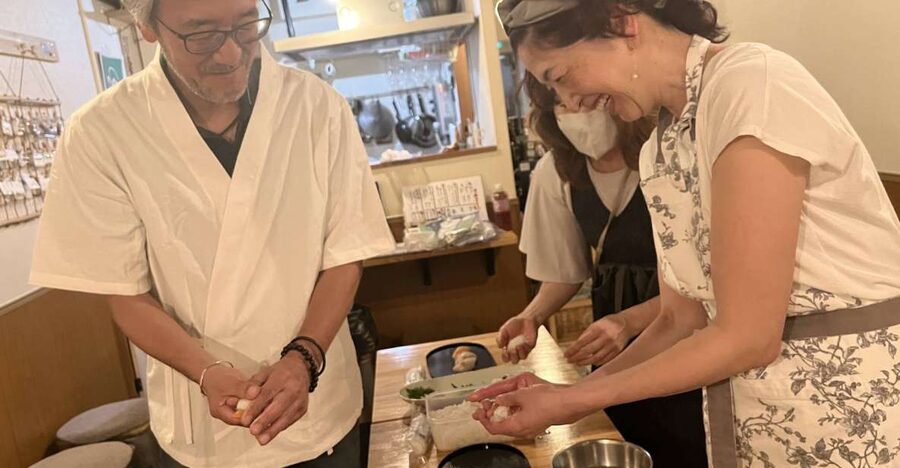
The class follows a sensible order. You do not sit down and immediately wrestle with sticky rice and slippery fish. First, the chef uses a sushi sample toy to show how the pieces should be handled. That simple practice step matters, especially for children and anyone who has never shaped sushi before.
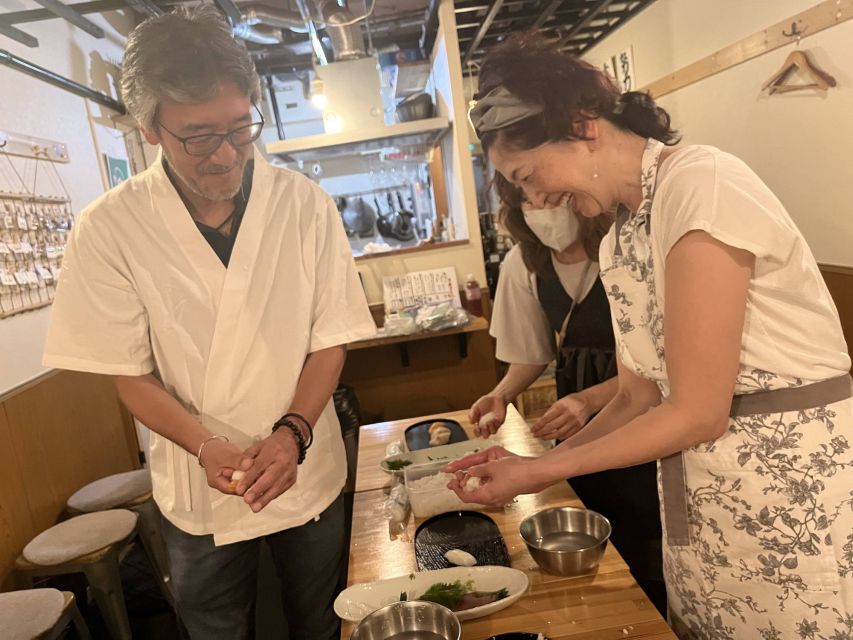
Once your hands understand the basic motion, you move on to real nigiri. The chef teaches you how to place the fish, form the rice, and bring the two together without crushing the rice. This is a small task, but it quickly shows why restaurant sushi looks so neat. The shape, pressure, and proportion all matter.
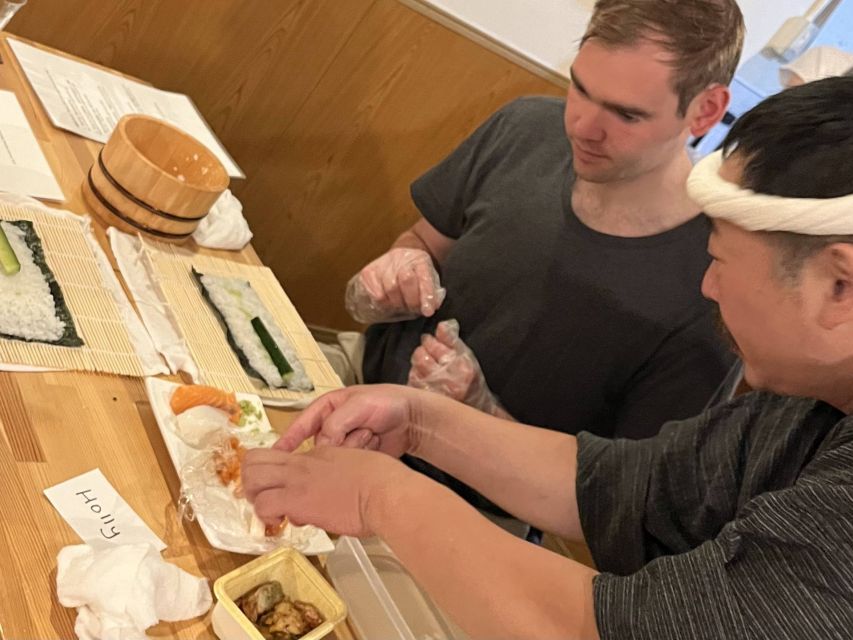
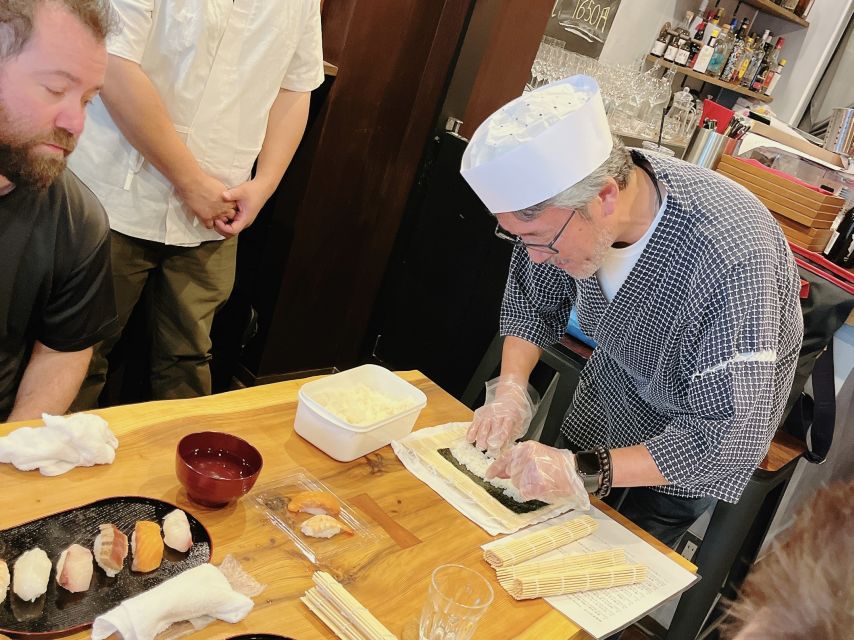
Next comes a sushi roll. You use a special tool, which makes the rolling stage less intimidating for beginners. You then arrange the finished pieces on a sushi plate. The meal is not an afterthought. Eating what you have just made is the payoff, along with Japanese-style dashi soup and tea or water.
The advertised duration ranges from 90 minutes to three hours, depending on the selected time and the class arrangement. I would check the exact start time and expected length when booking, especially if you are fitting this between Nishiki Market, Gion, or a train connection.
More Sushi and Japanese Classes in Kyoto:
- Ramen Cooking Class at Ramen Factory in Kyoto
★ 5.0 · 1,937 reviews - Sushi Making in Kyoto! Same-day bookings welcome!
★ 5.0 · 713 reviews - Kyoto: Ramen Cooking Class at a Ramen Factory with Souvenir
★ 4.9 · 532 reviews
What the chef teaches beyond shaping sushi
The best part of this experience is not simply learning to form a rice ball. The instructors also explain how sushi fits into Japanese dining.
Several chefs lead the sessions, including Hide, Yutaka, Yone, Nami, Yukihide, and Yune. Hide receives especially strong praise for his calm teaching style and decades of experience as a sushi chef. Nami is described as patient with young children, while Yutaka and Yone are noted for clear explanations. Your instructor depends on the date, but the teaching approach is built around showing each step rather than assuming you already know it.
You may learn how to eat sushi properly, how to use chopsticks, and how to approach a sushi plate at a restaurant. One useful lesson concerns etiquette, which can make a difference when you later visit a traditional sushi counter. The exact content can vary by chef, but the class gives you context that a quick meal alone cannot provide.
You may also hear about the different fish used, the knives involved, and why particular knives have particular jobs. That detail gives the food more meaning. It also helps explain why sushi preparation is a craft rather than a simple matter of putting fish on rice.
Why the fish matters
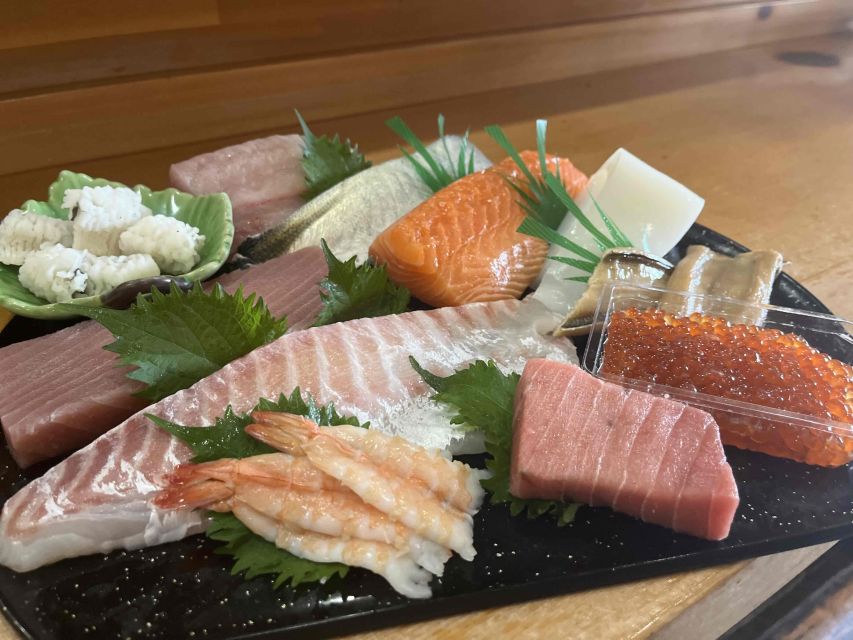
The class uses fish purchased early in the morning from Kyoto Central Wholesale Market. The fish is prepared shortly before the lesson, so freshness is a central part of the experience, not just a marketing detail.
For you, this means the class connects technique with ingredients. You are not practicing on anonymous supermarket pieces and then eating a separate meal. You work with the same type of food that makes sushi worth learning in the first place.
Fresh fish does not automatically make every piece perfect. Your results still depend on how evenly you shape the rice and place the topping. That is part of the fun. The chef provides the difficult preparation, while you get to attempt the final assembly.
One useful point is that even people who do not usually enjoy raw fish have found the finished sushi approachable. That is not a promise for every palate, but the quality of the ingredients and the guidance can make the meal less intimidating.
A class that works for children and families
This is one of the better Kyoto food activities for a mixed-age group. The toy practice stage gives children a clear way to understand the movements before real food is involved. The instructors are used to explaining the process patiently, and one five-year-old participant reportedly considered the class the favorite activity of a Japan trip.
That does not mean every child will sit happily through a full three-hour session. Check the actual duration before booking if you are traveling with young children. Still, the structure is more welcoming than a formal cooking lesson that begins with technical terms and expects adult concentration.
Teenagers also have a good reason to join. They can make something attractive with their own hands, eat it afterward, and leave with a skill they can try at home. The class has enough structure to teach, but it is not described as a rigid professional training course.
For families, the small group limit of eight is important. A chef has a better chance of noticing when a child needs another demonstration or when a beginner is pressing the rice too firmly.
More Hands-On Workshops in Kyoto:
- Kyoto: Ramen, Gyoza, and Onigiri Cooking Class
★ 5.0 · 445 reviews - The Original Small-Group Sushi Making Class in Kyoto
★ 5.0 · 436 reviews - Kyoto: Japanese Washoku Bento Small Group Cooking Class
★ 5.0 · 380 reviews - Kyoto Ramen and Gyoza Cooking Class with Professional Chefs
★ 5.0 · 282 reviews
What the small group adds
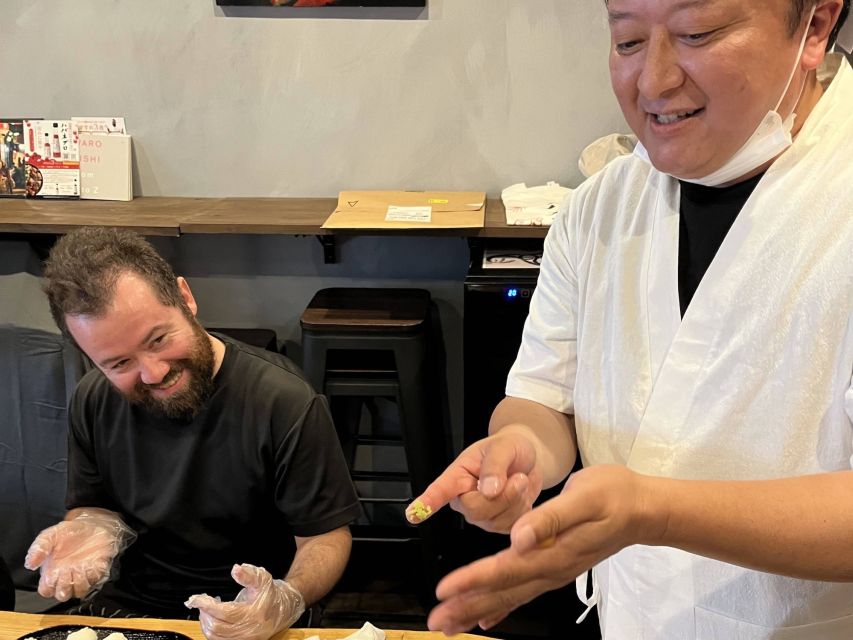
A maximum of eight people keeps the experience personal. You can watch the chef’s hands, ask questions, and get help before a misshapen roll becomes a lost lunch.
Small groups also help with translation. The class is offered in English and Japanese, and clear demonstrations carry much of the lesson even when culinary vocabulary is new. English-speaking instructors are available, but the exact chef depends on the session.
There is a social side, too. You prepare food beside the other participants, then sit down to eat it. That can make the class feel relaxed rather than like a lecture. At the same time, the group size is large enough that you should not expect a private lesson unless your party fills the available places.
The sessions are held at one of two venues around Shijo Karasuma. The organizer chooses the venue based on the number of people booked, then sends a Google Maps link by email. At the appointed time, someone meets you with a welcome board. This system is practical, but you should not assume a fixed address from the start. Check your email and allow enough time to find the selected venue.
One past class was held near Kyoto Kawaramachi Station, and another was described as having a pleasant river view. Those details may not apply to every session, so treat them as possibilities rather than guarantees.
The photo service lets you keep your hands busy
The class includes photos and videos taken during the activity, with the files shared afterward. This is a useful touch. Sushi making requires clean hands and attention, so stopping to photograph every stage is awkward.
You can focus on shaping the rice, rolling the maki, and arranging the final plate while someone else records the process. The images also give children and families a clear reminder of what they made together.
Do not expect a professional food photography session. The main value is convenience. You get a record of the class without constantly reaching for your phone or worrying about rice-covered fingers.
The value of $74 per person
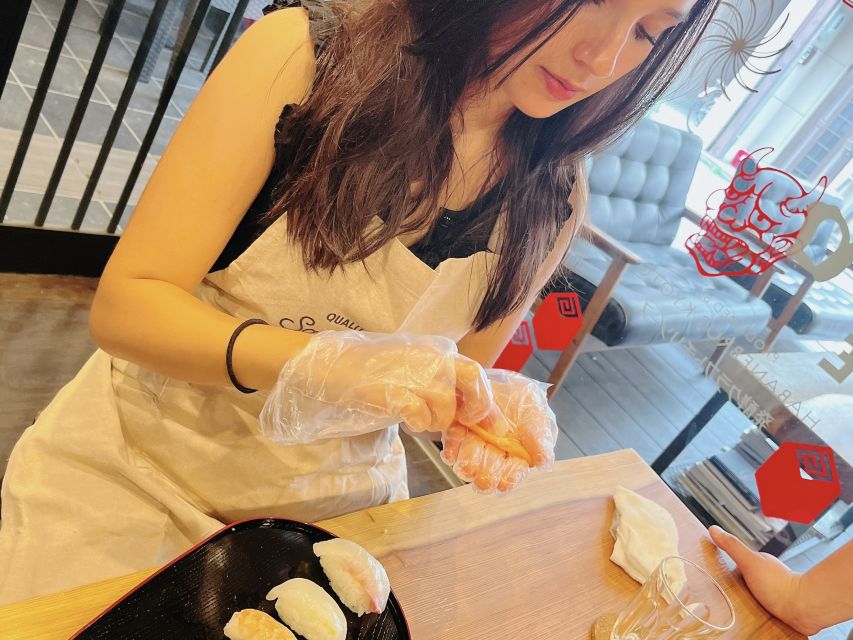
At $74 per person, this is more expensive than simply buying a sushi lunch in Kyoto. You are paying for more than food, though. The price includes instruction from a sushi chef, the fish, the finished meal, soup, tea or water, and the photo data afterward.
I think the value is strongest if you want an activity rather than only a meal. You receive a lesson in technique and etiquette, a chance to ask questions, and the satisfaction of making the food yourself. The fresh fish also gives the meal a quality that a basic cooking workshop may not provide.
The value is less clear for someone who already makes sushi at home. One participant specifically wished they could prepare the rice and cut the fish, and said they would have paid extra for that option. That is a fair limitation. The class teaches assembly more than full ingredient preparation.
For a family, the cost can add up quickly. For a couple or a small group that wants one memorable food activity in Kyoto, the price is easier to justify. Compare it with the cost of a special sushi meal, then ask whether the lesson and photos are worth the difference to you.
Dietary concerns and practical limits
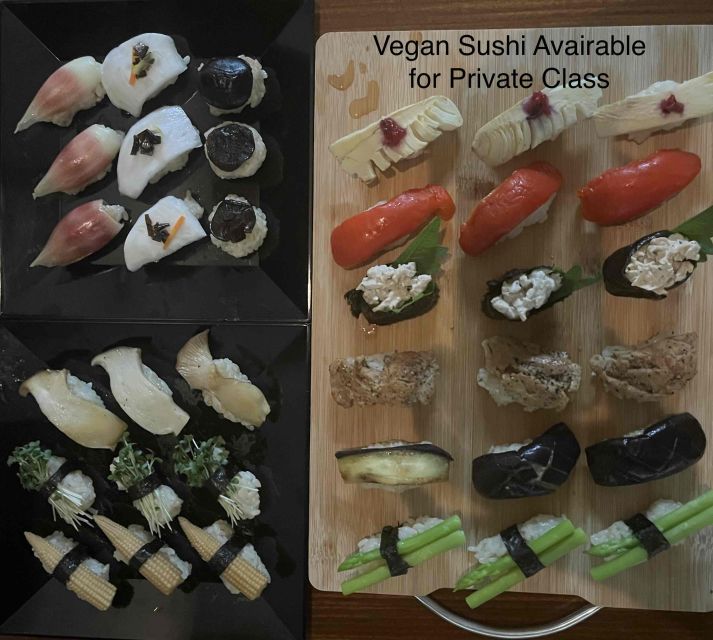
People with food allergies should not book this activity. That restriction is stated clearly, and you should take it seriously because fish, rice, seasonings, and other ingredients are part of the food preparation.
Strong fragrances are not allowed. Avoid perfume and heavily scented products on the day of the class. This is considerate in a small food room and helps keep the focus on the ingredients.
Gluten-free guests have been accommodated successfully in at least one session, with extra help for restaurant communication afterward. Still, that should not be treated as a general guarantee. If you have a dietary restriction rather than a serious allergy, contact the organizer before booking and explain exactly what you need.
The class includes eating the sushi you make, so you should be comfortable with the ingredients provided. The supplied information does not promise substitutions or a choice of fish.
Who will enjoy this Kyoto activity most
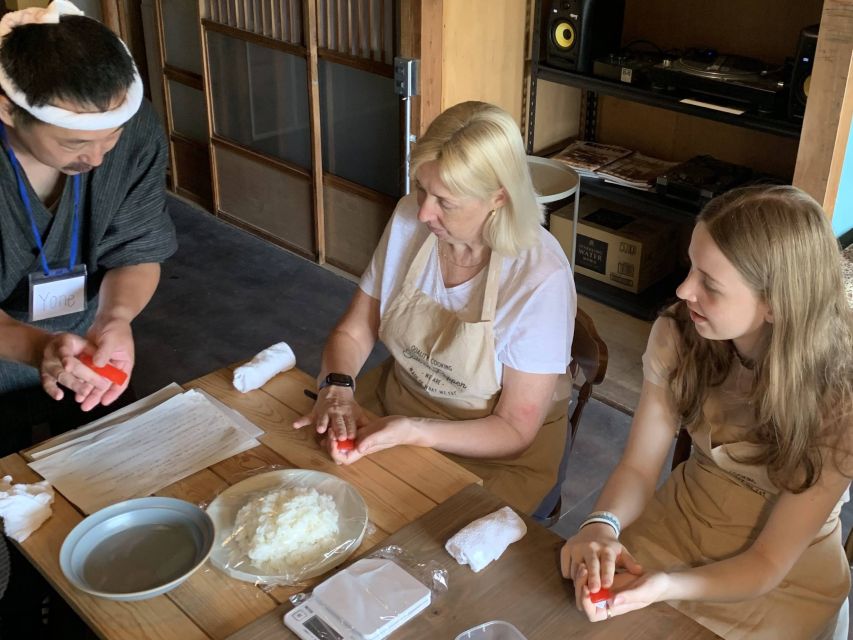
I would recommend this class to first-time sushi makers, families with children, couples who want a shared activity, and food-focused visitors who enjoy learning how a familiar dish is made.
It is also a good fit if you want a break from temple visits and walking. The class gives you a set task, a meal, and a chance to sit down without turning the day into a formal tour.
You may want something else if you are looking for a professional culinary course. You do not appear to cut the fish or prepare the rice from the beginning. You also may not want this activity if raw fish is a concern, you have a food allergy, or you prefer a quick meal with no instruction.
The class is especially appealing for people who want to take the skill home. The motions are simple enough to practice, and the chef’s explanations can help you understand why your first homemade sushi may not look like the pieces served in Kyoto.
Cancellation, timing, and meeting details
You can cancel up to two days in advance for a full refund. Check availability for the available start times, since the length can range from 90 minutes to three hours.
The meeting point is not always the same. There are two venues around Shijo Karasuma, and the selected location depends on the group size. You receive a Google Maps link by email, then look for a welcome board at the appointed time.
I would save the map link offline and avoid arriving with only a vague plan to meet around Shijo. This is a small practical step, but it removes needless stress before a hands-on class.
The activity is limited to eight people and taught in English or Japanese. Those details make it easier to plan for a family or small party, but you should confirm the exact session details when you select a date.
Should you book the sushi class?
Book it if you want to understand sushi by making it, not just eating it. The combination of market-fresh fish, patient chef instruction, nigiri, maki, etiquette tips, soup, and shared photos gives you a useful and enjoyable Kyoto memory for the price.
I would choose it for a family with children, a couple seeking a relaxed food activity, or anyone hoping to make sushi at home later. I would skip it if you need a fully hands-on professional kitchen lesson that includes rice and fish preparation, or if allergies make the meal unsuitable.
For most beginners, this is a well-shaped class with a clear payoff: you learn the basics, arrange your own plate, and eat the results while they are fresh.
FAQ
How long does the sushi-making class last?
The stated duration ranges from 90 minutes to three hours. Check the available start times and session details when booking.
What types of sushi will I make?
You first practice with a sushi sample toy, then make real nigiri sushi. After that, you make a sushi roll with a special tool.
Do I eat the sushi I make?
Yes. The class includes eating the sushi you prepare, along with Japanese-style dashi soup and tea or water.
Where does the fish come from?
The fish is purchased early each morning from Kyoto Central Wholesale Market and prepared before the class.
How many people are in the class?
The class is limited to eight participants, making it a small-group activity.
Is the class taught in English?
Yes. Instruction is available in English and Japanese.
Where is the meeting point?
There are two venues around Shijo Karasuma. The organizer selects the venue based on the number of participants and sends a Google Maps link by email. A welcome board is used at the meeting time.
Are photos included?
Yes. Photos and videos are taken during the class, and the data is shared with you afterward.
Can people with food allergies join?
No. The activity is listed as unsuitable for people with food allergies. Strong fragrances are also not allowed.
Just added around Kyoto
- Nishiki Market Food Tour with Cooking Class★ 4.9 · 42 reviews
- Kyoto: Wagashi (Japanese sweets) Cooking near Fushimiinari★ 5.0 · 40 reviews
- Kyoto: Sushi Making Experience in Kawaramachi★ 4.8 · 13 reviews
- Kyoto: Small-Group Authentic Sushi Making Workshop★ 5.0 · 137 reviews
- Kyoto Udon & Tempura Cooking Class with Professional Chefs★ 3.8 · 3 reviews
- Kyoto: Cooking class, learning how to make authentic sushi★ 4.2 · 9 reviews
- Kyoto: Morning Japanese Bento Cooking Class★ 5.0 · 149 reviews
- Kyoto Home Cooking Class &Supermarket tour near Fushimiinari★ 5.0 · 31 reviews
Japanese & Sushi Cooking Classes, compared.
Sushi Making Tokyo Roll and Authentic Japanese Sushi Class
Read our review →
Tokyo: Roll and Authentic Sushi Making Class in Asakusa
Read our review →
Ramen Cooking Class at Ramen Factory in Kyoto
Read our review →
Tokyo: Sushi Making Class in a Happi Coat near a Famous Spot
Read our review →
Sushi Making Tokyo! Popular Maki Sushi & Japanese Sushi(+Recipe!)
Read our review →
Sushi Making Osaka Roll and Authentic Japanese Sushi Class
Read our review →
Tokyo Sushi Making Class in Tsukiji with Professional Chef
Read our review →
Ramen & Gyoza Cooking Class in Tokyo with Local Supermarket Visit
Read our review →Browse the lists this tour appears in