
Review · SOUTH KOREA
Busan Local Food Cooking Class with Market Tour
Busan’s food culture makes the most sense when you stop being a customer and start working at the counter. This four-hour class with chef Heeyoung takes you from a hands-on Korean cooking lesson to the more than 100-year-old Bupyeong Kkangtong Market, with local food customs tying the two parts together.
I like the small maximum of 10 people, which gives Heeyoung room to explain techniques and keep an eye on each cook. I also like the unusual finish: a Korean tea ceremony after the meal, followed by a market walk where your chef can explain ingredients and help with translation. The main consideration is the fixed 10 a.m. start and the fact that the dishes are not listed in advance, so this suits curious eaters more than people seeking a specific menu.
Key points
- Chef Heeyoung leads in fluent English, covering cooking, food customs, and Korean culinary history.
- You cook and eat several Korean dishes, using ingredients supplied for the class, including local seafood.
- The meal includes local rice wine, followed by a traditional Korean tea ceremony.
- Bupyeong Kkangtong Market is more than a photo stop, since you explore it with a chef who can explain foods and translate.
- Recipes and a Busan food recommendation list go home with you, useful for the rest of your trip and for cooking later.
- The group is capped at 10 people, with the activity beginning and ending at the Busan Cooking Class location.
Why this class works better than a market snack stop
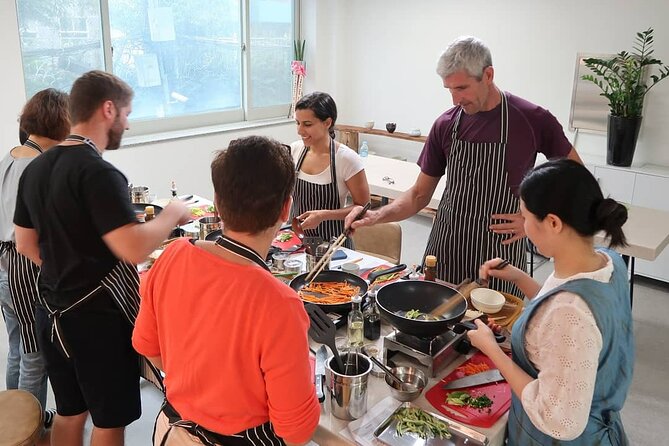
A market visit can show you Korean food, but it does not always explain what you are seeing. This class gives you the missing piece: you handle ingredients, follow Korean cooking methods, sit down to eat what you prepared, then walk through a traditional market with a chef’s guidance.
That order matters. Once you have prepared and tasted Korean dishes, you can look at market stalls with a sharper eye. You will understand more about the ingredients, the role of seafood, and the customs behind the food on display.
The class is led by Heeyoung, a professional Korean food chef who trained at a leading Korean cuisine culinary school in Korea. She speaks fluent English, so you can ask about technique and culture without relying on gestures or a translation app.
I would book this early in a Busan visit if food is important to you. The cooking lesson gives you useful context for restaurant menus and food markets later. If your schedule is tight, the four-hour format still gives you a full experience without taking an entire day.
More Market Tour Cooking Classes in South Korea
- Local Home Korean Cooking Class & Market Adventure in Seoul
★ 5.0 · 1,024 reviews - Seoul: Korean Cooking Class at a Local Home and Market Tour
★ 5.0 · 348 reviews - Cook 3 Authentic Korean Dishes with Local Market Tour
★ 5.0 · 231 reviews
Starting at 10 a.m. in Busan
The meeting point is Busan Cooking Class, 2F, 15 Gudeok-ro 186beon-gil, Seo-gu, Busan. The location is near public transportation, and the activity returns there at the end.
The morning start is practical for a cooking class. You can prepare and eat a substantial meal before the afternoon, then continue sightseeing. It does mean you need to plan around a fixed start time. This is not an evening class or a flexible drop-in activity.
Your mobile ticket is useful for arrival, but confirmation is subject to availability and is sent within 48 hours of booking. Since the class usually fills well ahead of time, leaving it until the last minute is not a smart plan. It averages about 52 days of advance booking, so popular dates may disappear early.
The experience lasts about four hours. Bring an appetite, since the point is not simply to watch a demonstration. You will take part in preparing several dishes and then eat the food you make.
Learning Korean food from the cutting board up
The cooking portion takes place in a studio with aprons, tableware, and ingredients provided. You do not need to arrive with special equipment or shop for supplies first.
Heeyoung guides you through Korean cooking methods and explains the food culture behind them. The exact dishes are not specified, which is worth noting before you book. You should expect typical Korean food and Busan-style cooking with seafood, but you should not reserve this class because you want one particular named dish.
That uncertainty can be a benefit. You are not locked into a narrow menu, and the lesson can focus on food that fits the class and the available ingredients. Still, people with allergies, strong dislikes, or a strict dietary plan should ask before booking, since the supplied details do not explain substitutions or dietary accommodations.
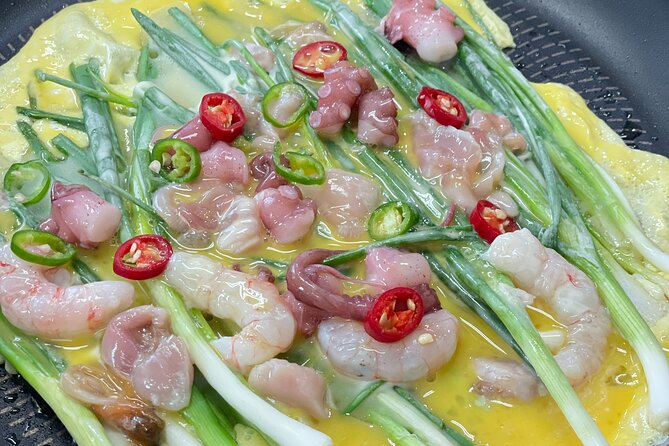
The class uses fresh local seafood as part of the Busan food focus. Seafood is an important reason to choose a Busan cooking lesson rather than a general Korean cooking class elsewhere in the country. You get a sense of how the city’s coastal setting shapes what appears on the table.
The instruction is hands-on rather than a cooking show. You follow Heeyoung’s directions, learn methods you can repeat at home, and eat the results afterward. The small group limit helps here. With no more than 10 participants, the chef can explain a step again or check that everyone understands what to do.
That personal attention has practical value. Korean cooking can involve unfamiliar cutting, seasoning, and preparation habits. A written recipe helps later, but it cannot correct your technique in the moment. An English-speaking chef can.
The meal, rice wine, and the Korean tea ceremony
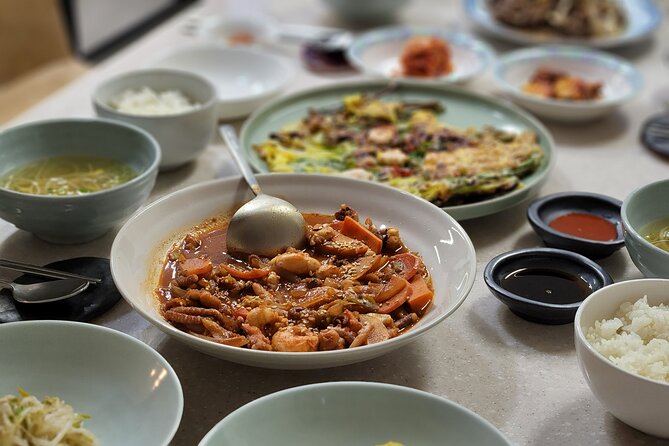
After cooking, you sit down to eat what you prepared. The meal is paired with local rice wine, adding a social element to the class rather than treating the food as a finished product on a plate.
Rice wine is part of the cultural lesson, but you should not feel that drinking is the main event. The supplied details do not specify an amount or offer a nonalcoholic alternative, so ask ahead if that matters to you.
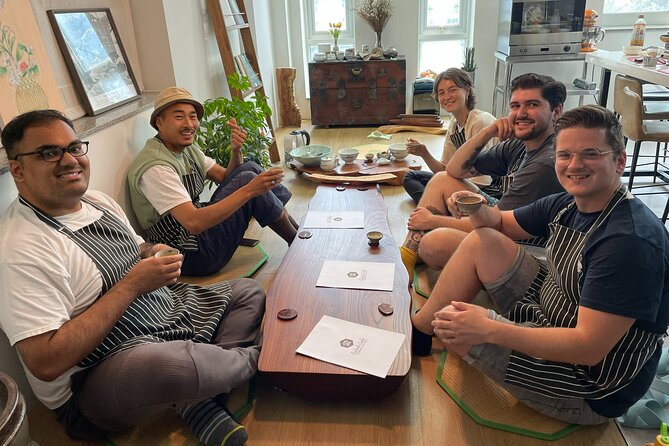
The class finishes with a Korean traditional tea ceremony. This is one of the more distinctive parts of the experience. Many food classes end once the meal is served. Here, the tea ceremony slows the pace and gives Heeyoung a chance to explain customs connected with serving and drinking tea.
For me, this closing ritual makes the class feel broader than a recipe lesson. You are not only learning what to cook. You are also seeing how food and drink fit into Korean social life. The pace may feel calm after the active cooking, which is a welcome change from rushing straight to the next stop.
Same place, a different menu:
- Master Korean traditional cooking with a Kimchi chef
★ 5.0 · 385 reviews - Seoul: Korean Cooking at Seoul Cooking Club!
★ 5.0 · 311 reviews - Korean Cooking at Seoul Cooking Club
★ 5.0 · 220 reviews - Seoul: Taste of Korea, Authentic Home Style Cooking Class
★ 4.9 · 166 reviews
Bupyeong Kkangtong Market with a chef as your guide
After the meal and tea, you visit Bupyeong Kkangtong Market, a traditional market more than 100 years old. It is also known as Bupyeong Food Market in the activity information.
This is not presented as a simple walk-through. Heeyoung points out ingredients, explains local delicacies, and discusses food customs. Her English matters here, since market shopping can be confusing when you do not know the names or uses of what you are seeing.
You also get translation help. That is useful if you want to ask about an ingredient, understand a food label, or identify something you noticed during the cooking class. The market visit gives the morning a strong local finish because the same food culture moves from the studio to a working public market.
You should not expect a separate shopping allowance or included market purchases. Personal expenses are not included, so anything you buy there comes out of your own pocket. That is a good thing in practice: you can spend nothing, pick up a snack, or purchase ingredients without paying an inflated package fee.
The market section also helps you use your time in Busan better. Heeyoung provides a Busan food recommendation list, so you leave with ideas for what to eat next. This can be particularly useful if you are unsure how to move beyond familiar Korean barbecue or standard restaurant dishes.
What the English instruction is really worth
A cooking class is only as useful as the explanation. Heeyoung’s fluent English allows her to cover more than the basic order of steps. She can discuss Korean cooking, history, culture, and the reasons behind particular methods.
That broader explanation is repeatedly praised in the supplied feedback, along with her friendly and patient approach. The key point for you is that the tone is both professional and personal. You get clear instruction without a stiff classroom atmosphere.
She is also described as willing to adapt the pace. That matters in a group class, where one person may already cook Korean food and another may be handling the ingredients for the first time. The class is designed to keep everyone involved rather than rush through a fixed demonstration.
If you are traveling alone, the group format gives you a social activity without requiring you to arrange a private tour. If you are a couple or family, the cooking provides something to do together rather than simply sitting across from one another at a restaurant.
A private booking may sometimes be possible if availability allows, but the supplied information only confirms a maximum of 10 people. Do not assume the class will be private when you book.
What is included for $109.58?
The price is $109.58 per person. That is not a bargain cooking demonstration, but it covers more than a meal.
You receive:
- Apron and tableware
- All cooking ingredients
- English-language instruction
- A Korean food culture lecture
- The food you prepare
- Local rice wine with the meal
- A traditional Korean tea ceremony
- A Busan food recommendation list
- Recipes to take home
- A guided visit to Bupyeong Kkangtong Market
The value depends on how you use the class. If you only want lunch, this costs more than an ordinary meal. If you want a chef-led lesson, cultural explanation, market orientation, and recipes, the price is easier to justify.
The included ingredients and equipment remove small costs that can add up in a cooking activity. You do not need to shop for food, rent tools, or buy a separate market tour. The market section also gives you direct access to a chef’s food advice, which is more useful than wandering through stalls without knowing what you are seeing.
I would consider it good value for someone who wants food to shape a trip, especially if you plan to cook Korean dishes at home. It is less compelling for someone who dislikes group activities, does not want to eat seafood, or only wants a quick market visit.
Recipes that remain useful after Busan
The recipe handout is a small but important part of the class. Food memories fade quickly, but a recipe gives you a way to recreate the experience at home.
You also receive a Busan food recommendation list. These two take-home items serve different purposes. The recipes help you cook, while the food list helps you choose what to eat during the rest of your time in the city.
The lesson is especially useful near the start of a trip because you can use what you learn in restaurants and markets afterward. Booking it at the very end still works, but you lose some of that practical benefit. Several people wished they had taken the class earlier for exactly this reason.
The class can also make Korean menus less intimidating. After preparing dishes yourself, terms and ingredients are less abstract. You can make better choices instead of ordering at random.
Who should book this experience?
I would recommend it to you if you meet one or more of these descriptions:
- You want to cook rather than only watch.
- You care about Korean food customs as well as recipes.
- You prefer small groups to large bus tours.
- You want fluent English instruction.
- You enjoy markets but want help understanding what you see.
- You plan to cook Korean food after returning home.
- You are visiting Busan and want a local food focus beyond restaurant dining.
Families and couples should find the shared format easy to enjoy, though the supplied information does not specify a minimum age. Solo participants can also fit comfortably into the group, especially since the chef actively involves people in the class.
I would hesitate if you need a guaranteed menu, require confirmed dietary substitutions, or cannot manage a 10 a.m. start. The experience also depends on good weather and a minimum number of participants. If weather causes cancellation, you are offered another date or a full refund. If the minimum is not met, you are offered another date or experience, or a full refund.
Free cancellation is available until 24 hours before the start time. Cancellations or changes inside that window are not refunded or accepted, so keep the local cut-off time in mind.
Is this Busan cooking class worth booking?
Yes, if you want a food activity with real instruction and local context. The strongest combination is the English-led cooking class with Heeyoung, followed by the market visit, recipes, and tea ceremony. Each part adds something different, and the four-hour length gives the experience room to breathe.
Book it early if your Busan dates are fixed. Choose a morning when you can arrive at 10 a.m. with time to eat what you prepare and walk through the market afterward.
Skip it if your main goal is a cheap meal, a specific advertised dish, or a short market stop. For everyone else, this is a practical way to understand Busan through its ingredients, cooking methods, and everyday food culture.
FAQ
Where does the Busan cooking class begin?
It begins at Busan Cooking Class, 2F, 15 Gudeok-ro 186beon-gil, Seo-gu, Busan, South Korea.
What time does the experience start?
The class starts at 10:00 a.m.
How long does the activity last?
The experience lasts approximately four hours.
Where does the activity end?
It ends back at the meeting point where the class begins.
Is the class taught in English?
Yes. The cooking class is conducted in English, and chef Heeyoung speaks fluent English.
What is included in the price?
The price includes an apron, tableware, all ingredients, the English cooking class, a Korean food culture lecture, the meal you prepare, a Korean traditional tea ceremony, local rice wine, a Busan food recommendation list, recipes, and the market visit.
Is the market visit included?
Yes. The activity includes a visit to Bupyeong Kkangtong Market with the chef.
How many people can join the class?
The activity has a maximum of 10 participants.
Can I cancel for a full refund?
Yes. You can cancel at least 24 hours before the start time for a full refund. Changes or cancellations made less than 24 hours in advance are not accepted or refunded.
More Food Experiences in South Korea
- Busan Tailored Korean cooking class (Vegan OK)with market tour
★ 5.0 · 66 reviews - Seoul: Temple Vegan Cooking Class & Oriental Medicine Tour
★ 4.6 · 32 reviews - Athens: Food Market Visit and Cooking Class with Wine
★ 4.9 · 1,087 reviews - Undiscovered Charleston: Half Day Food, Wine & History Tour with Cooking Class
★ 5.0 · 948 reviews
More Food and Drink Tours in South Korea
- Busan: Small-Group Traditional Korean Food Cooking Class
★ 4.9 · 58 reviews - Small Group Cooking Class & Market Food Tour in Florence
★ 5.0 · 1,574 reviews - Pasta Making & Wine Tasting with Dinner in Frascati from Rome
★ 5.0 · 1,326 reviews - Paella Cooking Class, Wine Tasting & Central Market in Valencia
★ 5.0 · 1,150 reviews
Just added around South Korea
- Busan Tailored Korean cooking class (Vegan OK)with market tour★ 5.0 · 66 reviews
- Korean cooking class in Haeundae, Busan★ 5.0 · 92 reviews
- Seoul: Premium Korean Feast Cooking Class★ 5.0 · 3 reviews
- Seoul: Korean Cooking Class with Local Grocery Shopping★ 5.0 · 13 reviews
- Seoul: Korean Kimchi Cooking Class in the Heart of the City★ 5.0 · 3 reviews
- Seoul: Kimchi Dishes Cooking Class with Wine Pairing★ 4.7 · 38 reviews
- (Seoul) Korean Cooking Class with a Professional Chef★ 5.0 · 14 reviews
- Seoul: Taste of Korea, Authentic Home Style Cooking Class★ 4.9 · 166 reviews
Cooking Classes with a Market Tour, compared.
Hanoi Cooking Class: Culture, Local Market & Meaning CSR Impact
Read our review →
5 Traditional Dishes Hanoi Cooking Class with Market Trip
Read our review →
Cooking Class and Lunch at a Tuscan Farmhouse with Local Market Tour from Florence
Read our review →
Chiang Mai: Cooking Class, Market & Thai Herbs Garden Tour
Read our review →
Chiang Mai: Authentic Cooking Class with Market & Farm Visit
Read our review →
Barcelona: Paella Cooking Experience & Boqueria Market Tour
Read our review →
Cooking Class Hoi An:Local Market, Basket Boat, Fishing & Cooking
Read our review →
Hoi An Cooking Class(Market,BasketBoat Crabfishing&Cooking Class)
Read our review →Browse the lists this tour appears in