
Review · JAPANESE & SUSHI
Fukuoka Japanese Home Cooking: Ginger Pork
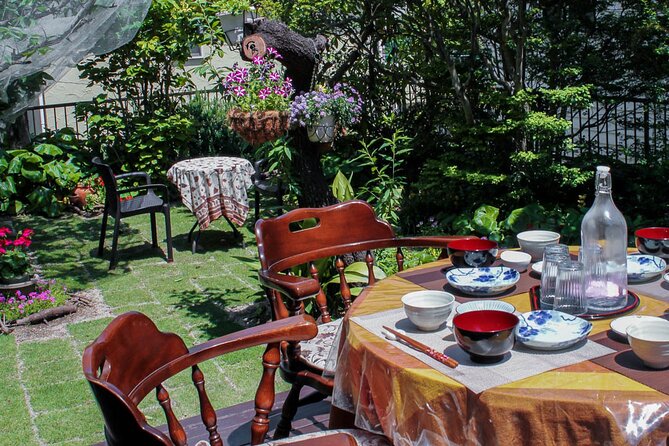
Fukuoka Japanese Home Cooking puts you in a real home kitchen, not a restaurant classroom. You help prepare ginger pork, dashi-based miso soup, kakiage tempura, and sesame greens, then sit down to eat the meal you made. I like the small maximum of four people, and I like the chance to learn everyday Japanese cooking from a welcoming local couple. The visit also includes karashi mentaiko, a Fukuoka specialty that gives the meal a strong local stamp.
The main drawback is the meeting point. You meet at Fukuoka Futaba Senior High School rather than directly at the home, and the north gate can be easy to miss. Plan to arrive early, especially since the class begins at 10:30 a.m. Alcohol is not included, and the three-hour session is built around cooking and conversation rather than sightseeing.
Key points to know before booking
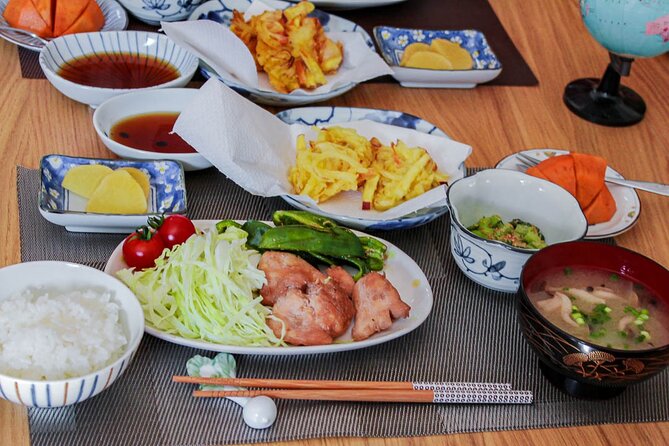
- Cook a full ichijiu-sansai meal: Learn the Japanese pattern of one soup and three dishes instead of making only one recipe.
- Meet at the school’s north gate: The useful landmark is the Fukuoka Futaba Gakuen all-weather field beside the north gate.
- Taste Fukuoka’s karashi mentaiko: This spicy pollock roe is served with hot rice as a local accent to the meal.
- Expect a tiny group: The experience accepts no more than four people, which suits hands-on instruction.
- Allow about three hours: The session includes preparation, eating, coffee, and dessert.
- Pay $79.21 per person: That price covers ingredients, tools, an apron, a mini towel, recipes, and instruction.
A small Fukuoka kitchen with a local point of view
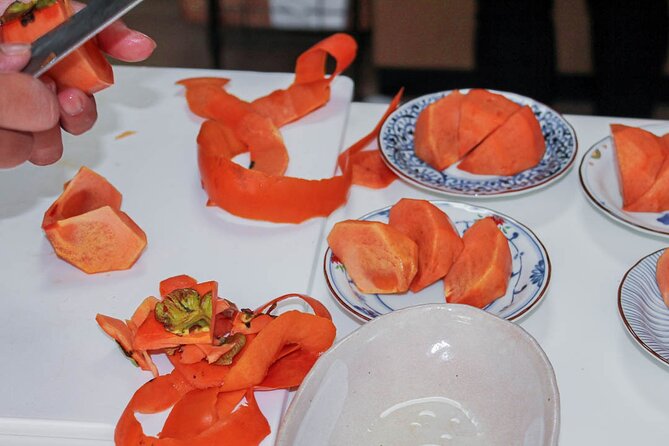
The appeal here is simple: you are not just eating Japanese food, you are learning how a Japanese household builds a meal. The hosts welcome you into their home and explain practical cooking habits that make sense beyond this one class.
The central idea is ichijiu-sansai, usually translated as one soup and three dishes. It is a useful way to understand Japanese home cooking because it puts balance ahead of showmanship. Rice forms the base, soup adds warmth, and the side dishes bring different flavors and textures.
For you, that means the class offers more than a recipe for ginger pork. You see how miso soup, vegetables, tempura, rice, and a main dish work together at the table. This is a good choice if you want food to be your way into local life.
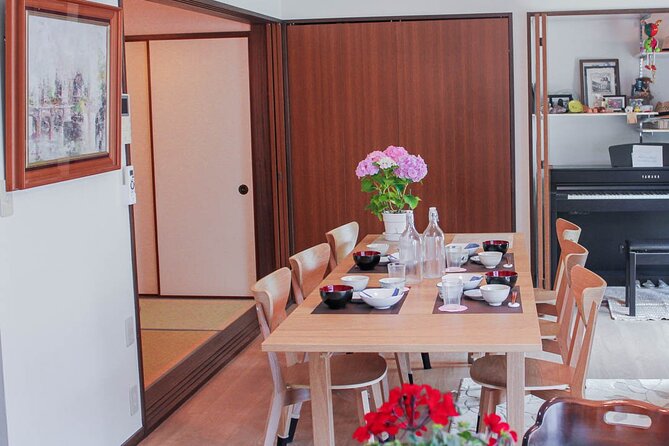
The setting matters, too. A home kitchen has a different feel from a professional cooking studio. The hosts can share household tips, small adjustments, and everyday methods. The class is led by a Japanese couple, and the personal exchange is a large part of its appeal.
More Home Cooking Classes in Japan
- Private Home Cooking in Yanaka – Local Flavors in a Warm Setting
★ 5.0 · 173 reviews - Near Fushimiinari: Kyoto Home Cooking Class & Supermarket tour
★ 5.0 · 100 reviews - Japanese Home Cooking Class & Walk in Todoroki Temple Tokyo
★ 5.0 · 88 reviews
Finding the north gate at 10:30 a.m.
Your stated meeting point is Fukuoka Futaba Senior High School, at 7-1 Goshogadani in Chuo Ward. The practical detail to remember is that you should go to the north gate, located on the side of the Fukuoka Futaba Gakuen all-weather field.
Do not simply arrive at the school address and wait at the first entrance you see. The north gate is the useful reference point, and the field’s Japanese name, 福岡雙葉学園 全天候型グラウンド, can help if you need to confirm your position.
The host may already be waiting before the start time, so punctuality matters. The experience begins at 10:30 a.m., and cooking classes are harder to join late than ordinary walking tours. You also need to arrange your own transportation to the meeting point. The location is near public transportation, but transport to and from the activity is not included.
Once the host meets you, the group returns to the meeting point at the end. The listed end point is the same as the start point, so you should not expect a separate drop-off elsewhere in Fukuoka.
Building the meal around dashi and umami
The first major lesson is the foundation of Japanese flavor: dashi. The class uses a dashi-based miso soup to show how cooks draw out umami, the savory depth that gives Japanese food much of its character.
This is valuable because miso soup is easy to underestimate. A bowl made with water and miso can taste flat, while a soup built on a good stock has far more body. The class gives you a chance to see that difference in practice and learn why the order and treatment of ingredients matter.
You also receive tips and tricks from a Japanese home cook, along with recipes to take away. That makes the class more useful than a meal you simply eat and forget. You can use the recipes as a guide later, although the experience is still centered on the session itself.
The ingredients and tools are supplied, and an apron and mini towel are provided. You do not need to pack cooking equipment. Since the group is limited to four people, you should have a fair chance to take part rather than watch from the edge of a large room.
Ginger pork, the main dish with everyday appeal
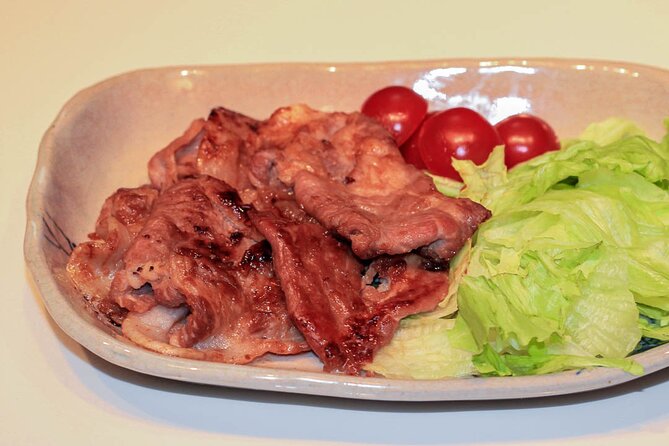
Ginger pork is a smart centerpiece for a home-cooking lesson. It is hearty, familiar, and practical enough to repeat at home. Ginger gives the dish a warm, sharp note, while the savory sauce makes it a natural partner for rice.
The class does not treat the dish as an isolated restaurant specialty. It appears as part of a complete Japanese meal, alongside soup and vegetable dishes. That context helps you understand how a common home dish fits into a wider eating pattern.
The exact cooking steps are not listed, so you should not expect a fixed set of advanced techniques to be advertised in advance. What is clear is that you prepare the dish yourself with the supplied ingredients and receive direct advice from the host.
I see this as a good match for people who enjoy cooking but do not want a demanding professional lesson. It is also suitable for curious eaters who want a clear, approachable introduction to Japanese flavors.
More Sushi and Japanese Classes in Japan:
- Sushi Making Tokyo Roll and Authentic Japanese Sushi Class
★ 5.0 · 3,971 reviews - Tokyo: Roll and Authentic Sushi Making Class in Asakusa
★ 4.9 · 1,957 reviews - Ramen Cooking Class at Ramen Factory in Kyoto
★ 5.0 · 1,937 reviews - Tokyo: Sushi Making Class in a Happi Coat near a Famous Spot
★ 4.9 · 1,377 reviews
Kakiage tempura and sesame greens add contrast
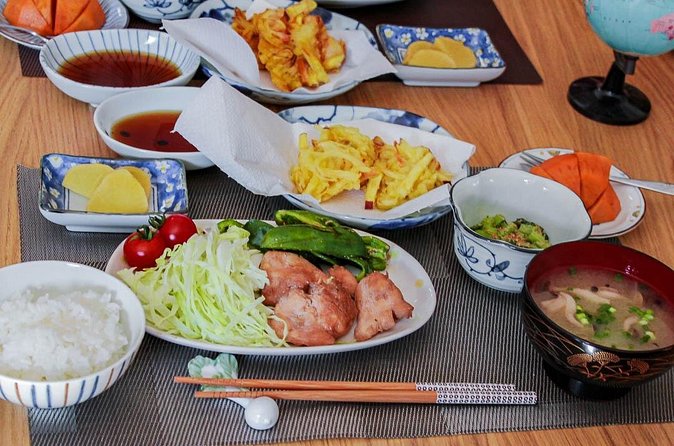
The meal includes kakiage, a type of mixed-ingredient tempura formed into a loose fritter. It brings crisp texture to a menu that also includes soup, rice, pork, and vegetables.
Tempura can look simple, but the result depends on handling. The class gives you a chance to see how a home cook approaches it. Since the experience is hands-on, you should be prepared to participate rather than simply wait for a finished plate.
The green vegetable sesame dish provides a different kind of contrast. Sesame adds a nutty note and a little richness to the vegetables, while the greens keep the meal from feeling too heavy.
Together, the four main elements show a useful Japanese balance: soft rice, warm soup, savory pork, crisp tempura, and seasoned vegetables. You are learning a menu structure as much as four separate recipes.
Karashi mentaiko brings Fukuoka to the table
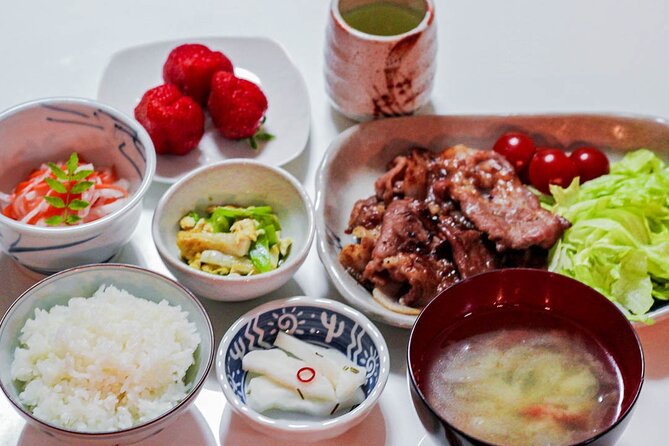
One of the most location-specific parts of the meal is karashi mentaiko, spicy pollock roe served with hot rice. Fukuoka is strongly associated with this food, so its inclusion gives the class a clear sense of place.
The flavor is savory and spicy, and it may be more assertive than the other dishes. You should think of it as a local specialty to sample rather than assume it will suit every palate.
Its role with rice also makes sense in the context of a Japanese home meal. The class is not only teaching dishes that could be made anywhere. It is also showing you one ingredient that connects the table to Fukuoka.
This is one of the details that makes the activity more satisfying than a generic Japanese cooking class. You get familiar dishes, such as miso soup and ginger pork, alongside something closely tied to the city.
Coffee, dessert, and conversation after lunch
After the cooking and meal, the visit continues with coffee and dessert. That closing time gives the experience a slower rhythm than a class that ends as soon as the last plate is cleared.
The hosts are a Japanese couple, and their warmth is an important part of the visit. You are welcomed into their home, so conversation is part of the experience rather than an optional extra. The setting can feel relaxed and personal, especially with only a few people taking part.
This is also where the class may appeal to you if you care about daily life as much as food. You have time to talk, ask questions, and compare cooking habits without the pressure of a large group moving on to the next station.
The atmosphere is not designed to imitate a formal restaurant. That is a benefit for many people, but it also means you should arrive ready for a social visit. If you prefer a fast, highly structured cooking lesson, this may feel less tightly programmed.
How the small group changes the experience
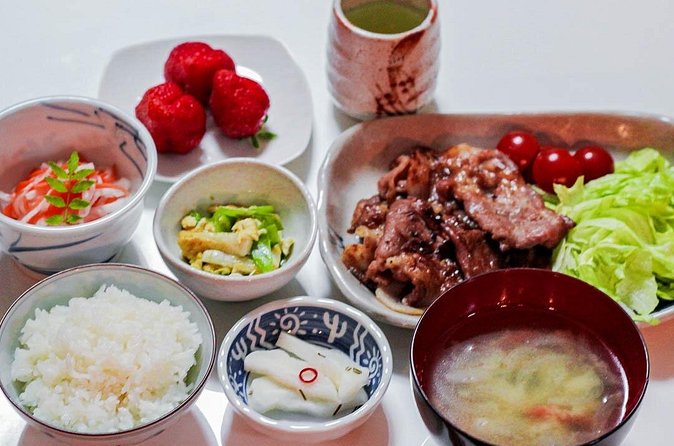
The maximum group size is four people. That is one of the strongest practical features of the activity because cooking instruction works better when you can see, ask, and participate.
In a large class, you may spend much of the time watching a demonstration. Here, the small number should give the host more room to offer individual guidance. It also keeps the home setting comfortable and makes conversation easier.
The trade-off is that the experience depends more on the people who attend. A small group can be friendly and relaxed, but it offers less anonymity than a busy group tour. You should be comfortable sharing a meal and space with the hosts and the other participants.
Children under five are free. The experience data does not provide a broader age policy or specific child facilities, so families should consider the three-hour cooking format and the need to stay on time.
What the $79.21 price covers
At $79.21 per person, this is not simply the price of a meal. Your fee includes the ingredients and tools, an apron, a mini towel, recipes, home-cooking advice, the cooking session, the meal, coffee, and dessert.
That makes the cost easier to judge. If you only want to eat Japanese food, you can find less expensive meals in Fukuoka. If you want a small-group activity with instruction and a personal home visit, the price is more reasonable.
The value also comes from the local setting. You are paying for access to a household experience that a restaurant cannot reproduce. The class combines food, conversation, cooking skills, and a Fukuoka specialty in one three-hour visit.
Alcohol is not provided, so do not factor drinks into the price. You also pay for your own transportation to and from the meeting point.
Who will enjoy this class most
I would recommend this activity to you if you like food with a story behind it. It suits people who want to understand how Japanese meals are assembled, not just taste a famous dish.
It is especially useful for:
- Home cooks: You receive recipes and practical instruction you can use after returning home.
- Food-focused visitors: The menu covers several techniques and includes karashi mentaiko, a local specialty.
- First-time visitors to Fukuoka: The home setting offers a personal way to connect with local customs.
- Couples and small groups: The four-person limit supports conversation and shared participation.
- Families with young children: Children under five are free, though the cooking format may not suit every young child.
- People seeking a slower morning: The class begins at 10:30 a.m. and includes time for coffee and dessert.
You may want to skip it if you dislike cooking, have very little time in Fukuoka, or want an activity with a busy sightseeing schedule. The class does not visit several landmarks. Its focus is one home, one meal, and the interaction around it.
Booking details worth checking
Confirmation is sent within 48 hours of booking, subject to availability. Since the class accepts only four people and is often booked about 63 days ahead, you should reserve early if your Fukuoka dates are fixed.
You can cancel for a full refund up to 24 hours before the local start time. Cancellations or changes made less than 24 hours before the start are not accepted for a refund.
Use the mobile ticket provided for the activity, and keep the meeting instructions available on your phone. Most of all, allow enough time to find the school’s north gate. Arriving at the general address without locating the correct entrance is the most avoidable problem here.
Should you book Fukuoka Japanese Home Cooking?
Book this class if you want a personal food experience with a very small group and a clear connection to Fukuoka. The combination of ginger pork, dashi miso soup, kakiage, sesame greens, and karashi mentaiko gives you both everyday Japanese cooking and a local specialty.
The strongest reasons to go are the home setting, the warm Japanese couple hosting the meal, and the chance to take part in preparing everything. The main cautions are the less obvious meeting point, the need to arrange your own transport, and the fact that alcohol is not included.
For food-minded visitors who prefer conversation and participation to a formal tour, $79.21 is a fair price for three hours. If that sounds like your kind of morning, book ahead and save the north gate instructions before you leave your hotel.
FAQ
Where does the experience meet?
The meeting point is Fukuoka Futaba Senior High School, 7-1 Goshogadani, Chuo Ward, Fukuoka, 810-0027, Japan. Go to the north gate beside the Fukuoka Futaba Gakuen all-weather field.
What time does the cooking class begin?
The experience starts at 10:30 a.m. You should arrive on time, since the activity takes place in a home kitchen and late arrival may interrupt the cooking session.
How long does the experience last?
The activity lasts approximately three hours. This includes cooking, eating the meal, and having coffee and dessert.
What dishes will I prepare?
You will prepare ginger pork, dashi-based miso soup, kakiage tempura, and a green vegetable dish with sesame. The meal also includes karashi mentaiko with hot rice.
Are ingredients and cooking tools included?
Yes. Ingredients and tools are included, along with an apron, a mini towel, and recipes.
Is transportation included?
No. You are responsible for transportation to and from the meeting point. The location is near public transportation.
How many people can join?
The activity has a maximum of four participants.
Can I cancel for a refund?
Yes. You can receive a full refund if you cancel at least 24 hours before the local start time. Cancellations or changes made less than 24 hours before the start are not accepted for a refund.
Just added around Japan
- Ramen Cooking Class at Lake Kawaguchiko (Short Course)★ 5.0 · 42 reviews
- View of Mt. Fuji is good! Sushi making experience class★ 5.0 · 6 reviews
- Sushi Cooking Class at Sushi Factory -KIWAMI- Mt.Fuji★ 5.0 · 23 reviews
- Fujisan Sushi Making Lesson★ 5.0 · 16 reviews
- Ramen Cooking Class at Ramen Factory in Mt.Fuji★ 5.0 · 101 reviews
- Japanese Cooking Class and Cultural Experience Around Tokyo★ 5.0 · 3 reviews
- Cooking Class: Make a Local Delicacy in a Japanese House★ 5.0 · 7 reviews
- Culinary Home Cooking with Grandmothers – Vegan Friendly★ 5.0 · 5 reviews
Japanese & Sushi Cooking Classes, compared.
Sushi Making Tokyo Roll and Authentic Japanese Sushi Class
Read our review →
Tokyo: Roll and Authentic Sushi Making Class in Asakusa
Read our review →
Ramen Cooking Class at Ramen Factory in Kyoto
Read our review →
Tokyo: Sushi Making Class in a Happi Coat near a Famous Spot
Read our review →
Sushi Making Tokyo! Popular Maki Sushi & Japanese Sushi(+Recipe!)
Read our review →
Sushi Making Osaka Roll and Authentic Japanese Sushi Class
Read our review →
Tokyo Sushi Making Class in Tsukiji with Professional Chef
Read our review →
Ramen & Gyoza Cooking Class in Tokyo with Local Supermarket Visit
Read our review →Browse the lists this tour appears in