
Review · OSAKA
Ramen and Gyoza Cooking Class in Osaka
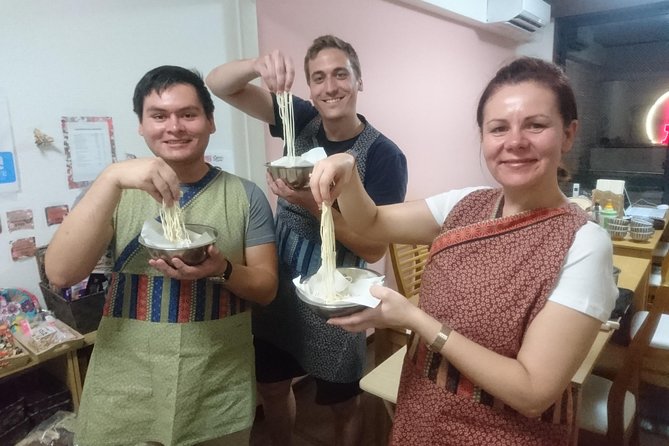
Fresh ramen noodles, two kinds of gyoza, green tea, and dessert make this Osaka cooking class a satisfying way to spend two and a half hours. You do not just watch a chef work. You mix, shape, cook, and eat the meal yourself.
I like the small-class setup, which gives the instructor time to check each person’s dough, dumpling folds, and cooking technique. I also like the printed recipe, since the best souvenir here is a skill you can use at home.
The main consideration is location and group size. The class is described as taking place in Nishinomiya, while the meeting address is in Osaka’s Kitahorie district, so check the exact map point before setting out. The class is planned as an intimate session of up to six, though booking information also lists a maximum of 12.
What makes this Osaka cooking class worth your time
- Fresh ramen from scratch: You work on the noodles, soup, and toppings rather than simply assembling a prepared bowl.
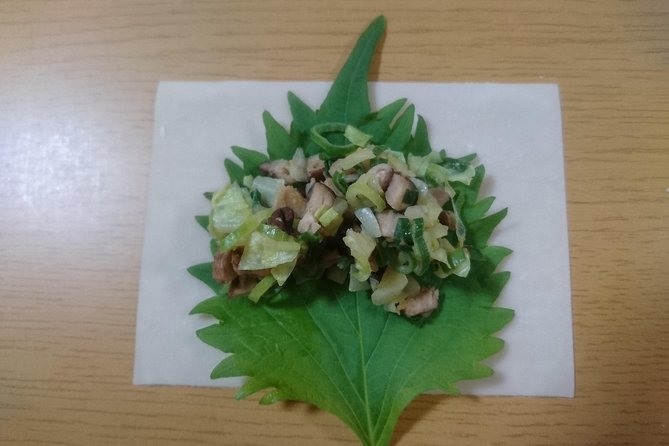
- Two distinct gyoza styles: The menu includes round pork dumplings and crisp rectangular vegetable dumplings.
- Clear, practical teaching: Keigo and the teaching team explain not only what to do, but why each step matters.
- A recipe you can actually use: You receive printed instructions, and the methods are designed for home cooking.
- A complete meal: Your class ends with the ramen and gyoza you made, green tea, and a seasonal dessert.
- Room for dietary requests: Vegetarian options are available when you give advance notice.
Making ramen instead of merely eating it
Osaka is an easy city for eating well. You can find ramen in a compact neighborhood shop, order gyoza at a counter, and move on to the next bowl. This class gives you a slower look at what sits behind those quick, comforting meals.
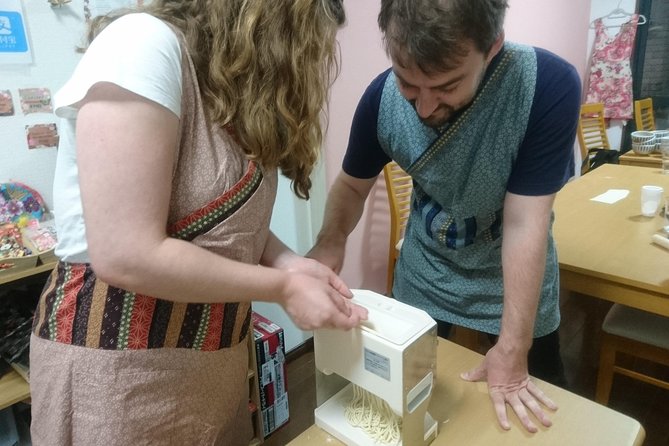
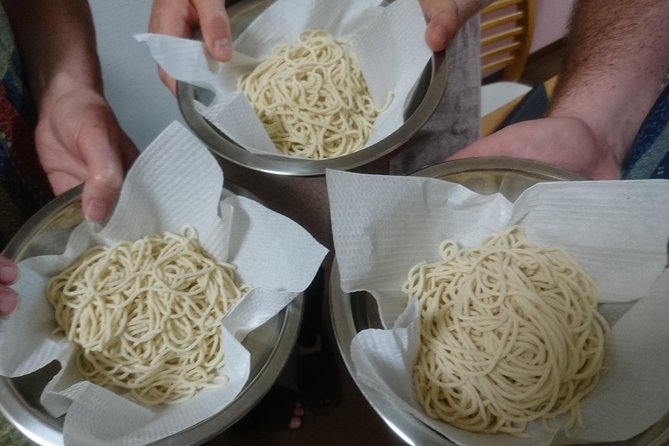
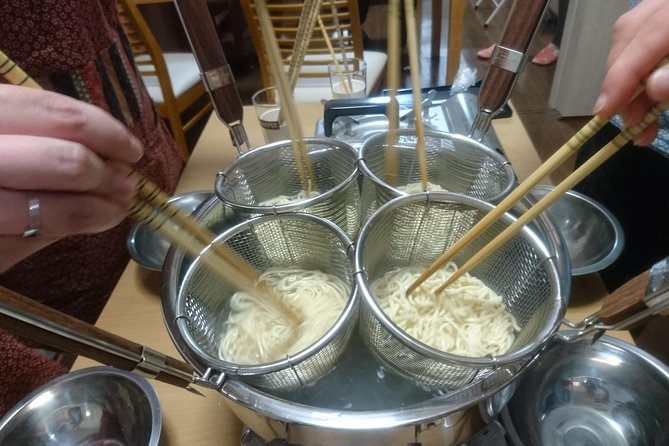
The first major task is making ramen from scratch. That means working with the noodles, preparing the soup, and handling the toppings. You are not handed a finished broth and told to stir in a few ingredients. The class breaks the process into manageable stages, so even a home cook without Japanese kitchen experience can keep up.
That practical format is one of the class’s strongest points. The instructor demonstrates a step, then you perform it yourself. The teaching team watches for common problems and helps correct them before they affect the final meal.
The pace matters. Ramen can sound like an ambitious project for a two-and-a-half-hour class, especially when gyoza is also on the menu. The session is organized to fit fresh noodles, soup, dumplings, cooking, and eating into the available time without making the class feel like a race.
You should still expect to stay focused. This is a working class, not a casual tasting. You will handle ingredients and equipment, follow instructions, and take part from start to finish. That is exactly why the lesson has more value than a restaurant meal if you want to repeat the dishes at home.
More Sushi and Japanese Classes in Japan:
- Sushi Making Tokyo Roll and Authentic Japanese Sushi Class
★ 5.0 · 3,971 reviews - Tokyo: Roll and Authentic Sushi Making Class in Asakusa
★ 4.9 · 1,957 reviews - Ramen Cooking Class at Ramen Factory in Kyoto
★ 5.0 · 1,937 reviews
Two gyoza styles make the class more interesting
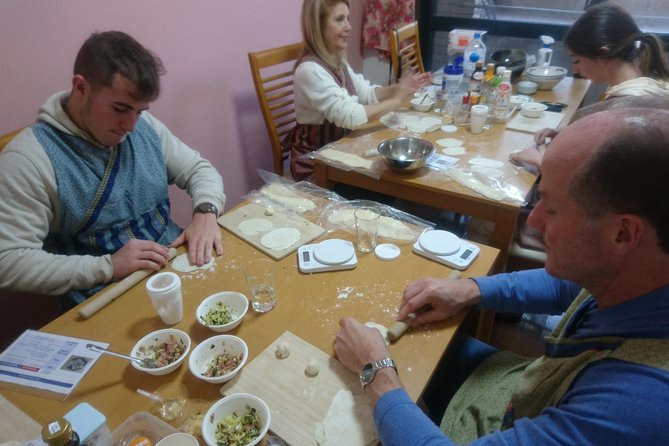
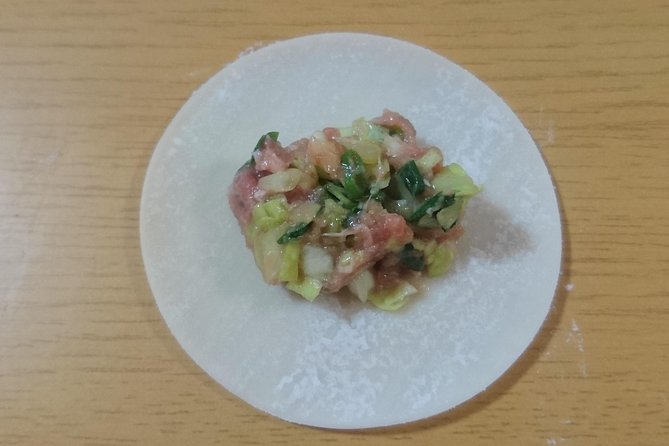
The gyoza portion gives you two different techniques rather than one repeated dumpling. First comes the familiar round pork gyoza. This is the version many people picture when they think of Japanese dumplings, with a filling wrapped in a circular skin and folded by hand.
You then make crispy rectangular vegetable gyoza. The shape changes the look and the handling, while the vegetable filling gives the meal a useful contrast to the pork version. Making both styles lets you see how a small change in shape and ingredients affects the finished dish.
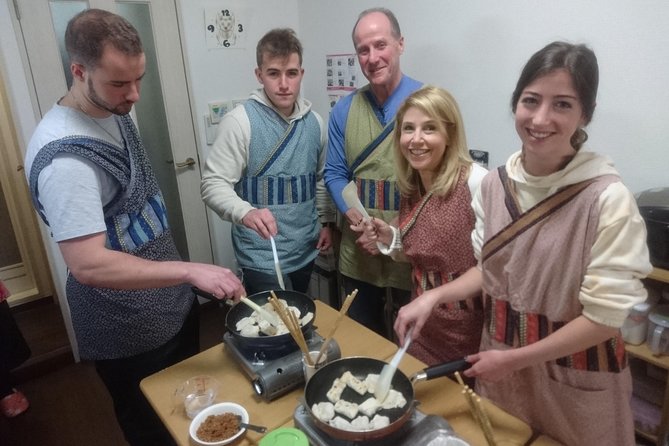
The folding stage is likely to be the most playful part of the class. It also takes patience. You need to avoid overfilling the wrappers, seal the edges properly, and learn how to create a dumpling that cooks evenly. The instructor checks your progress, so you are not left guessing if your first few folds look uneven.
That is good news for beginners. You do not need polished dumpling skills before arriving. You need a willingness to try, listen, and repeat the motion. The class is structured to help you leave with confidence rather than just a plate of food.
The two styles also make the experience useful for families and couples. One person can focus on learning the classic pork version while another works on the vegetable dumplings, then everyone shares the results. It gives the group more to talk about than a single recipe would.
Keigo’s teaching style and the small kitchen format
The strongest part of the experience is the instruction. Keigo has led sessions with clear, step-by-step explanations, good humor, and strong English. His teaching focuses on both method and reason, so you learn why ingredients are treated in a certain way rather than memorizing a list of orders.
That difference matters once you return home. If you only copy a recipe, a slightly different pan, flour, or vegetable can throw you off. If you understand the purpose of each stage, you have a better chance of adjusting the dish.
The class has also included Tomiko, who has helped participants find the venue and supported the cooking session. Other sessions have featured instructors named Fumi and Sakura, so your teacher may vary by date. The important practical point is to expect a teaching team rather than assume that every booking will have the same instructor.
The kitchen is described as clean, organized, and well prepared. Utensils and equipment are supplied, and ingredients are set up for the lesson. A tidy cooking station makes a real difference when several dishes are moving at once.
The small format is another advantage. A class planned for a maximum of six gives the instructor more chances to look at your dough and dumpling technique. One detail to check before booking is the stated group limit: the experience description says six, while the additional booking information gives a maximum of 12. If class size is important to you, confirm the number for your date.
The meal at the end is part of the lesson
Once the cooking is finished, you sit down and eat the food you made. That sounds obvious, but it changes the whole class. You get an immediate sense of how your noodle texture, soup balance, dumpling seal, and cooking time worked.
The meal includes the ramen and both types of gyoza, with green tea and a seasonal dessert. The dessert is a small but welcome finish after a savory meal. Since ingredients can change with the season, you should not expect exactly the same final details on every date.
I like this arrangement because it avoids the common cooking-class problem of leaving hungry after spending hours around food. Here, the dishes you prepare are the lunch or dinner, and the result becomes a proper shared meal.
You also get a chance to compare techniques with the rest of the group. That can be useful when one person’s dumplings brown more evenly or another person gets a better noodle texture. The point is not to produce identical restaurant portions. It is to understand what worked and what you can improve next time.
The final meal is also a natural social moment. The cooking keeps conversation moving, while the shared table gives you time to relax. For couples and families, that combination makes the class feel like an activity and a meal in one.
More Hands-On Workshops in Japan:
- Tokyo: Sushi Making Class in a Happi Coat near a Famous Spot
★ 4.9 · 1,377 reviews - Sushi Making Osaka Roll and Authentic Japanese Sushi Class
★ 5.0 · 1,220 reviews - Tokyo Sushi Making Class in Tsukiji with Professional Chef
★ 5.0 · 1,177 reviews - Ramen & Gyoza Cooking Class in Tokyo with Local Supermarket Visit
★ 5.0 · 823 reviews
What you can take home besides the recipes
The printed recipe is a practical benefit. Many food classes rely on memory, a few photographs, or a recipe sent later by email. Here, you receive written instructions to use after the class.
That matters most for the ramen. Homemade noodles and soup involve several steps, and it is easy to forget the sequence once you leave. Written guidance gives you a starting point when you want to recreate the meal in your own kitchen.
The gyoza recipes are likely to be easier to repeat, especially if you already cook regularly. The class helps you understand filling texture, wrapping, and cooking technique, while the ingredient list gives you a base to adapt.
The methods are presented as suitable for home cooks. You may not own every tool used in the class, and ingredients at home may differ, but the instruction is aimed at useful kitchen skills rather than a one-time performance.
Some sessions also include photographs taken during the cooking process and shared afterward. This is not listed as a formal inclusion, so treat it as something that may happen rather than a guaranteed part of every booking.
Dietary needs and seasonal ingredients
Vegetarian options are available if you tell the provider in advance. This is important because the standard menu includes pork gyoza, and the soup or other components may also need adjustment.
One particularly useful example from the class format is the ability to adapt the meal with soy meat and seaweed stock. That shows the teaching can accommodate some dietary preferences rather than simply removing the pork and leaving you with fewer dishes.
You should still provide all restrictions before the class. Do not wait until you arrive, since the ingredients and preparation plan may already be set. The exact substitutions can vary, and seasonal ingredients may change the menu.
The class includes all ingredients, utensils, and equipment, so you do not need to bring cooking supplies. Personal expenses and extra drinks are not included. Green tea is part of the meal, and the seasonal dessert is included as well.
Location, timing, and what to know before booking
The activity lasts about two hours and 30 minutes. That is long enough for a full cooking lesson and meal, but short enough to fit into a busy Osaka itinerary.
The meeting point is listed at Banix in Kitahorie, at 3-chōme 6-2, Nishi Ward, Osaka 550-0014. It is near public transportation, and the activity ends back at the meeting point. Hotel pickup and drop-off are not included.
There is a location detail worth checking carefully. The experience is described as a Nishinomiya cooking class, but the supplied meeting address is in Osaka’s Kitahorie neighborhood. Use the exact address and map pin when planning your route, especially if you are coming from another part of the Kansai area.
A useful touch is the help with finding the venue. Tomiko has met participants outside the building to guide them in, which can be helpful if the entrance is not immediately obvious. You should still allow enough time to arrive without rushing.
The listed price is $79.59 per person. That is not the cheapest way to eat ramen in Osaka, but it covers a full lesson, ingredients, kitchen equipment, a printed recipe, the meal, green tea, and dessert. If you value learning the techniques and want to cook the dishes again, the cost is easier to justify than if you only want a quick meal.
The class is especially good value for people who normally pay for a food activity and a separate lunch or dinner. You receive both in one session. It is less compelling for someone who has no interest in cooking and only wants to taste ramen, since Osaka offers easier and cheaper ways to do that.
Free cancellation is available if you cancel at least 24 hours before the start time. Changes or cancellations made inside that window are not accepted for a refund.
Who will enjoy this class most
I would choose this experience for couples who want a shared activity with a meal at the end. It also fits families well, provided everyone is comfortable taking part in hands-on kitchen work.
It suits beginner cooks because the instructions are broken into clear stages. It also gives experienced home cooks enough technique to stay interested, particularly with fresh noodles, soup preparation, and the two gyoza shapes.
Food lovers who already eat ramen often will get more from the class than someone who dislikes kitchen projects. You should be ready to spend time making the meal, not just sampling it.
Vegetarians can take part with advance notice, though you should explain your needs when booking. The class is also useful for people who want a cultural food activity that leaves them with a repeatable skill instead of only photographs.
Should you book the ramen and gyoza class?
Book it if you want to understand how ramen and gyoza come together, enjoy doing things with your hands, and plan to use the recipes at home. The combination of fresh noodles, two dumpling styles, clear English instruction, a small working group, and a complete meal gives the session real substance.
Think twice if your Osaka schedule is tight or if you only want a bowl of ramen. The class takes about two and a half hours, and the location details deserve a quick check because Nishinomiya and Kitahorie are presented together.
For most food-focused visitors, this is a strong use of an afternoon or evening. You leave with a full meal, practical cooking knowledge, and a better sense of the patience behind foods that often arrive at the table in minutes.
FAQ
How long does the ramen and gyoza cooking class last?
The class lasts approximately two hours and 30 minutes, including the hands-on cooking session and the meal at the end.
What will I cook?
You will make ramen from scratch, including noodles, soup, and toppings. You will also prepare two types of gyoza: classic round pork gyoza and crispy rectangular vegetable gyoza.
Is the meal included?
Yes. The ingredients and the lunch or dinner are included. Green tea and a seasonal dessert are also provided.
Are vegetarian options available?
Yes, vegetarian options are available. You must tell the provider about dietary restrictions in advance.
Where does the class meet?
The listed meeting point is Banix in Kitahorie, Nishi Ward, Osaka 550-0014, at 3-chōme 6-2. The activity ends back at the meeting point.
Is hotel transportation included?
No. Hotel pickup and drop-off are not included. The meeting point is near public transportation.
What happens if I need to cancel?
You can receive a full refund if you cancel at least 24 hours before the experience start time. Cancellations or changes made less than 24 hours before the start time are not accepted for a refund.
Just added around Japan
- Vegan/Vegetarian Ramen and Gyoza by Bentoya cooking★ 5.0 · 59 reviews
- Ramen Making from Scratch with Tokyo Mom(Vegan Option Available)★ 5.0 · 39 reviews
- Shibuya Tokyo: Sushi Making Class (Vegan/Vegetarian/Halal)★ 4.7 · 29 reviews
- Ramen & Dumpling Cooking in Tokyo with Chef/Vegan possible★ 5.0 · 107 reviews
- Tokyo Haneda: Bento & Ramen Gyoza Cooking Class in a Local home★ 5.0 · 9 reviews
- Hands-on Japanese Cooking in a Shinjuku Home Kitchen with Satoru★ 5.0 · 19 reviews
- Near Fushimiinari: Kyoto Home Cooking Class & Supermarket tour★ 5.0 · 100 reviews
- Japanese Home Cooking Class & Walk in Todoroki Temple Tokyo★ 5.0 · 88 reviews
Japanese & Sushi Cooking Classes, compared.
Sushi Making Tokyo Roll and Authentic Japanese Sushi Class
Read our review →
Tokyo: Roll and Authentic Sushi Making Class in Asakusa
Read our review →
Ramen Cooking Class at Ramen Factory in Kyoto
Read our review →
Tokyo: Sushi Making Class in a Happi Coat near a Famous Spot
Read our review →
Sushi Making Tokyo! Popular Maki Sushi & Japanese Sushi(+Recipe!)
Read our review →
Sushi Making Osaka Roll and Authentic Japanese Sushi Class
Read our review →
Tokyo Sushi Making Class in Tsukiji with Professional Chef
Read our review →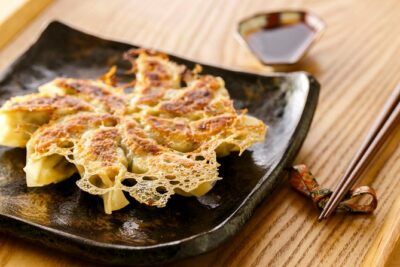
Ramen & Gyoza Cooking Class in Tokyo with Local Supermarket Visit
Read our review →Browse the lists this tour appears in