
Review · KOREAN
Cook 3 Authentic Korean Dishes with Local Market Tour
Mangwon Market is the best part of this experience. Before you cook, Jomin walks you through a real neighborhood food market, points out ingredients, and gives you time to sample street foods. You then return to a clean studio and prepare three Korean dishes at your own station.
I like the small class size, which allows Jomin to correct knife work and answer questions without rushing. I also like the cookbook, since it gives you a way to recreate dishes such as bibimbap, bulgogi, or soft tofu stew after leaving Seoul.
The main consideration is the menu. The three dishes can vary, so you may not cook every item you have in mind. The class can also be rescheduled or canceled if it does not reach its minimum number of four participants.
Key points at a glance
- Mangwon Market first: Meet Jomin at Mangwon Station, then shop through a local market before cooking.
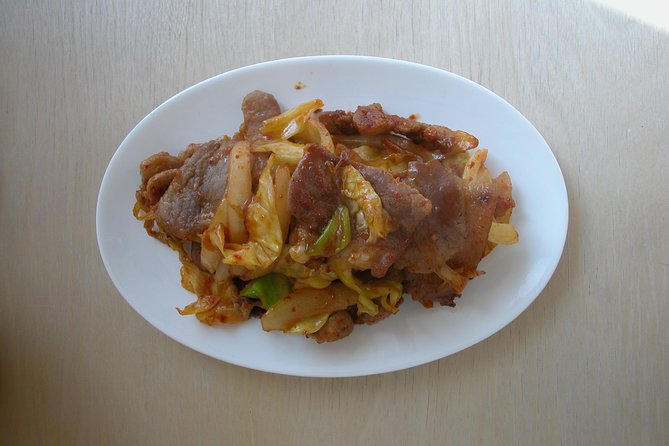
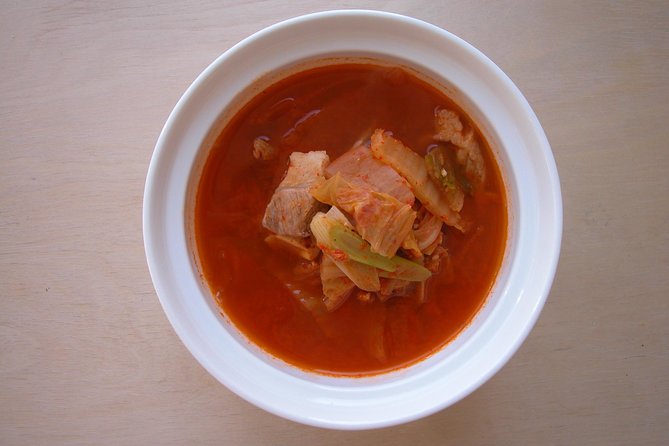
- Three Korean dishes: Possible dishes include bibimbap, bulgogi, soft tofu stew, kimchi stew, japchae, and stir-fried pork.
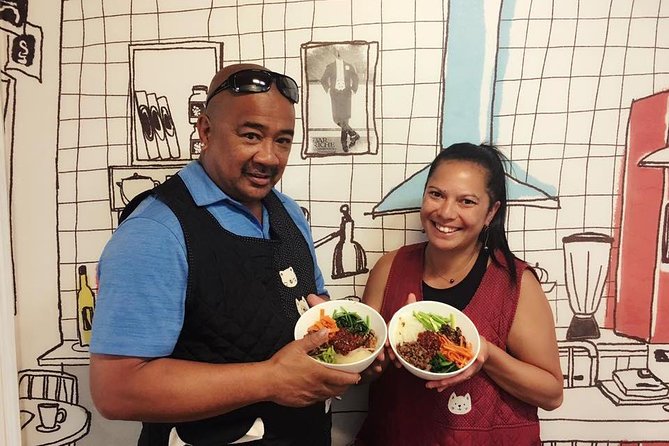
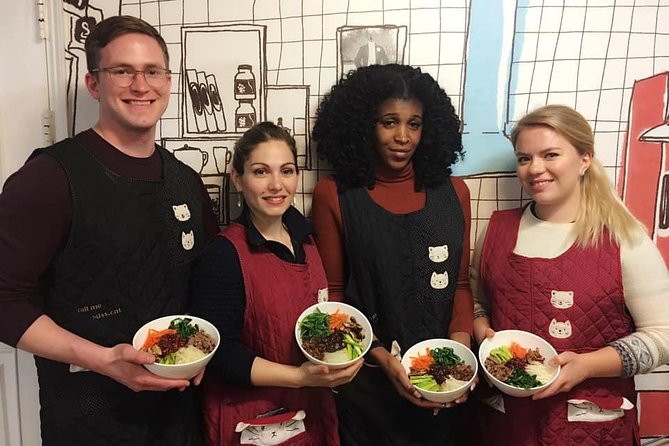
- Personal cooking station: This is hands-on instruction, not a demonstration watched from the side.
- Food culture included: Learn about banchan, kimchi, Korean ingredients, stocks, and market foods.
- Useful take-home material: A professionally designed cookbook includes the class recipes and other Korean favorites.
- Flexible meal timing: Choose a lunch or dinner class, with the activity lasting about three and a half hours.
Starting at Mangwon Station and Mangwon Market
You meet Jomin at Exit 2 of Mangwon Metro Station on Line 6. This is a useful meeting point because the market is close by, and you can reach the station by Seoul’s efficient subway system.
The walk through Mangwon Market is not filler before the cooking begins. It gives you a working picture of Korean food. Jomin explains the ingredients used in the class and identifies products that can be confusing if you are seeing them for the first time. You might look at seafood, tofu, vegetables, dried anchovies, prawns, rice wine, and other items tied to Korean home cooking.
You also get a chance to taste street food. That matters because Korean cooking is not limited to restaurant dishes. The market connects everyday ingredients with the food culture you see across Seoul, from small side dishes to soups and grilled meats.
One practical benefit is the chance to ask questions in front of the actual products. If you have wondered what Korean tofu looks like, how anchovies are used for stock, or which items belong in a stew, this is where those questions make sense.
The market is a working neighborhood market, not a staged food attraction. That means the experience may feel less polished than a purpose-built tasting tour. Some stalls may also be closed during holidays such as Chuseok. Still, enough remains open to give you a useful look at local shopping and Korean ingredients.
More Market Tour Cooking Classes in South Korea
- Local Home Korean Cooking Class & Market Adventure in Seoul
★ 5.0 · 1,024 reviews - Seoul: Korean Cooking Class at a Local Home and Market Tour
★ 5.0 · 348 reviews - Korean Cooking Class with Grocery Shopping at Seoul Local Market
★ 5.0 · 107 reviews
A cooking studio built for hands-on work
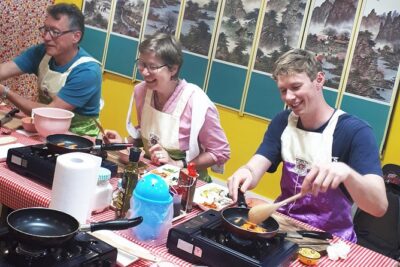
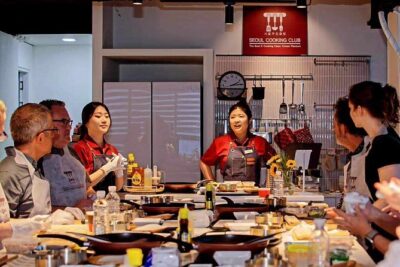
After the market, you go to Jomin’s cooking studio. The class is designed around participation. You do not simply watch a chef prepare food while standing at the back of a room. You have a personal cooking table and cooker, with fresh ingredients prepared for the class.
That setup makes a real difference. Korean dishes often involve several steps, including cutting vegetables, building a marinade, preparing stock, and cooking separate parts before bringing them together. Your own station lets you handle those steps yourself.
The studio is described as clean, spacious, and well organized. Ingredients are arranged in advance, which keeps the class moving during its three-and-a-half-hour schedule. Jomin first explains the menu, then guides you through the cooking process one dish at a time.
This approach suits beginners. You do not need to arrive with strong cooking skills. The instructions are intended to be clear, and Jomin provides individual assistance as you work. At the same time, cooks with more experience can ask about technique, seasoning, and ingredient choices rather than simply following a recipe.
The small class format is one of the strongest reasons to choose this activity. The stated class size is a maximum of four people, creating a more personal setting than a large group lesson. The general activity information allows up to 11 participants, so it is wise to confirm the class size for your chosen date if the small format is especially important to you.
What you may cook during the three dishes
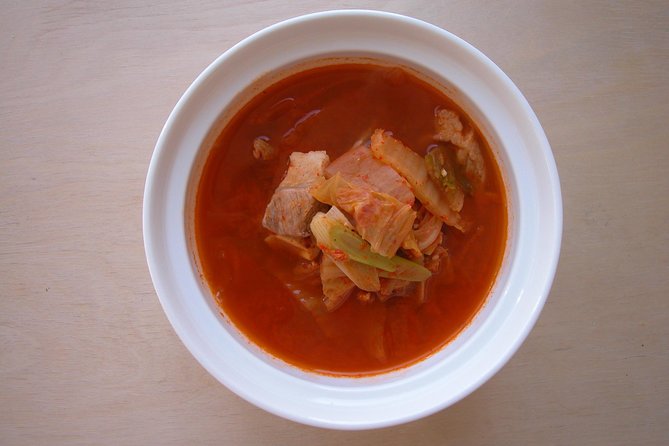
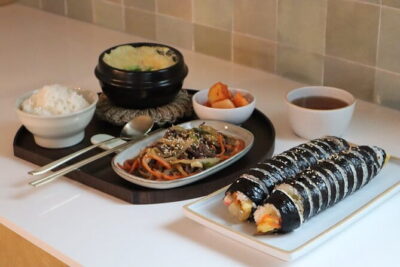
The menu can include soft tofu stew, bibimbap, bulgogi, kimchi stew, japchae, and stir-fried pork. Since the exact three dishes can vary, think of the class as an introduction to Korean home-style cooking rather than a fixed menu reservation.
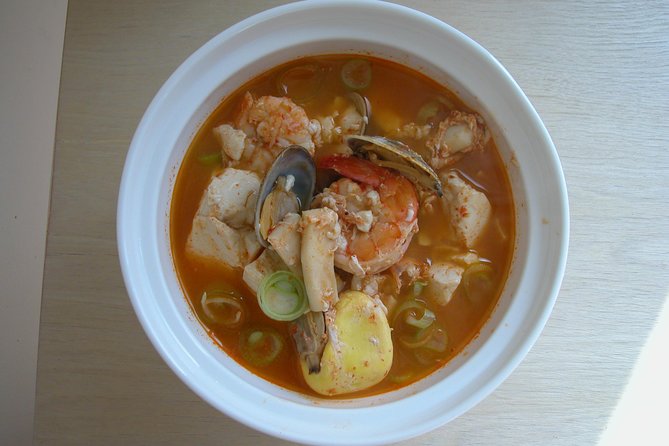
One sample combination includes sundubu jjigae, bibimbap, and bulgogi. Sundubu jjigae is a soft tofu stew that can include seafood such as clams. It teaches you how Korean soups gain flavor from stock, seasoning, and fresh ingredients without becoming complicated.
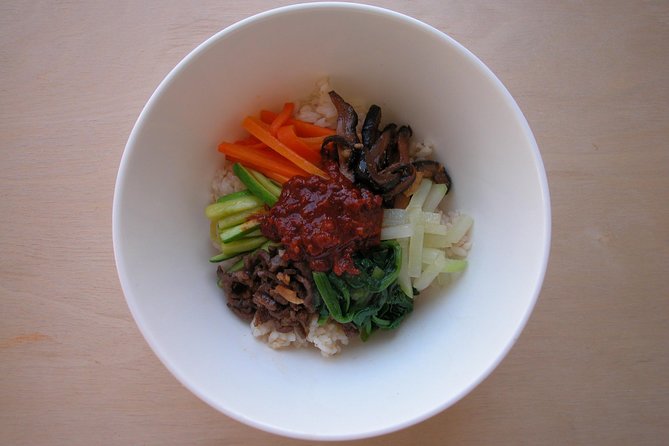
Bibimbap gives you a different kind of lesson. You prepare and cook vegetables, work with beef in some versions, and combine the parts with rice. It is a useful dish to learn because it shows how Korean meals balance grains, vegetables, protein, and sauce in one bowl.
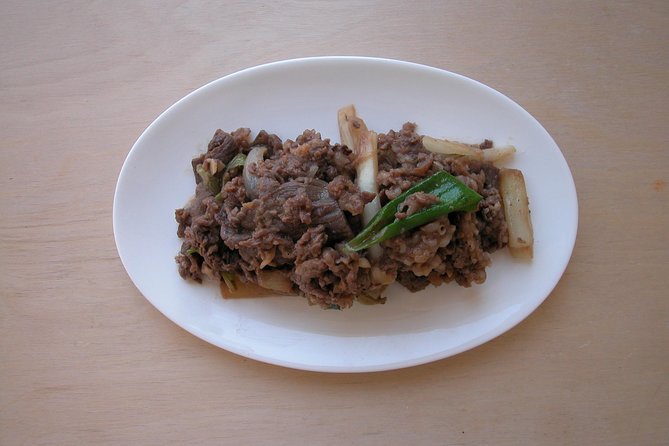
Bulgogi focuses on the marinade and cooking technique. You learn how to prepare the mixture that flavors the beef, then cook it at your station. The dish is familiar to many people from Korean restaurants, but making the marinade yourself gives you a better sense of its balance.
Another class combination may include japchae, a noodle dish with vegetables, or stir-fried pork. Kimchi stew may appear instead of soft tofu stew. If you have dietary restrictions or strong preferences, raise them when booking or before the class begins, but remember that the exact menu is not guaranteed in the details provided.
The class can accommodate vegetarian and vegan options. That is a useful choice, though you should communicate your needs clearly in advance so the ingredients and menu can be adjusted properly.
Learning Korean food culture, not just recipes
Jomin’s instruction covers more than measurements and cooking times. You learn about Korean food customs and ingredients, including banchan and kimchi. Banchan are the small side dishes that accompany a Korean meal, and understanding their role helps explain why a Korean table feels different from a typical Western plated dinner.
The market visit also puts ingredients in context. You may learn how anchovies and prawns are used in stock, how fresh tofu differs from packaged versions, or why certain vegetables appear in several dishes. These details make the recipes easier to remember because they connect cooking with shopping and daily meals.
The class may also include a taste of rice wine. This is a small detail, but it adds another layer to the food lesson. You are not just preparing a dish in isolation. You are learning how food, drink, side dishes, and shared meals fit together in Korean dining.
I especially value this kind of instruction for a first visit to Seoul. A restaurant meal can show you what Korean food tastes like. A market and cooking class show you how it is built, where the ingredients come from, and how the dishes relate to one another.
More Korean Cooking Classes in the world:
- Master Korean traditional cooking with a Kimchi chef
★ 5.0 · 385 reviews - Seoul: Korean Cooking at Seoul Cooking Club!
★ 5.0 · 311 reviews - Korean Cooking at Seoul Cooking Club
★ 5.0 · 220 reviews
Eating what you prepare
Once the food is ready, you sit down and eat your own dishes. The meal is divided into stages as the class progresses, so you may enjoy one dish while the next part is being prepared.
That pacing helps you notice the food while it is fresh. You can also compare the dishes and see how different Korean techniques produce different results. A stew, a rice bowl, and a marinated meat dish each use different methods, yet they work together as a complete meal.
Leftovers can be taken with you. Take-home containers are provided, which is useful because three dishes can be a lot of food during one class. It also gives you a second chance to taste the results later rather than rushing through everything at the studio.
The food is the central payoff, but the meal also acts as a practical test. If you enjoyed the flavors, you have the recipes and a better idea of how to find the ingredients at home. If a dish was not your favorite, you still leave knowing more about how it was made.
The cookbook and what you take home
The professionally designed cookbook is more useful than a loose recipe sheet. It includes the dishes made in class along with other Korean favorites recommended by Jomin.
That matters because memory fades quickly after a cooking lesson. By the time you return home, you may remember the broad steps but forget the seasoning proportions or the order in which ingredients were cooked. A well-organized recipe book gives you a practical reference.
You also take home any suitable leftovers. Together, the cookbook and leftovers extend the experience beyond the studio. You can eat again later and then try the recipes when you have access to a Korean grocery store or suitable substitutions.
Is $79 a fair price?
At $79 per person, this is not the cheapest way to eat Korean food in Seoul. You can buy a meal at Mangwon Market for much less. The price makes more sense when you count the market walk, food tasting, ingredients, cooking instruction, personal workstation, prepared meal, cookbook, and approximately three and a half hours of activity.
The small class size improves the value. A large cooking lesson can leave you watching from a distance, but this one gives you equipment and ingredients to handle yourself. If you are new to Korean cooking, that personal practice is the part you cannot get from a restaurant meal.
The value is also stronger for people who cook at home. You leave with recipes, methods, and a clearer understanding of ingredients. If you only want a quick meal or a short market stroll, this may feel too long and expensive.
The lunch or dinner choice makes it easier to fit into a Seoul schedule. Since the experience begins and ends near Mangwon Station, you can pair it with time in the Mangwon area rather than crossing the city for a single activity.
Who will enjoy this class most?
I would choose this class if you want food to be a main part of your Seoul visit. It suits couples, families, solo visitors, and small groups who like learning by doing.
It is especially good for:
- First-time visitors who want an introduction to Korean ingredients and food customs
- Beginner cooks who prefer clear instruction and personal help
- Experienced home cooks who want recipes they can repeat
- People interested in markets rather than only restaurants
- Visitors needing vegetarian or vegan adjustments
- Anyone who wants a social activity with a shared meal at the end
It may not suit you if you want a fixed menu, a formal chef demonstration, or a quick tasting tour. The class is active, and you should expect to chop, season, cook, and follow instructions for several hours.
Jomin’s teaching style appears structured and direct. That is helpful when several dishes must be prepared on time, but it may feel a little strict if you prefer a completely casual lesson. I see that as a reasonable trade for clear guidance, especially if you are new to Korean cooking.
Practical details before you book
The activity lasts about three hours and 30 minutes. It begins and ends at Mangwon Station, with the meeting point at Exit 2. A mobile ticket is accepted, and confirmation is provided when you book.
You can choose a lunch or dinner session. Vegetarian and vegan options are available, but tell the provider about your needs in advance rather than assuming the standard menu will work for you.
The activity has a minimum of four participants. If that number is not reached, the class may be canceled or rescheduled, with a different date or experience, or a full refund offered.
Free cancellation is available until 24 hours before the start time. Cancellations or changes made less than 24 hours before the activity are not accepted for a refund, and the cut-off follows Seoul local time.
Should you book this Korean cooking class?
Yes, if you want more than a meal and you like the idea of learning through real ingredients. The combination of Mangwon Market, a small personal workstation, three Korean dishes, and a useful cookbook gives the activity solid value at $79.
Book it early in your Seoul stay if possible. You can use the market knowledge and ingredient tips during the rest of your visit, and you may even return home with a new favorite dish to cook.
Skip it if your schedule is tight, you dislike hands-on cooking, or you need a guaranteed menu. For everyone else, this is a practical, friendly way to connect Korean food with the place it comes from.
FAQ
Where does the Korean cooking class meet?
The meeting point is Mangwon Metro Station in Seoul, at Entrance 2. The activity also ends back at the meeting point.
How long does the experience last?
The class and market visit last approximately three hours and 30 minutes.
What dishes will I cook?
The three-dish menu may include soft tofu stew, bibimbap, bulgogi, kimchi stew, japchae, or stir-fried pork. The exact combination can vary.
Is the class a demonstration or hands-on?
It is a hands-on class. You receive your own cooking table and cooker, work with fresh ingredients, and receive guidance from Jomin.
How many people can join the cooking class?
The cooking class has a maximum size of four people. The general activity information lists a maximum of 11 travelers for the wider activity, so confirm the group size for your chosen date if needed.
Can I choose lunch or dinner?
Yes. You can choose between a lunch class and a dinner class.
Are vegetarian and vegan options available?
Yes. Vegetarian and vegan options are available. Communicate your dietary needs when arranging the class.
Do I get to visit a market?
Yes. The experience begins with a walk through Mangwon Market, where Jomin explains ingredients and gives you opportunities to taste street foods.
Do I receive recipes after the class?
Yes. You take home a professionally designed cookbook containing the class recipes and additional Korean favorites.
What is the cancellation policy?
You can cancel up to 24 hours before the start time for a full refund. Cancellations or changes made less than 24 hours before the start time are not accepted for a refund.
More Shopping Trips in the world
- Chiang Mai: Authentic Cooking Class with Market & Farm Visit
★ 4.9 · 4,546 reviews - Barcelona: Paella Cooking Experience & Boqueria Market Tour
★ 4.8 · 3,661 reviews - Cooking Class Hoi An:Local Market, Basket Boat, Fishing & Cooking
★ 5.0 · 3,660 reviews - Hoi An Cooking Class(Market,BasketBoat Crabfishing&Cooking Class)
★ 5.0 · 3,386 reviews
More Market Tour Cooking Classes in the world
- Hanoi Cooking Class: Culture, Local Market & Meaning CSR Impact
★ 5.0 · 5,147 reviews - 5 Traditional Dishes Hanoi Cooking Class with Market Trip
★ 5.0 · 4,890 reviews - Cooking Class and Lunch at a Tuscan Farmhouse with Local Market Tour from Florence
★ 5.0 · 4,831 reviews - Chiang Mai: Cooking Class, Market & Thai Herbs Garden Tour
★ 4.9 · 4,824 reviews
Just added around the world
- A Coruña: Local Market Shopping and Cooking Workshop★ 5.0 · 16 reviews
- Vegan/Vegetarian Ramen and Gyoza by Bentoya cooking★ 5.0 · 59 reviews
- Traditional Zanzibar Cooking Class including Spice Tour★ 4.5 · 14 reviews
- Verona: Pasta and Tiramisu Cooking Class with Fine Wine★ 4.8 · 633 reviews
- Thessaloniki: Cooking & Dining Experience with Greek Family★ 4.9 · 85 reviews
- NGO Lifted Strong – Traditional Tanzanian Cooking Class★ 5.0 · 39 reviews
- 5 Hours Private Cooking Classes in Langadas Thessalonikis★ 5.0 · 14 reviews
- Thessaloniki: Greek Cooking Class, Market visit and Lunch★ 5.0 · 15 reviews
Korean Cooking Classes, compared.
Local Home Korean Cooking Class & Market Adventure in Seoul
Read our review →
Master Korean traditional cooking with a Kimchi chef
Read our review →
Seoul: Korean Cooking Class at a Local Home and Market Tour
Read our review →
Korean Cooking Class with Grocery Shopping at Seoul Local Market
Read our review →Browse the lists this tour appears in