
Review · USA
Exclusive Sushi-Making Class in Chicago (Includes 3-Course Meal)
The best part of this Chicago class is that you do not just watch a chef make sushi. You handle the knife, season the fillings, and learn how to roll two different styles. I like the eight-person limit, which gives you room to ask questions, and the practical kitchen tips that can help beyond sushi.
I also like the BYOB format and the full three-course meal. You can bring wine or beer, then sit down to eat what you made. The main drawback is the firm booking policy: once you pay, the experience cannot be changed or refunded, so choose your date carefully.
Key points at a glance
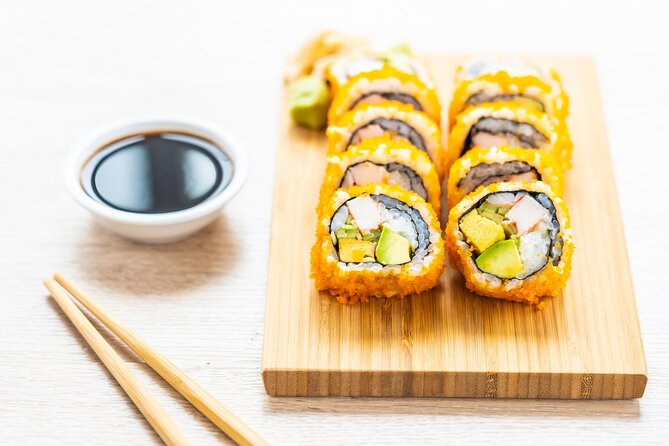
- Two sushi rolls, one dessert: Make spicy ahi tuna, shrimp tempura, and tōgarashi-seasoned tropical fruit.
- Small class size: A maximum of eight people allows for personal help with knife work and rolling.
- Chef Kumi may lead the class: Her calm, welcoming style has made the process easy to follow for first-time sushi makers.
- Useful beyond sushi: Instruction includes knife skills and everyday cooking advice.
- BYOB-friendly evening: Bring wine or beer to enjoy during the class.
- Chicago meeting point: Start at 2316 S Leavitt St, apartment 3, at 6:30 pm, and finish at the same location.
What the two-hour Chicago sushi class is really like
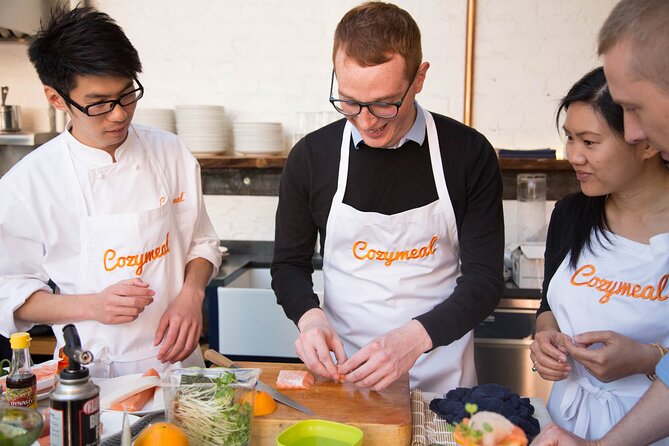
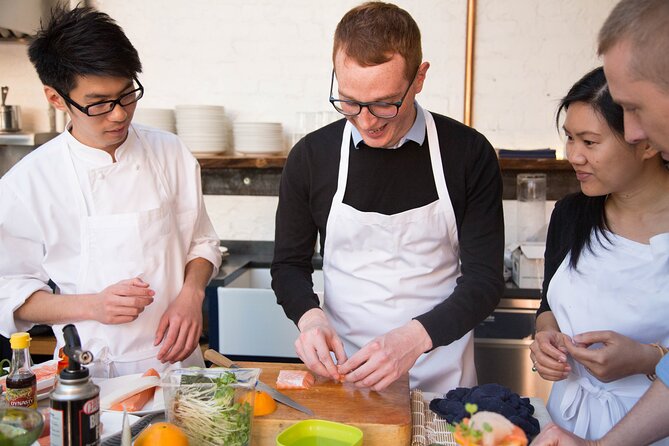
This is a hands-on cooking lesson rather than a restaurant meal with a short demonstration. You arrive at 2316 S Leavitt St, apartment 3, for a 6:30 pm start. The class runs for about two hours and stays in the same setting from beginning to end.
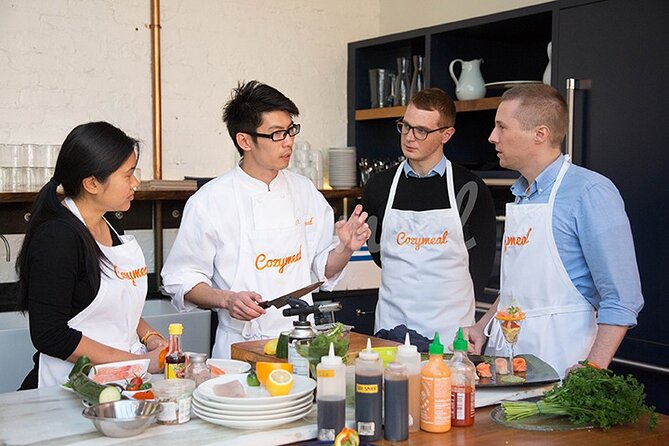
The small format matters. With no more than eight people, you are not one face in a crowd watching from the back of a large kitchen. You have a better chance to get direct help when your rice is spreading too far, your filling is too generous, or your roll needs a little more pressure.
The pace should suit a range of cooking abilities. The chef adjusts the lesson to the group, so you do not need to arrive with sushi-making experience. At the same time, the class is not only for complete beginners. You can pick up knife habits, flavor combinations, and rolling methods that are useful if you already cook at home.
Chef Kumi has led this experience with a welcoming manner and clear instructions. Her approach makes the class a good choice for a date night or a small evening activity with friends. You leave with more than dinner. You also leave with the confidence to try sushi again on your own.
More Cooking Classes with Lunch in the USA
- New Orleans Demonstration Cooking Class with Meal
★ 5.0 · 3,000 reviews - New Orleans Hands-On Cooking Class with Meal
★ 5.0 · 1,183 reviews - Authentic Asian Cooking Class in NYC (Includes 4-Course Meal)
★ 5.0 · 8 reviews
Starting with knife skills and sushi basics
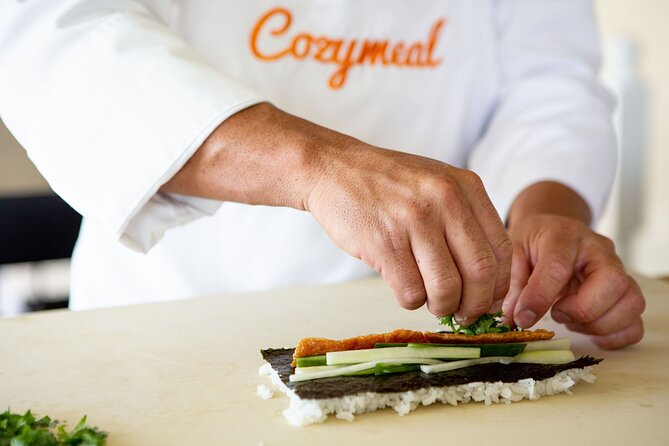
The class introduces the essential techniques before you assemble the finished rolls. Knife work is a central part of that lesson, and it is one of the most useful parts for anyone who cooks regularly.
Good sushi depends on more than putting ingredients on rice. Ingredients need to be cut into manageable pieces, balanced in size, and arranged so the roll holds together. Your chef guides you through those steps and offers practical advice for handling ingredients in the kitchen.
You should expect to work at your own pace while following the chef’s demonstration. If your cuts are not perfect, that is part of the point. This is a cooking class, not a professional sushi examination. The goal is to understand the method and make food that tastes good.
The instruction also reaches beyond the evening’s menu. One of the strengths of the class is the extra kitchen advice woven into the lesson. Those small pointers can be just as useful as the sushi techniques because they apply to everyday food preparation.
First course: spicy ahi tuna roll
The first roll pairs fresh ahi tuna with spicy aioli, oyster sauce, cucumber, scallions, and avocado. It gives you several textures to manage at once: soft fish, creamy avocado, crisp cucumber, and the bite of scallions.
The spicy aioli brings heat and richness, while oyster sauce adds a savory note. The ingredients are familiar enough to make the roll approachable, but the combination still shows how Japanese-inspired rolls often balance creamy, salty, fresh, and spicy elements in one bite.
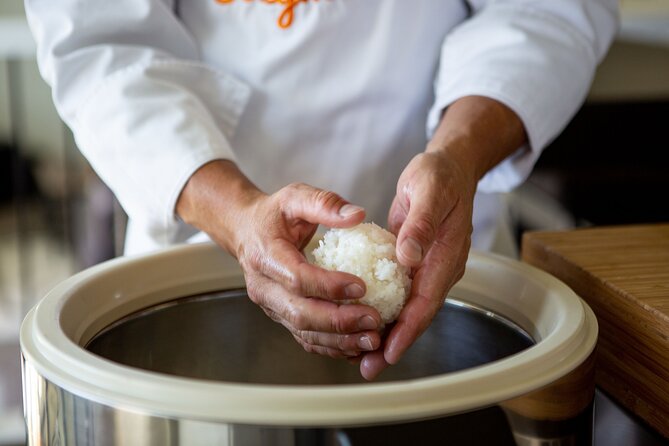
This is a good first roll for learning how filling quantities affect the finished shape. Add too much and the sushi becomes difficult to close. Add too little and the result can feel skimpy. Your chef helps you find the middle ground, then shows you how to apply even pressure as you roll.
The ahi tuna is served as part of the prepared class menu. If you have food restrictions or concerns about specific ingredients, tell the provider in advance. The class is designed to accommodate a range of dietary needs, but changes should be arranged before you arrive.
Second course: shrimp tempura roll
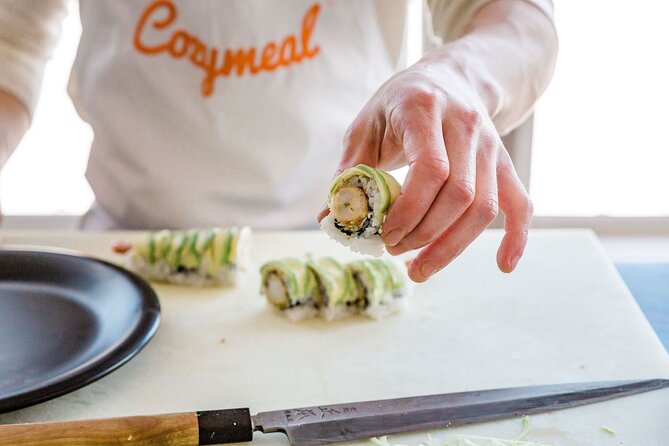
The second main course changes the texture and flavor profile. This roll uses crispy shrimp tempura with jalapeño, cucumber, and miso aioli.
Compared with the ahi tuna roll, this one is more about contrast. The shrimp brings crunch, the cucumber adds freshness, and the jalapeño gives the roll a sharper edge. Miso aioli ties those flavors together with a savory, creamy finish.
Making a second roll is useful because you can correct what went wrong the first time. You may cut the fillings more evenly, spread the rice with greater control, or roll with more confidence. The class builds in repetition without making the menu feel repetitive.
The shrimp tempura roll is also a good reminder that sushi does not have to mean raw fish. If you are hesitant about ahi tuna, this course gives you a cooked seafood option. Still, the menu includes both fish and shellfish, so advance notice is important if you need substitutions.
More Sushi and Japanese Classes in the USA:
- Sushi Making Class at a Local Distillery in Boston
★ 5.0 · 22 reviews - Sushi Making Class at a Local Brewery in Boston
★ 4.5 · 3 reviews - Sushi Making Tokyo Roll and Authentic Japanese Sushi Class
★ 5.0 · 3,971 reviews - Tokyo: Roll and Authentic Sushi Making Class in Asakusa
★ 4.9 · 1,957 reviews
Finishing with tōgarashi and honey
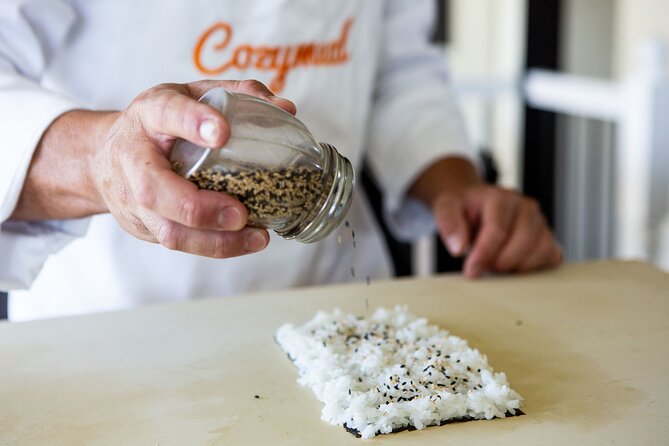
Dessert keeps the meal simple: tropical fruit seasoned with tōgarashi and drizzled with honey. Tōgarashi is a Japanese spice blend that brings a gentle sweet-spicy character to the fruit.
This closing course works well after two savory rolls. The fruit gives the meal a lighter finish, while honey rounds out the spice. It is not a second cooking project on the same scale as the sushi, but it shows how a small seasoning change can make familiar ingredients feel different.
The dessert also gives the class a clear three-course shape. You prepare two substantial rolls, then finish with something fresh and sweet. For the $125 price, that matters. You are paying for instruction, ingredients, and a complete meal rather than a short lesson followed by a separate dinner bill.
Why the eight-person limit improves the lesson
A small group is one of the strongest reasons to choose this class instead of a larger demonstration. Sushi rolling requires close attention to pressure, placement, and timing. A chef can correct those details more easily with eight people than with a room full of participants.
The group size also makes the evening more social without turning it into a loud party format. You have a chance to compare your rolls, share the meal, and ask questions. That balance suits couples, friends, and solo cooks who enjoy meeting people through food.
The class is not private, so you should not expect the whole evening to revolve around your own schedule or skill level. The chef has to keep the group moving. Still, the limited capacity leaves more room for one-to-one guidance than a standard large cooking event.
I would especially recommend the format if you feel nervous about working with a sushi mat or raw fish. The setting is designed to make mistakes manageable. You can ask for help before a small error becomes a completely unraveled roll.
BYOB makes this a useful date-night choice
Wine and beer are welcome, which gives the evening a relaxed BYOB feel. The alcohol is not included, so bring your own if you want it. This detail can make the experience work well for a date night because you can choose a drink you already enjoy without paying a restaurant markup.
The BYOB policy also means you should plan ahead. The supplied details specifically mention wine and beer, so do not assume other drink arrangements are provided. The class itself includes the food and instruction, but not your beverages.
The meal gives you a natural rhythm for the evening. You learn a technique, make a roll, and eat it. Then you move to the next preparation and finish with fruit. That structure keeps the two hours active without making it feel like a rushed kitchen shift.
One practical point: the meeting location is an apartment address, not a named restaurant or public attraction. Check the address carefully before setting out and allow enough time to arrive for the 6:30 pm start.
Is $125 a fair price?
At $125 per person, this is not a budget dinner. The value depends on how much you want from the evening.
If you compare it with the cost of two restaurant meals, the price may seem high. You are not simply buying two sushi rolls and dessert. You are also paying for a chef-led lesson, hands-on practice, ingredients, knife instruction, a small group, and the chance to eat the food you prepare.
The value is strongest for people who want a skill-based activity. If you only want sushi, a restaurant will be simpler and likely less expensive. If you want an evening built around cooking, conversation, and learning how to repeat the meal at home, the class offers more.
The group limit is important to the calculation. A cheap class with little access to the chef may leave you confused about the very techniques you came to learn. Here, no more than eight people share the instruction, which supports the higher price.
The full menu also helps. You make two main rolls with different fillings and finish with fruit. That gives you a broader lesson than a class focused on one basic roll. BYOB can keep the total evening cost more manageable, since you are not required to purchase drinks on site.
Who should book this experience?
I would point this class toward several kinds of people:
- Couples looking for a hands-on date night
- Friends who want a social activity with a meal
- First-time sushi makers who want direct instruction
- Home cooks interested in knife skills and rolling methods
- Visitors who prefer a small food class to a standard restaurant dinner
- Anyone who enjoys BYOB evenings and Japanese-inspired flavors
It is also a good fit if you want an activity with a clear start and finish. The class lasts about two hours, begins at 6:30 pm, and ends where it starts. That makes it easier to fit into an evening plan than a long cooking workshop.
You should think twice if your plans may change. The experience is non-refundable and cannot be amended for any reason. A minimum number of participants is required, though if the class is canceled because that minimum is not reached, you are offered another date or experience, or a full refund.
People with dietary needs should contact the provider before booking or as soon as possible afterward. The class can accommodate a variety of restrictions, but the chef needs advance notice to adjust the menu.
Service animals are allowed. The available information does not provide a full accessibility description for the apartment venue, so contact the provider directly if you need details beyond that policy.
How to get the most from the evening
Arrive ready to participate. This is not the kind of class where you can sit back and let the chef do the difficult parts. The value comes from handling the ingredients, trying the knife work, and making the rolls yourself.
If you bring wine or beer, keep the amount sensible so you can still follow the instructions and work safely with knives. A drink can add to the evening, but the cooking remains the main event.
Tell the chef about dietary needs early. The menu includes ahi tuna, shrimp, oyster sauce, miso aioli, jalapeño, avocado, and other ingredients that may not suit every diet. Advance communication gives the kitchen a fair chance to make useful changes.
Most of all, do not judge your first roll too harshly. The class is built around learning. A slightly uneven roll can still taste excellent, and the second roll gives you a chance to improve.
My verdict: book it if you want dinner with a skill attached
I recommend this experience if you want a small, social Chicago evening where you make the meal instead of simply ordering it. The strongest features are the eight-person cap, direct knife and rolling instruction, the useful everyday cooking tips, and the complete menu of two rolls plus dessert.
Chef Kumi’s welcoming approach makes the class especially appealing for beginners and couples. The BYOB policy adds flexibility, while the apartment setting keeps the experience personal rather than polished and formal.
Skip it if you want a quick restaurant meal, dislike fixed plans, or may need to cancel. The $125 price makes the class worthwhile mainly for someone who values instruction and participation. Book it when you want sushi, a little kitchen practice, and an evening you can share at the table afterward.
FAQ
How long does the sushi-making class last?
The class lasts approximately two hours.
What time does the class begin?
The class starts at 6:30 pm.
Where does the experience begin?
Meet at 2316 S Leavitt St, apartment 3, Chicago, IL 60608, USA.
Where does the experience end?
The activity ends back at the meeting point.
How many people can join the class?
The class has a maximum of eight participants.
What food will I make?
You will make a spicy ahi tuna roll, a shrimp tempura roll, and tropical fruit seasoned with tōgarashi and honey.
Can I bring my own alcohol?
Yes. The class is BYOB, and wine and beer are welcome.
Can dietary needs be accommodated?
The class is designed to accommodate a variety of dietary needs. Contact the provider in advance so the menu can be adjusted when possible.
More Hands-On Workshops in the USA
- Undiscovered Charleston: Half Day Food, Wine & History Tour with Cooking Class
★ 5.0 · 948 reviews - New Orleans: Cajun and Creole Cooking Class
★ 4.9 · 730 reviews - Hands-on Cajun Roux Cooking Class in New Orleans
★ 5.0 · 356 reviews - Hands-On Hawaiian Imu Cooking and Cultural Dining Experience
★ 5.0 · 95 reviews
Just added around the USA
- Traveling Spoon Chicago-Style Deep Dish Pizza Private Online Cooking Class★ 5.0 · 4 reviews
- Deep Dish Cooking Class at Pizzeria Uno in Chicago★ 4.5 · 25 reviews
- Hands-on Cooking Class in Charleston★ 5.0 · 83 reviews
- Authentic Asian Cooking Class in NYC (Includes 4-Course Meal)★ 5.0 · 8 reviews
- Sushi Making Class at a Local Distillery in Boston★ 5.0 · 22 reviews
- Sushi Making Class at a Local Brewery in Boston★ 4.5 · 3 reviews
- Hands-On Hawaiian Imu Cooking and Cultural Dining Experience★ 5.0 · 95 reviews
- Baumkuchen Campfire Baking Class★ 5.0 · 3 reviews
Japanese & Sushi Cooking Classes, compared.
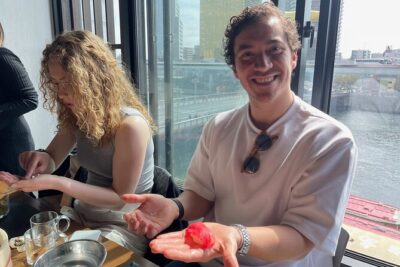
Sushi Making Tokyo Roll and Authentic Japanese Sushi Class
Read our review →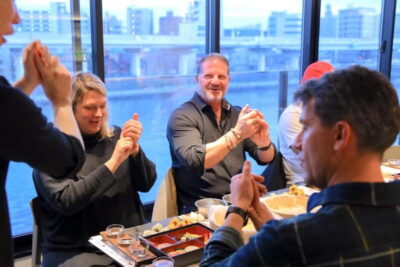
Tokyo: Roll and Authentic Sushi Making Class in Asakusa
Read our review →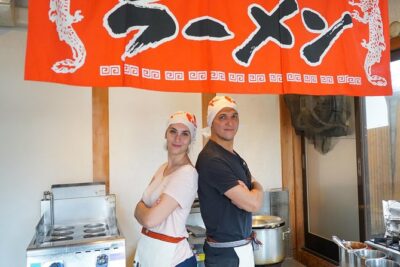
Ramen Cooking Class at Ramen Factory in Kyoto
Read our review →
Tokyo: Sushi Making Class in a Happi Coat near a Famous Spot
Read our review →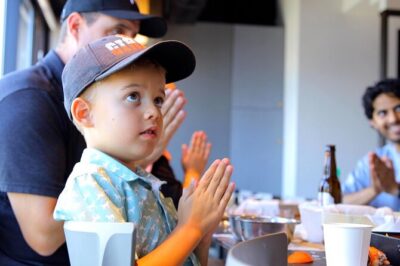
Sushi Making Tokyo! Popular Maki Sushi & Japanese Sushi(+Recipe!)
Read our review →
Sushi Making Osaka Roll and Authentic Japanese Sushi Class
Read our review →
Tokyo Sushi Making Class in Tsukiji with Professional Chef
Read our review →
Ramen & Gyoza Cooking Class in Tokyo with Local Supermarket Visit
Read our review →Browse the lists this tour appears in