
Review · KYOTO
Kyoto Family Kitchen Cooking Class
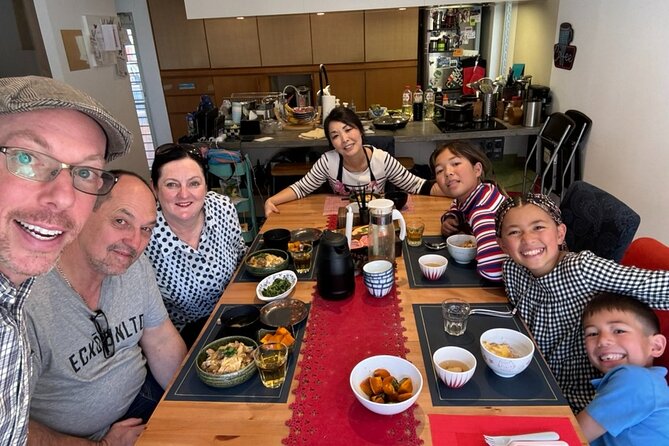
The best part of this Kyoto experience is not mastering a restaurant recipe. It is sitting at a family kitchen counter with Anthony, Naomi, their children, dog, and cat, then eating the meal you helped prepare. I like the relaxed home setting and the chance to learn how ordinary Japanese dishes are built from staples such as dashi, soy sauce, mirin, and sake. I also like that the class can adapt to food needs, including vegetarian requests.
The main consideration is the format. This is an informal family cooking evening, not a polished demonstration with a chef, printed lesson plan, or perfectly measured recipe at every turn. If you want technical instruction, you may find it too casual. If you want conversation, home cooking, and a real connection, that informality is the point.
Key points to know before booking
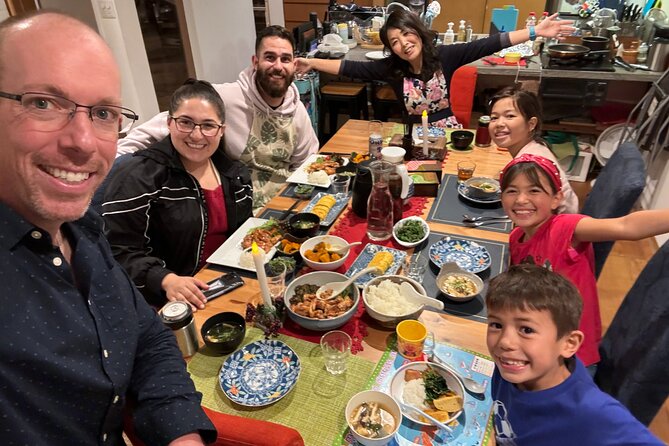
- Cook in a real Kyoto home: You join Anthony and Naomi, their children, dog, and cat in a suburban house outside central Kyoto.
- Learn everyday Japanese cooking: The focus is on dashi, soy sauce, mirin, sake, and other building blocks used in home meals.
- Expect about two and a half hours: The evening usually runs from 6:00 to 8:30 PM, Monday through Friday.
- Dinner is included: Ingredients, seasonings, tea or coffee, taxes, and transportation to Kokusaikaikan subway station are covered.
- Private for your group: Only your party participates, with a minimum of two people.
- Choose connection over culinary precision: The experience is strongest for families, couples, and small groups who enjoy talking while they cook.
A Kyoto cooking class that feels like dinner with friends
Many cooking classes put you behind a worktable with a professional instructor and a set menu. Kyoto Family Kitchen takes another route. You arrive at a family house on a hill, put down your day bag, have some tea, and talk about your time in Japan before cooking begins.
That opening matters. You are not rushed straight into chopping. The conversation moves from your trip to food, then to the dishes planned for the evening. Anthony and Naomi create a setting where you can ask simple questions, compare food customs, and get comfortable before handling ingredients.
The hosts are Anthony and Naomi, and their children may join the evening. Their dog and cat are part of the household too. That makes this feel less like a commercial kitchen and more like a visit to a Japanese family home. For many people, that is the real draw.
The class is offered as a private activity, so your group does not cook beside strangers. That is useful for families with children, couples who want a quieter evening, or friends with specific food needs. It also means the tone can depend on the group. Come ready to talk, ask questions, and take part.
More Hands-On Workshops in Kyoto:
- Ramen Cooking Class at Ramen Factory in Kyoto
★ 5.0 · 1,937 reviews - Kyoto: Ramen Cooking Class at a Ramen Factory with Souvenir
★ 4.9 · 532 reviews - Kyoto: Ramen, Gyoza, and Onigiri Cooking Class
★ 5.0 · 445 reviews
The setting outside central Kyoto
The address is in Sakyo Ward, at 33-50 Kamitakano Saimyōjiyama. It is outside the city center, in a suburban part of Kyoto rather than near the main sightseeing streets. The location gives you a different view of the city, one based on ordinary residential life instead of temples, shopping arcades, and hotel lobbies.
Transportation to Kokusaikaikan subway station is included. After booking, you arrange the meeting time, menu, and directions with the host. Pay attention to those instructions, since the house is not presented as a standard tourist attraction with a large sign or a busy front desk.
The class runs Monday through Friday from 6:00 to 8:30 PM. That timing works well after a day at places such as Kiyomizu-dera or the Philosopher’s Path, though you should allow enough time to reach the residential area without rushing. The activity ends back at the meeting point.
The home setting brings practical differences. You may be cooking around a family counter rather than in a spacious teaching kitchen. Children and pets may be nearby. For some people, that is exactly what makes the evening memorable. For others, especially anyone seeking a quiet or highly structured class, it may feel less controlled.
What happens when you arrive
The first stage is simple: tea, conversation, and an introduction to the evening meal. You can talk about your route through Japan, ask about Japanese food, and hear how the hosts use familiar ingredients at home.
This is also the time to confirm the menu and food requirements. A vegetarian guest can be accommodated, but you should discuss dietary needs with Anthony and Naomi before the class. The meal is prepared around the group, and the hosts have shown flexibility when a party includes different preferences.
The hosts may choose dishes such as gyoza, tamago yaki, okonomiyaki, teriyaki chicken, or sautéed vegetables. The exact menu is arranged after booking, so you should not book this expecting one fixed list of dishes. That flexibility can be a plus, but it also means you should ask questions if you have a particular food goal.
The preview gives you context before the cooking starts. Instead of treating each recipe as a separate trick, the hosts explain the basic ingredients that appear across many Japanese meals. This is practical cooking information you can carry into your next trip to a Japanese grocery store or restaurant.
Learning the four kitchen staples
The class introduces dashi, soy sauce, mirin, and sake as core parts of Japanese home cooking. These ingredients do different jobs, but together they help form the savory, sweet, and balanced flavors associated with many familiar dishes.
Dashi is the foundation for a range of Japanese foods. Soy sauce provides salt and depth. Mirin brings sweetness and shine. Sake contributes flavor in cooking. The value of the lesson is not just memorizing names. You begin to see how a short list of common ingredients can support several types of meals.
You will also work with other seasonings and ingredients supplied for the class. Everything needed for cooking is included, so you do not need to shop before arriving. Coffee and tea are included as well, while alcohol is not.
The lesson is hands-on. You put on an apron and gather around the kitchen counter to slice, dice, mix, and assemble. Children can take part, with adults helping as needed. The emphasis is on preparing food together rather than watching someone cook while you stand back.
That distinction explains the one notable criticism of this experience. One disappointed participant expected a more formal cooking lesson and felt they were assisting the host family with an informal dinner. The menu in that case included sautéed vegetables and teriyaki chicken, and the visitor learned some Japanese cooking basics but wanted more instruction.
I would treat that as a useful warning, not a reason to dismiss the class. If you need exact knife skills, a formal recipe packet, or a chef explaining every technique in sequence, choose a conventional cooking school. If you want to prepare a meal with a local family, this format is a better match.
A few more cooking classes around Kyoto worth a look
- Kyoto: Japanese Washoku Bento Small Group Cooking Class
★ 5.0 · 380 reviews - Kyoto Ramen and Gyoza Cooking Class with Professional Chefs
★ 5.0 · 282 reviews - Kyoto: Afternoon Japanese Izakaya Cooking Class
★ 4.9 · 241 reviews - Izakaya Style Cooking Class
★ 5.0 · 219 reviews
The dishes and the meal afterward

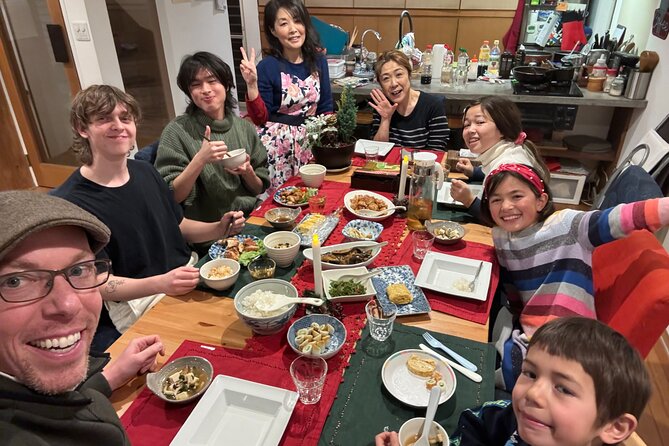
The meal is the payoff, but it is also part of the cultural exchange. After the cooking, everyone gathers at the table and eats together. You are not handed a boxed meal at the end. You share food with the hosts and continue the conversation.
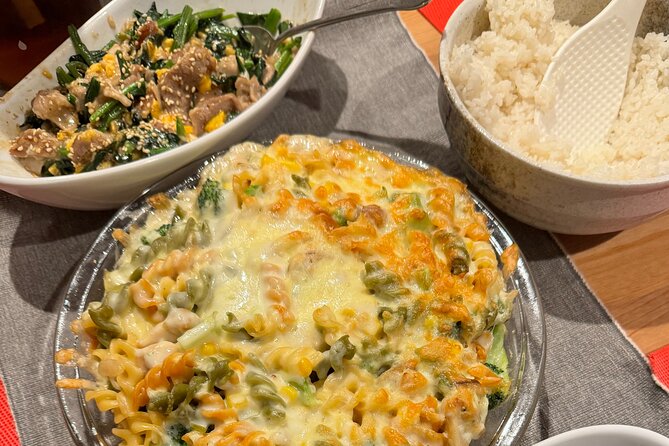
Past menus have included gyoza and tamago yaki, Japanese rolled omelet. Okonomiyaki has also been prepared, and one evening included teriyaki chicken and sautéed vegetables. These dishes give you a useful range: dumpling making, egg technique, a savory cabbage-based specialty, and familiar home-style main dishes.
The hosts prepare food from scratch, though some preparation is naturally done before you arrive. That is normal for a two-and-a-half-hour home dinner. You get enough work to feel involved without spending the whole evening waiting for rice, sauces, or fillings to be ready.
The table is where the experience becomes more than a lesson. You may talk about Japan, your home country, family life, travel, and food customs. The hosts have also taught basic Japanese phrases during the meal, which adds a small but useful touch for the rest of your trip.
The children and pets may be part of the evening. Families with children can find this especially helpful because young visitors have a chance to play while adults talk and eat. One family included a 78-year-old grandmother and an 11-year-old child, and the informal setting gave both generations room to participate.
Still, remember that you are entering a private home. Normal household activity is part of the experience. The children may be present, the dog may wander through, and the cat may appear at the table area. If you have allergies or discomfort around animals, ask about that before booking.
Why the family setting matters
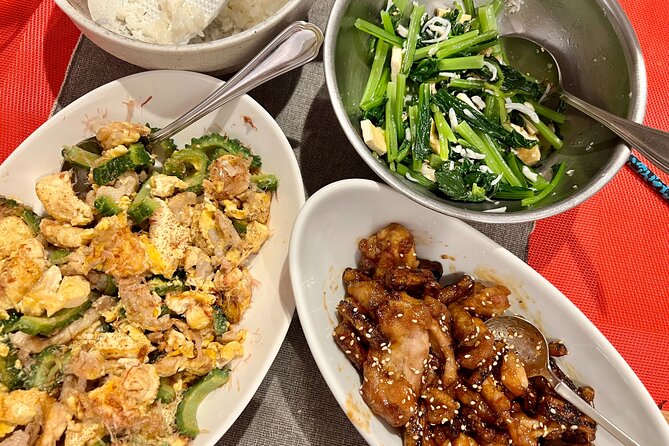
Kyoto has no shortage of food experiences. You can eat kaiseki, visit a market, order ramen, or attend a restaurant-based cooking lesson. A family kitchen offers something different: a look at how food fits into daily life.
You learn less about formal restaurant presentation and more about the rhythm of an ordinary dinner. Ingredients are discussed as household staples. The recipes are useful rather than ceremonial. The conversation is as important as the chopping.
That is why the hosts’ warmth matters so much. Anthony and Naomi welcome you into their home, introduce you to their children, and share space that is normally private. The evening works when everyone treats it as a shared meal, not simply a paid lesson.
I especially like this for visitors who want a human connection but do not want a large group activity. The private format lets you spend time with the host family at your own pace. A couple can have a long conversation. Parents can let children participate without worrying about holding up a class. A small group can ask about food and daily life without competing for the instructor’s attention.
The tradeoff is that the experience will not feel anonymous or slick. Your evening depends partly on the natural flow of conversation and the household mood. That is the charm, but also the uncertainty.
Price and what you receive for $96.84
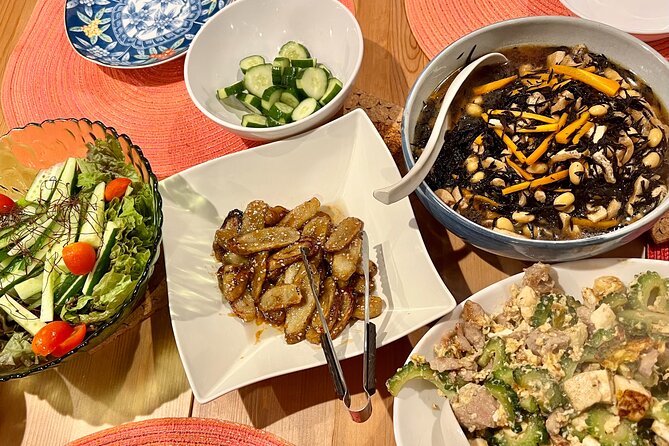
At $96.84 per person, this is not the cheapest way to eat dinner in Kyoto. You can buy a filling restaurant meal for less, and a standard group cooking class may sometimes cost less as well.
The price makes more sense when you count what is included: dinner, ingredients, seasonings, an English-speaking instructor, tea or coffee, all taxes and fees, and transportation to Kokusaikaikan subway station. You are also paying for a private family visit rather than only for food preparation.
Value depends on your goal. If you measure the experience by how many dishes you learn or how many hours you spend actively chopping, the price may seem high. If you value a personal conversation with a Kyoto family and a meal in a real home, it becomes easier to justify.
The minimum is two guests, so solo visitors cannot book this as a single participant under the stated terms. Groups are welcome, including larger family gatherings, though you should finalize the details with the host after booking.
Alcoholic drinks are not included, and gratuity is not included. Free cancellation is available up to 24 hours before the start time. Changes or cancellations made inside that window are not refundable.
Who will enjoy this evening most
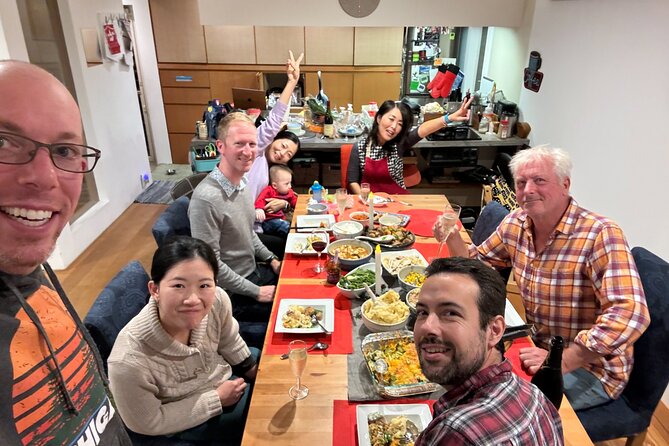
I would recommend Kyoto Family Kitchen to families with children, couples, and small groups who enjoy informal cultural experiences. It is especially good for anyone who wants to eat in a local home rather than simply visit another restaurant.
It also suits people who like to ask questions. You can talk about Japanese food, family routines, language, and travel while preparing dinner. The hosts’ English makes that exchange possible.
Vegetarians should contact the hosts before arriving. A vegetarian guest in a group of six was given plenty to eat, but advance communication is still the smart move. The same applies to other food requirements.
This is less suitable for anyone who wants a formal culinary certificate, advanced technique, or a fixed menu guaranteed in advance. You may also want another option if you dislike pets, find family noise distracting, or prefer a strictly timed class.
Service animals are allowed, and the activity is near public transportation. Specific mobility details are not provided, so ask the host if you need information about steps, kitchen access, or seating.
My booking advice
Book this if your ideal Kyoto evening includes a home-cooked meal, children at play, pets underfoot, and plenty of conversation. You will leave with more than a recipe. You will have seen how a family shares food and hospitality in a setting far removed from the main sightseeing routes.
Before booking, confirm the menu, dietary needs, meeting instructions, and transportation details with Anthony and Naomi. Also make sure everyone in your group understands that this is a relaxed family evening, not a formal chef-led course.
For the right person, the $96.84 price buys a rare kind of access: an invitation into daily life. For the wrong person, the loose format may feel like helping with dinner rather than taking a class. Know which experience you want, and the choice becomes clear.
FAQ
Where does the Kyoto Family Kitchen class take place?
It takes place at 33-50 Kamitakano Saimyōjiyama in Sakyo Ward, Kyoto, outside the city center in a suburban home.
How long does the experience last?
The experience lasts approximately 2 hours and 30 minutes, from 6:00 to 8:30 PM.
On which days is the class available?
It is available Monday through Friday during the stated operating period.
Is the class private?
Yes. Only your group participates in the activity.
What is the minimum number of participants?
A minimum of two guests is required.
Who hosts the cooking experience?
The experience is hosted by Anthony and Naomi, with their children and household pets sometimes part of the evening.
What food and cooking ingredients are included?
Dinner, all seasonings and cooking ingredients, and coffee or tea are included. Alcoholic beverages are not included.
Is transportation included?
Transportation to Kokusaikaikan subway station is included. The activity ends back at the meeting point.
Can the hosts accommodate dietary requirements?
The hosts can accommodate food requirements, including vegetarian needs, but you should discuss them with the hosts after booking when finalizing the menu.
Can I cancel for a full refund?
Yes. You can cancel at least 24 hours before the start time for a full refund. Cancellations or changes made less than 24 hours before the start time are not accepted for a refund.
Just added around Kyoto
- Private Cooking Class Udon in Kyoto Japan★ 5.0 · 23 reviews
- Private Plant-Based Japanese Cooking Class – Kyoto Edition★ 5.0 · 15 reviews
- Private Kyoto Sushi Cooking Class & Tea Ceremony with Emika★ 5.0 · 66 reviews
- Private Guided Traditional Buddhist Cooking in Japan★ 5.0 · 16 reviews
- Kyoto Wagashi(Japanese sweets) Cooking Class near Fushimiinari★ 5.0 · 60 reviews
- Nishiki Market, Private Sushi class & Sake Tasting in Townhouse★ 5.0 · 6 reviews
- Private Kyoto Cooking Class with Aki in a Beautiful Wooden House★ 5.0 · 12 reviews
- Private Kyoto Market Tour and Authentic Cooking Class with Aki★ 5.0 · 15 reviews
Cooking Classes, compared.
Half-Day Thai Cooking Class at Organic Farm in Chiang Mai
Read our review →
Florence: Pasta Cooking Class with Unlimited Wine
Read our review →
3 in 1 Cooking Class near Navona: Fettuccine, Ravioli & Tiramisu
Read our review →
Hanoi Cooking Class: Culture, Local Market & Meaning CSR Impact
Read our review →
5 Traditional Dishes Hanoi Cooking Class with Market Trip
Read our review →
Cooking Class and Lunch at a Tuscan Farmhouse with Local Market Tour from Florence
Read our review →
Chiang Mai: Cooking Class, Market & Thai Herbs Garden Tour
Read our review →Browse the lists this tour appears in