
Review · KYOTO
Authentic Japanese Cooking Experience at Izakaya restaurant
Kyoto’s Izakaya Factory gives you more than a meal. You cook three everyday Japanese dishes in a real izakaya setting, then sit down and eat what you made. The class covers yakitori, filled onigiri, and dashi-maki tamago, a soft rolled omelet flavored with Japanese stock.
I like the small group size, limited to eight people, and the practical mix of grilling, shaping, and pan work. I also like that dietary options include vegetarian, vegan, and Muslim-friendly courses. The main consideration is the price: at $139 per person for 1.5 hours, this is not a cheap meal, so you should book it for the hands-on lesson and cultural setting, not simply for dinner.
Key points at a glance
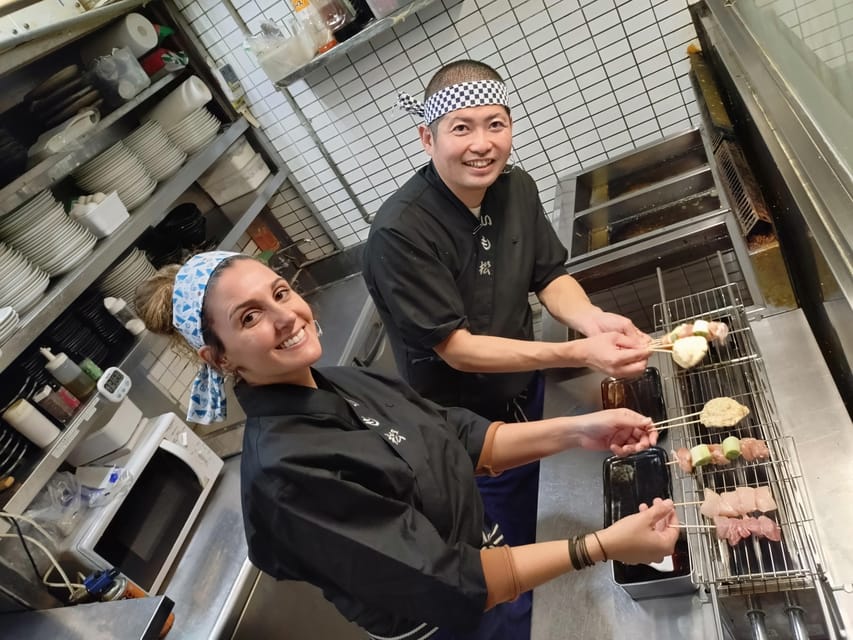
- Yakitori over the grill: Prepare and cook savory chicken skewers in the style of a Japanese izakaya.
- Three useful Japanese staples: Make dashi-maki tamago, onigiri, and yakitori rather than watching a demonstration only.
- Small Kyoto class: With no more than eight participants, you should have a fair chance to work directly with the instructor.
- Your own meal at the end: Sit down with the food you prepared, plus one soft drink.
- Dietary choices available: Vegetarian, vegan, and Muslim-friendly courses avoid pork, alcohol, and non-Halal meat.
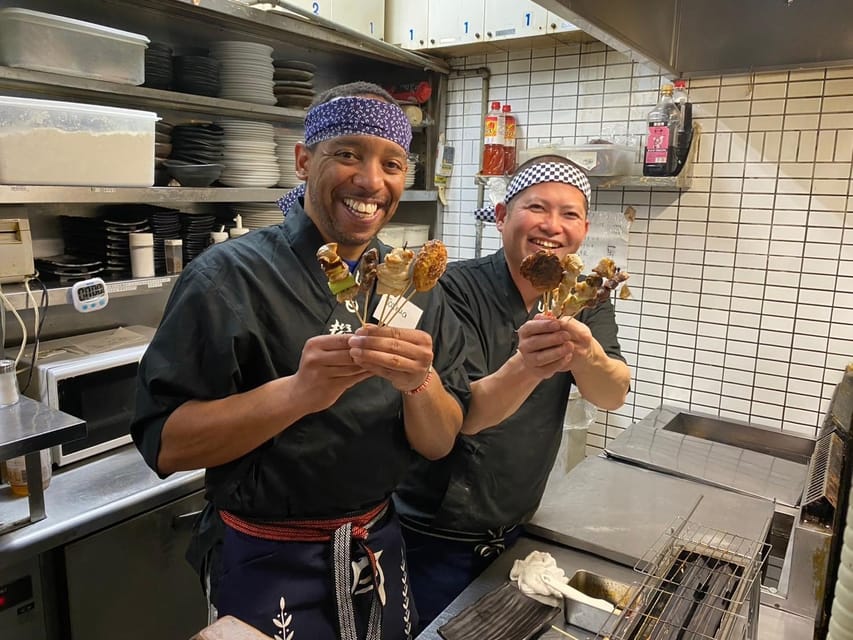
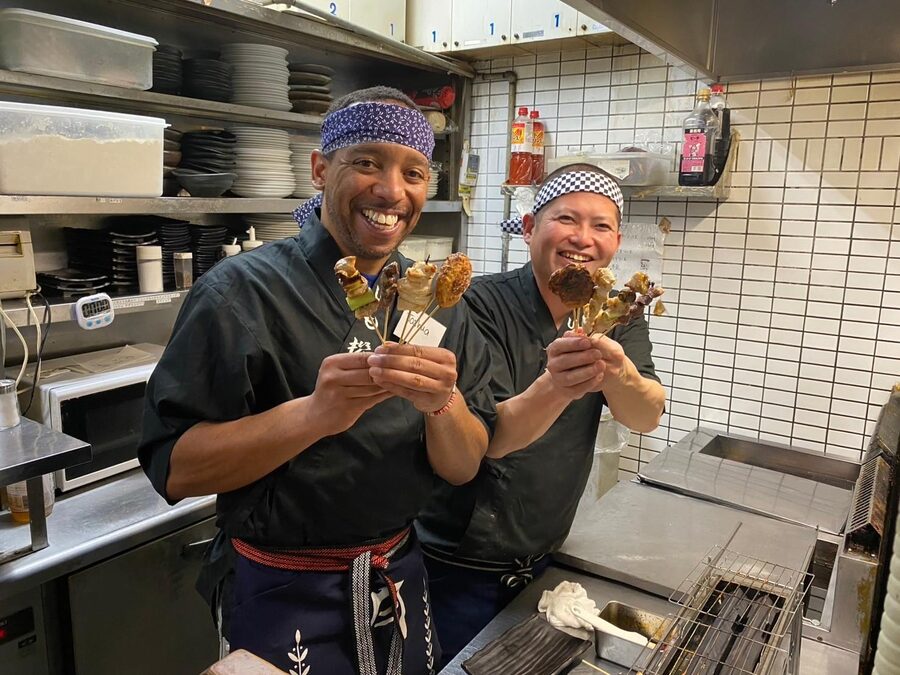
- A practical souvenir: You receive a bandana to take home, a small reminder of the class.
Finding Izakaya Factory near Sanjo
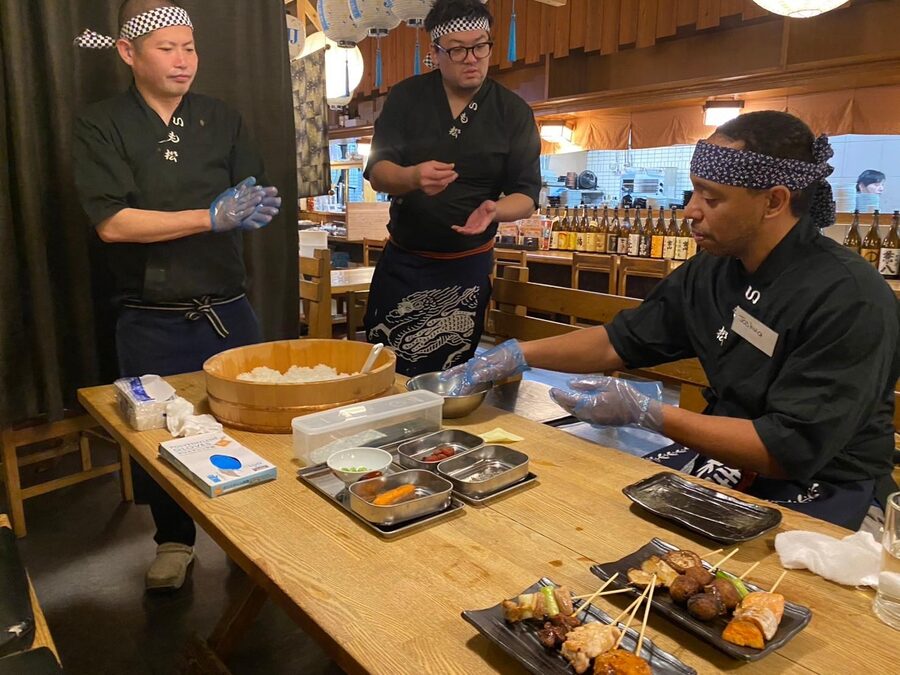
The class meets at Imomatsu, in the basement of the Sixth Tourist Building at Zaimokucho in Kyoto’s Nakagyo Ward. The location is a five-minute walk from Keihan Sanjo Station and a seven-minute walk from Hankyu Kawaramachi Station.
The meeting point is also listed as 234 meters from Sanjo Station. Those figures may refer to different station exits, so I would allow a few extra minutes to find the correct building, especially if you are carrying luggage or arriving after dark. Look for the Imomatsu address rather than expecting a large street-level cooking school sign.
This is a convenient location for a food-focused Kyoto day. You can reach it by train, and the activity finishes back at the same place. Transportation is not included, so you pay your own train or taxi fare.
More Sushi and Japanese Classes in Kyoto:
- Ramen Cooking Class at Ramen Factory in Kyoto
★ 5.0 · 1,937 reviews - Sushi Making in Kyoto! Same-day bookings welcome!
★ 5.0 · 713 reviews - Kyoto: Ramen Cooking Class at a Ramen Factory with Souvenir
★ 4.9 · 532 reviews
What the 1.5-hour class feels like
The short duration keeps the experience focused. You are not spending half a day on a long lecture or a market visit. Instead, the time is built around preparing food, learning the basic techniques, and eating the finished dishes.
An English-speaking instructor leads the class, and Japanese is also available. The information provided does not name the individual instructor, so you should think of this as an English-supported lesson rather than a class tied to one particular chef.
The format suits beginners. You do not need to arrive with cooking experience, and the food itself gives the class a clear rhythm. You work with ingredients, follow instructions, cook, and then eat. That practical structure is helpful if you want to understand Japanese food by doing rather than simply hearing about it.
Because the group is capped at eight, the class should feel more personal than a large demonstration. A particularly quiet session may even leave you with one-on-one time. The small group size is one of the strongest reasons to consider this experience, since pan work and grilling are easier to learn when you can see the instructor closely and ask questions.
Starting with dashi-maki tamago
Dashi-maki tamago is the most technique-driven part of the class. It is a Japanese rolled omelet made with egg and dashi, the stock that gives many Japanese dishes their savory depth. The finished omelet should be soft, layered, and gently seasoned.
Rolling an omelet looks simple until you try to keep the layers together. The lesson gives you a chance to see how the instructor handles the pan and how the egg is folded into a neat shape. One participant found that the Izakaya Master made the omelet look very easy, which is a useful warning: the demonstration may look effortless, but your first attempt may require patience.
I like this part because it teaches a skill you can repeat at home. You do not need unusual equipment or a professional kitchen to make an omelet, though the technique takes practice. If you enjoy cooking, this may be the most rewarding section of the class.
The class also appears to use a special frying pan for this dish. Since the included items list does not promise a pan, do not assume one comes home with you. The stated souvenir is a bandana.
Grilling yakitori in izakaya style
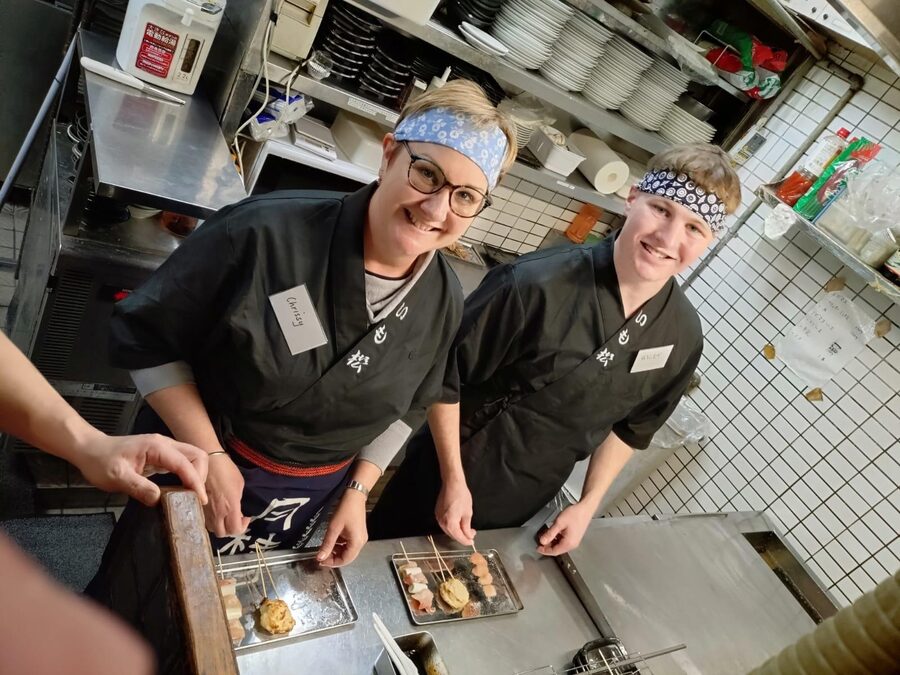
Yakitori is chicken prepared on skewers and grilled. It is one of the most familiar foods associated with Japanese izakaya dining, and making it yourself gives the meal a stronger connection to the setting.
This is the most social part of the class. Grilling adds heat, timing, and a little pressure, even when the lesson is designed for beginners. You learn how the skewers are prepared and cooked rather than receiving a finished plate from a kitchen.
The class description does not specify the exact chicken cuts, seasoning, or grill type, so I would not book this expecting a detailed regional yakitori seminar. The value is in the basic experience: handling the skewers and cooking them in an izakaya-style environment.
If you choose the Muslim-friendly course, confirm the food option when booking. The available information states that these courses use no pork, alcohol, or non-Halal meat. That makes the activity easier to fit into a Kyoto itinerary for people with specific dietary rules.
More Dining Experiences in Kyoto:
- Pasta Making & Wine Tasting with Dinner in Frascati from Rome
★ 5.0 · 1,326 reviews - Rome: Pasta Making with Wine Tasting and Dinner in Frascati
★ 4.9 · 979 reviews - Palermo: Pizza and Gelato Cooking Class with Dinner and Wine
★ 4.9 · 951 reviews - Seville: Spanish Cooking Class with Dinner
★ 4.9 · 900 reviews
Shaping filled onigiri by hand
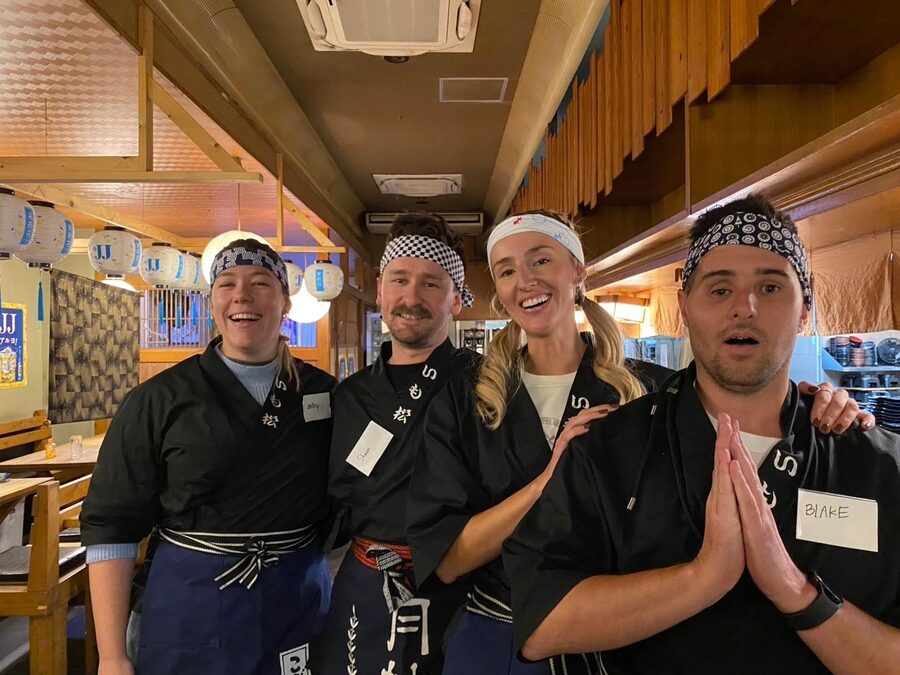
Onigiri are rice balls, often shaped by hand and filled with savory ingredients. They are a practical part of Japanese home cooking and convenience food culture, so this dish offers a good look at something ordinary and important rather than a formal restaurant specialty.
The key lesson is shaping. Rice can be sticky, and the pressure used to form an onigiri affects its texture and appearance. The class lets you work with different fillings, which makes the process more than a single repeated mold.
This is also the easiest item to recreate after returning home. You can adjust the filling, size, and shape to suit your kitchen. The finished onigiri may not look perfect on your first try, but that is part of the fun. A slightly lopsided rice ball still makes a satisfying snack.
The food choices are another strength here. Vegetarian and vegan courses are offered, so the fillings can be adapted for those diets. Ask for the correct course when reserving rather than waiting until the class begins.
Sitting down to eat what you made
After cooking, you sit down and enjoy the dishes you prepared. That final meal matters. It gives the class a natural payoff and lets you compare the finished food with what you have eaten at Japanese restaurants.
One soft drink is included. Alcohol is not part of the stated inclusions, and the Muslim-friendly course specifically avoids alcohol. If you are looking for an evening drinking experience with several rounds of sake or beer, this is not that kind of izakaya outing. It uses the izakaya setting and cooking style, but the focus is on food and participation.
The meal also helps you judge the techniques while they are fresh. You can see how the omelet holds together, taste the balance of the onigiri filling, and find out how your yakitori turned out. I prefer this kind of ending to a class where you cook food but do not get enough time to enjoy it.
The available details do not say how large the finished meal is. I would treat it as a substantial tasting meal rather than a guarantee of a full restaurant dinner. If you have a large appetite, you may still want another meal later.
Dietary options that make the class easier to book
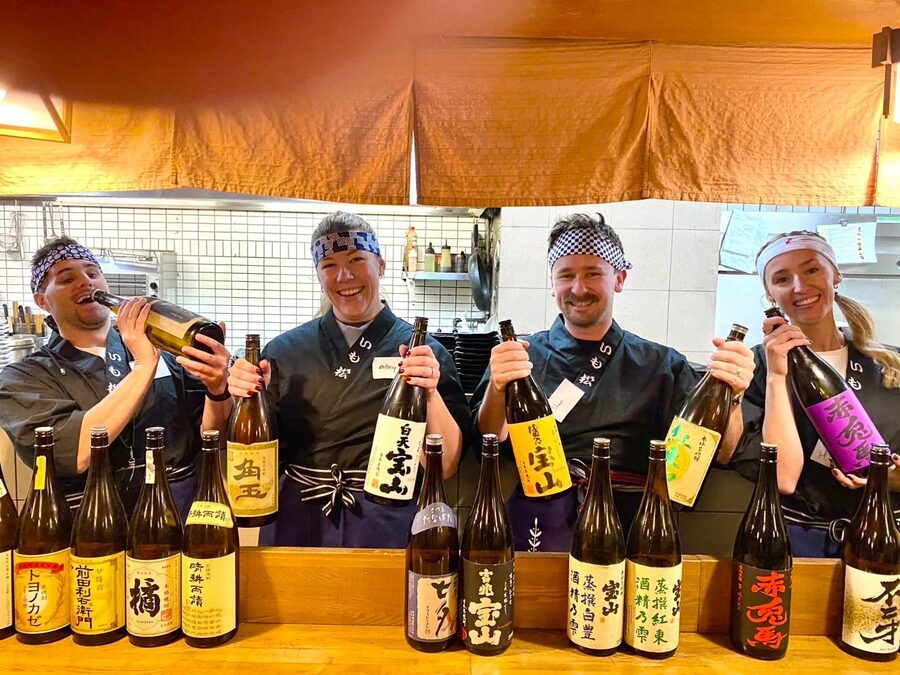
The activity offers vegetarian, vegan, and Muslim-friendly courses. The Muslim-friendly option uses no pork, alcohol, or non-Halal meat. This is important in Japan, where stock, sauces, and cooking methods may not always be obvious from a menu.
I appreciate that the dietary choices are built into the experience rather than left to guesswork. Still, you should select the proper course during booking and make your needs clear. The supplied information confirms the course categories, but it does not list every ingredient or explain how each dish changes.
For vegan participants, the omelet will need an alternative preparation, and the yakitori will need a suitable substitute. The exact substitutions are not specified. That does not make the option unusable, but it means you should check the details before paying if you have allergies or strict medical restrictions.
Is $139 a fair price?
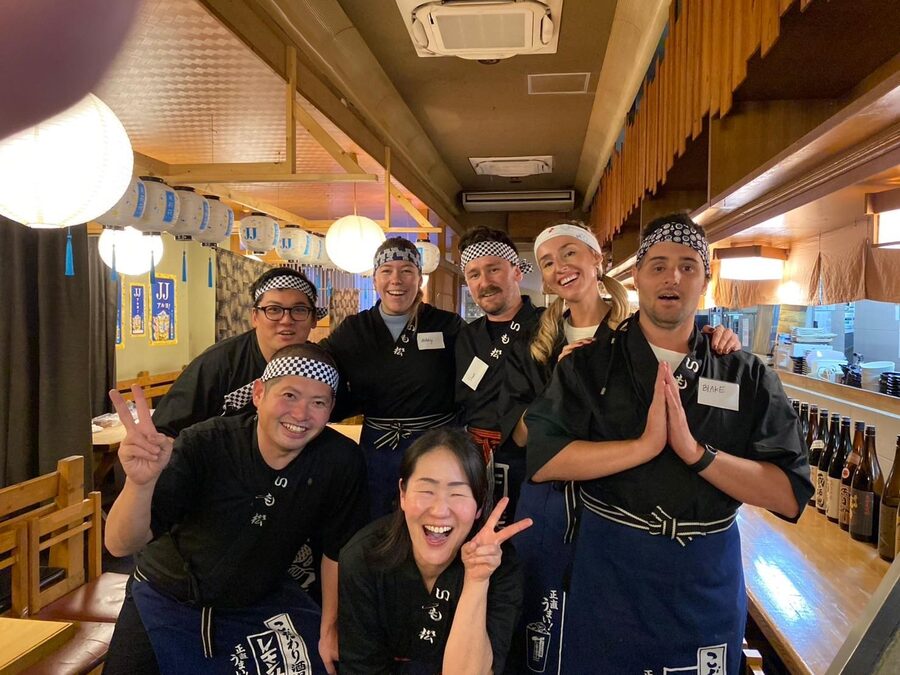
At $139 per person, the price is high for a 1.5-hour food class. You are not paying only for ingredients. The cost also covers instruction, cooking equipment, the small group format, your meal, one soft drink, and the bandana souvenir.
The strongest value comes if you want a focused cultural activity in central Kyoto. You get to practice three different food skills, speak with an English-speaking instructor, and eat the results. The eight-person limit is also more useful here than it would be on a simple restaurant visit, since close instruction is part of the point.
The value is weaker if your main goal is simply to eat yakitori, omelet, and onigiri. Kyoto has many places to eat for far less. You should choose this class because you want to take part in the preparation and learn techniques you can try at home.
It is also a reasonable choice for a short schedule. The class takes only 1.5 hours, and the central location makes it easy to place between other Kyoto plans. You still need to allow time for getting to the basement venue and for your own transport costs.
Who should book this Kyoto cooking class?
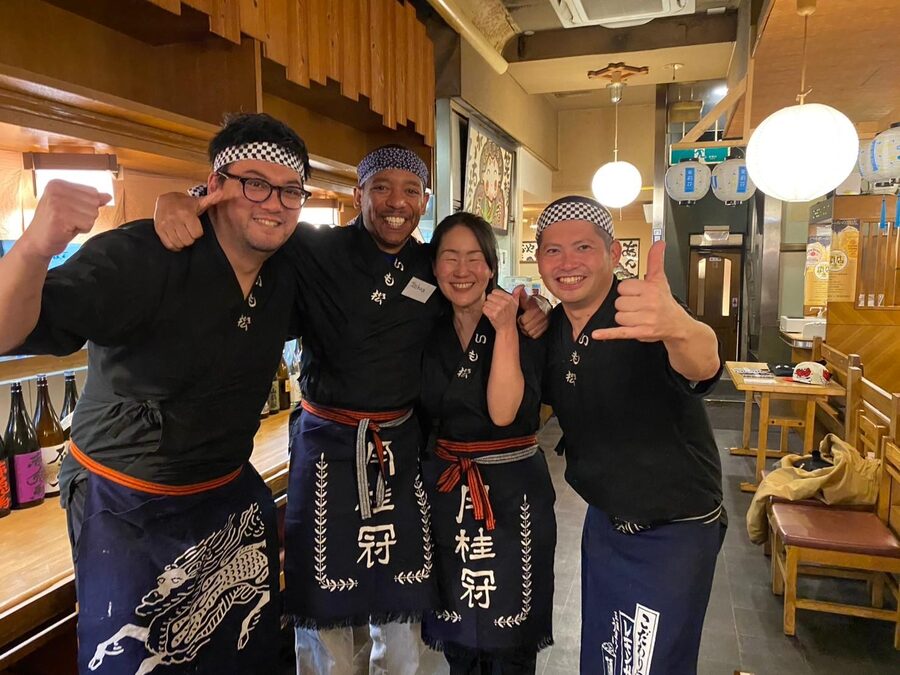
I would recommend it to first-time visitors who want a direct introduction to familiar Japanese food. It is especially suitable if you enjoy hands-on activities, prefer small groups, or want a break from temple and shrine visits.
Families and mixed-skill groups should find the format approachable because no previous cooking ability is required. The three dishes also offer different kinds of work, so one person can enjoy grilling while another prefers shaping rice or handling the omelet.
It is a good fit for couples, too. A private or nearly private session may be possible if the class has few bookings. One couple had the class to themselves, which gave them more direct time with the instructor and left them eager to recreate the recipes at home. You cannot count on an empty class, but the eight-person maximum keeps the scale manageable.
I would be more cautious if you want a long, technical cooking course. The 1.5-hour schedule leaves time for only a basic introduction to each dish. You should expect clear instruction and active cooking, not a chef-training session.
Booking details worth knowing
You can cancel up to 24 hours before the activity for a full refund. A reserve-now, pay-later option is also available, which helps if your Kyoto schedule is still changing.
The activity begins and ends at the Imomatsu meeting point. Starting times vary, so check availability for the date you want rather than assuming a morning or evening schedule.
The class is offered in English and Japanese. Ingredients and cooking tools are included. Transportation to and from the venue is not included, and the stated souvenir is a bandana.
Final call: book it for the cooking, not just the meal
Book this experience if you want to make three recognizable Japanese dishes in a small Kyoto setting and then eat your work. The hands-on format, English-speaking instruction, dietary options, and central location make it a practical choice for beginners.
Skip it if $139 feels too high for a short class or if you only want a restaurant meal. For everyone else, the best reason to go is simple: you leave with techniques you can repeat, especially onigiri and dashi-maki tamago, along with a better sense of how an izakaya meal comes together.
FAQ
Where does the cooking class take place?
The class meets at Imomatsu, in the basement of the Sixth Tourist Building at Zaimokucho, Nakagyo Ward, Kyoto. It is about a five-minute walk from Keihan Sanjo Station and a seven-minute walk from Hankyu Kawaramachi Station.
How long does the activity last?
The cooking experience lasts 1.5 hours. Starting times vary, so check availability for your preferred date.
What dishes will I make?
You will make dashi-maki tamago, yakitori, and onigiri with fillings. After preparing the dishes, you sit down and eat the food you made.
Is the class suitable for beginners?
Yes. The activity is suitable for all skill levels, including people with no previous cooking experience.
Are vegetarian, vegan, and Muslim-friendly options available?
Yes. Vegetarian, vegan, and Muslim-friendly courses are offered. The Muslim-friendly course uses no pork, alcohol, or non-Halal meat.
What is included in the price?
The price includes all ingredients and cooking tools, one soft drink, an English-speaking instructor, and a bandana souvenir. Transportation to and from the venue is not included.
More Drink Tastings in Kyoto
- Kyoto: Afternoon Japanese Izakaya Cooking Class
★ 4.9 · 241 reviews - Izakaya Style Cooking Class
★ 5.0 · 219 reviews - Ramen and Sushi Cooking Class with Sake Pairing Set in Tokyo
★ 5.0 · 291 reviews
Just added around Kyoto
- Gyoza Cooking Class in Kyoto: Traditional Japanese Dumplings★ 5.0 · 12 reviews
- Near Fushimiinari: Kyoto Home Cooking Class & Supermarket tour★ 5.0 · 100 reviews
- Gyoza Cooking Class in Kyoto: Traditional Japanese Dumplings★ 5.0 · 210 reviews
- Izakaya Style Cooking Class★ 5.0 · 219 reviews
- Kyoto: Afternoon Japanese Izakaya Cooking Class★ 4.9 · 241 reviews
- Kyoto Ramen and Gyoza Cooking Class with Professional Chefs★ 5.0 · 282 reviews
- Kyoto: Japanese Washoku Bento Small Group Cooking Class★ 5.0 · 380 reviews
- Kyoto: Ramen, Gyoza, and Onigiri Cooking Class★ 5.0 · 445 reviews
Japanese & Sushi Cooking Classes, compared.
Sushi Making Tokyo Roll and Authentic Japanese Sushi Class
Read our review →
Tokyo: Roll and Authentic Sushi Making Class in Asakusa
Read our review →
Ramen Cooking Class at Ramen Factory in Kyoto
Read our review →
Tokyo: Sushi Making Class in a Happi Coat near a Famous Spot
Read our review →
Sushi Making Tokyo! Popular Maki Sushi & Japanese Sushi(+Recipe!)
Read our review →
Sushi Making Osaka Roll and Authentic Japanese Sushi Class
Read our review →
Tokyo Sushi Making Class in Tsukiji with Professional Chef
Read our review →
Ramen & Gyoza Cooking Class in Tokyo with Local Supermarket Visit
Read our review →Browse the lists this tour appears in