
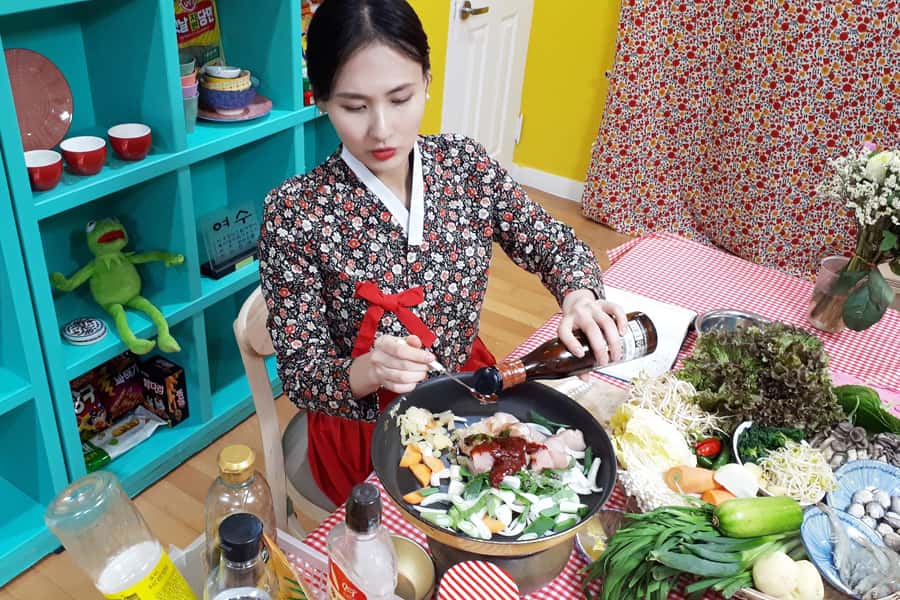
Review · KOREAN
Seoul: Korean Cooking Class at a Local Home and Market Tour
Korean food makes the most sense when you see the ingredients before they reach the table. This market-to-home cooking class starts at Mangwon Station, leads you through a traditional market, and ends with four dishes cooked in a local home. The small group, capped at 10, keeps the lesson personal.
I like two things right away: you shop for ingredients instead of simply watching a demonstration, and you eat your own work as part of a full Hanjeongsik meal with more than 10 side dishes. The main consideration is practical: there is no hotel pickup, and the local home has no elevator.
Key points at a glance
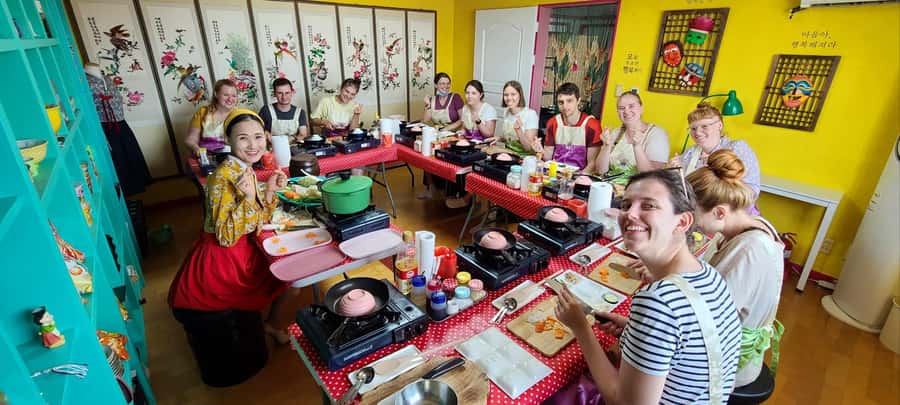
- Mangwon market before the kitchen: Walk through a less touristy market, learn what Korean cooks buy, and sample local street food.
- Four useful recipes: Prepare bibimbap, dakgalbi, haemul-pajeon, and doenjang-jjigae with guidance from an English-speaking Korean chef.
- Small group setting: The class accepts no more than 10 people, with each person taking part in the cooking.
- A meal beyond the dishes you make: Your host adds rice, seasonal fruit, rice wine, and more than 10 Korean side dishes.
- Culture in manageable doses: Learn a few Korean phrases, hear about food customs, and try on a Tal mask linked to Korean heritage festivals.
- A clear price trade-off: At $98 per person, you pay more than you would for a meal, but the fee includes the market walk, food, instruction, equipment, drinks, and recipes.
Starting at Mangwon Station
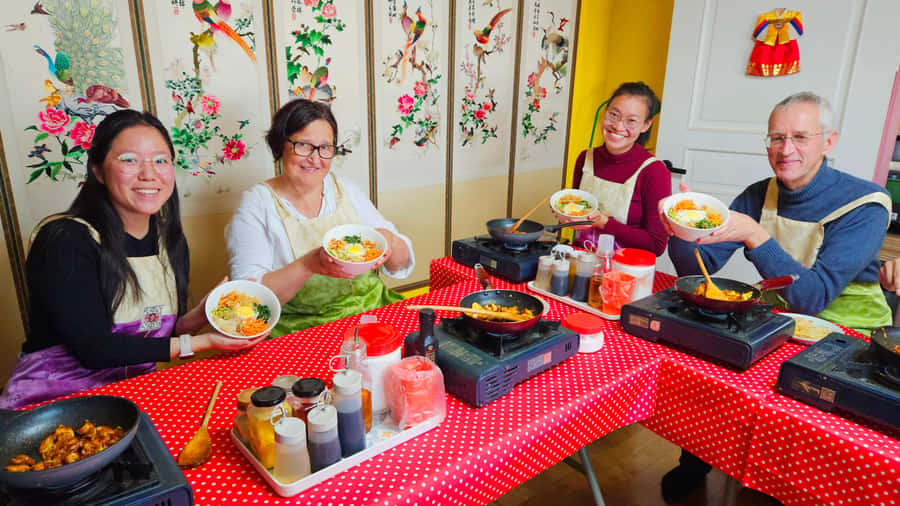
Your meeting point is outside Mangwon Station, Exit 2. You need to make your own way there, since this experience does not include hotel pickup or drop-off. Build in enough time to find the exit and meet the guide without rushing into the market portion.
The class lasts 3.5 hours, so the timing matters. This is not a quick cooking demonstration squeezed between major sights. You spend part of the session walking and tasting, then settle into the kitchen for hands-on work and a shared meal.
The group limit of 10 is a useful middle ground. You get the social energy of cooking with other people, but the class should not feel like a large food tour where you stand at the back and watch. Several participants specifically enjoyed having their own cooking space and taking an active role, even with little or no previous cooking-class experience.
Guides named in the experience include Sarah and Junghee. Sarah is described as energetic, organized, and comfortable in English. Junghee is known for a warm, funny hosting style. The tone seems friendly rather than formal, which suits a class built around conversation and food.
More Market Tour Cooking Classes in South Korea
- Local Home Korean Cooking Class & Market Adventure in Seoul
★ 5.0 · 1,024 reviews - Korean Cooking Class with Grocery Shopping at Seoul Local Market
★ 5.0 · 107 reviews - Cook 3 Authentic Korean Dishes with Local Market Tour
★ 5.0 · 231 reviews
Reading the market before cooking
The first part takes you through a traditional local market, including Mangwon and World Cup Market areas. This is where the class earns its cultural value. You are not simply told that Korean cooking uses vegetables, seafood, fermented pastes, and rice. You see those ingredients in the setting where local people shop for them.
Your guide helps identify the items needed for the recipes. That gives you a practical reason to pay attention. You can connect the market stalls to the dishes you will later prepare, instead of treating the walk as a separate sightseeing stop.
You also get samples of local street food. The exact samples can vary, but the point is to taste food in a daily shopping setting rather than only in a restaurant aimed at visitors. Keep a little appetite in reserve. The class includes a welcome drink, a cooked meal, side dishes, fruit, and rice wine later.
The market walk is also useful for first-time visitors who find Korean food shops hard to read. A native Korean guide can explain ingredients and food customs while you are looking directly at them. You will likely leave with a better sense of what is fresh, what is fermented, and how many small dishes fit into an ordinary Korean meal.
The drawback is that markets require walking and standing. If you prefer a seated food tour, this may feel like work before the cooking begins. Still, the walk is short enough to serve a purpose, and it gives the class a stronger local feel than a lesson held entirely indoors.
Four dishes, four different skills
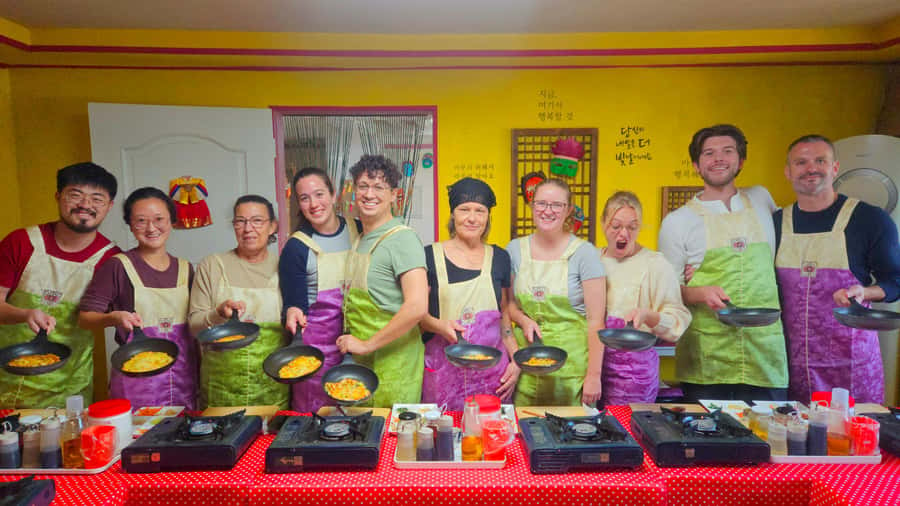
After the market, you head to the class venue, a local home. You begin with a welcome tea and learn a few Korean phrases before cooking starts. This small language lesson helps break the ice and gives you something useful to try with your host.
The menu covers four familiar Korean dishes:
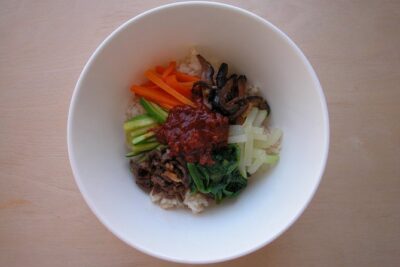
- Bibimbap: mixed rice with meat and vegetables. This introduces the balance of rice, toppings, texture, and seasoning that makes the dish so recognizable.
- Dakgalbi: stir-fried chicken. It gives you a different style of Korean cooking, with meat and vegetables cooked together in a strongly seasoned preparation.
- Haemul-pajeon: seafood and green onion pancake. Flipping the pancake is one of the class’s more playful moments, and it adds a hands-on technique that is easy to remember.
- Doenjang-jjigae: fermented soybean paste stew. This gives you a taste of a basic Korean comfort dish and shows how fermented paste forms the backbone of many meals.
You are not just watching Sarah or Junghee cook each dish. The class is designed around doing the work yourself, with the chef-guide explaining the steps and helping when needed. That makes the recipes more useful after you return home.
The menu is also well chosen for comparison. Bibimbap is assembled, dakgalbi is stir-fried, haemul-pajeon depends on batter and heat, and doenjang-jjigae is a stew. In one sitting, you see several ways Korean cooks build flavor and texture.
The class should suit beginners particularly well. The instructions are described as clear and detailed, and the hosts make a point of including people with different skill levels. You do not need to arrive as a serious home cook. You do need to be willing to chop, stir, cook, and pay attention.
A local home changes the meal
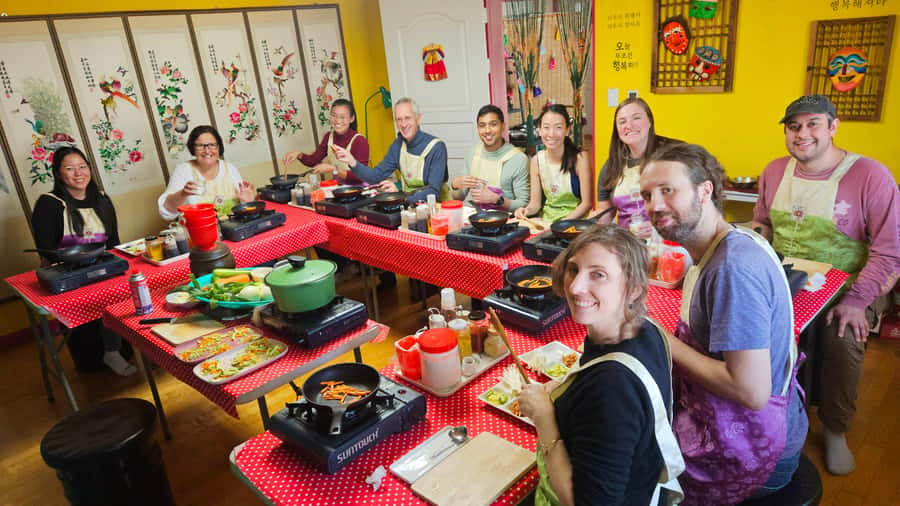
Cooking in a local home gives the class a more personal shape than a standard school kitchen. The setting lets you connect the food to everyday Korean life, and the host’s own home helps the experience feel less like a staged performance.
The home setting has one clear limitation: there is no elevator to reach it. If stairs are difficult for you, contact the provider before booking. This is one of the few practical concerns that could affect your decision.
The decor has been described as colorful and Korean, which adds to the sense of place without needing a formal lecture. You are there to cook and eat, but the surroundings help make the meal feel connected to a real household.
Your guide also helps keep the social side moving. People who attended with different levels of cooking experience found the atmosphere relaxed, funny, and inclusive. That matters in a small class, where a quiet or overly formal host could make the whole afternoon feel stiff.
Sarah’s English is described as excellent, and the activity is offered in English and Korean. You should still expect cooking terms and ingredient names to require a little patience. Food is a useful common language, and the class relies on demonstration as much as spoken explanation.
More Korean Cooking Classes in the world:
- Master Korean traditional cooking with a Kimchi chef
★ 5.0 · 385 reviews - Seoul: Korean Cooking at Seoul Cooking Club!
★ 5.0 · 311 reviews - Korean Cooking at Seoul Cooking Club
★ 5.0 · 220 reviews
The Hanjeongsik finish
Once the four dishes are ready, you sit down to eat. The food you made is served with rice, seasonal fruit, rice wine, and a Hanjeongsik spread that includes more than 10 side dishes.
Hanjeongsik is not one single recipe. It is a Korean course-style meal built around many small plates served together. This is an important part of the experience because it shows how Korean food works as a shared table, not just as one large entrée per person.
The side dishes also give you more flavors to compare. The dishes you cook are the main project, but the host’s additions show how a Korean meal gains variety through small portions of vegetables, pickles, seasoned items, and other accompaniments. You can try a little of everything without filling up on one dish.
Rice wine is included, along with water. The class is therefore more than a lesson followed by a sample plate. It ends with a proper meal and time to talk with the host and the other members of your group.
Food quality depends partly on your own cooking, of course. That is part of the charm. You get the satisfaction of eating dishes you helped prepare, while the side dishes and host-prepared items take pressure off your own technique.
Tal masks and the cultural extras
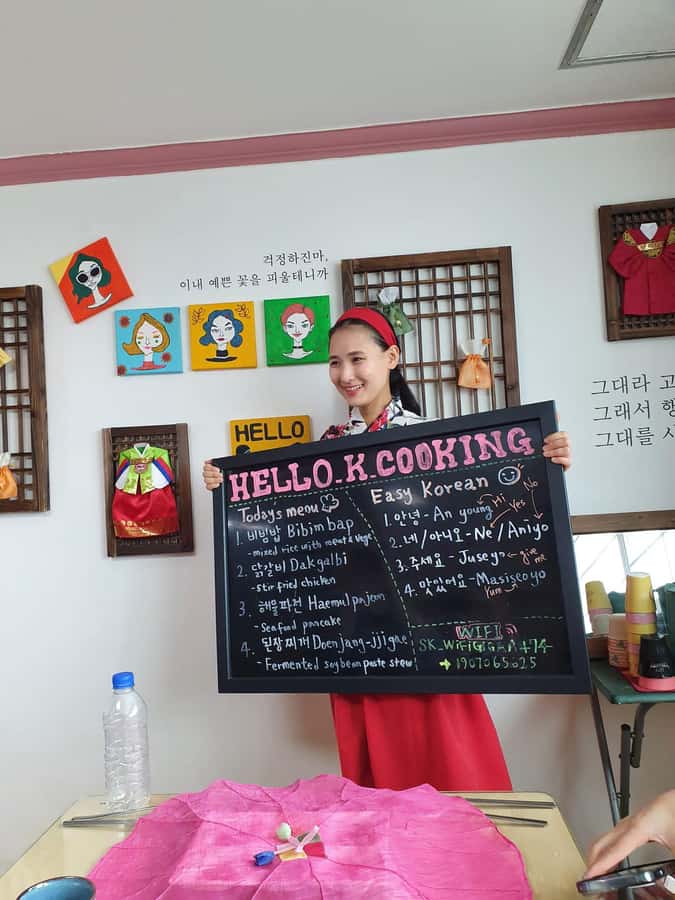
The cooking is the main event, but the cultural details give the afternoon more shape. You learn a few Korean expressions, hear explanations about ingredients and customs, and get to try on an artful Tal mask.
Tal masks are associated with Korean heritage festivals and traditional performances. Trying one on is a light, memorable activity rather than a full cultural lecture. It gives you a visual connection to Korean festival life and makes for a good photograph.
Photo and video service is included. That is useful in a cooking class, where your hands are often busy and it is difficult to record the experience yourself. Do not expect a professional travel film, but the inclusion means you can focus more on the food and group.
Recipes are also included, so the class has value after you leave Seoul. Some participants received recipes through WhatsApp and wished for a small printed cookbook instead. That is a fair point. Digital recipes are convenient, but a paper handout would make the experience easier to remember and use in your own kitchen.
Is $98 a fair price?
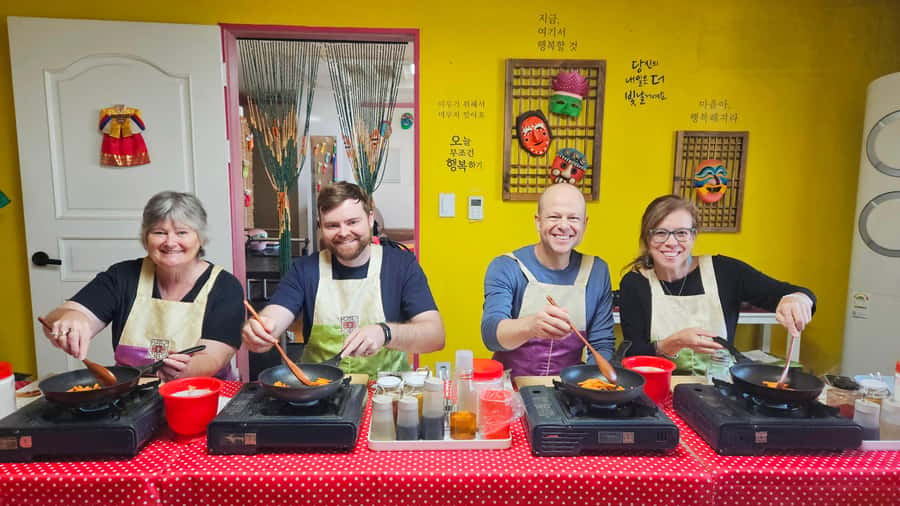
At $98 per person, this is not a cheap lunch. You could eat Korean food for much less in Seoul. The useful comparison is not a simple restaurant meal, though. Your fee covers a market tour, street-food samples, ingredients, equipment, instruction, a welcome tea, four dishes, a large side-dish meal, rice wine, water, recipes, and photo or video service.
The price makes more sense if you value participation. You are paying for access to a local host, a guided market visit, hands-on instruction, and a long meal. It is less compelling if you mainly want to eat Korean food or if you would rather spend three and a half hours sightseeing.
The small group improves the value. With no more than 10 people, the guide can explain techniques, answer questions, and help beginners. A private class would likely cost more, while a large school could offer less personal attention.
I would consider this a good use of money for food-focused visitors, couples, families with older children, and solo visitors who enjoy meeting people. It is also a strong choice early in a Seoul stay because the market and ingredient lessons can help you order and shop with more confidence later.
Who should book this class?
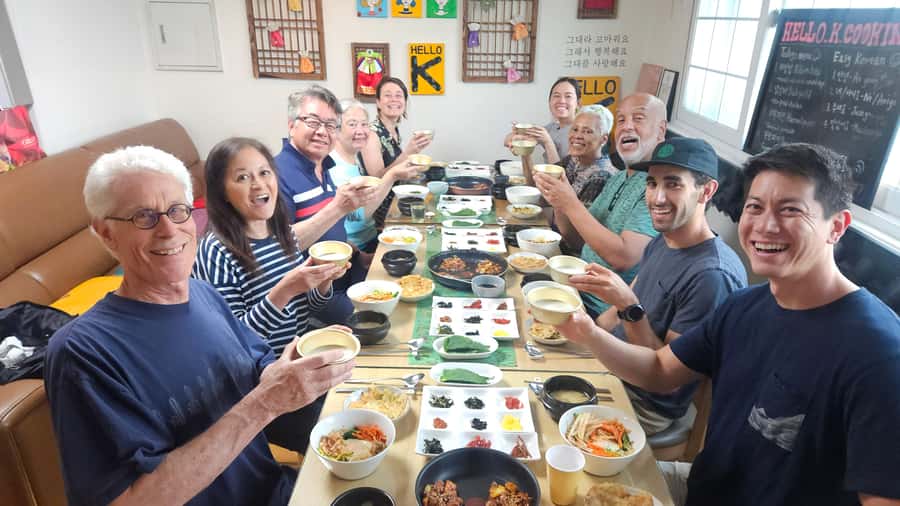
Book it if you want to do the cooking, not just watch someone prepare a polished meal. The class favors curious beginners and people who enjoy a friendly group setting.
It is a good match for anyone who wants a local market visit with a clear purpose. You will learn more from the stalls because you are collecting ingredients for dishes you will make soon afterward.
It also works well for people who enjoy cultural context in small pieces. The Korean phrases, Tal mask, Hanjeongsik meal, and market explanations add depth without turning the session into a long history lesson.
You may want to skip it if you dislike shared cooking, market walking, stairs, or group activities. Contact the host ahead of time about allergies and dietary restrictions. The provider specifically asks participants to do this, and the menu includes meat, seafood, and fermented soybean paste.
Practical details worth knowing
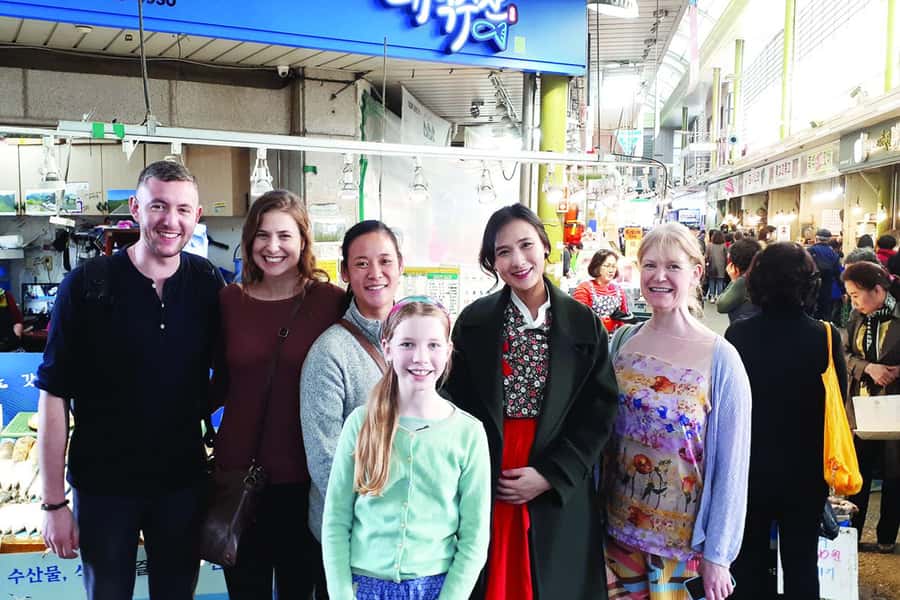
Meet the guide outside Mangwon Station at Exit 2. There is no hotel transfer, so transport to and from the station is your responsibility.
The class is available in English and Korean. It lasts 3.5 hours, with starting times shown when you check availability. The group is limited to 10 people.
The full price is $98 per person. Ingredients and cooking equipment are included, as are street-food samples, the meal, drinks, recipes, and photo or video service.
You can cancel up to 24 hours before the activity for a full refund. A reserve-now, pay-later option is also available, which helps if your Seoul schedule is still changing.
Should you book it?
I would book this class if you want one Seoul activity that combines food, a neighborhood market, a local home, and real participation. The strongest part is the progression: you see the ingredients, taste something at the market, cook four dishes, then sit down to a broad Korean meal.
The main cautions are the $98 price, the lack of hotel pickup, and the stairs to the home. If those are manageable, the class offers unusually good contact with Korean food culture in a short session. It is especially worthwhile for first-time Korean cooks and anyone who wants recipes they can repeat at home.
FAQ
Where does the cooking class meet?
Meet your guide outside Mangwon Station at Exit 2. The activity ends back at the meeting point.
How long does the experience last?
The experience lasts 3.5 hours. Starting times depend on availability.
What dishes will I cook?
You will prepare bibimbap, dakgalbi, haemul-pajeon, and doenjang-jjigae.
Is the market tour included?
Yes. The experience includes a traditional market tour and samples of local street food.
What language is the class offered in?
The class is offered in English and Korean.
How many people can join the class?
It is a small-group activity limited to 10 participants.
Is hotel pickup included?
No. You are responsible for getting to and from Mangwon Station because hotel pickup and drop-off are not included.
More Home Cooking Classes in the world
- Khmer Cooking Class at a Local’s Home in Krong Siem Reap
★ 5.0 · 2,731 reviews - Marrakech: Moroccan Cooking Class with a Local Family
★ 4.9 · 668 reviews - Mexican Cooking from Scratch in a Local Home in Tulum
★ 5.0 · 585 reviews - Pastamama, Home Cooking Classes at Grace’s Home
★ 5.0 · 521 reviews
More Market Tour Cooking Classes in the world
- Hanoi Cooking Class: Culture, Local Market & Meaning CSR Impact
★ 5.0 · 5,147 reviews - 5 Traditional Dishes Hanoi Cooking Class with Market Trip
★ 5.0 · 4,890 reviews - Cooking Class and Lunch at a Tuscan Farmhouse with Local Market Tour from Florence
★ 5.0 · 4,831 reviews - Chiang Mai: Cooking Class, Market & Thai Herbs Garden Tour
★ 4.9 · 4,824 reviews
Just added around the world
- A Coruña: Local Market Shopping and Cooking Workshop★ 5.0 · 16 reviews
- Vegan/Vegetarian Ramen and Gyoza by Bentoya cooking★ 5.0 · 59 reviews
- Traditional Zanzibar Cooking Class including Spice Tour★ 4.5 · 14 reviews
- Verona: Pasta and Tiramisu Cooking Class with Fine Wine★ 4.8 · 633 reviews
- Hoi An/Da Nang: Vegetarian Cooking Class & Basket Boat Ride★ 4.8 · 90 reviews
- Hoi An : Vegetarian Cooking Class W Optional Coconut Village★ 4.9 · 28 reviews
- Hoi An Vegan Cooking School with Local Chef and Basket Boat★ 4.8 · 31 reviews
- Tbilisi: Cooking Class with a Local Family★ 5.0 · 104 reviews
Korean Cooking Classes, compared.
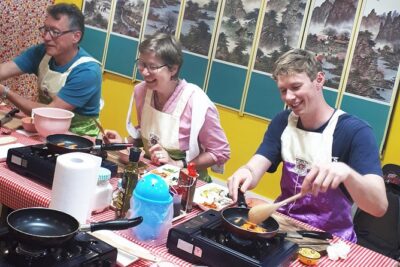
Local Home Korean Cooking Class & Market Adventure in Seoul
Read our review →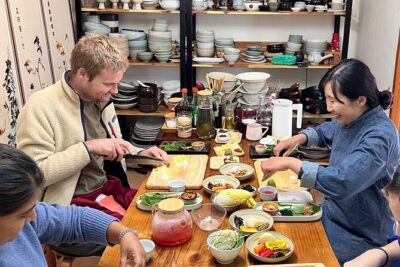
Master Korean traditional cooking with a Kimchi chef
Read our review →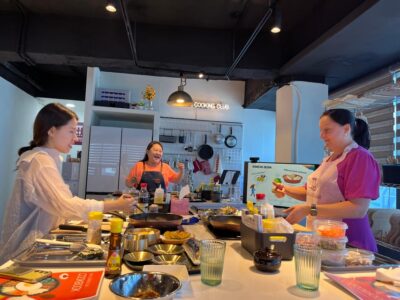
Cook 3 Authentic Korean Dishes with Local Market Tour
Read our review →
Korean Cooking Class with Grocery Shopping at Seoul Local Market
Read our review →Browse the lists this tour appears in