
Review · VEGAN & VEGETARIAN
Shibuya Tokyo: Sushi Making Class (Vegan/Vegetarian/Halal)
Making sushi in Shibuya is less about mastering a chef’s knife and more about getting your hands on one of Japan’s most recognizable foods. In 90 minutes, you take a short sushi quiz, prepare vegetable fillings, roll California rolls, and shape nigiri with help from English-speaking instructors such as Momoyo and Kaito.
I like two things right away: the class welcomes vegan, vegetarian, halal, and gluten-free diners, and you actually eat what you make. The friendly teaching style also matters. You get useful guidance without needing cooking experience. One caution: the studio can take a little time to find, so allow more than the basic seven-minute walk from Shibuya Station.
Key points at a glance
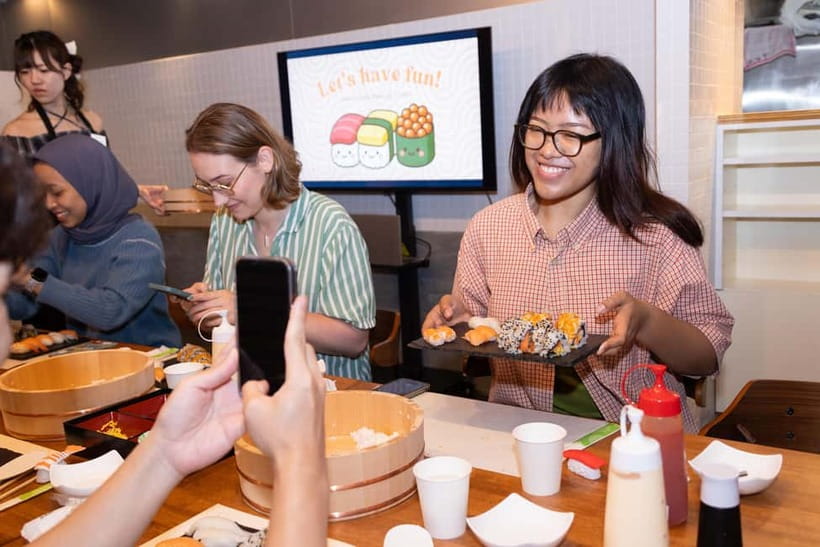
- A real hands-on meal: You make California rolls and nigiri, then sit down to eat your own sushi.
- Fresh vegetable fillings: Ingredients can include eggplant, mushroom, tomato, avocado, and other vegetables.
- A short sushi quiz first: You get a simple introduction to sushi history before handling the food.
- Dietary choices must be arranged early: Vegan, vegetarian, halal, and gluten-free options are available, but changes cannot be made on the day.
- English instruction in central Shibuya: The studio is about a seven-minute walk from Shibuya Station.
- Good value for a short activity: At $58 per person, the price includes instruction, ingredients, utensils, and a full meal.
Why a sushi class works well in Shibuya
Shibuya is famous for giant screens, crowded crossings, shopping, and late-night energy. It is also a useful place to fit in a focused cultural activity between city walks. This class gives you a break from simply looking at food. You learn how it is assembled, why the shapes matter, and how to make something you can repeat at home.
That practical angle is important. A sushi restaurant can give you a memorable meal, but a class gives you a skill as well. You leave knowing how to handle a sushi mat, spread rice, arrange fillings, and shape nigiri. The lesson is not designed as professional chef training, but it offers enough technique to make sushi less mysterious.
The activity lasts 90 minutes, so it fits neatly into a Tokyo day. You can schedule it before shopping in Shibuya, after visiting the crossing, or as a relaxed food stop before dinner. Because the class takes place indoors, it also gives you a dependable plan for a rainy afternoon.
More Vegan Cooking Classes in Japan
- Ramen & Dumpling Cooking in Tokyo with Chef/Vegan possible
★ 5.0 · 107 reviews - Ramen Making from Scratch with Tokyo Mom(Vegan Option Available)
★ 5.0 · 39 reviews - Vegan/Vegetarian Ramen and Gyoza by Bentoya cooking
★ 5.0 · 59 reviews
Finding the studio seven minutes from Shibuya Station
The studio is in the heart of Shibuya, about a seven-minute walk from the station. That sounds simple, but Shibuya Station is large and the surrounding streets can be confusing, especially if you are following a map while crossing busy roads.
One participant specifically advised allowing extra time to find the venue. I would take that advice seriously. Do not leave the station at the last minute and expect a perfectly calm arrival. Check the meeting instructions before setting out, and note that the meeting point can vary depending on the option you book.
The central location is still a strong advantage. You do not need to spend part of your day traveling to a distant cooking school. Once you find the studio, you can settle into a clean cooking space with the ingredients and tools prepared for the lesson.
A friendly quiz before the rice hits the mat
The class begins with a short quiz about sushi history. This is not a long lecture, and it helps set the tone before the practical work starts. You learn a few facts about Japan’s best-known dish while getting comfortable with the instructor and the other people in the room.
I like this opening because it gives the meal some context without turning the class into a formal history lesson. The quiz also helps explain why sushi is more than raw fish placed on rice. It introduces the food as a Japanese craft with its own traditions, shapes, and methods.
The quiz appears to be one of the most praised parts of the class because instructors explain the background in a light, easy way. You should expect basic cultural context rather than a detailed study of sushi’s development. For most people, that is the right balance for a 90-minute activity.
Preparing vegetables with simple, useful guidance
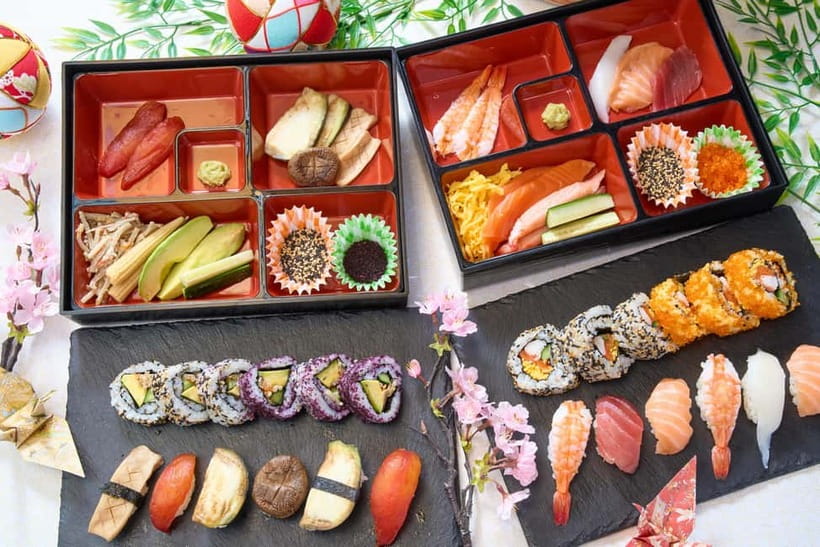
The exact ingredients can vary, but the vegetable selection may include eggplant, mushrooms, tomato, avocado, and other fresh produce. These ingredients give the class color and texture, which is especially helpful when you are making sushi without seafood.
The instructor explains the main ingredients and shows how they fit into each type of sushi. You do not need to arrive with cooking skills. The teaching is aimed at beginners, and the process is broken into manageable steps.
This is where dietary planning matters. If you choose vegan or vegetarian sushi, you can work with vegetable fillings from the start. Halal and gluten-free options are also available, but you must state your needs when booking. The menu cannot be changed on the day, so do not assume you can arrive and make a last-minute request.
For anyone with allergies, giving clear information in advance is especially important. The staff are described as accommodating, but the published instructions still require you to provide your food preferences or restrictions before the activity.
More Sushi and Japanese Classes in Tokyo:
- Sushi Making Tokyo Roll and Authentic Japanese Sushi Class
★ 5.0 · 3,971 reviews - Tokyo: Roll and Authentic Sushi Making Class in Asakusa
★ 4.9 · 1,957 reviews - Tokyo: Sushi Making Class in a Happi Coat near a Famous Spot
★ 4.9 · 1,377 reviews - Sushi Making Tokyo! Popular Maki Sushi & Japanese Sushi(+Recipe!)
★ 5.0 · 1,314 reviews
Rolling California rolls without the usual fuss
The main practical lesson includes California rolls. You place the fillings, work with the rice, and use the sushi-making tools provided by the studio. The instructor demonstrates the technique and then lets you try it yourself.
Rolling looks easy when someone else does it. The rice can spread unevenly, fillings can shift, and the roll may not be as tight as you expected. That is part of the fun. The instructors, including Momoyo, are praised for being patient and clear, so you have room to correct your technique rather than simply watching a demonstration.
You will likely care less about making a perfect restaurant-style roll than about understanding the process. The useful lesson is learning how much filling to use, how to position it, and how to apply pressure without crushing the rice.
The food you make is not just a prop for photographs. You eat it afterward, which gives the activity a satisfying finish. Staff can also take photos of your sushi before you start eating, so you can keep a record of your first attempts.
Shaping nigiri, the most recognizable sushi form
The class also teaches nigiri. This is the compact hand-shaped piece most people picture when they think of traditional sushi. In this class, you create a vegetable version rather than working with fish.
Nigiri is a good skill to include because it looks simple but depends on balance. You need enough rice to hold together, but not so much that the topping disappears. The class gives you a chance to practice the shape with direct help from the instructor.
For a first-time sushi maker, nigiri can be more revealing than rolling. A roll can hide its filling inside. Nigiri puts the rice and topping on display. That makes it a useful exercise in neatness and proportion, even if your first pieces look homemade.
The focus remains approachable. You are not being graded, and the instructors aim to keep the room relaxed. That matters for families, couples, solo participants, and anyone who feels nervous about cooking in front of other people.
Eating your own work at the end
After the preparation, you sit down and eat what you have made. The food serves as both lunch or a substantial snack and the payoff for the lesson. Several people describe the portion as filling, so you should not think of this as a tiny demonstration followed by a separate meal.
The taste will depend on the ingredients and the choices available that day. Fresh vegetables such as avocado, tomato, mushroom, and eggplant offer different textures, while the rice gives the meal its familiar sushi base.
I value the fact that the meal is part of the booking. You are not paying $58 only to watch an instructor prepare food. You receive ingredients, cooking tools, instruction, and the chance to eat your finished sushi.
It is also a useful option for people who have trouble finding suitable prepared food while visiting Japan. Vegan diners in particular can find it tiring to explain restrictions at every restaurant. Here, your chosen menu is arranged in advance and built into the activity.
English-speaking instructors who keep the pace easy
The class is taught in English, and the instructors focus on clear, friendly guidance. Momoyo is praised for making the lesson easy and enjoyable, while Kaito and Momoyo are both described as enthusiastic and helpful. The staff also make time for conversation, which adds a personal touch without taking over the lesson.
That teaching style suits beginners. You can ask questions as you work, and you do not need to understand Japanese cooking terms before you begin. The short format also keeps the class moving. You get an introduction, practical work, and a meal without a long period of sitting and listening.
The social side is worth noting. You may have a pleasant chat with the staff and the other people at your table, but the activity does not depend on being outgoing. Solo visitors can participate comfortably, while couples and families have a shared task to work on.
Audio recording is not allowed. You can take photos of the finished sushi, but plan to keep recording equipment put away during the class.
Is $58 a fair price?
At $58 per person, this is not the cheapest meal you can find in Tokyo. You can eat simple sushi for less, especially if you use a supermarket or casual restaurant. The price makes more sense when you count the instruction, food, tools, central location, and the time spent making the meal.
You are paying for an activity as well as lunch. The value is strongest if you want to learn a repeatable skill, need a dietary-friendly food experience, or prefer doing something active rather than simply ordering a plate.
The class is also fairly compact. A 90-minute activity does not consume half your day, which gives the price some practical value in a city where time is precious. You can combine it with Shibuya shopping and sightseeing without building your entire schedule around it.
The value is weaker if you are mainly looking for expert sushi tasting or traditional fish preparation. This is a vegetable-focused class, and its strength is participation rather than gourmet dining.
Who will enjoy this activity most
This class suits you if you want a low-pressure introduction to Japanese food culture. No cooking background is required, and the instructors guide you through each step.
It is particularly useful for:
- Vegans and vegetarians who want a planned Japanese food experience
- People who need halal or gluten-free arrangements
- Families looking for an activity that is more engaging than sightseeing
- Solo visitors who enjoy meeting local instructors through a shared task
- Couples seeking a relaxed food activity in central Tokyo
- Anyone who wants a practical souvenir rather than another purchased item
The class may not suit you if you want a serious chef-led course, a long lesson on knife skills, or a seafood-focused sushi menu. It is friendly and accessible rather than advanced.
Practical advice before you book
Choose your dietary option carefully when making the reservation. Vegan, vegetarian, halal, and gluten-free choices are available, but menu changes cannot be made on the day.
Check the exact meeting point for your selected option. The location is close to Shibuya Station, but the studio can take longer to locate than the walking time suggests. I would aim to arrive with a small buffer.
Keep the 90-minute schedule in mind. You will have time for the quiz, instruction, preparation, photos, and eating, but this is not a leisurely half-day cooking school. If you want a slower pace, allow extra time before or after the class rather than expecting the lesson itself to stretch.
The class has a very strong overall rating of 4.7 from 29 reviews, with repeated praise for the instructors’ warmth, clear explanations, clean studio, tasty food, and relaxed mood. The most consistent point is not technical mastery. It is that people feel comfortable trying the process and leave with a new skill.
Should you book the Shibuya sushi class?
Book it if you want to make and eat your own sushi in a central Tokyo setting, especially if you need vegan, vegetarian, halal, or gluten-free food. The English instruction, short quiz, hands-on rolls, nigiri practice, and friendly staff give the class a good mix of culture and action.
I would be more cautious if your main goal is high-end sushi, raw fish, or advanced culinary training. For everyone else, $58 is a reasonable activity price because you receive a meal, a lesson, and a skill you can try again at home.
Give yourself extra time to find the studio, state your food needs at booking, and arrive ready to make imperfect but edible sushi. That is the point of the experience.
FAQ
How long does the sushi-making class last?
The class lasts 90 minutes. It includes the sushi quiz, instruction, hands-on preparation, and time to eat what you make.
Where is the class located?
The studio is in central Shibuya, about a seven-minute walk from Shibuya Station. The exact meeting point may vary depending on the option booked.
Is the class taught in English?
Yes. The instructor language is English, and the class is led by English-speaking local staff.
Are vegan and vegetarian options available?
Yes. Vegan and vegetarian options are available, with ingredients such as eggplant, mushroom, tomato, avocado, and other vegetables.
Can I request halal or gluten-free sushi?
Yes. Halal and gluten-free options are available. You need to state your food preferences or restrictions when booking, since menu changes cannot be made on the day.
What types of sushi will I make?
The lesson includes California rolls and nigiri. You use the provided ingredients, utensils, and sushi-making tools, then eat your finished sushi.
More Food Experiences in Tokyo
- Small Group Cooking Class & Market Food Tour in Florence
★ 5.0 · 1,574 reviews - Athens: Food Market Visit and Cooking Class with Wine
★ 4.9 · 1,087 reviews - Undiscovered Charleston: Half Day Food, Wine & History Tour with Cooking Class
★ 5.0 · 948 reviews - Vietnamese Food Cooking Class in Hanoi with Market Experience
★ 5.0 · 778 reviews
More Vegan Cooking Classes in Tokyo
- Oaxacan Vegetarian Cooking Class
★ 5.0 · 235 reviews - Hoi An: Vegetarian Cooking Class w Local Family and transfer
★ 4.9 · 145 reviews - Jaipur Market Tour & Vegetarian Rajasthani Home Cooking Class
★ 5.0 · 113 reviews - Hoi An/Da Nang: Vegetarian Cooking Class & Basket Boat Ride
★ 4.8 · 90 reviews
Just added around Tokyo
- Ramen Making from Scratch with Tokyo Mom(Vegan Option Available)★ 5.0 · 39 reviews
- Ramen & Dumpling Cooking in Tokyo with Chef/Vegan possible★ 5.0 · 107 reviews
- Tokyo Haneda: Bento & Ramen Gyoza Cooking Class in a Local home★ 5.0 · 9 reviews
- Hands-on Japanese Cooking in a Shinjuku Home Kitchen with Satoru★ 5.0 · 19 reviews
- Private Home Cooking in Yanaka – Local Flavors in a Warm Setting★ 5.0 · 173 reviews
- Japanese Home Cooking Class & Walk in Todoroki Temple Tokyo★ 5.0 · 88 reviews
- Sushi-Making Experience at ’Activity Maison Kissako’★ 5.0 · 197 reviews
- Popular Sushi Making Class near Tokyo Tower★ 5.0 · 229 reviews
Japanese & Sushi Cooking Classes, compared.
Sushi Making Tokyo Roll and Authentic Japanese Sushi Class
Read our review →
Tokyo: Roll and Authentic Sushi Making Class in Asakusa
Read our review →
Ramen Cooking Class at Ramen Factory in Kyoto
Read our review →
Tokyo: Sushi Making Class in a Happi Coat near a Famous Spot
Read our review →
Sushi Making Tokyo! Popular Maki Sushi & Japanese Sushi(+Recipe!)
Read our review →
Sushi Making Osaka Roll and Authentic Japanese Sushi Class
Read our review →
Tokyo Sushi Making Class in Tsukiji with Professional Chef
Read our review →
Ramen & Gyoza Cooking Class in Tokyo with Local Supermarket Visit
Read our review →Browse the lists this tour appears in