
Review · OSAKA
Discover Osaka Cuisine through Cooking Class Experience
Osaka’s famous street food becomes much more interesting when you make it yourself. In this 90-minute cooking class, a local Osaka mother teaches you the methods and background behind two of the city’s three best-known dishes: takoyaki, okonomiyaki, and yakisoba. You do not simply watch food appear on a plate. You take part in making it.
I like two things right away: the chance to learn from someone who has lived in Osaka for more than 60 years, and the small maximum group of eight people. The friendly teaching style also suits beginners, and the class has earned praise for its warm staff, clear instruction, and hands-on format. The main consideration is that this is a focused food class, not a full cultural program, and drinks besides water cost extra.
Key points to know before booking
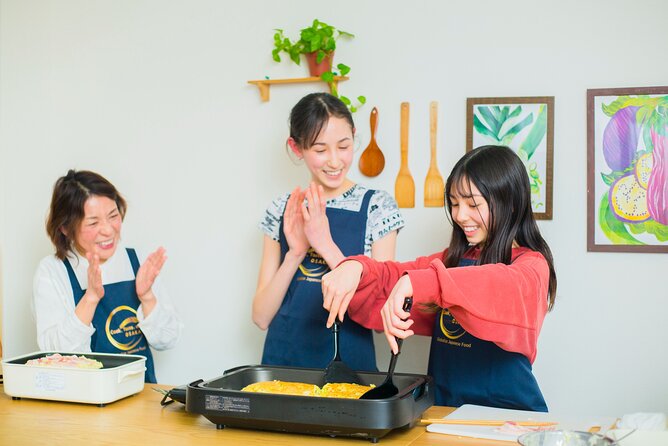
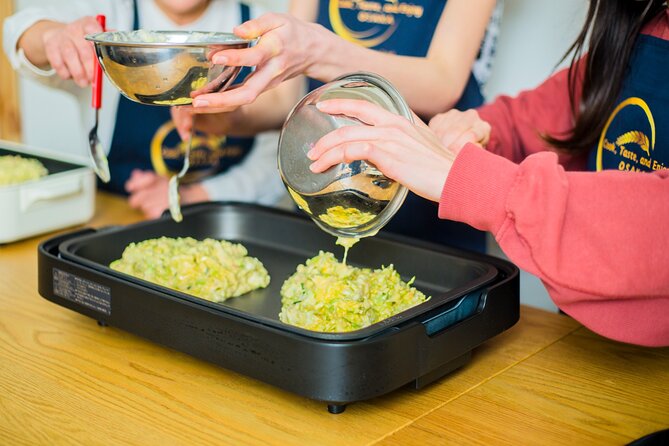
- Cook two Osaka staples: The class covers two of three choices, takoyaki, okonomiyaki, and yakisoba.
- Learn from a local Osaka mother: Your instructor has lived in Osaka for more than 60 years and explains both technique and food background.
- Keep the group small: No more than eight people can join, giving the class a personal feel.
- Expect a 90-minute session: This works well before dinner, between sightseeing stops, or during a short Osaka stay.
- Meet in Nishishinsaibashi: The class begins and ends at 2-chōme-13-16 Nishishinsaibashi in Chuo Ward.
- Water is included: Other drinks, including alcohol, cost extra during the class.
Why making Osaka food tells you more than eating it
Osaka is often associated with generous portions, casual restaurants, and food served hot and fast. Takoyaki, okonomiyaki, and yakisoba fit that picture, but each dish also reflects the city’s practical, social food culture. You are not learning delicate restaurant cuisine here. You are learning food made to share, adjust, and enjoy without ceremony.
That makes this class useful early in your visit. Once you understand how the food comes together, menus and street stalls make more sense. You can recognize the batter, sauces, toppings, and cooking methods rather than treating each dish as an unfamiliar ball, pancake, or noodle plate.
The class focuses on two of the three signature foods. The exact combination matters if you have a strong preference, so check the current booking details before you pay. The description names takoyaki, okonomiyaki, and yakisoba as the choices, but it does not promise that all three are prepared in one session.
More Hands-On Workshops in Osaka:
- Sushi Making Osaka Roll and Authentic Japanese Sushi Class
★ 5.0 · 1,220 reviews - Osaka: Ramen and Gyoza Cooking Class in Dotonbori
★ 5.0 · 378 reviews - Osaka Cooking Class: Okonomiyaki &Japanese cuisines experience
★ 5.0 · 261 reviews
Cooking with an Osaka mother of 60 years
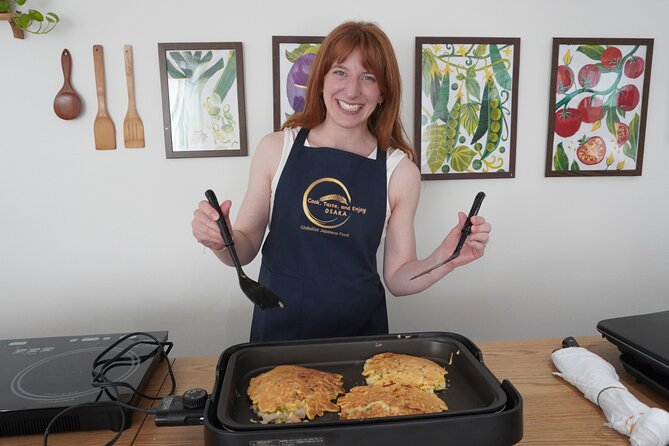
The central appeal is the instructor. She is described as an elderly mother who has lived in Osaka for more than 60 years. That gives the class a local, everyday angle that a polished restaurant demonstration may not provide.
You can expect her to explain how the food is made and where it fits in Osaka’s food culture. The lesson is not only about measurements and cooking time. It also gives you a sense of why these dishes are so closely tied to the city.
The staff have also been praised for being kind, welcoming, and good at teaching. One participant who already lived in Japan and knew Japanese food found the session worthwhile, even with limited English conversation with the staff. That is helpful context if you worry about language. The class appears to rely on patient instruction, demonstration, and participation, rather than on a long formal lecture.
Still, communication may vary depending on the staff member and the group. The host has been described as friendly and comfortable speaking English, while the cooking instructor may use less English. If you need every explanation to be detailed and fluent in English, keep that in mind. If you are happy to learn by watching, trying, and asking simple questions, the format should be more comfortable.
Takoyaki: the fun part is turning the balls
Takoyaki is probably the most immediately memorable dish in the class. You have likely seen the golden, round snacks at food stalls around Osaka. They look simple until you try to make them.
The batter is poured into a special pan with round compartments, then fillings are added. The cooking process requires attention because the outside firms up before the inside is fully set. You turn the pieces as they cook, shaping them into neat balls. It is an active task, not a passive demonstration.
The class allows you to choose your own fillings, according to the available information. That small choice gives you room to make the dish your own and makes the session work well for couples, families, and friends. It also adds a little fun when the first few pieces look less than perfect. Takoyaki is forgiving in spirit, and the point is learning the movement rather than producing a restaurant display on your first attempt.
A useful expectation check: your takoyaki may not look like the food prepared by a skilled Osaka vendor. That is part of the appeal. You get to see how much practice goes into those tidy golden balls, then eat your own version while it is fresh.
Okonomiyaki and yakisoba bring a different lesson
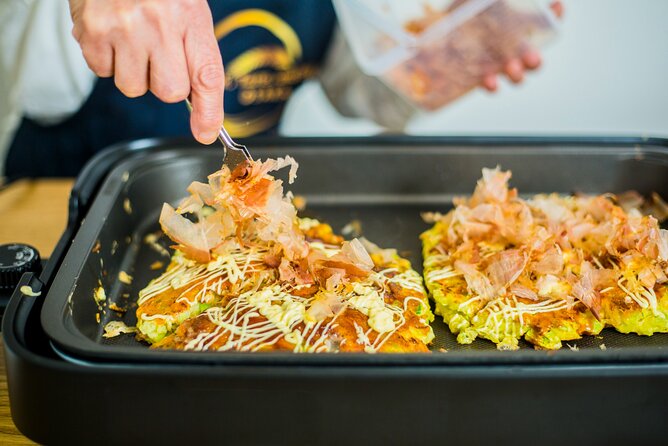
Okonomiyaki offers a broader look at Osaka’s fondness for food that can be mixed, cooked, topped, and shared. Its name is often explained as meaning something like what you like, grilled, which fits the flexible nature of the dish. In this class, you learn the traditional way of preparing it while hearing about its connection to Osaka.
Yakisoba gives you a third possible route. Compared with takoyaki, it is less about shaping and more about combining ingredients over heat. Compared with okonomiyaki, it has a different texture and cooking rhythm. If the session includes yakisoba, you will get a useful contrast between Osaka’s round snack, savory pancake, and stir-fried noodles.
The class prepares two of the three dishes, so you should not assume you will cook all three. If you have already tried takoyaki several times and want something different, ask about the day’s selection before booking. If you want the most recognizable Osaka food activity, takoyaki and okonomiyaki are likely to be the pair you hope for, but the available details do not guarantee that combination.
A few more cooking classes around Osaka worth a look
- Ramen and Gyoza Cooking Class in Osaka
★ 5.0 · 202 reviews - Osaka Sake Tasting with Takoyaki Cooking
★ 5.0 · 156 reviews - Cooking Ramen&Gyoza/KatsuCurry/Bento/Okonomiyaki+Store Tour@Osaka
★ 5.0 · 138 reviews - Three Types of Ramen Cooking Class in Osaka
★ 5.0 · 119 reviews
A 90-minute format that fits a busy Osaka day
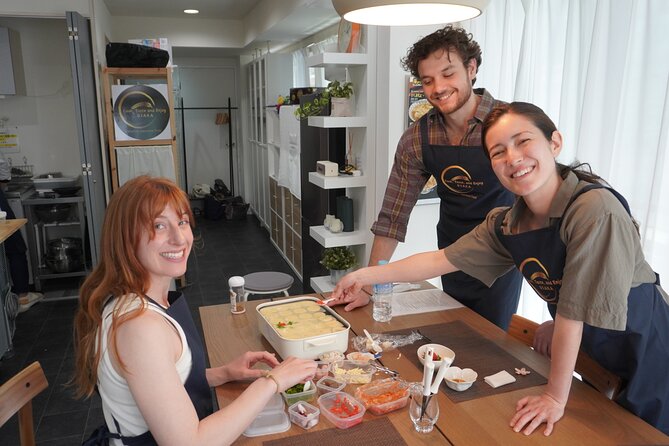
Ninety minutes is a sensible length for this activity. It gives you time to hear an explanation, take part in preparation, cook two dishes, and eat without taking over half a day.
I would place it between major sightseeing plans rather than at the end of a packed evening. The class begins and ends at the same address, 2-chōme-13-16 Nishishinsaibashi, Chuo Ward, Osaka, 542-0086. It is near public transportation, which makes the meeting point practical for a day in central Osaka.
The return to the same location is convenient. You do not need to arrange a separate pickup or work out where the class finishes. Plan your route carefully, though. The information confirms the meeting address and nearby transit, but it does not give a detailed walking guide from a particular station.
The short format also makes this a good choice for a first or second day in Osaka. You get an introduction to local food, and the instructor can provide information about Osaka and lesser-known places to visit. That local advice may help you shape the rest of your stay.
What the class adds beyond a restaurant meal
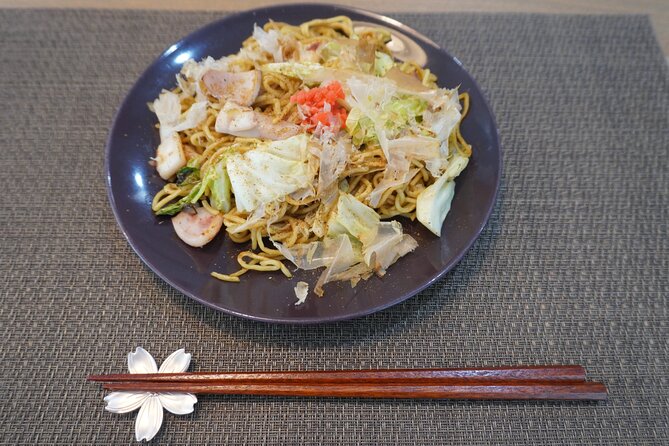
Eating okonomiyaki or takoyaki is easy. You can find them all over Osaka. The value here comes from understanding what you are eating and learning how the food is handled.
The class also creates a direct exchange with a local resident. The instructor has spent more than six decades in Osaka, and the session includes information about the city beyond the kitchen. You may hear about places that do not appear in a standard sightseeing plan, though the exact recommendations will depend on the conversation.
That personal contact is the strongest reason to book. If you only want a quick meal, the class takes more time and costs more than buying street food. If you want a story to attach to the meal, the cooking session gives you one.
The experience provider also offers other cultural activities, with a 10 percent discount if you take part in more than one cultural experience course. This is useful if you are building a wider program around Osaka food and local traditions. The current class itself does not include a separate traditional culture activity, so do not book it expecting a combined cooking and craft or ceremony session.
Is the $65.04 price good value?
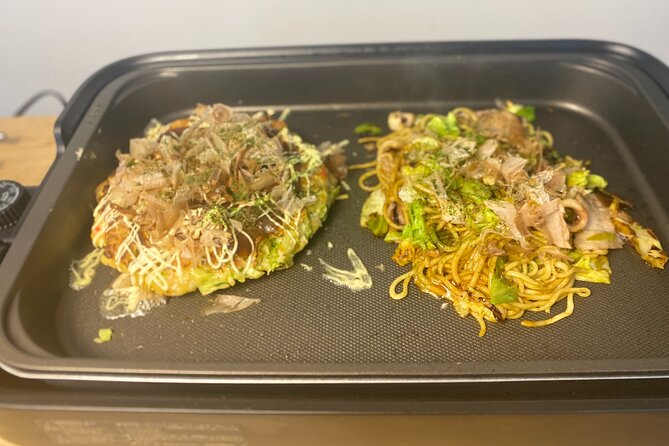
At $65.04 per person, this is not the cheapest way to eat Osaka food. You can buy takoyaki or yakisoba from a stall for far less. The comparison is not really food against food. It is a comparison between a meal and a small-group lesson with a local instructor.
The price includes the cooking experience and complimentary bottled water. It does not include other drinks, and alcohol costs extra. Those charges are easy to avoid if you are happy with water, but you should not assume that a beer or soft drink is part of the quoted amount.
The maximum group size of eight helps support the price. A smaller group means more opportunity to watch the instructor, handle the food, and ask questions. It also keeps the session from feeling like a large demonstration where you are stuck at the back.
I see the best value for someone who is curious about how Osaka food is made, enjoys hands-on activities, or wants local conversation alongside a meal. The value is weaker if you have little interest in cooking, need a full three-dish menu, or are simply looking for the least expensive lunch.
Who will enjoy this most?
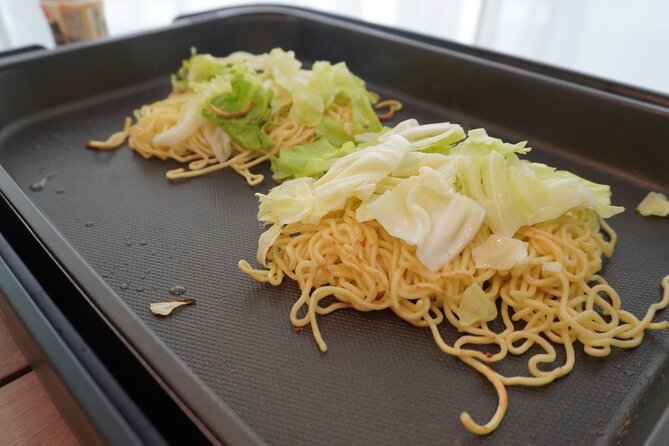
This class suits couples, friends, and families who like doing something together. Takoyaki in particular gives everyone a job, and choosing fillings adds a simple personal touch. The activity can also work for solo participants, especially if you enjoy meeting people in a small group.
It is a good pick for first-time visitors who want a food introduction without committing to a long tour. It also suits people who already know Japanese food but want a closer look at Osaka specialties. The experience has worked well even for someone living in Japan who already knew the cuisine.
Families should consider the cooking format carefully. The details do not specify a minimum age or child policy, so confirm that before booking for young children. The same applies to dietary restrictions. The available information does not state whether vegetarian, seafood-free, or other adjustments are possible.
Food-focused visitors will get the most from it, especially if you plan to eat these dishes again later in the trip. You will recognize the methods and ingredients more clearly after making them yourself.
What to know about the teaching style
The teaching style sounds warm and practical. The staff have been praised for being welcoming and extremely good at teaching, and the host has been described as easy to talk to in English. That combination matters because a cooking class can become frustrating if the instructions move too quickly.
Expect a friendly exchange rather than a formal culinary school lesson. The instructor explains the food and its background, then guides you through the preparation. You will likely learn by watching closely and copying the motion, particularly when shaping takoyaki.
Do not expect professional-chef training or advanced knife work. The class is designed as an affordable Osaka food and culture experience. Its strength is access, conversation, and participation.
Booking, cancellation, and practical details
Confirmation is provided when you book, and the activity accepts a mobile ticket. The group is limited to eight people, so reserving ahead is sensible. The average booking time is 48 days before the activity, which suggests that popular dates may fill well before a trip.
Free cancellation is available if you cancel at least 24 hours before the local start time. Cancellations made less than 24 hours ahead are not refunded, and changes within that window are not accepted. That policy is reasonable, but set a reminder if your Osaka schedule is still changing.
The class begins and ends at the same Nishishinsaibashi address. Water is included. Drinks other than water, including alcoholic beverages, are charged separately.
Should you book this Osaka cooking class?
Book it if you want more than a quick plate of Osaka food. The small group, the 60-plus years of local life behind the instruction, and the chance to cook two signature dishes make this a personable way to understand the city’s food culture.
Think twice if you want all three dishes, a full traditional culture program, or a bargain meal. You should also confirm the dish combination if takoyaki, okonomiyaki, or yakisoba is a must.
For most food-curious visitors, I would choose this class early in an Osaka stay. You get a meal, a practical lesson, and a local contact who can point you toward more of the city. That is a fair return for 90 minutes and $65.04, provided you value the experience as much as the food.
FAQ
Where does the Osaka cooking class begin and end?
The class begins at 2-chōme-13-16 Nishishinsaibashi, Chuo Ward, Osaka, 542-0086, Japan. It ends back at the same meeting point.
How long does the experience last?
The cooking class lasts approximately 1 hour and 30 minutes.
Which Osaka dishes will I make?
You will make two of Osaka’s three signature foods: takoyaki, okonomiyaki, and yakisoba. The available information does not specify which two will be prepared in every session.
How many people can join the class?
The activity has a maximum of eight participants.
Is water included in the price?
Yes. Bottled water is complimentary. Other drinks, including alcoholic beverages, cost extra.
Can I cancel for a full refund?
Yes, if you cancel at least 24 hours before the experience start time. Cancellations or changes made less than 24 hours in advance are not accepted for a refund.
Just added around Osaka
- Traditional Home cooking Experience in Osaka, Japan★ 5.0 · 14 reviews
- Well-balanced BENTO (lunch box) Cooking Class★ 5.0 · 35 reviews
- Osaka Street Food Festival :Takoyaki&Okonomiyaki for Families★ 5.0 · 13 reviews
- Three Types of Ramen Cooking Class in Osaka★ 5.0 · 119 reviews
- Takoyaki DIY Cooking in the Heart of Osaka★ 5.0 · 7 reviews
- SUSHI Making Experience at Restaurant★ 5.0 · 8 reviews
- Sushi Making Osaka Omakase Cooking Class in Japan★ 5.0 · 4 reviews
- Cooking Class for Ramen and Gyoza in a Quiet Old Osaka House★ 5.0 · 3 reviews
Cooking Classes, compared.
Half-Day Thai Cooking Class at Organic Farm in Chiang Mai
Read our review →
Florence: Pasta Cooking Class with Unlimited Wine
Read our review →
3 in 1 Cooking Class near Navona: Fettuccine, Ravioli & Tiramisu
Read our review →
Hanoi Cooking Class: Culture, Local Market & Meaning CSR Impact
Read our review →
5 Traditional Dishes Hanoi Cooking Class with Market Trip
Read our review →
Cooking Class and Lunch at a Tuscan Farmhouse with Local Market Tour from Florence
Read our review →
Chiang Mai: Cooking Class, Market & Thai Herbs Garden Tour
Read our review →Browse the lists this tour appears in