
Review · OSAKA
Ramen-Making Experience in the Osaka Castle Area with Souvenir
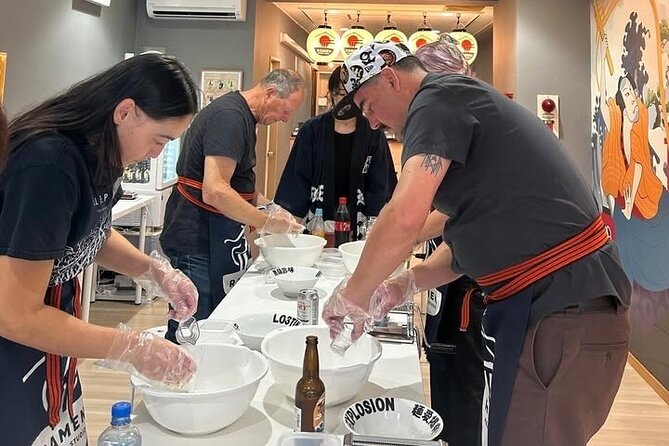
Making ramen from scratch is the heart of this Osaka class. You mix Japanese wheat flour, shape fresh noodles, prepare chicken chashu, and choose a soup base before sitting down to eat what you made. I like the hands-on format and the chance to ask questions in English as you work. I also like the small maximum group of eight, which should keep the lesson personal.
The main catch is the price: $85.39 per person is a serious spend for a two-hour meal and cooking lesson. You are paying for instruction, ingredients, the studio setting, and a souvenir, not just a bowl of noodles. If you want a quick, inexpensive lunch, this is not the right pick. If you want a practical food activity, the value is much better.
Key points at a glance
- Fresh noodles made by you: Use Japanese wheat flour specially made for ramen and create chewy noodles from scratch.
- Three soup choices: Pick tonkotsu, shoyu, or miso, with recipes based on those used by well-known ramen shops.
- Chicken chashu included: Prepare tender chicken simmered in the studio’s original broth.
- Small class size: The maximum is eight people, a useful detail for families and first-time cooks.
- Near Osaka Castle: The studio is about a 20-minute walk from the castle and within 5 to 10 minutes of three stations.
- A souvenir to take home: The class ends with a small gift, adding something tangible beyond the meal.
Why this ramen class works near Osaka Castle

This is a cooking lesson first, but its location makes it easy to fit into an Osaka sightseeing day. The studio is about a 20-minute walk from Osaka Castle, so you can pair the class with castle grounds, museum visits, or a simple stroll through the surrounding area.
Three stations are within about 5 to 10 minutes on foot. Tenmabashi Station is roughly 10 minutes away from Exit 13, Minamimorimachi Station is about 10 minutes from Exit 6, and Osaka Tenmangu Station is about five minutes from Exit 7. That gives you useful flexibility if you are coming from another part of the city.
The studio is in Higashitenma, in Osaka’s Kita Ward. Umeda Sky Building and Namba are both about 20 to 30 minutes away by train, making the class possible as part of a wider day rather than a destination that demands a full afternoon.
I would allow extra time for the walk from the station. The class itself lasts about two hours, and arriving rushed takes away from the relaxed kitchen experience. Morning and late afternoon sessions are available, so you can place the lesson before sightseeing or use it as a food-centered end to the day.
More Sushi and Japanese Classes in Osaka:
- Sushi Making Osaka Roll and Authentic Japanese Sushi Class
★ 5.0 · 1,220 reviews - Osaka Sushi Making Experience
★ 5.0 · 400 reviews - Osaka: Ramen and Gyoza Cooking Class in Dotonbori
★ 5.0 · 378 reviews
Starting with Japanese ramen noodles
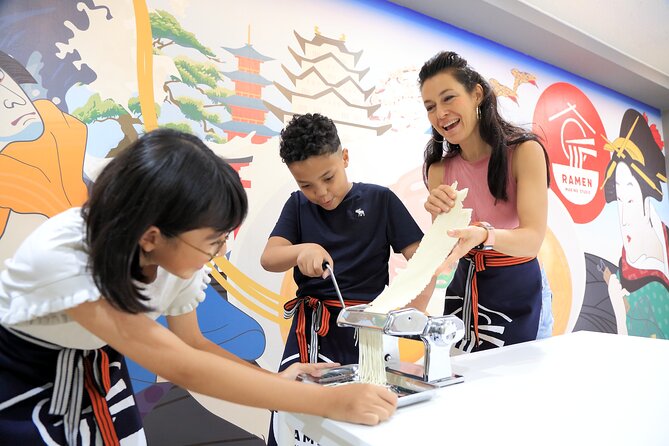
The most distinctive part of the class is making your own noodles. You use Japanese wheat flour specially made for ramen, rather than simply boiling packaged noodles and adding toppings.
The important difference is texture. Fresh noodles are chewy, and that springy bite is one of ramen’s pleasures. You get to see how the dough changes as you work it, then prepare noodles that go straight into your finished bowl.
This is a good task for beginners because it is concrete and easy to understand. You do not need prior cooking experience. The instructors guide you through each step, and the small group size should make it easier to follow along or ask for help.
For children, noodle making is likely to be the most playful part of the class. Families should still remember that this is a real cooking lesson, not only a demonstration. Young children may need close help from an adult, though the class is open to all skill levels and described as family-friendly.
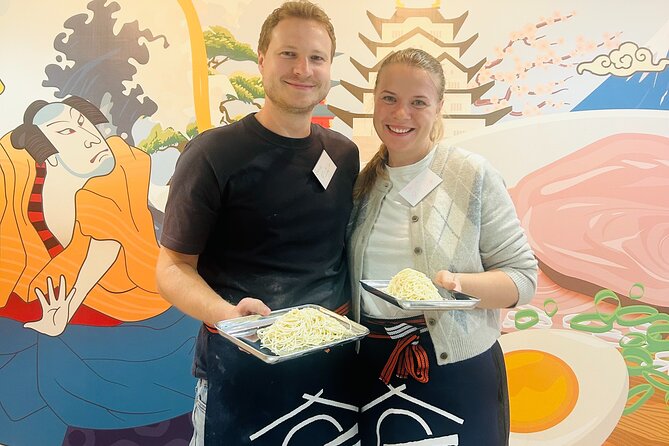
The final noodles are not just a craft project. They become part of the meal you eat at the end, which gives the work a clear payoff. I always find that more satisfying than making something in a class and never seeing the finished result.
Preparing chicken chashu with the studio broth
The protein component is chicken chashu. You prepare chicken simmered in the studio’s original broth, with the aim of producing tender, juicy slices for your ramen.
This is a useful variation for anyone who mainly associates chashu with pork. The class gives you a look at how a soft, flavorful topping is built through slow cooking and broth, rather than treating it as a ready-made garnish.
The information provided does not specify how long the chicken cooks or how much of the preparation is done by you versus the instructor. You should expect guided participation rather than complete independence at every stage. That is normal for a short class, especially when hot equipment and food safety are involved.
The chashu step also adds balance to the noodle work. You are not spending the full session on dough. Instead, the class moves through several parts of a ramen bowl, giving you a better sense of how the dish comes together.
Choosing between tonkotsu, shoyu, and miso
You choose one of three soup bases: tonkotsu, shoyu, or miso. Each has a different character, so your choice matters.
Tonkotsu is the option to consider if you like a creamy, pork-bone-style ramen profile. Shoyu is soy-sauce based and usually brings a more savory, clear taste. Miso gives you a fuller, fermented flavor. The exact final recipe comes from the studio’s methods, so you should not expect to recreate every detail from the class description alone.
The recipes are based on those used by well-known ramen shops. That gives the soup portion more purpose than simply mixing a packet with hot water. You are learning how the broth choice shapes the bowl, then tasting the result with noodles and chashu you prepared yourself.
If you are booking with family or friends, the three choices also make the meal more interesting. You can pick a favorite or compare bowls, though the available information does not confirm if each person must choose the same base or can select separately.
I would choose your soup before class if you already know what you like. If not, ask the English-speaking instructor for guidance. The staff are there to answer questions in real time, and the class is designed for people at all cooking levels.
Same place, a different menu:
- Osaka Cooking Class: Okonomiyaki &Japanese cuisines experience
★ 5.0 · 261 reviews - Osaka: Roll and Authentic Sushi Making Class in Dotonbori
★ 4.9 · 239 reviews - Ramen and Gyoza Cooking Class in Osaka
★ 5.0 · 202 reviews - Osaka Sake Tasting with Takoyaki Cooking
★ 5.0 · 156 reviews
A friendly, English-speaking class for first-time cooks
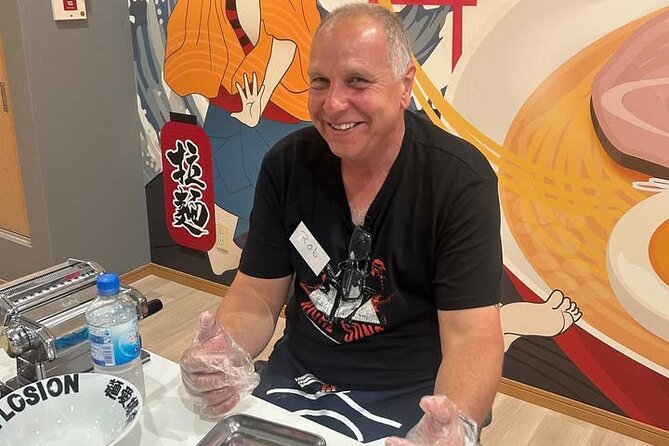
The class is taught by English-speaking instructors, which is a major practical benefit. You can ask why a step matters, check that you are doing it correctly, and understand the cooking advice without trying to follow a translation app.
The strongest praise has focused on the staff. They are described as friendly, professional, kind, and fun, with excellent English and a good balance between instruction and interaction. That balance matters. Too much talking turns a cooking lesson into a lecture, while too little guidance leaves beginners guessing.
The kitchen is described as spotlessly clean, another important point when you are handling dough, meat, and soup. The lesson is hands-on from start to finish, but you are guided through the process rather than left to manage a complex recipe alone.
The maximum of eight participants is small enough to support questions and individual help. It is not a private lesson, so the pace will still be shared with the group. Still, eight is a much better setting for a practical class than a large demonstration where you only watch an instructor work.
Staff may take photos and videos during the activity for social media or advertising. If you do not want to appear, tell them before the class begins. That is easy to handle, but it is worth remembering before you walk through the door.
The Japanese details inside the studio
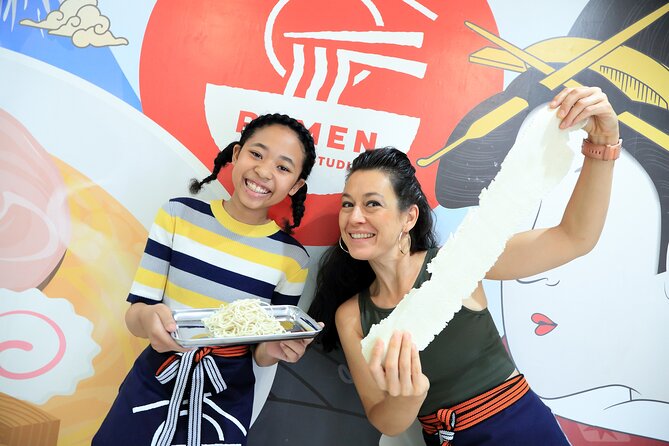
The venue adds more than a cooking counter. Its walls use ramen and Japanese motifs, giving you a themed setting for photos without needing to visit a separate cultural attraction.
One unusual feature is the glass entrance door. It was made more than 100 years ago using a technique that no longer exists. You will also find other items reflecting Japanese culture, which the staff introduce during the visit.
These details help the session feel tied to Japan rather than like a generic international cooking course. The cultural material is not described as a full history lesson, so keep your expectations sensible. It is an added layer around the ramen lesson, not a substitute for a museum visit.
The studio’s photo-friendly design may appeal to families and groups who want a record of the activity. If you prefer a quiet, private meal with no photography, remember the staff may use images for promotional purposes unless you opt out.
What the two-hour schedule gives you
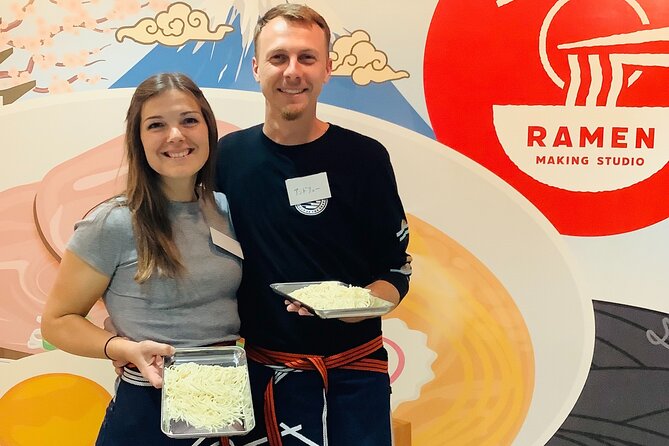
Two hours is a sensible length for this activity. It gives you time to make noodles, prepare chicken chashu, choose and prepare soup, and eat the finished ramen without turning the class into a full-day commitment.
The structure also suits a sightseeing schedule. A morning class leaves most of the day open for Osaka Castle, Umeda, or another part of the city. A late afternoon class can serve as a planned meal before you continue into the evening.
The class ends back at the meeting point, so you do not need to arrange a separate return transfer. The exact order and timing of each cooking step are not specified, and the pace can vary with the group. You should arrive ready to participate rather than expecting a tightly timed show.
At the end, you receive a souvenir. The description does not identify what the souvenir is, so do not book this expecting a particular item. Think of it as a small extra that extends the memory of the class beyond the bowl you eat.
Is $85.39 good value?
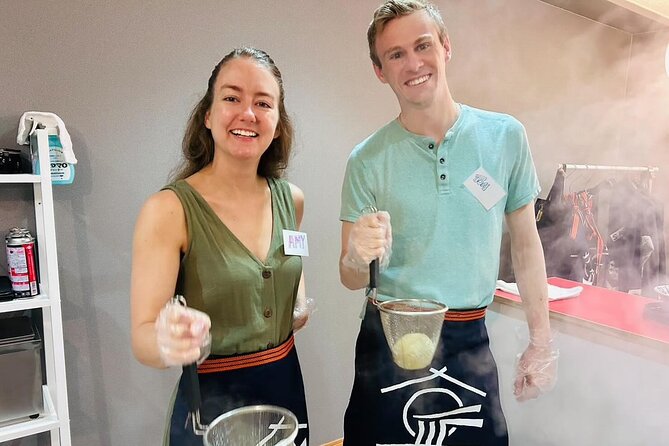
At $85.39 per person, this costs far more than eating ramen at a neighborhood shop. That comparison is fair, but incomplete. The fee includes a two-hour guided lesson, ingredients, a meal, access to a small studio, English-language help, cultural details, and a souvenir.
I see the strongest value for people who would otherwise pay for a food tour or cooking activity. You get to make several parts of the dish, not only watch an instructor prepare it. The fresh noodles are the key reason to consider the price, since they turn an ordinary meal into a skill-based experience.
The value is weaker if your main goal is simply to taste excellent ramen. Osaka has many places to eat ramen for much less, and this class will take more time than a regular meal. It also may not be the best choice for someone who already cooks ramen often and wants advanced technique.
For a family, the cost adds up quickly, so compare the price with other planned activities. For a first-time visitor who wants a friendly introduction to Japanese food, the combination of food, instruction, and souvenir can justify the expense.
The experience has a 5.0 rating from 22 reviews and a 100 percent recommendation rate. Those figures suggest consistent satisfaction, especially with the staff, clear instruction, cleanliness, and taste of the finished ramen. They do not remove the price concern, but they do support the idea that the class delivers what it promises.
Who should book this Osaka activity?
I would recommend it most to:
- Families looking for an activity that works for different ages and skill levels
- First-time visitors who want more than a restaurant meal
- Food lovers interested in noodles, broth, and chashu
- Couples or friends who enjoy making and eating the same dish together
- Anyone staying near Osaka Castle, Tenmabashi, Minamimorimachi, or Osaka Tenmangu
- Visitors who want an English-language lesson with room for questions
I would think twice if you have a tight schedule, dislike group activities, or only want a cheap lunch. The class is small, but it is still shared with other participants. It is also not presented as an advanced professional course, so experienced ramen cooks may find the material basic.
Booking, cancellation, and practical details
You receive confirmation when booking, and the activity uses a mobile ticket. Public transportation is close by, with three stations less than 10 minutes from the studio.
The meeting point is Japan, 530-0044 Osaka, Kita Ward, Higashitenma, 1-chōme4, at Higashitenma Heights. The experience finishes at the same location.
Free cancellation is available if you cancel at least 24 hours before the local start time. Cancellations made less than 24 hours in advance are not refunded, and late changes are not accepted.
Because the class has a maximum of eight people, book ahead if your schedule is fixed. The activity had more than 10 bookings in the previous month, which suggests it is active without implying that every session sells out.
Should you book the ramen-making class?
Book it if you want to learn by doing. The fresh noodles, chicken chashu, choice of three soup bases, English-speaking staff, clean kitchen, and small group make this more than a meal with a recipe attached.
The price is the deciding factor. I would pay it for a family-friendly food activity or a memorable break from standard sightseeing, but not for a quick bowl of ramen. Plan it around Osaka Castle, allow time to reach the studio, and tell the staff at the start if you do not want photos used for promotion.
For most visitors who enjoy Japanese food and have two spare hours, this is a strong choice. It gives you something to eat, something to learn, and a souvenir to carry home.
FAQ
How long does the ramen-making experience last?
The activity lasts approximately two hours.
Where does the class take place?
The meeting point is in Higashitenma, Kita Ward, Osaka, at Japan, 530-0044 Osaka, Higashitenma, 1-chōme4, Higashitenma Heights. The class ends at the same location.
Is the studio close to Osaka Castle?
Yes. The studio is within walking distance of Osaka Castle, about 20 minutes away.
How can I reach the studio by train?
Tenmabashi Station is about 10 minutes away from Exit 13, Minamimorimachi Station is about 10 minutes from Exit 6, and Osaka Tenmangu Station is about five minutes from Exit 7.
What types of ramen soup can I choose?
You can choose from tonkotsu, shoyu, or miso soup.
Is the class suitable for beginners and families?
Yes. The activity is family-friendly and open to all skill levels.
How many people can join the class?
The maximum group size is eight people.
Is cancellation free?
You can cancel for a full refund up to 24 hours before the experience start time. Cancellations or changes made less than 24 hours before the start are not accepted for a refund.
Just added around Osaka
- Traditional Home cooking Experience in Osaka, Japan★ 5.0 · 14 reviews
- Well-balanced BENTO (lunch box) Cooking Class★ 5.0 · 35 reviews
- Osaka Street Food Festival :Takoyaki&Okonomiyaki for Families★ 5.0 · 13 reviews
- Three Types of Ramen Cooking Class in Osaka★ 5.0 · 119 reviews
- Takoyaki DIY Cooking in the Heart of Osaka★ 5.0 · 7 reviews
- SUSHI Making Experience at Restaurant★ 5.0 · 8 reviews
- Sushi Making Osaka Omakase Cooking Class in Japan★ 5.0 · 4 reviews
- Cooking Class for Ramen and Gyoza in a Quiet Old Osaka House★ 5.0 · 3 reviews
Japanese & Sushi Cooking Classes, compared.
Sushi Making Tokyo Roll and Authentic Japanese Sushi Class
Read our review →
Tokyo: Roll and Authentic Sushi Making Class in Asakusa
Read our review →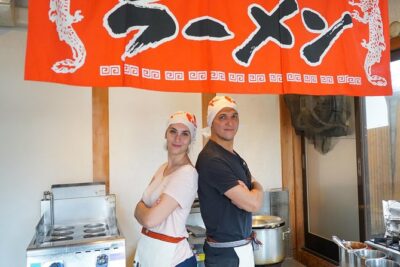
Ramen Cooking Class at Ramen Factory in Kyoto
Read our review →
Tokyo: Sushi Making Class in a Happi Coat near a Famous Spot
Read our review →
Sushi Making Tokyo! Popular Maki Sushi & Japanese Sushi(+Recipe!)
Read our review →
Sushi Making Osaka Roll and Authentic Japanese Sushi Class
Read our review →
Tokyo Sushi Making Class in Tsukiji with Professional Chef
Read our review →
Ramen & Gyoza Cooking Class in Tokyo with Local Supermarket Visit
Read our review →Browse the lists this tour appears in