
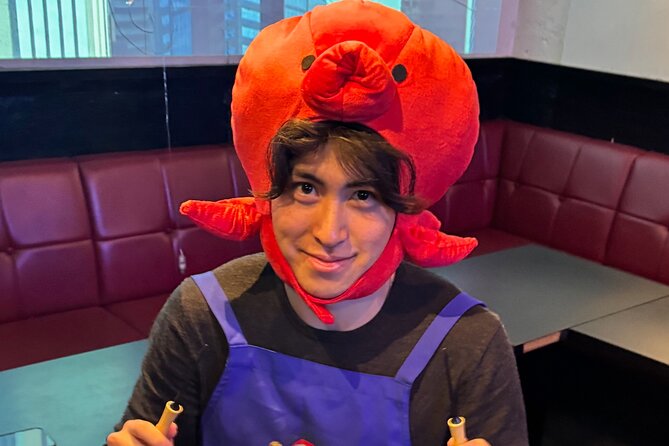
Review · JAPAN
TAKOYAKI Cooking Class with All-you-can-drink in Tokyo, Roppongi
Tokyo street food is at its most fun when you get to cook it yourself. This Roppongi takoyaki class turns a simple snack into a social meal, with hands-on work, Japanese food customs, and all-you-can-drink beverages packed into about 70 minutes. You make the batter, prepare the octopus, cook the balls, and finish them with classic toppings.
I like the relaxed pace and the small maximum group of 10 people, which gives the class a more personal feel than a large demonstration. I also like the drink plan: alcoholic beverages, soft drinks, and even lemon sours have been part of the experience, making this feel like a casual Japanese takopa, or takoyaki party.
The main drawback is finding the meeting point. The address is in central Roppongi, but one visitor had trouble locating it during a major thunderstorm. Give yourself extra time, keep the mobile ticket ready, and use the full address rather than relying on a quick glance at the map.
Key points at a glance
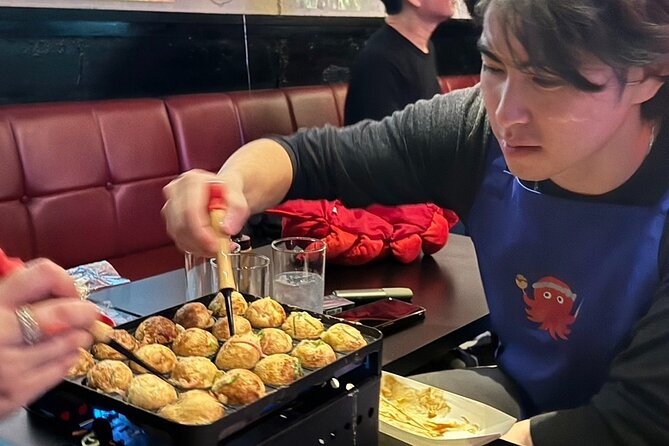
- Cook every part of the takoyaki: Mix the batter, cut the octopus, add toppings, and use the takoyaki machine yourself.
- A Japanese home-party tradition: Takoyaki parties, known as takopa, are a common way to eat and socialize at home.
- Unlimited drinks included: Alcoholic beverages and soda are included, with lemon sours specifically noted as a popular choice.
- Hosts Kana and Asami: The class is led by friendly, patient hosts who can also make the activity comfortable for visitors practicing Japanese.
- About 70 minutes in Roppongi: The short format fits neatly into an evening of dining, bars, or sightseeing in the district.
- Small group, central setting: The maximum is 10 people, and the activity begins and ends at the same Roppongi meeting point.
Why making takoyaki beats simply ordering it
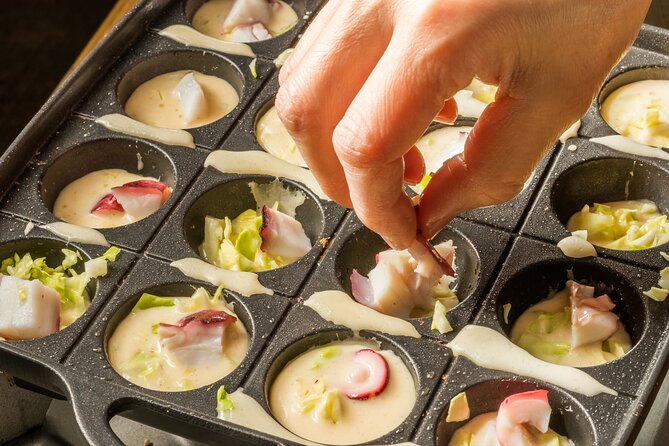
Takoyaki is easy to recognize once you see it: round wheat cakes cooked on a special griddle, with chopped octopus inside. They are savory, salty, soft in the middle, and usually finished with toppings that add sweetness, freshness, spice, and texture.
Ordering a plate gives you the finished snack. This class shows you how the snack comes together. You handle the batter and ingredients, watch the cakes cook, and learn why the griddle has half-sphere molds instead of a flat surface.
That hands-on part matters. The cooking process is simple enough for beginners, but it still gives you something to do. You are not sitting at a table waiting for food to arrive. You are part of the meal from the first step to the final topping.
The social setting is just as important. In Japan, making takoyaki at home is often a group activity called takopa. People gather around the machine, cook several rounds, talk, and eat as they go. This Roppongi class borrows that idea and places it in a short, bookable activity suited to a Tokyo evening.
More Hands-On Workshops in Japan:
- Sushi Making Tokyo Roll and Authentic Japanese Sushi Class
★ 5.0 · 3,971 reviews - Tokyo: Roll and Authentic Sushi Making Class in Asakusa
★ 4.9 · 1,957 reviews - Ramen Cooking Class at Ramen Factory in Kyoto
★ 5.0 · 1,937 reviews
Mixing the batter and preparing the octopus
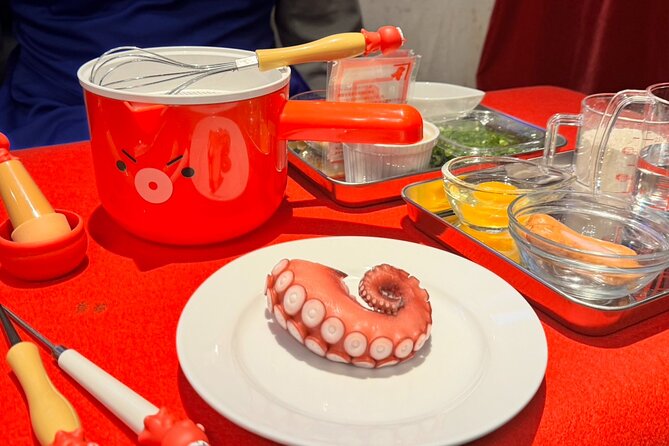
The class begins with the basic ingredients rather than a finished tray of food. You make the takoyaki dough first, then cut the octopus that will go inside the cakes.
These are not complicated steps, but they give you useful context. The dough is the foundation of the snack, while the octopus supplies the chewy center that makes takoyaki different from an ordinary savory pancake or fritter.
The description allows about 20 minutes for making the takoyaki. That time covers the early preparation and the basic cooking process. You should not expect a long culinary lecture or a full restaurant-style lesson. This is a compact activity focused on making, eating, and talking about Japanese culture with the hosts.
The class is suitable for all ages, according to the supplied details. That makes it a reasonable option for families, couples, friends, and solo visitors who enjoy joining a small group. The work is practical rather than technical, so you do not need advanced cooking skills.
Hosts Kana and Asami are named as the people guiding the activity. One especially useful detail is that the hosts have been patient with Japanese learners. If you are practicing basic Japanese, the class may offer a friendly setting to use it without the pressure of a formal language lesson.
Turning the takoyaki on the Roppongi griddle
Once the batter and octopus are ready, you cook the takoyaki in the special machine. The steps are described as simple, but the fun comes from watching the soft mixture take shape in the round molds.
You add the mixture to the griddle, place the octopus inside, and work the cakes as they cook. The provided information does not promise a formal lesson in turning technique, so you should view this as a guided cooking party rather than a professional cooking course.
That distinction helps set the right expectation. You will learn the basic sequence and get to make the food yourself, but the main goal is enjoyment. There is no stated time pressure, so you can cook and eat while talking with the staff.
The lack of a strict deadline is a real advantage in a 70-minute activity. Short food classes can feel rushed when every step is timed. Here, the cooking is intended to be relaxed. You have room to chat, watch the texture change, and enjoy the process instead of treating the griddle like an exam.
Takoyaki is also forgiving as a group food. If one batch is not perfectly shaped, the result is still part of the fun. The experience is less about producing identical restaurant-quality balls and more about understanding how this popular snack is made.
Finishing with green onion, ginger, and bonito flakes
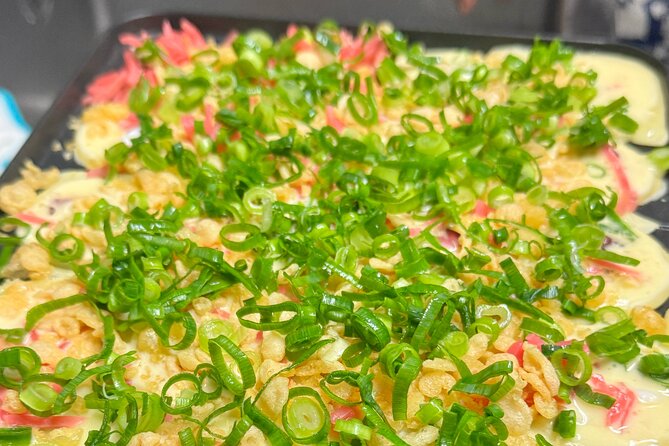
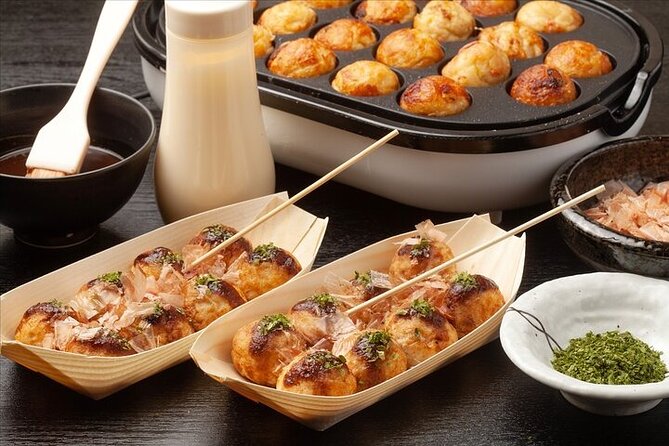
The final stage adds the familiar toppings. You place green onion, pickled ginger, and bonito flakes on the cooked takoyaki in order.
Each topping changes the bite. Green onion adds freshness, pickled ginger brings a sharper note, and bonito flakes add a savory finish. The toppings also help explain why takoyaki has such a layered taste despite its small size.
This is one of the most useful parts of the class for anyone who has eaten takoyaki in Japan but never thought about its construction. You see that the snack is not only a ball of batter with octopus inside. The toppings are part of the standard serving style and complete the dish.
The supplied details describe the cooking and eating as one continuous takoyaki party. You do not simply prepare food and leave it behind. You cook, eat, talk, and continue enjoying the social side of the activity.
A few more cooking classes around Japan worth a look
- Tokyo Sushi Making Class in Tsukiji with Professional Chef
★ 5.0 · 1,177 reviews - Ramen & Gyoza Cooking Class in Tokyo with Local Supermarket Visit
★ 5.0 · 823 reviews - Tsukiji Fish Market Guided Tour and Sushi Making with Pro Chef
★ 5.0 · 775 reviews - Kyoto: Ramen Cooking Class at a Ramen Factory with Souvenir
★ 4.9 · 532 reviews
What all-you-can-drink adds to the class
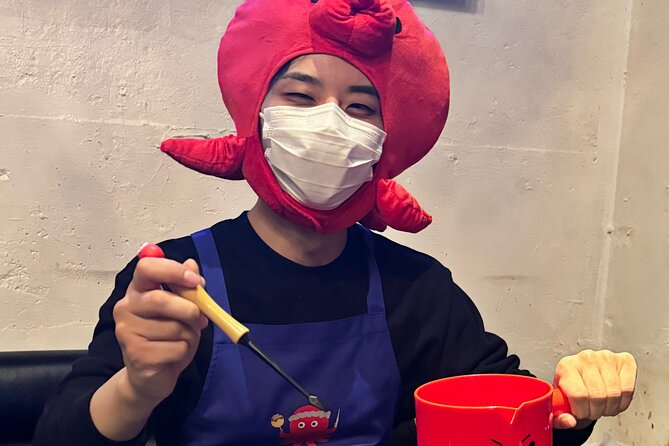
The price includes all-you-can-drink alcoholic beverages and soft drinks. That changes the value calculation in a useful way, especially for people planning to spend the evening in Roppongi, where drinks can become expensive quickly.
The drink package is not a separate add-on. It is part of the activity, along with the cooking tools, takoyaki snacks, and gratuities. Lemon sours have been specifically singled out as a favorite drink, so they are worth looking for if they are available during your session.
You should still book this class for the food and social setting first. The alcohol is an extra benefit, not a reason to treat the activity as a bar visit. The total time is only about 70 minutes, and the cooking remains the main event.
The arrangement will suit adults who want a light meal with drinks before moving on to another part of Roppongi. It can also work for people who do not drink, since soda is included. The supplied information does not list a detailed beverage menu, so do not assume a particular brand or full cocktail selection.
Because the activity includes alcoholic drinks, the tone may be more lively than a quiet instructional class. That is useful to know if you are choosing between a serious cooking lesson and a casual food-and-drink outing.
Roppongi location and the meeting point
The class meets at a private karaoke location at 7-chome 9-3 Crest Roppongi, second floor, in Minato City. It begins and ends at the same meeting point.
The address is in Roppongi, a convenient part of Tokyo for an evening activity. You will not need private transportation as part of the booking, and the location is near public transportation. The experience itself does not include transport, so you are responsible for getting to the meeting point.
Finding the exact entrance deserves attention. Roppongi has plenty of signs, side streets, and buildings with businesses on upper floors. One person had difficulty finding the location during a heavy thunderstorm, which is a good warning even though bad weather was the problem in that case.
I would save the full address before leaving your hotel and keep the mobile ticket accessible. Arriving early is sensible, particularly if you are unfamiliar with Roppongi or are attending during rain. The meeting point is listed as a karaoke venue, so look for the building and second-floor location rather than expecting a prominent takoyaki sign.
Since the class ends where it begins, you can plan your next stop from the same part of Roppongi. That makes it easy to continue with dinner, a bar, or another evening plan, although the class itself already includes food and drinks.
Is $57.23 a fair price?
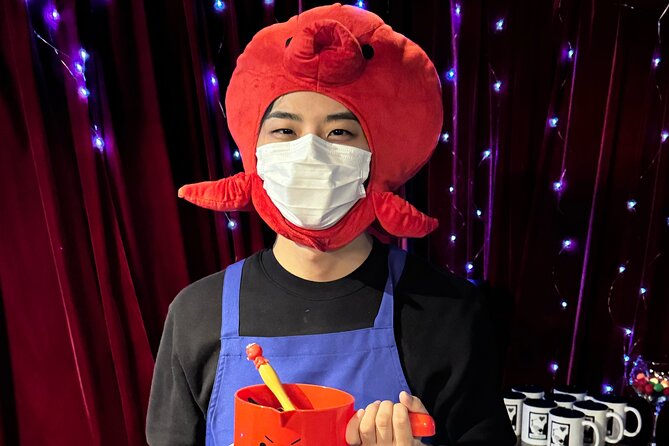
At $57.23 per person, this is not the cheapest way to eat takoyaki in Tokyo. Street stalls and casual restaurants can sell the snack for much less. The price makes more sense when you count what you are actually buying.
You receive the instruction, cooking tools, ingredients, takoyaki, unlimited alcoholic drinks, unlimited soda, and gratuities. You also get a hosted social activity in central Tokyo rather than a takeaway snack.
For a visitor who wants a quick food lesson, the value is reasonable. You are paying for participation and conversation as much as for the food itself. The all-you-can-drink element can also make the cost compare favorably with buying several drinks separately in Roppongi.
The value is weaker if your only goal is to taste takoyaki. In that case, a street-food stop will likely be faster and cheaper. The class earns its price when you want to understand the home-party tradition, cook the food yourself, and enjoy a drink with the meal.
The activity is booked an average of 53 days ahead, so planning matters. That timing suggests you should not leave it until the last part of a Tokyo itinerary if the date is important to you. The maximum group size is 10, which helps explain why advance planning may be useful.
Who will enjoy this most?
I would recommend the class to couples, friends, families, and solo visitors who like food activities with a social side. It is especially suitable if you want something informal after a day of sightseeing and prefer an activity where you can participate instead of simply watching.
It also fits people curious about everyday Japanese customs. The takopa idea gives the class more meaning than a generic cooking demonstration. You get a small look at how a popular snack works as a reason for people to gather.
Japanese-language learners may appreciate the patient atmosphere associated with Kana and Asami. You can expect the class to involve conversation about Japanese culture, although it is not presented as a structured language course.
The class may be less suitable for someone seeking a long, technical cooking lesson. The activity lasts about 1 hour and 10 minutes, and the emphasis is on simple steps, eating, and socializing. It may also not be ideal for someone who dislikes group activities or has no interest in alcoholic drinks, even though soda is included.
Service animals are allowed. The activity has a maximum of 10 participants, but the supplied details do not specify the exact size of each individual booking.
Booking, cancellation, and practical details
You receive confirmation at the time of booking, and the ticket is mobile. Keep it ready when you arrive, particularly because the meeting point may take a little effort to identify.
Free cancellation is available up to 24 hours before the scheduled start time. Cancel at least 24 hours in advance for a full refund. Cancellations or changes made less than 24 hours before the start are not accepted for a refund, and cut-off times follow Tokyo local time.
The activity includes gratuities, cooking tools, takoyaki snacks, alcoholic drinks, and soda. Private transportation is not included. The experience returns to the original meeting point, so you do not need to arrange a separate pickup or drop-off.
My recommendation for the takoyaki party
Book this if you want a short, friendly Tokyo food activity that combines cooking with drinks. The strongest points are the hands-on format, the small group limit, the relaxed pace, and the chance to experience takopa rather than simply buy a finished snack.
I would be especially happy to recommend it to adults planning an evening in Roppongi, couples looking for a shared activity, and families who want a simple introduction to Japanese food culture. The all-you-can-drink package adds solid value at $57.23 if you would otherwise buy drinks in the area.
Skip it if you only want the cheapest takoyaki or a serious culinary lesson. Also allow extra time to find the second-floor meeting point. With that small bit of planning, this looks like an easygoing way to cook, eat, and raise a lemon sour in central Tokyo.
FAQ
How long does the takoyaki cooking class last?
The activity lasts approximately 1 hour and 10 minutes.
Where does the class meet?
It meets at 【貸切・カラオケ】六本木7557, at Crest Roppongi, 2nd floor, 7-chome 9-3, Roppongi, Minato City, Tokyo 106-0032.
Where does the activity end?
The activity ends back at the meeting point.
What will I do during the class?
You will make the takoyaki dough, cut the octopus, cook the takoyaki in a special machine, and add green onion, pickled ginger, and bonito flakes.
Are drinks included?
Yes. Unlimited alcoholic beverages and unlimited soda or soft drinks are included.
Are cooking tools provided?
Yes. The tools needed for the cooking activity are included.
Is transportation included?
No. Private transportation is not included, so you must make your own way to the Roppongi meeting point.
How many people can join the activity?
The maximum group size is 10 people.
Can I cancel for a full refund?
Yes, provided you cancel at least 24 hours before the experience start time. Cancellations or changes made less than 24 hours before the start time are not accepted for a refund.
Just added around Japan
- 3-Hour Shared Halal-Friendly Japanese Cooking Class in Tokyo★ 5.0 · 4 reviews
- Traditional Home cooking Experience in Osaka, Japan★ 5.0 · 14 reviews
- Well-balanced BENTO (lunch box) Cooking Class★ 5.0 · 35 reviews
- Osaka Street Food Festival :Takoyaki&Okonomiyaki for Families★ 5.0 · 13 reviews
- Three Types of Ramen Cooking Class in Osaka★ 5.0 · 119 reviews
- Takoyaki DIY Cooking in the Heart of Osaka★ 5.0 · 7 reviews
- SUSHI Making Experience at Restaurant★ 5.0 · 8 reviews
- Sushi Making Osaka Omakase Cooking Class in Japan★ 5.0 · 4 reviews
Cooking Classes, compared.
Half-Day Thai Cooking Class at Organic Farm in Chiang Mai
Read our review →
Florence: Pasta Cooking Class with Unlimited Wine
Read our review →
3 in 1 Cooking Class near Navona: Fettuccine, Ravioli & Tiramisu
Read our review →
Hanoi Cooking Class: Culture, Local Market & Meaning CSR Impact
Read our review →
5 Traditional Dishes Hanoi Cooking Class with Market Trip
Read our review →
Cooking Class and Lunch at a Tuscan Farmhouse with Local Market Tour from Florence
Read our review →
Chiang Mai: Cooking Class, Market & Thai Herbs Garden Tour
Read our review →Browse the lists this tour appears in