
Review · OSAKA
Enjoy artistic TEMPURA Cooking Class
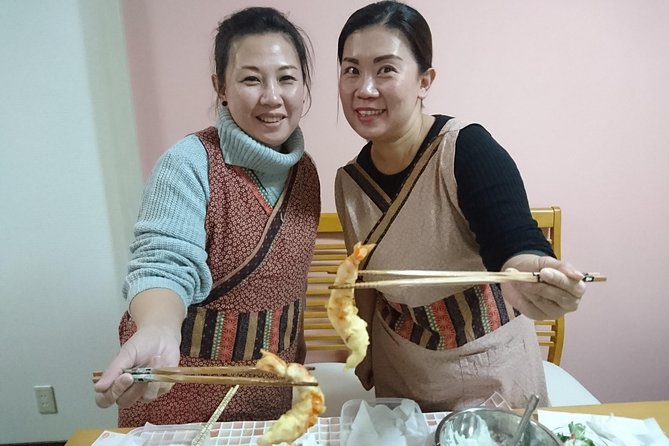
The best part of this Osaka class is that you do not simply watch someone fry food. You make six kinds of tempura, from four vegetables to two seafood items, including one large shrimp, then eat the meal you prepared. You also learn dashi, the savory Japanese stock that gives many soups their base flavor.
I like the small eight-person limit, which gives the instructor room to guide each person through the knives, ingredients, batter, and cooking steps. I also like the practical recipe handouts. The main consideration is that two hours goes quickly, so this is a focused cooking lesson rather than a long, leisurely food tour.
Key points at a glance
- Make six tempura dishes: Prepare four types of vegetables and two types of seafood, including a large shrimp.
- Start with dashi: Learn a basic Japanese stock and how it helps create a savory soup.
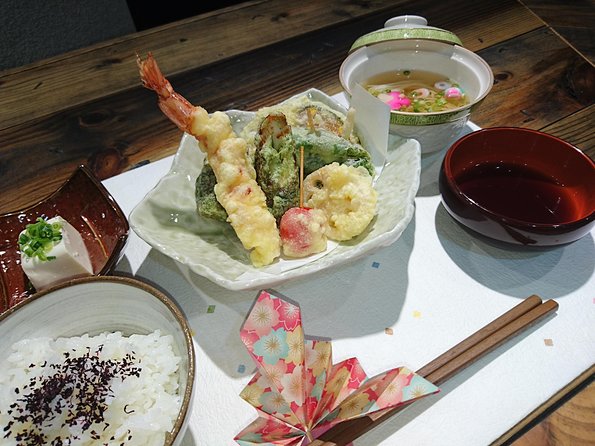
- Eat what you cook: Your meal includes tempura, steamed rice, chilled tofu, and soup made with your dashi.
- Small class size: The maximum is eight people, a useful limit for hands-on instruction.
- Choose lunch or dinner: The schedule can fit around a day of sightseeing in Osaka.
- Take the method home: Recipes are provided so you can try the techniques again after Japan.
Making dashi before the frying begins
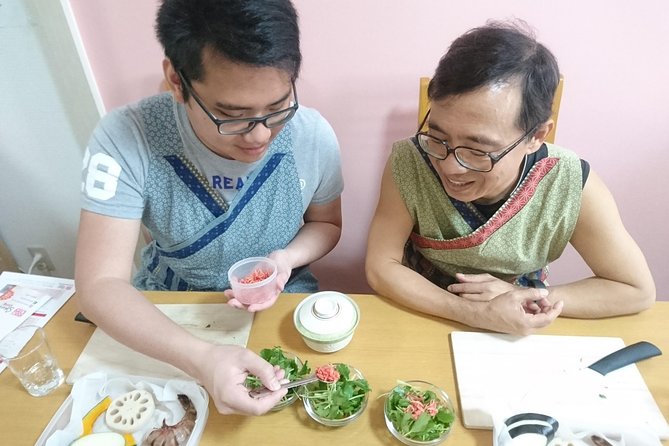
The class starts with an apron and a lesson in dashi, a traditional Japanese broth. This is a smart place to begin. Tempura may be the headline dish, but dashi gives you a second skill that reaches far beyond this one meal.
The instructor guides you through making the stock step by step. You also learn tips for producing a savory broth and turning it into a pleasing soup. Since the finished meal includes soup, you get to taste the result rather than treating the dashi as a side exercise.
For me, this makes the class more useful than a lesson focused only on batter. Dashi is part of the everyday foundation of Japanese cooking. You may not remember every detail after a busy trip, but the recipe and basic method give you something clear to practice at home.
The class format also keeps the lesson active from the beginning. You are not waiting for the instructor to finish a long demonstration before touching the food. You start with a core preparation, then move into the ingredients and tools used for the main dish.
More Hands-On Workshops in Osaka:
- Sushi Making Osaka Roll and Authentic Japanese Sushi Class
★ 5.0 · 1,220 reviews - Osaka: Ramen and Gyoza Cooking Class in Dotonbori
★ 5.0 · 378 reviews - Osaka Cooking Class: Okonomiyaki &Japanese cuisines experience
★ 5.0 · 261 reviews
Preparing four vegetables and two seafood tempura
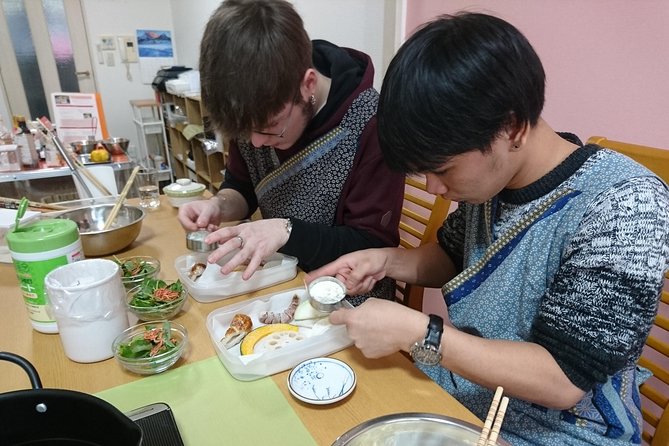
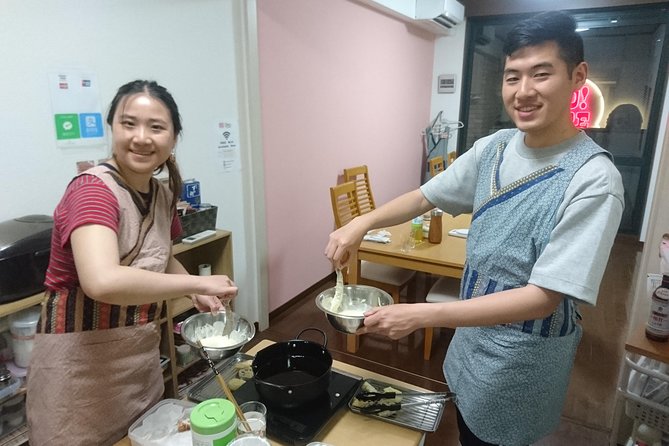
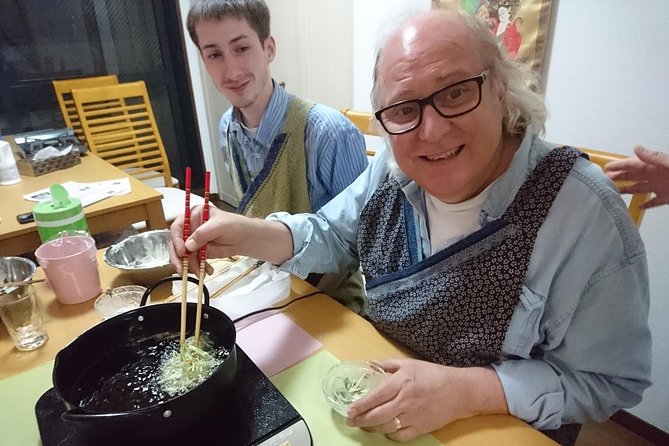
After the broth, each participant receives a kitchen knife and chopping board. Having your own work area matters in a small cooking class. You can prepare the ingredients directly instead of standing behind someone else or waiting for a shared tool.
The menu includes four kinds of vegetable tempura and two kinds of seafood tempura. One seafood item is a large shrimp, which gives the lesson a classic tempura centerpiece. The exact vegetables and second seafood item are not specified, so you should expect variety without booking on the promise of particular ingredients.
This section is where the class becomes useful for home cooks. Tempura looks simple, but the appeal lies in its light coating and careful preparation. You get to work through the steps yourself, with the instructor guiding you as you go.
The information provided does not give a detailed timetable for each ingredient, so do not expect a technical masterclass devoted to one single shrimp or vegetable. Instead, think of the session as a compact introduction to a full meal. You handle several ingredients and leave with a sense of how the parts fit together.
The meal you make at the table
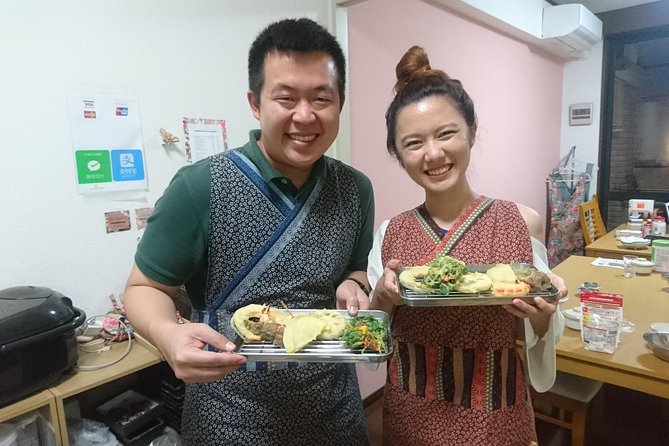
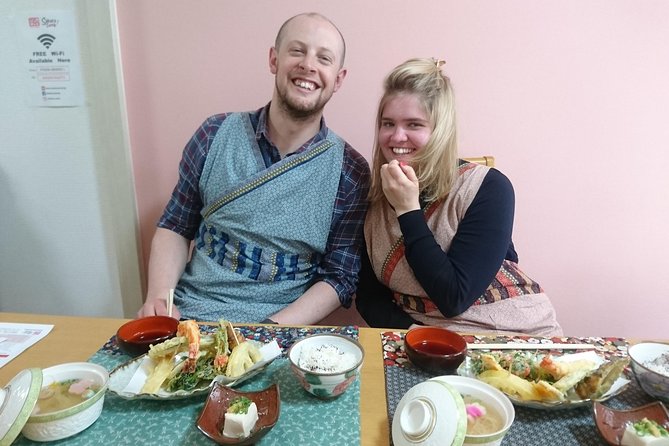
At the end, the prepared dishes are arranged with chopsticks. The meal includes the tempura you made, steamed rice, chilled tofu, and soup based on the dashi from the opening lesson.
This finish gives the class a satisfying shape. You begin by learning a Japanese stock, prepare the main ingredients, cook the tempura, and then sit down to eat everything together. The simple ritual of saying Itadakimasu before eating adds a small cultural touch without turning the class into a staged performance.
I especially like the fact that nothing is treated as a display dish only. You eat the work of your own hands. That makes it easier to notice what you learned, from the texture of the coating to the way the broth supports the rest of the meal.
The chilled tofu and steamed rice also make the meal feel more complete. Tempura alone can be rich, while rice and tofu provide plain, cooling elements beside the fried food. The menu is still centered on tempura, but it has enough variety to feel like lunch or dinner rather than a series of samples.
Why the eight-person limit matters
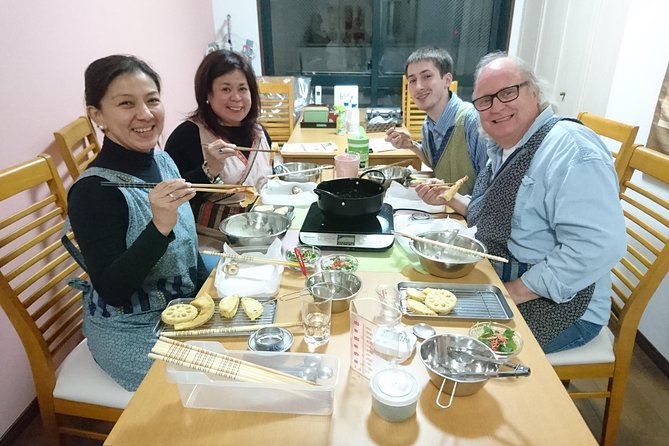
The maximum group size is eight. That is small enough to make a real difference in a kitchen lesson, especially when everyone is chopping and preparing food at the same time.
With eight or fewer people, you have a better chance of seeing the instructor’s demonstrations and getting help when you need it. A small group also reduces the risk of the class becoming a crowded cooking line where the quickest people take over the work.
The most enthusiastic praise focuses on the instructor’s friendly manner. One participant described the instructor as courteous and joyful, and said the class inspired plans to make tempura at home in the United States. No instructor name is provided, so you should not book this expecting a named chef or a particular teacher.
The class is not presented as a formal culinary school course. It is a social, hands-on introduction for people who want to learn a Japanese dish in a manageable amount of time. If you already have serious tempura experience, you may find the lesson basic. If you want clear guidance and a meal at the end, the format makes good sense.
A few more cooking classes around Osaka worth a look
- Ramen and Gyoza Cooking Class in Osaka
★ 5.0 · 202 reviews - Osaka Sake Tasting with Takoyaki Cooking
★ 5.0 · 156 reviews - Cooking Ramen&Gyoza/KatsuCurry/Bento/Okonomiyaki+Store Tour@Osaka
★ 5.0 · 138 reviews - Three Types of Ramen Cooking Class in Osaka
★ 5.0 · 119 reviews
Lunch or dinner in Kitahorie
The meeting point is 1-chōme-17-20 Kitahorie, Nishi Ward, Osaka, 550-0014, Japan, and the activity finishes at the same location. It is near public transportation, which makes it easier to fit into an Osaka day without arranging a separate ride.
You can choose a lunch or dinner experience. That choice is useful because the class takes about two hours, and cooking can work better as a planned meal than as an extra stop squeezed between sightseeing visits.
For lunch, you can use the class as the main midday activity and continue exploring Osaka afterward. For dinner, it can give your evening a clear purpose and replace the need to search for a restaurant after a long day.
The class begins at a fixed meeting point, so plan your route carefully. The address is in Kitahorie, but no specific station, walking time, or directions are provided. Use the full address when planning your journey rather than relying only on the name of the neighborhood.
What $70.79 buys you
At $70.79 per person, the price is reasonable if you value instruction, a full prepared meal, and a small class. You are not paying only for a plate of tempura. The fee covers a roughly two-hour activity that includes dashi, ingredient preparation, six tempura types, and the meal served with rice and chilled tofu.
The small group is important to the value. An inexpensive class with a large crowd may leave you watching more than cooking. Here, the limit of eight supports the hands-on format and gives the instructor fewer people to monitor.
The recipe handouts add value after the trip. You may not reproduce restaurant-level tempura immediately, but you have a written reference for the broth and dishes you practiced. That turns the class into something you can revisit in your own kitchen.
The price is less compelling if you only want to eat tempura or if you do not plan to cook again. Osaka has plenty of places to enjoy prepared food. This experience earns its cost through participation, not through luxury surroundings or a long meal.
The activity is often booked about 56 days ahead. That does not guarantee that every date fills that early, but it is a useful planning signal. If you have a fixed lunch or dinner date in Osaka, reserve ahead rather than leaving this until the last day.
Who will get the most from this class
This class suits you if you want an activity that combines food and practical learning. It works especially well for people who enjoy cooking, couples or friends looking for a shared meal, and anyone who wants a Japanese recipe they can attempt at home.
It is also a good fit for visitors who prefer a short activity. Two hours is long enough to learn several techniques and eat, but short enough to fit around other plans. The lunch and dinner choices make the schedule easier to manage.
Families and groups should check the booking details before committing, since the supplied information does not state age limits or child arrangements. The same applies to dietary restrictions, allergies, and accessibility. The menu includes seafood and shrimp, and no substitutions or accommodation policies are provided.
You may want to choose another activity if you are looking for a broad food walk, a restaurant tasting, or a highly advanced chef’s course. This is a single-meal cooking class with a clear focus on dashi and tempura.
Practical planning before you book
Confirmation is sent within 48 hours of booking, subject to availability. If your Osaka schedule is tight, allow for that confirmation window before treating the class as fixed.
The ticket is mobile, so you can show it from your phone. Keep the meeting address available, since the class both starts and ends there.
The cancellation terms are flexible up to a point. You can cancel at least 24 hours before the local start time for a full refund. Cancellations or changes made less than 24 hours before the start are not accepted for a refund.
Wear something suitable for a cooking session. An apron is provided or used at the beginning of class, but the supplied details do not specify clothing rules, shoe requirements, or facilities for storing belongings. If those points matter to you, ask Sakura Cook before booking.
What makes the experience authentic
The class has a useful balance. You learn a recognizable Japanese dish, but you also work with dashi, rice, tofu, chopsticks, and the custom of saying Itadakimasu before eating.
That combination gives you more than a recipe for fried food. You see how a Japanese meal can include a central dish, a simple soup, rice, and a cooling side. The meal is not presented as a grand feast. Its value comes from showing how several ordinary elements work together.
The recipe handout supports that lesson. You can return home with a practical reminder of the process rather than depending on memory after a busy trip. For anyone who has taken a cooking class and forgotten the details a week later, that is a real advantage.
The class also keeps its focus. You will not spend the two hours moving between unrelated dishes or sightseeing stops. You prepare one meal from start to finish, which makes the activity easy to understand and easy to fit into a wider Osaka itinerary.
Should you book the tempura class?
Book it if you want to make your own Japanese meal, learn dashi, and work in a group capped at eight people. The $70.79 price is fair for a two-hour hands-on class that includes six tempura preparations, rice, chilled tofu, soup, and recipes to take home.
Skip it if you mainly want a quick restaurant meal, need a specialized dietary menu, or hope for an advanced chef-level course. Those details are not promised.
For most food-minded visitors, the strongest reason to book is the practical format. You learn, cook, sit down to eat, and leave with a recipe you can try again. That is a useful souvenir, and it takes up only half a day or evening.
FAQ
Where does the tempura cooking class meet?
The class meets at 1-chōme-17-20 Kitahorie, Nishi Ward, Osaka, 550-0014, Japan.
Where does the activity finish?
The activity ends back at the meeting point.
How long does the cooking class last?
The class lasts approximately two hours.
How many people can join?
The group has a maximum of eight participants.
What food will I prepare?
You will prepare four kinds of vegetable tempura and two kinds of seafood tempura, including one large shrimp.
Does the class include anything besides tempura?
Yes. You learn to make dashi soup stock, and the meal includes steamed rice, chilled tofu, and soup.
Can I choose lunch or dinner?
Yes. The experience offers a choice of lunch or dinner.
What is the cancellation policy?
You can cancel at least 24 hours before the local start time for a full refund. Cancellations or changes made less than 24 hours before the start are not accepted for a refund.
Just added around Osaka
- Traditional Home cooking Experience in Osaka, Japan★ 5.0 · 14 reviews
- Well-balanced BENTO (lunch box) Cooking Class★ 5.0 · 35 reviews
- Osaka Street Food Festival :Takoyaki&Okonomiyaki for Families★ 5.0 · 13 reviews
- Three Types of Ramen Cooking Class in Osaka★ 5.0 · 119 reviews
- Takoyaki DIY Cooking in the Heart of Osaka★ 5.0 · 7 reviews
- Sushi Making Osaka Omakase Cooking Class in Japan★ 5.0 · 4 reviews
- SUSHI Making Experience at Restaurant★ 5.0 · 8 reviews
- Cooking Class for Ramen and Gyoza in a Quiet Old Osaka House★ 5.0 · 3 reviews
Cooking Classes, compared.
Half-Day Thai Cooking Class at Organic Farm in Chiang Mai
Read our review →
Florence: Pasta Cooking Class with Unlimited Wine
Read our review →
3 in 1 Cooking Class near Navona: Fettuccine, Ravioli & Tiramisu
Read our review →
Hanoi Cooking Class: Culture, Local Market & Meaning CSR Impact
Read our review →
5 Traditional Dishes Hanoi Cooking Class with Market Trip
Read our review →
Cooking Class and Lunch at a Tuscan Farmhouse with Local Market Tour from Florence
Read our review →
Chiang Mai: Cooking Class, Market & Thai Herbs Garden Tour
Read our review →Browse the lists this tour appears in