
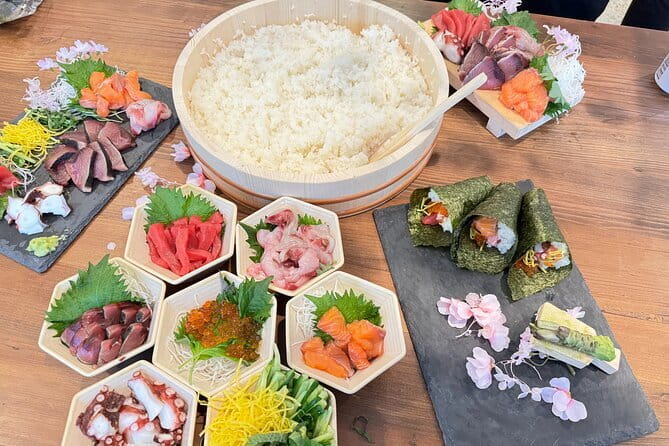
Review · OSAKA
Osaka Sushi Cooking Class “Learn here and make it at home”
The clever part of this Osaka class is that you learn two sushi styles you can repeat at home, not just watch a chef work. In about three hours, you prepare maki rolls and neat temari sushi balls, then sit down to eat what you made.
I like the central location, only about five minutes on foot from Shinsaibashi and Honmachi stations. I also like the small maximum of eight people, plus the choice of sake, beer, or soft drinks during the final tasting. The main consideration is that this is a hands-on food class, so it may feel less appealing if you want a quiet meal with no cooking involved.
Key points to know before booking
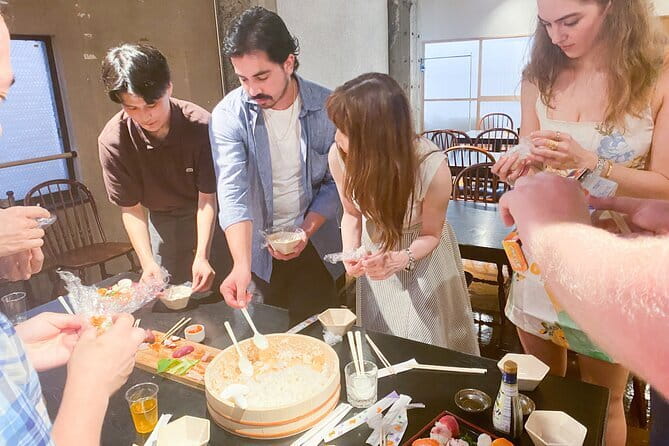
- Two sushi styles in one class: Make familiar seaweed-wrapped maki rolls and small, round temari sushi.
- A practical three-hour format: Allow 30 minutes for preparation, 90 minutes for cooking, and one hour to eat and drink.
- A small group setting: The class accepts a maximum of eight participants, which gives the session a personal feel.
- Central Osaka location: The kitchen is about five minutes from both Shinsaibashi and Honmachi stations.
- English instruction included: Spanish and Japanese instruction are available on request.
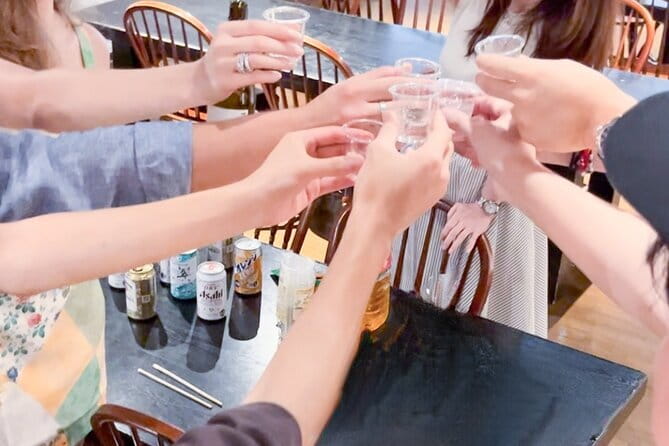
- Drinks are part of the tasting: Adults age 20 and older may have Japanese sake and beer, while younger participants receive non-alcoholic drinks.
Making sushi you can actually repeat at home
Many food classes leave you with a pleasant memory and a few attractive photographs. This one aims for something more useful: a basic method for making maki sushi and temari sushi in your own kitchen.
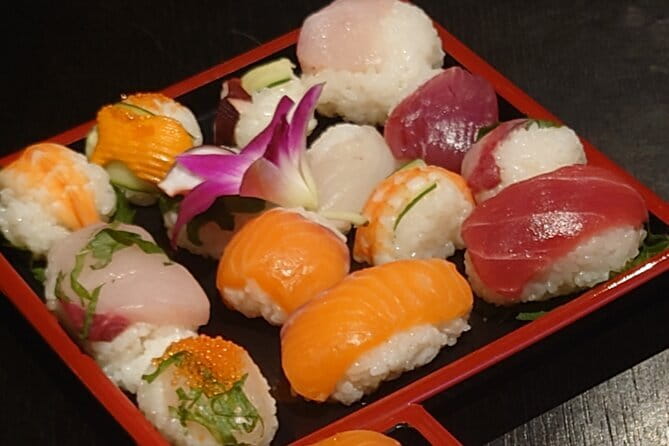
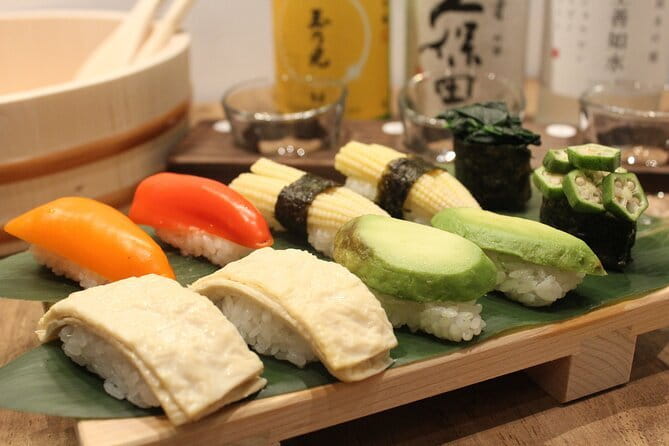
Maki is the familiar sushi roll. Rice, fish, and vegetables are placed on a sheet of seaweed, then rolled and cut into pieces. Temari sushi is smaller and rounder, with seasoned rice shaped into a ball and topped with fish or vegetables.
That pairing makes sense for a first sushi class. Maki teaches you how to spread, fill, and roll. Temari sushi is less dependent on perfect rolling technique. You can shape the rice with plastic wrap, then add the topping on top. It is tidy, attractive, and approachable for home cooks.
The class is not simply a demonstration. You receive the tools, ingredients, apron, and disposable gloves needed to prepare the food yourself. The instructors guide you through the steps, so you can ask for help as you work rather than trying to remember a fast cooking show.
More Sushi and Japanese Classes in Osaka:
- Sushi Making Osaka Roll and Authentic Japanese Sushi Class
★ 5.0 · 1,220 reviews - Osaka Sushi Making Experience
★ 5.0 · 400 reviews - Osaka: Ramen and Gyoza Cooking Class in Dotonbori
★ 5.0 · 378 reviews
A useful three-hour schedule in Osaka
The class is divided into three clear parts. That structure matters because sushi preparation can feel rushed if cooking and eating are squeezed into one short block.
The first 30 minutes: orientation and preparation
The opening half hour gives you time to get settled and prepare for the cooking session. You learn what you will make and how the ingredients and tools fit together.
This is also the point to mention food allergies or vegetarian needs. The class asks you to contact the provider after booking if you need those options. Do not wait until the cooking begins, since ingredient planning may need to happen in advance.
The instructors speak English, and Spanish or Japanese instruction can be requested. That is useful in a class built around small physical details, such as how much rice to use or how tightly to shape a roll. You should still expect a practical lesson rather than a formal lecture.
The next 90 minutes: hands-on sushi making
The main cooking period lasts about an hour and a half. You work on both maki and temari sushi with the provided ingredients and kitchen tools.
Maki sushi gives you the more familiar sushi-making challenge. You place rice, fish, and vegetables on seaweed, then roll the ingredients together. The key lesson is likely not just the finished roll, but learning how the ingredients need to be arranged before you cut it.
Temari sushi offers a different kind of rhythm. Rice is formed into a small ball, often with plastic wrap, and topped with fish or vegetables. The finished pieces are compact and decorative, which helps explain why this style works well for a home meal, party, or family cooking project.
The class also suits families. Children can take part in shaping and decorating the small sushi balls, while adults can focus on rolling the maki. A small souvenir is included for children according to the experience details shared by the provider, adding a pleasant extra for younger participants.
You will wear an apron and disposable plastic gloves. All ingredients and kitchen tools are supplied, so you do not need to shop, pack cooking equipment, or prepare anything before arriving.
More Hands-On Workshops in Osaka:
- Osaka Cooking Class: Okonomiyaki &Japanese cuisines experience
★ 5.0 · 261 reviews - Osaka: Roll and Authentic Sushi Making Class in Dotonbori
★ 4.9 · 239 reviews - Ramen and Gyoza Cooking Class in Osaka
★ 5.0 · 202 reviews - Three Types of Ramen Cooking Class in Osaka
★ 5.0 · 119 reviews
The final hour: taste your own work with drinks
The last hour is set aside for eating and drinking. You sit down with the sushi you prepared rather than rushing away after the cooking ends.
For participants age 20 and older, drinks include Japanese sake and beer, along with soft drinks. Anyone under 20 receives non-alcoholic drinks. That makes the tasting portion workable for mixed-age groups, though the alcohol policy is worth remembering when planning a family booking.
There is value in eating your own finished food immediately. You can see which shapes held together, which rolls were easier to cut, and how the rice and toppings work together. The session becomes a meal as well as a lesson, and the final hour gives the class a relaxed finish.
The food itself is the focus, not a separate restaurant menu. If you are looking for a broad sushi tasting with many styles and premium ingredients, this may not be the right choice. If you want to learn a few basic techniques and enjoy what you make, the format is a better fit.
Why the small group limit matters
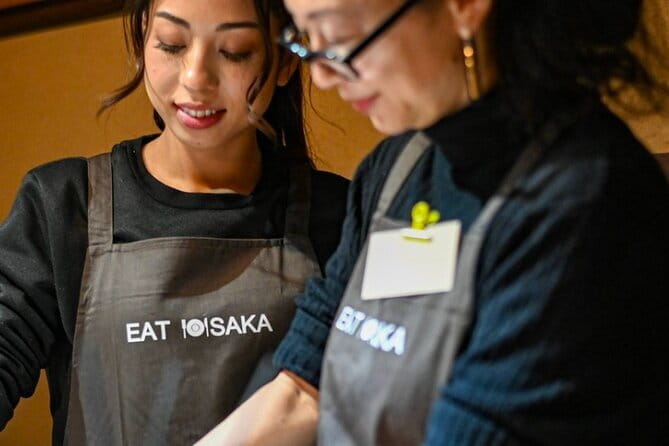
The class has a maximum of eight participants. That is a useful number for a cooking activity because you are not working in a large room while trying to copy a distant demonstration.
With a group this size, you have a better chance of getting help when your roll is too loose, your rice ball is uneven, or you are unsure how much filling to use. The experience still depends on the people booked for your session, but the stated limit keeps it from becoming a mass-market food demonstration.
A small class can also suit solo visitors and families. You are likely to spend much of the session working at your own place, while still having time to share the meal at the end.
Getting there from Shinsaibashi or Honmachi
The kitchen is in the Minamisenba area of central Osaka, at 4-chome-3-1 Bakuro-machi, Chuo Ward. It is about a five-minute walk from both Shinsaibashi and Honmachi stations on the Osaka Metro.
That location is convenient if you are already sightseeing or shopping in central Osaka. You do not need private transportation, and the class ends where it begins. The meeting point is in a quieter neighborhood despite its central position, which can make the transition from busy city streets to a cooking session easier.
Use the mobile ticket supplied with your booking. Confirmation is normally received at booking, though a reservation made within two days of the activity may take up to 48 hours to confirm, subject to availability. Give yourself enough time to reach the address, especially if you are unfamiliar with Osaka station exits.
The instructors and language support
The instruction is available in English. Spanish and Japanese support can be requested, which makes this a practical option for mixed-language groups.
The provider does not give instructor names for this sushi class, so you should not book expecting a named chef-led presentation. The useful point is the language coverage and the fact that instructors guide you through the process with your own hands.
That approach suits people who want to learn by doing. You may make a less-than-perfect first roll, but that is part of the value. The goal is to leave knowing the sequence, the basic shapes, and the general technique, rather than simply watching an expert create flawless sushi.
What the price includes at $70
At $70 per person, this class costs more than buying a casual sushi meal in Osaka. The price needs to be judged as a combined cooking lesson, meal, and drinks experience.
You receive:
- English-speaking instruction
- Spanish or Japanese instruction upon request
- All cooking ingredients
- Kitchen tools
- An apron
- Disposable plastic gloves
- Sake and beer for participants age 20 and older
- Soft drinks
- About three hours of instruction and tasting
The value is strongest if you would like a food activity with something to take home as a skill. You are not paying only for the sushi on the plate. You are paying for guided preparation, a small group setting, equipment, ingredients, and time to eat afterward.
The value is weaker if your priority is simply getting the cheapest sushi meal. You also need to be comfortable spending part of your day cooking rather than sightseeing. For many visitors, that trade is worthwhile because sushi is closely tied to everyday Japanese food culture and the techniques are simple enough to try again.
Who will enjoy this class most
I would recommend the class to families, couples, friends, and solo visitors who like food activities with a practical side. It is particularly suitable if you want a break from museums, shopping, and Osaka’s busy streets.
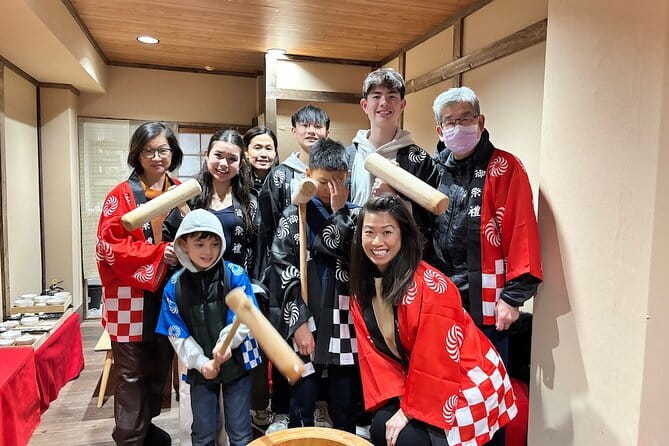
Families get a flexible menu of tasks. Maki rolling provides a clear project, while temari sushi is small, colorful, and easy to shape with plastic wrap. Children can take part without needing to manage a complicated knife technique, though the class does not provide specific age guidance.
It also suits visitors who want to recreate part of their Japan trip at home. The temari method is especially approachable because it does not demand a bamboo rolling mat. Maki takes more practice, but learning both styles gives you a useful introduction to sushi preparation.
You may want to skip it if you have severe food restrictions that cannot be handled by the available options, or if you prefer a chef to prepare everything for you. Contact the provider about vegetarian or allergy needs after booking, rather than assuming substitutions will be available.
A few practical points before you go
Bring yourself and your booking details. The class provides the cooking tools, ingredients, apron, and gloves, so there is no required preparation.
Plan for the full three hours. The schedule is not just a quick lesson followed by a snack. The 30-minute orientation, 90-minute cooking session, and one-hour tasting are separate parts of the experience.
Alcohol is limited by age. Only participants who are 20 or older are served sake and beer. Younger participants receive soft drinks or other non-alcoholic beverages.
The activity requires good weather. If poor weather causes cancellation, you are offered another date or a full refund. For a normal cancellation, you can receive a full refund if you cancel at least 24 hours before the start time. Changes or cancellations inside that window are not accepted, and the amount paid is not refunded.
Should you book the Osaka sushi class?
Book it if you want to make your own Japanese food, keep the group small, and finish with a relaxed meal and drinks. The combination of maki and temari sushi gives you two different techniques, and the central Osaka location makes the class easy to fit into a day around Shinsaibashi or Honmachi.
The strongest reason to choose it is practical. You can take the basic methods home, especially the simple plastic-wrap approach for temari sushi. The main drawback is the price compared with an ordinary sushi meal, plus the fact that cooking takes up three hours of your Osaka schedule.
For families, food-minded couples, and visitors who enjoy learning by doing, $70 is a fair price. If you want only a quick tasting or a formal chef performance, spend your time and money elsewhere.
FAQ
How long does the Osaka sushi cooking class last?
The experience lasts approximately three hours. It includes 30 minutes of orientation and preparation, 1 hour and 30 minutes of cooking, and one hour of sushi tasting with drinks.
What kinds of sushi will I make?
You will make maki sushi, which is a seaweed-wrapped sushi roll, and temari sushi, which is a small, round piece of rice topped with fish or vegetables.
Where does the class meet?
The meeting point is in Minamisenba at 4-chome-3-1 Bakuro-machi, Chuo Ward, Osaka, 541-0059, Japan.
How far is the kitchen from public transportation?
The kitchen is about a five-minute walk from both Shinsaibashi Station and Honmachi Station on the Osaka Metro.
Is an English-speaking instructor included?
Yes. English-speaking instruction is included. Spanish and Japanese instruction are available upon request.
Are ingredients and cooking tools provided?
Yes. The class provides all ingredients and kitchen tools. Aprons and disposable plastic gloves are also included.
Are drinks included?
Yes. The tasting includes soft drinks, and Japanese sake and beer are available for participants age 20 and older.
What do participants under 20 receive to drink?
Participants under 20 are served non-alcoholic drinks instead of sake or beer.
Can I request vegetarian or allergy-friendly options?
You can contact the provider about vegetarian or food allergy options after completing your booking. It is best to make the request in advance.
Can I cancel for a full refund?
Yes, if you cancel at least 24 hours before the experience start time. Cancellations or changes made less than 24 hours before the start time are not accepted for a refund.
Just added around Osaka
- Traditional Home cooking Experience in Osaka, Japan★ 5.0 · 14 reviews
- Well-balanced BENTO (lunch box) Cooking Class★ 5.0 · 35 reviews
- Osaka Street Food Festival :Takoyaki&Okonomiyaki for Families★ 5.0 · 13 reviews
- Three Types of Ramen Cooking Class in Osaka★ 5.0 · 119 reviews
- Takoyaki DIY Cooking in the Heart of Osaka★ 5.0 · 7 reviews
- SUSHI Making Experience at Restaurant★ 5.0 · 8 reviews
- Sushi Making Osaka Omakase Cooking Class in Japan★ 5.0 · 4 reviews
- Cooking Class for Ramen and Gyoza in a Quiet Old Osaka House★ 5.0 · 3 reviews
Japanese & Sushi Cooking Classes, compared.
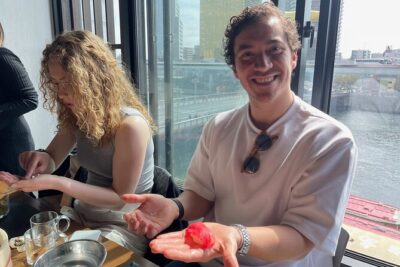
Sushi Making Tokyo Roll and Authentic Japanese Sushi Class
Read our review →
Tokyo: Roll and Authentic Sushi Making Class in Asakusa
Read our review →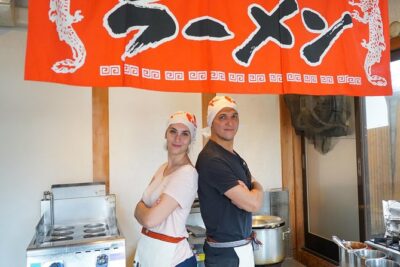
Ramen Cooking Class at Ramen Factory in Kyoto
Read our review →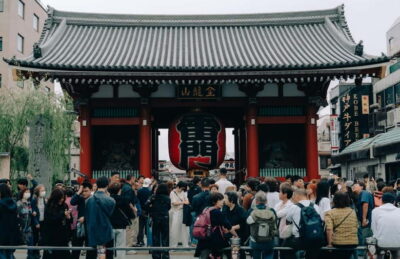
Tokyo: Sushi Making Class in a Happi Coat near a Famous Spot
Read our review →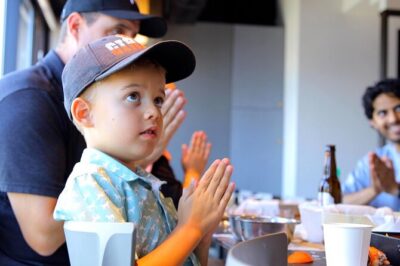
Sushi Making Tokyo! Popular Maki Sushi & Japanese Sushi(+Recipe!)
Read our review →
Sushi Making Osaka Roll and Authentic Japanese Sushi Class
Read our review →
Tokyo Sushi Making Class in Tsukiji with Professional Chef
Read our review →
Ramen & Gyoza Cooking Class in Tokyo with Local Supermarket Visit
Read our review →Browse the lists this tour appears in