
Review · CHINESE
Gyoza Cooking Class in Kyoto: Traditional Japanese Dumplings
Gyoza is the star here, but the best part is making every piece yourself. You choose a filling, mix and shape the dough, learn the pleats, then cook your dumplings in a professional baking machine. It is a hands-on way to spend part of an afternoon or evening in Kyoto, not just another food tasting.
I like the small, practical skill you take home. Several instructors, including Hama, Maya, Ryo, and Yo, are praised for making the steps clear and relaxed. I also like the cultural extra: after cooking, you can put on Samurai armor for photos. The main caution is the price, $118.19 per person, which is high for a 90-minute food class.
Key points at a glance
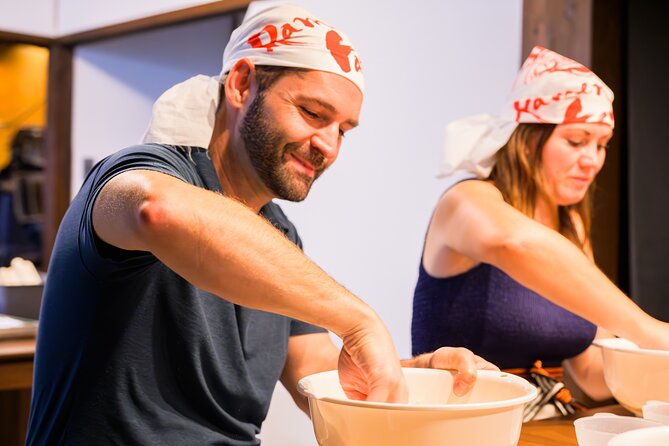
- Make gyoza from scratch: Prepare wrappers, select a filling, fold the dumplings, and cook them yourself.
- English-speaking instruction: Hama, Maya, Ryo, and Yo have each led highly praised sessions.
- About 10 to 12 dumplings: The class gives you a proper portion to make and eat, not just a token sample.
- Kyoto townhouse setting: The class takes place at 230-1 Kamimyōkakujichō in Nakagyo Ward.
- Samurai photo option: Armor dress-up is optional and follows the cooking portion.
- Useful souvenir: An apron is provided as a memento, according to multiple class experiences.
Why making gyoza beats simply eating it
Gyoza began in China, then developed into a popular Japanese dish with its own styles, sizes, and cooking habits. This class gives you a short introduction to that story while keeping the focus on your hands and your food.
That matters because gyoza looks simple until you try to make it. The wrapper must be thin but strong. The filling needs enough moisture for flavor without tearing the dough. The pleats need to hold during cooking. You learn these small details by doing them, not by watching a chef work from across a counter.
You can choose your preferred filling, which gives the session a little personal edge. The exact filling choices are not specified in advance, so you should ask the instructor what is available when you arrive. The class is designed to keep the process approachable rather than turn you into a restaurant cook in one sitting.
The strongest reason to book is that the lesson has a clear payoff. You finish with gyoza you made yourself and a method you can repeat at home. That is more useful than a food tour where the best part ends when the plate is empty.
More Sushi and Japanese Classes in Japan:
- Sushi Making Tokyo Roll and Authentic Japanese Sushi Class
★ 5.0 · 3,971 reviews - Tokyo: Roll and Authentic Sushi Making Class in Asakusa
★ 4.9 · 1,957 reviews - Ramen Cooking Class at Ramen Factory in Kyoto
★ 5.0 · 1,937 reviews
Starting in a Kyoto townhouse
The meeting point is 230-1 Kamimyōkakujichō, in Kyoto’s Nakagyo Ward. The activity begins and ends at this same location, and it is near public transportation. You will need to arrange your own way there because private transportation is not included.
A traditional townhouse gives the class a more local setting than a hotel kitchen or a large modern studio. The available information does not promise a historic tour of the building, so come for the cooking rather than a long architectural visit. Still, the townhouse setting helps the session feel connected to Kyoto instead of being a generic cooking lesson that could happen anywhere.
Arrive with enough time to find the address. The class lasts about one hour and 30 minutes, though one session was described as taking closer to two hours. Cooking classes can run a little long when a group needs extra help, so avoid scheduling a temple visit or train departure immediately afterward.
The maximum group size is 20 people. That is not a private lesson by default, but the hands-on format makes a difference. One family described each person having a personal working station, and that is important when you are handling dough and filling. A group of 20 can still feel busy, so your experience may depend partly on the day’s attendance.
Choosing a filling and making the wrappers
The class begins with the building blocks of the dumpling. You choose a filling, then make the wrappers from scratch rather than using ready-made rounds.
This is the part I would value most if you already enjoy Japanese food. Store-bought wrappers are convenient, but making your own shows you what controls the texture. The dough has to be worked and shaped with care, and the wrapper must be large enough to hold the filling without becoming thick and heavy.
The instructor provides the cooking tools, so you do not need to bring equipment. An English-speaking teacher leads the steps, and the sessions with Hama, Maya, Ryo, and Yo have been especially well received for clear, friendly instruction. Their role is not just to demonstrate. They help you understand how much filling to use and how to handle the dough.
The class also offers small cultural details about gyoza, Japanese food, Samurai culture, and Japanese history. Do not expect a full history lecture. This is a cooking class with cultural context, not a museum program. The history works best as seasoning for the main activity.
Learning the folds, one dumpling at a time
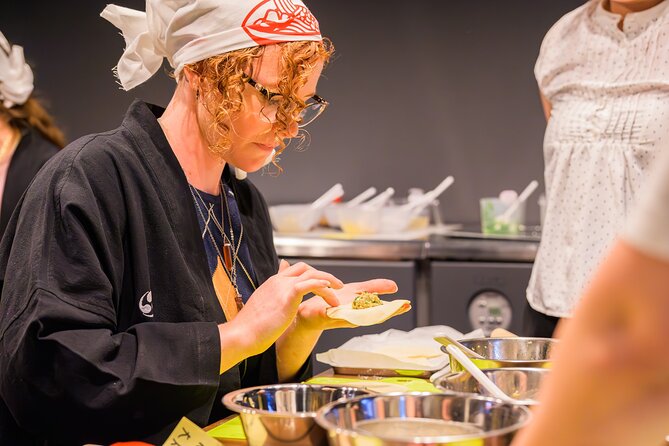
Once the wrappers and filling are ready, you learn the art of wrapping. This is where the activity becomes playful. Your first dumpling may look uneven, while the next few start to show a pattern.
The key benefit is repetition. You make roughly 10 to 12 gyoza per person, giving you enough chances to improve. One or two dumplings would only give you a demonstration. A dozen lets you test the technique, correct your grip, and decide how much filling feels right.
The class suits older children and teenagers especially well. A family with a 10-year-old found the process hands-on and easy to enjoy, and another family described it as a memorable evening activity. Younger children may need help with the dough and folding, but the supplied information does not state a minimum age, so check before booking if age is a concern.
You should also expect some variation in appearance. This is not a contest for perfect restaurant pleats. The point is to learn a repeatable method, then eat what you made. That takes pressure off and makes the class work for beginners.
More Chinese Cooking Classes in Japan:
- Ramen & Dumpling Cooking in Tokyo with Chef/Vegan possible
★ 5.0 · 107 reviews - Warsaw’s No 1 cooking class-Polish dumplings with liqueur tasting
★ 5.0 · 576 reviews - Flavors of Beijing: Eat Like A Real Chinese
★ 5.0 · 78 reviews - Beijing: Dumpling Making Workshop with Meal and Tea
★ 4.7 · 69 reviews
Cooking the gyoza in a professional machine
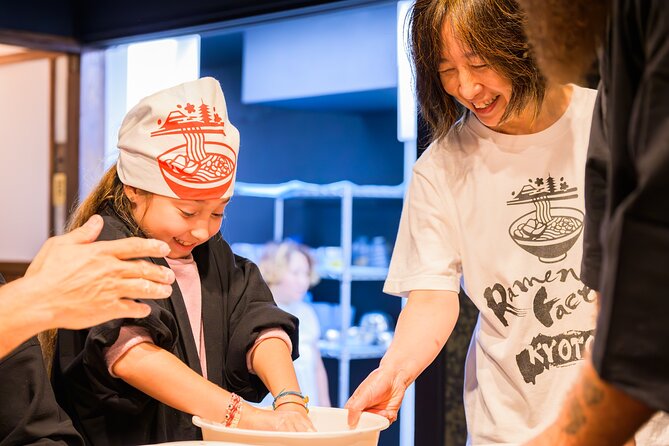
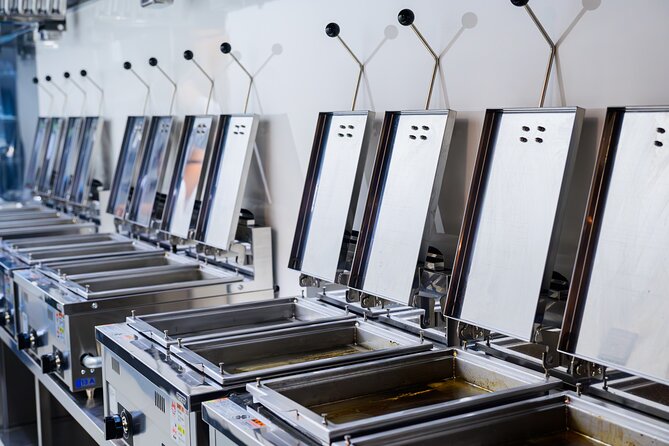
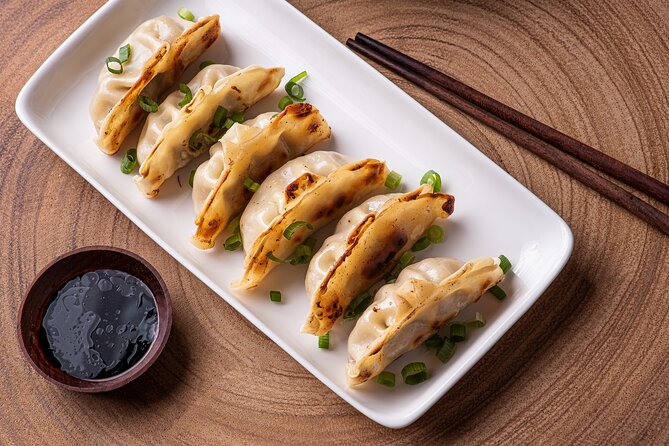
After wrapping, you cook the dumplings using a professional baking machine. This helps the class keep the cooking step controlled, especially with a larger group.
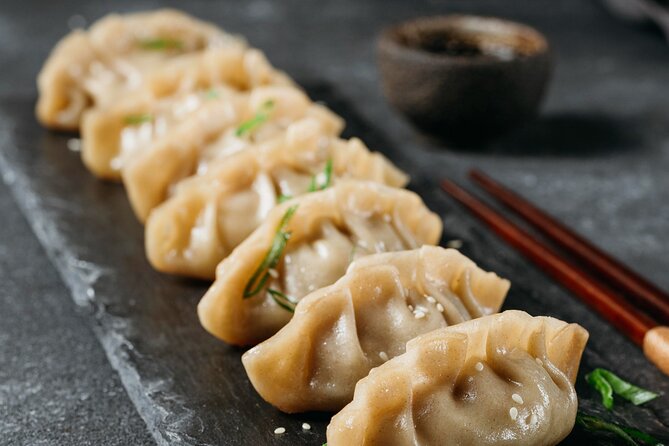
The cooking stage is where your careful folding pays off. A good gyoza needs the right balance of browned underside, cooked filling, and tender wrapper. The machine takes some guesswork out of the process, but you still get to see how your dumplings turn out.
You should arrive ready to eat. The class is not simply a dough-shaping workshop, and the portion of 10 to 12 dumplings per person makes it a light meal for many people. If you have a large appetite, plan another meal later. The exact accompaniments and drink arrangements are not specified, so do not assume a full restaurant-style dinner is included.
The food is the strongest value argument for the class. You are paying for instruction, ingredients, tools, the setting, and the chance to make a Japanese dish from its first step to the finished plate. At $118.19, the cost is not low, but it makes more sense if you treat the session as a cooking lesson and cultural activity rather than as a meal alone.
The optional Samurai armor photo
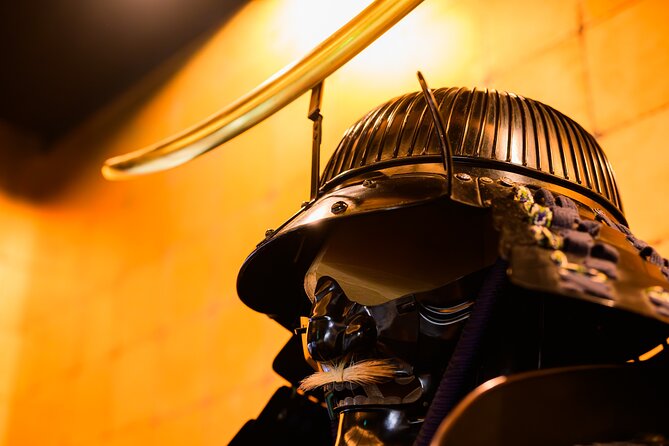
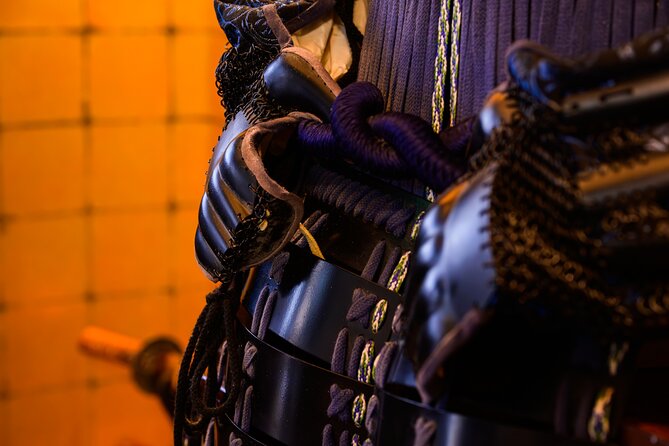
After eating, you may dress in Samurai armor and take photos. This part is optional, so you can enjoy the cooking class without turning it into a costume experience.
For families and first-time visitors, the armor adds a memorable visual finish. It also gives children and teenagers a clear second activity after the food is finished. The cultural connection is broad rather than scholarly, so keep your expectations in the right place. You are getting a photo opportunity tied to Samurai culture, not a detailed armor workshop.
The photo option is also useful for couples or groups who want something beyond the usual Kyoto temple picture. The class already gives you an activity to remember, and the armor makes that memory easier to capture.
The instructors shape the experience
The listed instructors include Hama, Maya, Ryo, and Yo. The strongest praise goes to their friendliness, English ability, and talent for making the steps easy to follow.
Hama is repeatedly singled out for making the class fun and for explaining the process in a way that leaves people eager to cook gyoza at home. Maya is praised for clear English and an easy teaching style. Ryo is described as personable and especially good with an activity suited to older children and teenagers. Yo is praised for being friendly and for the pleasant townhouse setting.
That does not mean every session will feel identical. Teaching style can vary, and the group size may change the amount of personal attention you receive. Still, the format gives the instructor plenty of natural contact with each person because everyone must work with dough, filling, and folding.
A useful tip: ask for the recipe before you leave. One person forgot to request it and later learned that the recipe could be sent. Take-home instructions have also been part of the experience, but because the formal inclusions list only an English-speaking instructor and cooking tools, do not treat a printed recipe as guaranteed.
What you take home besides the recipe
The most useful souvenir is the skill. You can repeat the basic process for friends and family, even if your home kitchen does not have the same cooking machine.
An apron is also provided as a souvenir, and some sessions include a headband as well. The apron is a nice touch because it is practical, light to pack, and connected to something you actually did in Kyoto. It gives the class a little more value than a single meal and a few photographs.
The experience can also help you understand why gyoza is such a popular comfort food in Japan. You see how a dish with Chinese origins has become part of everyday Japanese food culture. That context is brief, but it gives the meal more meaning.
Price, timing, and who should book
At $118.19 per person, this is a premium short activity. It is more expensive than simply ordering gyoza at a restaurant, and the class lasts about 90 minutes. The price becomes easier to justify if you want instruction, a cultural story, hands-on work, an apron, and the optional Samurai photos.
I would book it if you enjoy cooking, want an indoor Kyoto activity, or are looking for something that works for a family. It is also a good choice for a rainy day or for an evening when you want more than another restaurant meal.
I would hesitate if your main goal is a cheap lunch. You can eat gyoza for far less, and the class takes time that could otherwise go toward sightseeing. It may also disappoint you if you want a formal Samurai history lesson or a full culinary course covering many dishes. This is a focused beginner class about one food.
The class is capped at 20 people, but private sessions can happen when attendance is low. One person booked an evening session and received a private lesson, which made the cultural explanation and instruction feel especially personal. You cannot count on that outcome, but quieter times may offer a better chance of extra attention.
Free cancellation is available if you cancel at least 24 hours before the local start time. Cancellations or changes made within 24 hours are not refunded or accepted, so keep your Kyoto schedule firm once the deadline passes.
Should you book the Kyoto gyoza class?
Book this class if you want to make something, not just see something. The best parts are the from-scratch wrappers, repeated folding practice, clear English instruction, and a finished plate of roughly 10 to 12 dumplings. Hama, Maya, Ryo, and Yo each bring a friendly style, and the optional Samurai armor gives the session a fun final scene.
Skip it if $118.19 feels too high for a short meal-based activity or if you prefer a serious history tour. For everyone else, especially families, food lovers, and visitors who want a practical souvenir from Kyoto, it offers a useful skill and a pleasant memory in one compact session.
FAQ
Where does the gyoza class take place?
The meeting point is 230-1 Kamimyōkakujichō, Nakagyo Ward, Kyoto, 604-0025, Japan. The activity ends back at the same meeting point.
How long does the class last?
The stated duration is approximately one hour and 30 minutes. Some sessions may take closer to two hours.
How much does the class cost?
The listed price is $118.19 per person.
Is transportation included?
No. Private transportation is not included, though the meeting point is near public transportation.
What is included in the experience?
An English-speaking instructor and cooking tools are included.
How many people can join?
The maximum group size is 20 people.
Can I wear Samurai armor?
Yes. Dressing in Samurai armor is an optional part of the experience, with time for photos afterward.
What is the cancellation policy?
You can cancel for a full refund up to 24 hours before the experience start time. Cancellations or changes made less than 24 hours in advance are not accepted and are not refunded.
More Hands-On Workshops in Japan
- Tokyo: Sushi Making Class in a Happi Coat near a Famous Spot
★ 4.9 · 1,377 reviews - Sushi Making Osaka Roll and Authentic Japanese Sushi Class
★ 5.0 · 1,220 reviews - Tokyo Sushi Making Class in Tsukiji with Professional Chef
★ 5.0 · 1,177 reviews - Ramen & Gyoza Cooking Class in Tokyo with Local Supermarket Visit
★ 5.0 · 823 reviews
Just added around Japan
- Ramen Making from Scratch with Tokyo Mom(Vegan Option Available)★ 5.0 · 39 reviews
- Shibuya Tokyo: Sushi Making Class (Vegan/Vegetarian/Halal)★ 4.7 · 29 reviews
- Vegan/Vegetarian Ramen and Gyoza by Bentoya cooking★ 5.0 · 59 reviews
- Ramen & Dumpling Cooking in Tokyo with Chef/Vegan possible★ 5.0 · 107 reviews
- Hands-on Japanese Cooking in a Shinjuku Home Kitchen with Satoru★ 5.0 · 19 reviews
- Tokyo Haneda: Bento & Ramen Gyoza Cooking Class in a Local home★ 5.0 · 9 reviews
- Near Fushimiinari: Kyoto Home Cooking Class & Supermarket tour★ 5.0 · 100 reviews
- Japanese Home Cooking Class & Walk in Todoroki Temple Tokyo★ 5.0 · 88 reviews
Japanese & Sushi Cooking Classes, compared.
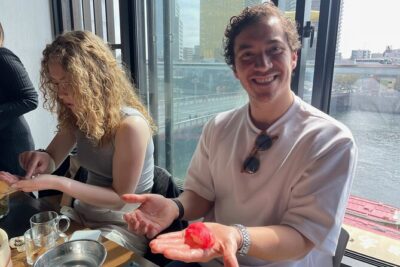
Sushi Making Tokyo Roll and Authentic Japanese Sushi Class
Read our review →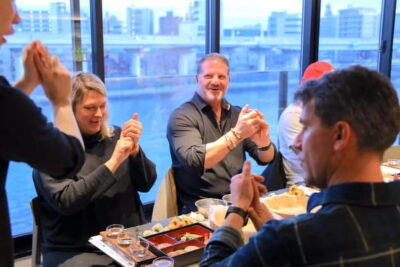
Tokyo: Roll and Authentic Sushi Making Class in Asakusa
Read our review →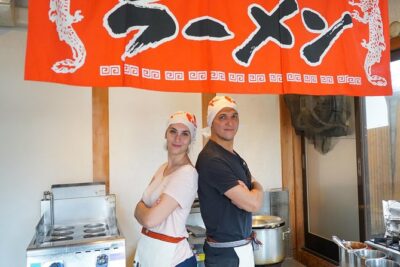
Ramen Cooking Class at Ramen Factory in Kyoto
Read our review →
Tokyo: Sushi Making Class in a Happi Coat near a Famous Spot
Read our review →
Sushi Making Tokyo! Popular Maki Sushi & Japanese Sushi(+Recipe!)
Read our review →
Sushi Making Osaka Roll and Authentic Japanese Sushi Class
Read our review →
Tokyo Sushi Making Class in Tsukiji with Professional Chef
Read our review →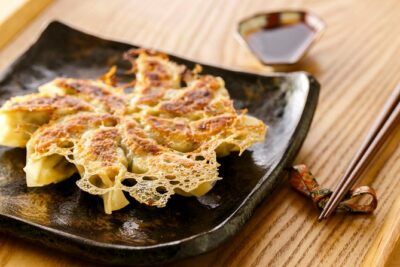
Ramen & Gyoza Cooking Class in Tokyo with Local Supermarket Visit
Read our review →Browse the lists this tour appears in