
Review · JAPAN
Miyazaki’s local cuisine experience Let’s make cold soup and chicken Nanban! Super Local Food Cooking!
Miyazaki’s best food lesson begins with two dishes that look simple but carry plenty of local meaning: chilled miso soup and chicken nanban. One cools you down on a hot day. The other is a beloved fried-chicken dish linked to Nobeoka. You make both yourself, rather than just eating them at a restaurant.
I like the private format, which lets the guide adjust the pace and explain local customs without a crowd waiting behind you. I also like the mortar-and-pestle work, since rubbing sesame seeds by hand gives you a real sense of how a home-cooked Miyazaki meal comes together.
The main consideration is the price: $163 for about two and a half hours is a serious spend for a cooking class. It makes the most sense if you value personal instruction, local conversation, and a meal you could not easily recreate from a standard restaurant visit.
Key points about this Miyazaki cooking class
- Two signature dishes in one session: Prepare sesame-based chilled miso soup and Miyazaki-style chicken nanban.
- Private participation: Only your group takes part, so the class can feel more personal than a large workshop.
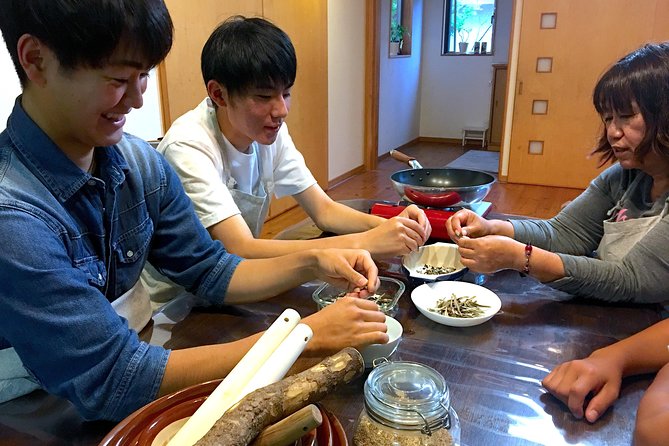
- Hands-on traditional technique: Use a mortar and pestle to work the sesame mixture for the cold soup.
- Local food context: Learn how recipes change from one Miyazaki home or area to another.
- Friendly regional storytelling: The guide discusses Miyazaki as well as the cooking, adding useful context for a first visit.
- Convenient central meeting point: The activity starts at Miyazaki Station, with pickup offered and the experience ending back at the meeting point.
Why these two dishes tell you a lot about Miyazaki
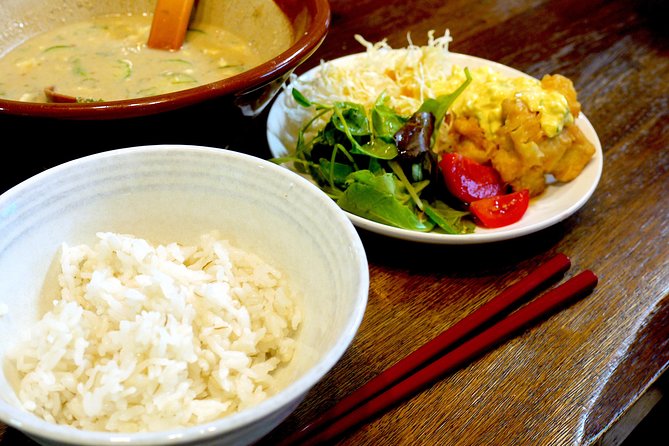
This class is not built around fancy restaurant cooking. It focuses on food that people in Miyazaki connect with home, family, and daily life.
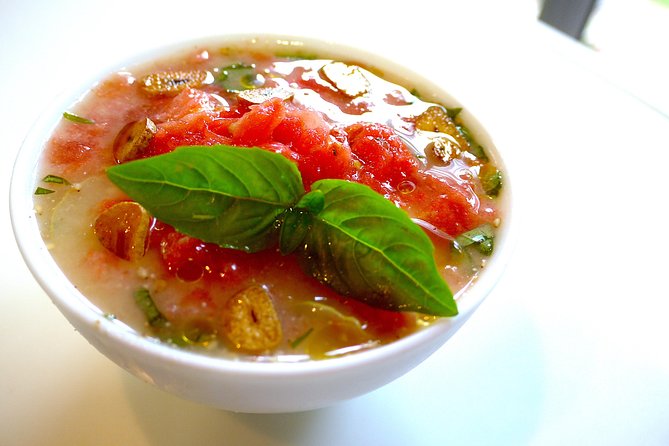
Chilled miso soup, often called hiyajiru, is especially suited to Miyazaki’s warm weather. It is a cold miso-based soup, commonly made with sesame seeds, and has long been associated with home cooking around Miyazaki City. The point is not showy presentation. The point is a cool, savory dish that is easy to eat when the heat has taken away your appetite.
That simple idea gives the dish its appeal. You are not just learning a recipe. You are learning why a family might make one particular meal in summer, and why the same meal can look slightly different in another household or nearby area.
Chicken nanban offers a different story. It is a newer local dish associated with Nobeoka City, yet it has become a kind of food symbol for Miyazaki Prefecture. Restaurants across the prefecture serve it, but the class lets you prepare a version yourself.
The value is in seeing how a dish commonly ordered outside Miyazaki fits into local food culture. You can also compare the class version with the chicken nanban you may try at restaurants during the rest of your stay.
More Food and Drink Tours in Japan:
- Ramen and Sushi Cooking Class with Sake Pairing Set in Tokyo
★ 5.0 · 291 reviews - Osaka Sake Tasting with Takoyaki Cooking
★ 5.0 · 156 reviews - Tokyo: Sushi and Ramen Cooking Class with Sake Pairing Set
★ 5.0 · 81 reviews
Meeting at Miyazaki Station
The class begins at Miyazaki Station, at 1 Nishikimachi, Miyazaki. That is a practical starting point if you are arriving by train or using the station area as your base.
Pickup is offered, but the stated meeting point is the station. You should confirm the pickup details when booking rather than assume that door-to-door transport is included in every case. The activity ends back at the meeting point, so you do not need to arrange a separate return transfer.
The total time is about two hours and thirty minutes. That is long enough for a proper cooking session and conversation, but short enough to fit around sightseeing in Miyazaki City. I would allow extra time before and after the scheduled period if you have a train to catch or another fixed appointment.
The experience is private. Only your group participates, which matters here because cooking instruction works better when you can ask questions as they come up. A private class also gives the guide more room to talk about the differences between local recipes.
Starting with chilled miso soup
The first dish is likely to be the most unusual for many people visiting Miyazaki. Chilled miso soup may sound like a contradiction if you are used to hot miso soup at Japanese restaurants. In Miyazaki, though, it is a practical summer dish with a clear purpose.
The basic version uses sesame seeds, miso, and other ingredients to create a cool soup with a nutty, savory taste. The precise method can vary by home and area. That variation is part of the lesson, not a problem to be corrected.
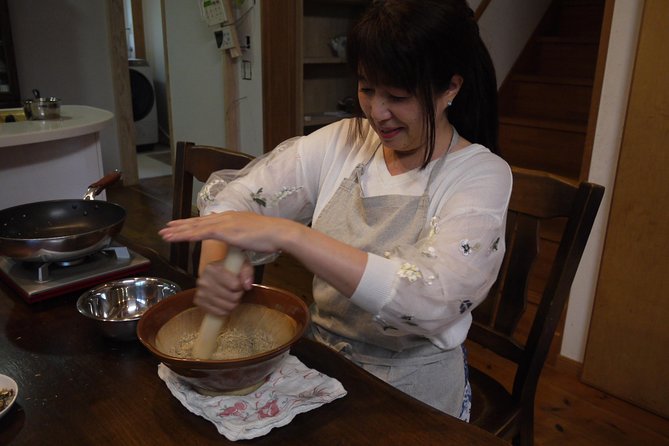
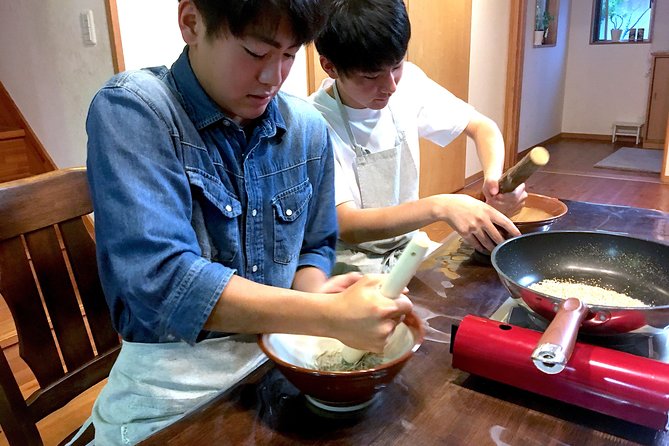
You work with a mortar and pestle to grind the sesame mixture. This is a small but important detail. It slows the cooking down and puts a traditional household technique in your hands. You can hear and feel the sesame being worked rather than simply watching someone blend it in a modern kitchen appliance.
The process is also approachable. The dish is described as surprisingly easy to make, which makes it a good choice if you do not cook often. You are learning something with a strong local connection without taking on an advanced culinary project.
I would pay close attention to how the guide explains the balance of ingredients. Since each home may have its own approach, this is the moment to ask what makes the local version different from packaged chilled soup sold in souvenir shops. Prepared products are available, but the class gives you the taste and method behind the dish.
The practical benefit is clear: once you understand the basic technique, you can think about making it again at home. You may need to adapt ingredients, but the method is less intimidating than many Japanese dishes taught in formal classes.
Preparing Miyazaki-style chicken nanban
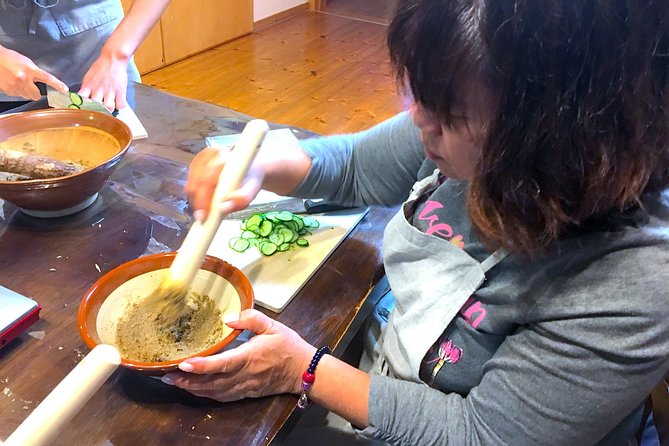
Chicken nanban gives the class a second focus and a different kind of kitchen experience. It is a fried chicken dish associated with Nobeoka and now widely treated as Miyazaki soul food.
The activity teaches a Miyazaki-style version. That wording matters because chicken nanban can vary, and people familiar with the dish may have firm ideas about what belongs on the plate. The class presents one local approach rather than claiming that every household or restaurant prepares it in exactly the same way.
You get to make the dish instead of simply ordering it. That makes the meal more satisfying, but it also takes time and attention. Compared with chilled miso soup, chicken nanban is the more substantial part of the session, and you should expect the cooking to involve several steps.
The supplied details do not specify the exact cuts, sauce, or side dishes used, so I would not book this expecting a fixed restaurant-style menu beyond the two named dishes. What you can count on is a hands-on lesson centered on chicken nanban as it is understood in Miyazaki.
The contrast between the two dishes is one of the class’s strengths. Chilled miso soup shows a cool, home-style response to summer heat. Chicken nanban shows how a regional dish can grow from a local origin into a food served throughout the prefecture.
More Food Experiences in Japan:
- Ramen & Dumpling Cooking in Tokyo with Chef/Vegan possible
★ 5.0 · 107 reviews - Vegan/Vegetarian Ramen and Gyoza by Bentoya cooking
★ 5.0 · 59 reviews - Nishiki Market Food Tour with Cooking Class
★ 4.9 · 42 reviews - Ramen Making from Scratch with Tokyo Mom(Vegan Option Available)
★ 5.0 · 39 reviews
More than a recipe lesson
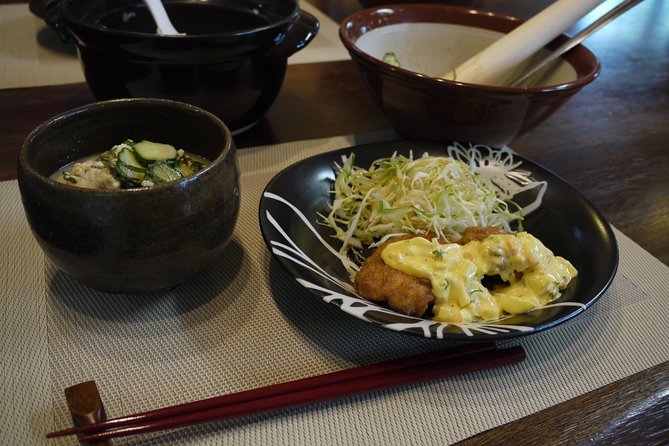
The strongest part of the experience may be the conversation around the food. The guide is described as friendly and willing to discuss many topics connected with Miyazaki, not just the mechanics of cooking.
That can make a real difference if this is your first visit. A food class gives you a relaxed setting for asking basic questions about the area, local habits, and the dishes you may see elsewhere. You are not rushing through a restaurant meal while trying to identify every ingredient.
The regional differences are especially worth asking about. Chilled miso soup changes from home to home and area to area. Chicken nanban also brings up the question of what counts as the Miyazaki version, particularly for people who have eaten versions outside the prefecture.
That kind of discussion is useful because food traditions are rarely as tidy as a single official recipe. You may leave with a better understanding of why two people from Miyazaki can prepare the same dish in different ways and still see both as authentic.
One note of practicality: the guide’s name is not provided in the available tour information. You can expect a friendly guide, but you should not book this expecting a named chef or celebrity instructor.
What the $163 price means
At $163, this class costs more than a casual meal of chicken nanban and chilled soup. If your only goal is to taste the dishes, a restaurant will be the cheaper choice.
The price makes more sense when you count the full experience: a private group, about two and a half hours, hands-on preparation, local food background, and a meal you help create. You are paying for access to instruction and conversation, not just ingredients.
That value depends heavily on your interests. I would consider it worthwhile for a couple, family, or small group that enjoys cooking and wants a personal introduction to Miyazaki food. It is harder to justify if you are traveling alone on a tight budget or have little interest in preparing Japanese food.
The private format helps the price. A large group class can offer a lower cost, but it may give you less time to ask about recipe differences or local life. Here, the group size is limited to your party, so your questions are more likely to shape the session.
You should also consider the opportunity cost. Two and a half hours is a meaningful portion of a short visit. If you have only one day in Miyazaki, this class should compete with sightseeing, shopping, and restaurant meals. If you have more time, it fits well as a slower afternoon or morning activity.
Who will enjoy this experience most
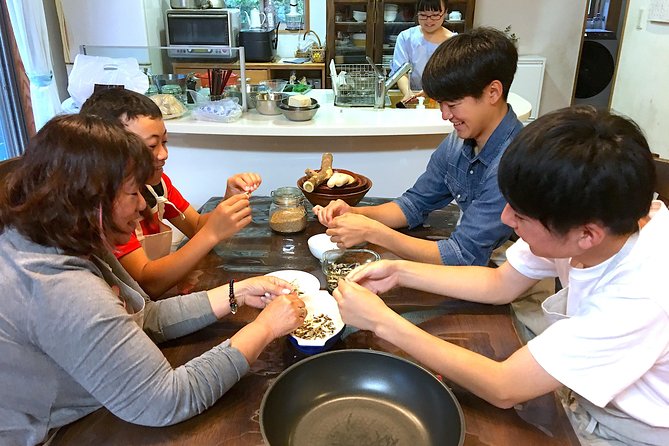
I would recommend this class to you if you like food with a story. It suits people who want to understand what local residents actually cook at home, not only what appears on a tourist menu.
It is also a good fit for first-time visitors to Miyazaki. The friendly regional conversation can give you useful orientation, and the station meeting point is straightforward to reach.
Families may appreciate the private setup, especially if different members want to work at different speeds. The recipes are described as approachable, though the information does not specify a minimum age or special children’s program.
Food-focused couples and small groups should also find the format appealing. You can prepare two dishes, compare methods, and eat the result together without sharing the class with strangers.
I would think twice if you need a fully specified professional cooking curriculum. The attraction here is local home cooking and cultural context, not advanced chef training. The exact details of the kitchen, ingredients, and step-by-step menu are not provided in advance.
Small practical details to know
The activity is offered as a mobile ticket, and confirmation is sent within 48 hours of booking, subject to availability. Service animals are allowed, and the meeting point is near public transportation.
You can cancel for a full refund up to 24 hours before the start time. Changes or cancellations made less than 24 hours before the experience are not accepted for a refund, and the cut-off follows local time.
The activity is provided by Kyushu Island Cooking. Since it ends back at Miyazaki Station, it is easy to continue into the city afterward. You might plan a restaurant visit later so you can compare the class’s chicken nanban with another local preparation, but the class itself includes the two featured dishes.
Should you book the Miyazaki cooking class?
Book it if you want a personal, hands-on introduction to Miyazaki food and are comfortable paying $163 for that access. The private group format, mortar-and-pestle technique, and discussion of home recipe differences give the class more substance than a simple tasting.
Skip it if you only want a cheap meal, need a tightly detailed professional course, or have no time for a two-and-a-half-hour activity. For the right visitor, though, this is a useful way to meet Miyazaki through food that locals connect with summer, family kitchens, and regional pride.
FAQ
Where does the cooking experience start?
It starts at Miyazaki Station, at 1 Nishikimachi, Miyazaki, 880-0811, Japan.
Where does the experience end?
The activity ends back at the meeting point.
How long does the cooking class last?
The experience lasts approximately two hours and thirty minutes.
What dishes will I prepare?
You will prepare chilled miso soup, a local Miyazaki home-style dish, and chicken nanban, a popular dish associated with Miyazaki Prefecture and Nobeoka City.
Is the tour private?
Yes. Only your group will participate in this private activity.
Is pickup available?
Pickup is offered. The listed meeting point is Miyazaki Station, so confirm the pickup arrangements when booking.
Is the activity near public transportation?
Yes. The meeting point is near public transportation.
Are service animals allowed?
Yes. Service animals are allowed.
What is the cancellation policy?
You can cancel at least 24 hours before the start time for a full refund. Cancellations or changes made less than 24 hours before the start time are not accepted for a refund.
Just added around Japan
- Japanese food Cooking at Home★ 5.0 · 12 reviews
- Private Cooking Class Udon in Kyoto Japan★ 5.0 · 23 reviews
- Private Plant-Based Japanese Cooking Class – Kyoto Edition★ 5.0 · 15 reviews
- Private Kyoto Sushi Cooking Class & Tea Ceremony with Emika★ 5.0 · 66 reviews
- Private Guided Traditional Buddhist Cooking in Japan★ 5.0 · 16 reviews
- Kyoto Wagashi(Japanese sweets) Cooking Class near Fushimiinari★ 5.0 · 60 reviews
- Nishiki Market, Private Sushi class & Sake Tasting in Townhouse★ 5.0 · 6 reviews
- Private Kyoto Cooking Class with Aki in a Beautiful Wooden House★ 5.0 · 12 reviews
Cooking Classes, compared.
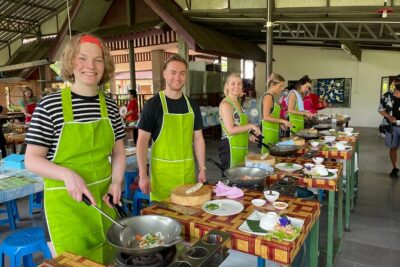
Half-Day Thai Cooking Class at Organic Farm in Chiang Mai
Read our review →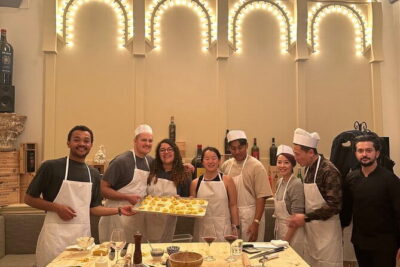
Florence: Pasta Cooking Class with Unlimited Wine
Read our review →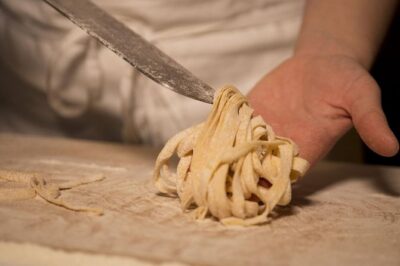
3 in 1 Cooking Class near Navona: Fettuccine, Ravioli & Tiramisu
Read our review →
Hanoi Cooking Class: Culture, Local Market & Meaning CSR Impact
Read our review →
5 Traditional Dishes Hanoi Cooking Class with Market Trip
Read our review →
Cooking Class and Lunch at a Tuscan Farmhouse with Local Market Tour from Florence
Read our review →
Chiang Mai: Cooking Class, Market & Thai Herbs Garden Tour
Read our review →Browse the lists this tour appears in