
Review · VEGAN & VEGETARIAN
Culinary Home Cooking with Grandmothers – Vegan Friendly
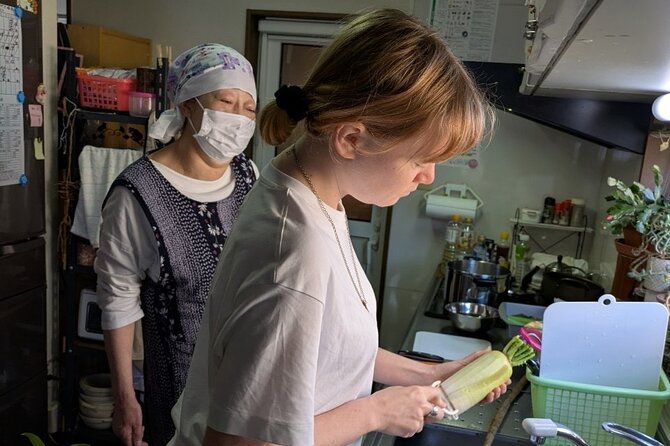
A meal with local grandmothers is the heart of this Aomori experience. You’ll step into a private home kitchen, learn simple Japanese cooking methods, and sit down together afterward for the food you helped prepare. The welcome is personal, and the focus is on family cooking rather than a polished restaurant demonstration.
I like two things right away: the naturally plant-based menu makes the class useful for vegan, vegetarian, and gluten-free diners, and the seasonal Aomori setting gives the dishes a clear connection to local weather and farming. The main consideration is transport. You must make your own way to Mutsu-Tsuruta Station, and the class begins at 11:00 a.m.
- Cook with local grandmothers: Learn family methods, stories, and kitchen habits passed down through generations.
- Taste Aomori’s seasons: A short introduction links the region’s snowy winters and lush summers to its food.
- Prepare a full plant-based meal: The menu may include keno-jiru, onigiri rice balls, and seasonal side dishes.
- Share lunch at one table: The class ends with a homemade meal and time for conversation.
- Private group setting: Only your group takes part in the activity.
- Simple station access: The meeting point is near public transportation, but transportation to Mutsu-Tsuruta Station is not included.
Aomori Food Begins With the Weather
Aomori is Japan’s northernmost prefecture on the main island of Honshu. Its food is shaped by strong seasonal changes, including cold, snowy winters and productive summers. This class gives you a short introduction to that setting before you start cooking, which helps explain why the meal feels practical and comforting rather than showy.
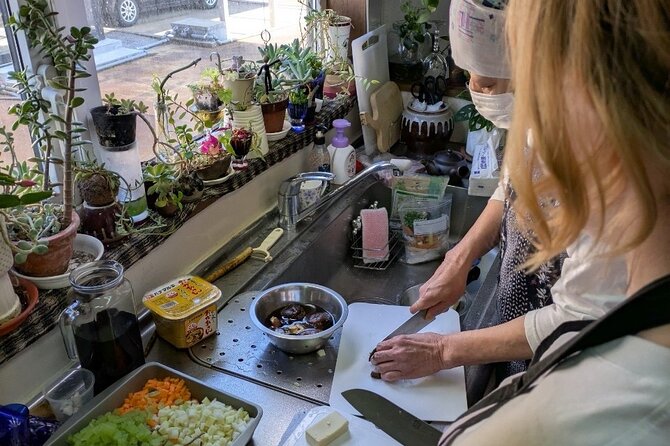
The food is built around local ingredients and home methods. You’ll learn how to wash, cut, and season ingredients in a Japanese kitchen. These are useful skills to take home because they do not depend on expensive equipment or restaurant-level technique.
That connection between place and food matters. A rice ball or vegetable soup can seem simple on its own, but the class shows how everyday dishes carry local habits, seasonal choices, and family memory. You are not just following a recipe. You are learning why these foods belong in an Aomori home.
Entering the Home Kitchen at 11:00
The experience begins at 11:00 a.m. in Maeda Tsuruta, Kitatsugaru District, Aomori 038-3503. The class ends back at the same meeting point, so you do not need to arrange a separate return transfer after lunch.
The setting is a cozy home rather than a commercial cooking school. That changes the tone. You can expect the room to feel informal and social, with the cooking taking place side by side instead of with everyone seated in rows watching an instructor work.
The host or guide speaks English, and English-language support is available during the experience. That is important here because the best part of a home cooking class is asking small questions as you go: why an ingredient is cut a certain way, how much seasoning to use, or how a family prepares a dish at home.
The group is private, with only your party taking part. If you are traveling with family or friends, this gives you more room to work at your own pace. It also makes the cultural exchange more direct. You are not one person in a large class competing for a place at the cutting board.
More Home Cooking Classes in Japan
- Private Home Cooking in Yanaka – Local Flavors in a Warm Setting
★ 5.0 · 173 reviews - Near Fushimiinari: Kyoto Home Cooking Class & Supermarket tour
★ 5.0 · 100 reviews - Japanese Home Cooking Class & Walk in Todoroki Temple Tokyo
★ 5.0 · 88 reviews
Cooking Keno-jiru, Onigiri, and Seasonal Sides

The cooking portion is hands-on. You will help prepare dishes rather than simply watch a demonstration. The menu can change according to the season and available ingredients, but the sample dishes include keno-jiru, onigiri rice balls, and seasonal side dishes.
Keno-jiru is a vegetable miso soup associated with northern Japanese home cooking. It is the kind of food that makes sense in Aomori’s cold climate: warm, savory, and built around vegetables. In this class, it provides a useful lesson in how simple ingredients can become a satisfying meal through careful cutting, seasoning, and simmering.
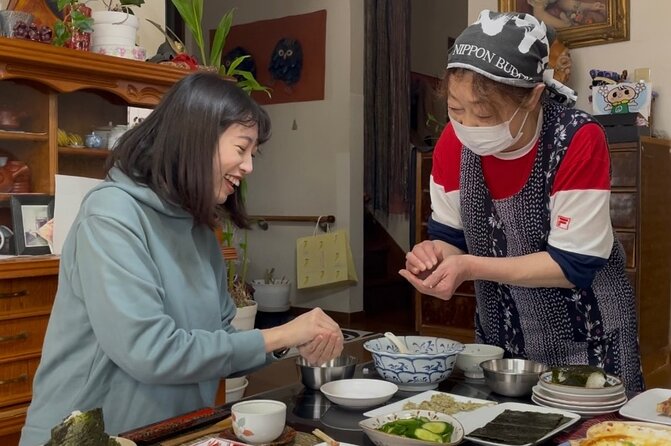
Onigiri gives you a different type of practice. You will work with rice and shape it into hand-held rice balls. The technique is straightforward, but it also shows how Japanese home food often values neat preparation and portability without making the meal feel fast or disposable.
Seasonal sides round out the table. Since the ingredients depend on the time of year, the exact dishes are not fixed. That is a small advantage if you want food tied to the moment of your visit, but it also means you should not book expecting a precise menu beyond the examples provided.
The cooking methods are accessible. You’ll learn to wash, cut, and season ingredients in ways you can repeat at home. I like this practical approach because it leaves you with more than a pleasant lunch. You gain a few habits that can improve your own cooking without requiring a special Japanese kitchen.
Stories From Aomori’s Grandmothers
The grandmothers are not simply there to supply instructions. They share family recipes, stories, and experience from years of preparing food at home. The social side is a major reason to choose this class over a standard cooking lesson.
The atmosphere is intended to feel warm and family-like. You’ll have time to talk while working, and the pace allows the cooking to become a conversation rather than a checklist of tasks. The grandmothers’ role gives the class a human scale that is hard to reproduce in a formal culinary studio.
Language should not stop you from joining. English support is available, and the experience is designed to welcome people from outside Japan. Still, you should expect some communication to happen through demonstration, gestures, and shared work, as it often does in a home kitchen. That can be part of the charm, but it may not suit someone looking for a highly technical lesson with lengthy explanations of every step.
The experience also offers a glimpse of Japanese hospitality through food. Rather than presenting culture as a museum display, the class lets you take part in ordinary actions: preparing vegetables, forming rice balls, sharing lunch, and listening to stories. Those small actions can tell you more about daily life than a short list of facts.
One Table, One Plant-Based Meal
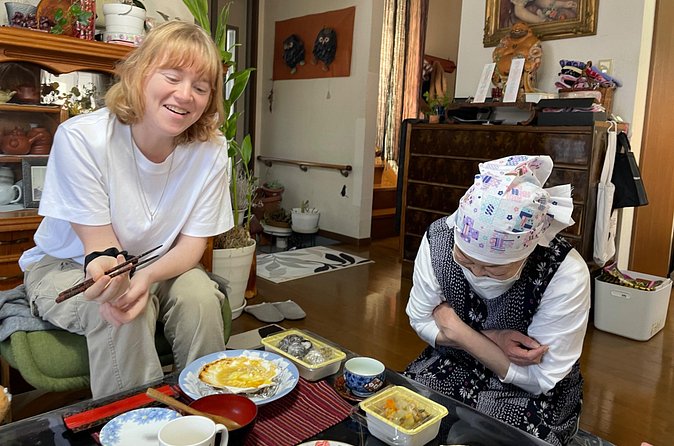
After cooking, everyone sits down to eat the meal together. Lunch is included, along with a welcome drink, all ingredients, and the utensils used during the class.
The menu is naturally plant-based and designed to suit vegan and vegetarian diners, including Oriental Vegetarian guests. It is also described as gluten-free. That makes this a particularly useful choice if your diet makes many Japanese food experiences difficult.
You should still communicate your dietary needs clearly when booking or before the class. The supplied information describes the menu as suitable for these diets, but it does not provide a detailed ingredient list for every season. Since the menu changes with available produce, asking about specific concerns is sensible.
The shared table is more than the final meal. It gives the class a natural ending. You have prepared the food together, and now you can taste it while talking about the dishes and the region. The result is less like eating at the end of a lesson and more like being invited to take part in a household routine.
For diners who avoid animal products, this is also a chance to enjoy familiar Japanese flavors without having to inspect every dish for hidden fish, meat, or dairy. The plant-based structure is built into the experience rather than treated as a last-minute substitute.
More Vegan Cooking Classes in Japan
- Ramen & Dumpling Cooking in Tokyo with Chef/Vegan possible
★ 5.0 · 107 reviews - Vegan/Vegetarian Ramen and Gyoza by Bentoya cooking
★ 5.0 · 59 reviews - Ramen Making from Scratch with Tokyo Mom(Vegan Option Available)
★ 5.0 · 39 reviews - Shibuya Tokyo: Sushi Making Class (Vegan/Vegetarian/Halal)
★ 4.7 · 29 reviews
What the $78.04 Price Covers
At $78.04 per person, this is not a bargain lunch, but the price covers more than food. You receive about three hours of instruction, a welcome drink, ingredients, utensils, an English-speaking host or guide, hands-on cooking, and the homemade meal afterward.
The private format adds value for a small group. You are paying for direct participation and personal contact with the hosts, not just a seat in a larger class. If you want a quick cooking demonstration, the price may feel high. If you want a social cultural experience with food, it becomes easier to justify.
The value is strongest for people who care about the setting and the people involved. A restaurant meal could cost less, and a short cooking class in a city may offer more menu detail. This experience gives you something different: time in a local home, contact with older residents, and a meal prepared together.
There is one extra cost to remember. Public transportation to Mutsu-Tsuruta Station is not included, and you must make your own way there. Check your route before booking, especially if this is one stop in a busy day. The meeting point is near public transportation, but the activity does not include pickup.
Who Will Enjoy This Class Most
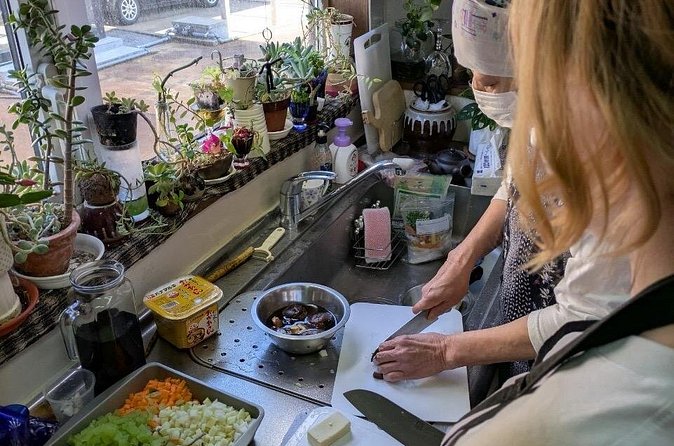
I would choose this experience if you want a quieter, personal side of Aomori. It suits couples, families, friends, and solo visitors who enjoy conversation as much as cooking. The private setup is especially helpful for groups with different levels of kitchen experience.
It is also a strong option for vegan and vegetarian diners who want more than a side dish. The whole meal is plant-based, and the menu is designed to include people with common dietary restrictions. Gluten-free diners may also find the class convenient, though it is wise to confirm any specific ingredient concerns.
Families should note that the activity lasts about three hours and includes hands-on preparation. Children who enjoy cooking and talking with local hosts may have a good time, but the supplied details do not give a minimum age or specific child facilities. Ask BASAMA’s Kitchen if that matters for your group.
This is less suited to someone with a tight timetable or a strong preference for a fixed menu. The start time is set at 11:00 a.m., the duration is approximate, and dishes may change with the season. You should allow enough time to reach the meeting point without rushing.
Practical Details Before You Book
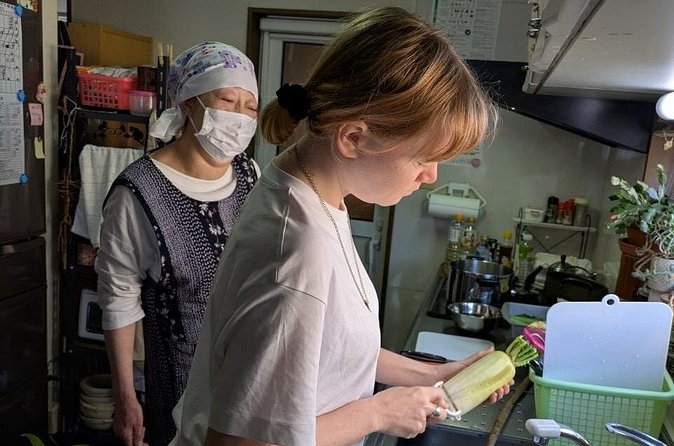
The experience uses a mobile ticket, and confirmation is provided at the time of booking. The start and end point is Maeda Tsuruta in the Kitatsugaru District of Aomori, with the activity returning to that meeting point.
You should plan your transport before the day. Mutsu-Tsuruta Station is on the JR Gono Line, and getting to the station is your responsibility. Since the activity starts at 11:00 a.m., leave enough time for the final connection and for finding the meeting point.
The tour provider is BASAMA’s Kitchen. The class is private, but the available information does not give a maximum group size. If you are booking for a larger party, confirm the group arrangements directly.
Free cancellation is available if you cancel at least 24 hours before the local start time. Cancellations made less than 24 hours before the activity are not refunded, and late changes are not accepted. That policy is reasonable, but your transport plans should be settled before the cutoff.
Should You Book BASAMA’s Kitchen?
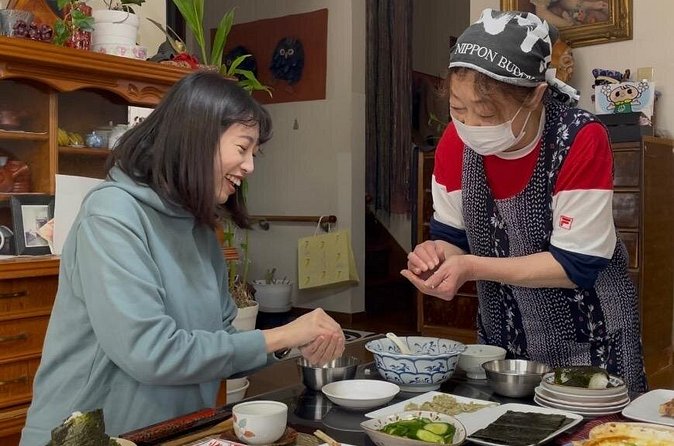
Book this class if you want to cook, eat, and talk in a real home setting. The strongest reasons are the personal contact with local grandmothers, the plant-based menu, and the chance to connect Aomori’s climate with everyday food.
The class is not the right pick if you want a formal chef-led lesson, a guaranteed menu, or a quick activity close to a major sightseeing center. You also need to arrange your own transport to Mutsu-Tsuruta Station.
For many visitors, the best souvenir will not be a recipe alone. It will be the feeling of sitting at one table after working together, with a meal that reflects the season and the people who prepared it. At $78.04, that personal exchange is the main value.
FAQ
Where does the cooking experience take place?
It takes place in Maeda Tsuruta, Kitatsugaru District, Aomori 038-3503, Japan. The activity ends back at the meeting point.
What time does the experience begin?
The class starts at 11:00 a.m.
How long does the activity last?
The experience lasts approximately three hours.
Is transportation included?
No. You must make your own way to Mutsu-Tsuruta Station on the JR Gono Line. Transportation to the station is not included.
Is the meal vegan and vegetarian friendly?
Yes. The menu is naturally plant-based and suitable for vegan and vegetarian diners, including Oriental Vegetarian guests.
Is the food gluten-free?
The menu is described as gluten-free. Since dishes may change with the season and available ingredients, confirm any specific dietary concerns before attending.
What is included in the price?
The price includes a welcome drink, the hands-on cooking experience, all ingredients and utensils, an English-speaking host or guide, and a homemade lunch featuring the dishes prepared together.
Can I cancel for a full refund?
Yes. You can receive a full refund if you cancel at least 24 hours before the local start time. Cancellations or changes made less than 24 hours before the experience are not accepted for a refund.
More Food Experiences in Japan
- Nishiki Market Food Tour with Cooking Class
★ 4.9 · 42 reviews - Osaka Dotonbori: Vegan/Vegetarian Sushi Making Experience
★ 5.0 · 9 reviews - Okonomiyaki&Takoyaki for Families:Osaka Street Food Festival
★ 5.0 · 4 reviews - Osaka: Sushi Making Class and Dotonbori Food Tour
★ 4.7 · 3 reviews
Just added around Japan
- Famous Inari Sushi Making Experience in Toyokawa★ 5.0 · 4 reviews
- Nagoya Super Market Tour & Home Cooking Class with a Local, Akiko★ 5.0 · 10 reviews
- Tokyo: Tsukiji Market Walking Tour & Sushi Cooking Class★ 4.6 · 122 reviews
- Tokyo: Sushi Cooking Class with Sake Tasting★ 4.8 · 55 reviews
- Sushi-Making Experience★ 4.7 · 4 reviews
- Tokyo: Tsukiji Market Guided Tour & Sushi-Making Experience★ 4.4 · 11 reviews
- Tokyo: Sushi and Ramen Cooking Class with Sake Pairing Set★ 5.0 · 81 reviews
- Tokyo: Sushi Making with Pro Chef & Tsukiji Fish Market Tour★ 4.6 · 49 reviews
Vegan & Vegetarian Cooking Classes, compared.
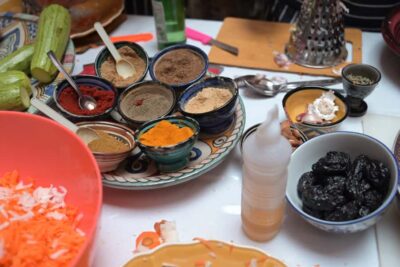
Marrakech: Moroccan Cooking Class for vegetarians and vegan
Read our review →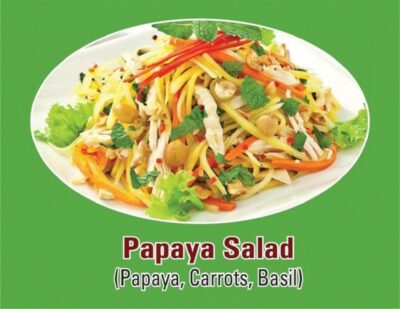
Hoi An: Vegetarian Cooking Class w Local Family and transfer
Read our review →
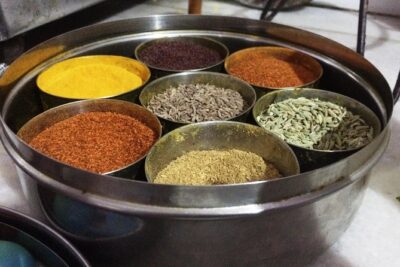
Jaipur Market Tour & Vegetarian Rajasthani Home Cooking Class
Read our review →
Ramen & Dumpling Cooking in Tokyo with Chef/Vegan possible
Read our review →
Hoi An/Da Nang: Vegetarian Cooking Class & Basket Boat Ride
Read our review →
Vegan/Vegetarian Ramen and Gyoza by Bentoya cooking
Read our review →Browse the lists this tour appears in