
Review · OSAKA
Osaka Cooking Class and Sake Tasting with Local Supermarket Visit
Osaka’s food culture makes more sense when you handle the ingredients yourself. This four-hour class begins at a local supermarket, then moves to a cooking studio where you prepare niku-sui, okonomiyaki, and gyoza with a guide beside you.
I like the supermarket visit because it turns a familiar errand into a look at everyday Osaka life. I also like the small group, capped at seven, and the chance to taste local sake with the meal instead of simply watching a demonstration.
The main consideration is the price, $92.50 per person. That is a fair rate if you value instruction, drinks, and a hands-on cultural activity, but it is more than a simple meal or a short market walk.
Key points to know before booking
- Three Osaka comfort foods: Make beef soup, savory okonomiyaki, and Japanese dumplings in one class.
- Supermarket first: Learn about local ingredients while shopping with your guide.
- Small group size: The class accepts no more than seven participants, allowing for personal help.
- Beginner-friendly cooking: You fold gyoza, shape okonomiyaki, and follow simple Japanese methods step by step.
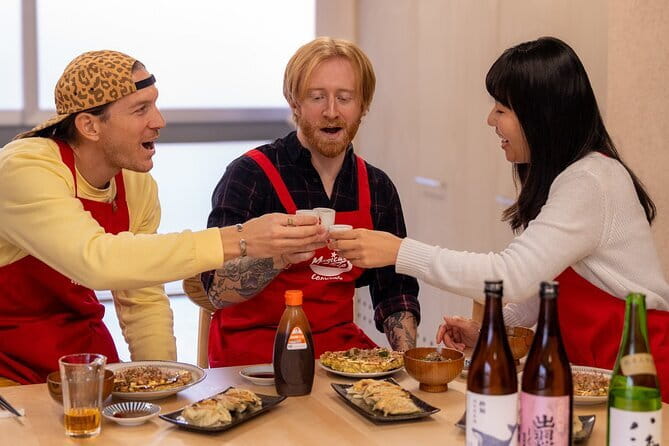
- Drinks with the meal: Enjoy sake, beer, or soft drinks while eating what you prepare.
- Convenient morning timing: Meet at 10:00 a.m. by the FamilyMart on the south side of Minami-morimachi Station, then return there at the end.
A practical Osaka food lesson, not just a cooking show
Many cooking classes ask you to sit, watch, and copy a few motions. This one gives you more to do. You help select ingredients, prepare several dishes, and eat the results with a drink.
That difference matters. If you want to remember Japanese food as more than a list of restaurant orders, handling the ingredients gives you useful context. You see what goes into familiar dishes and learn methods you can try again at home.
The class is built for all skill levels. You do not need prior cooking experience, and the instructions are designed to be easy to follow. At the same time, someone who already cooks should still have enough hands-on work to stay interested, especially during gyoza folding and okonomiyaki preparation.
The relaxed format also makes this a good choice for solo visitors. You are not signing up for a formal school with a long list of rules. You are joining a small food activity with a guide who gives live feedback as you work.
More Drink Tastings in Osaka:
- Osaka Sake Tasting with Takoyaki Cooking
★ 5.0 · 156 reviews - Osaka: Cooking Class & Sake Tasting with Local Market Visit
★ 4.8 · 31 reviews - Osaka: Okonomiyaki Cooking Class with Beer or Soft Drink
★ 4.9 · 9 reviews
Meeting at Minami-morimachi Station at 10:00 a.m.
The meeting point is the FamilyMart at the south side of Minami-morimachi Station, at 2-chome 3-10, 1F, in Osaka’s Kita Ward. The activity begins at 10:00 a.m. and ends back at the same meeting point.
That return to the starting place keeps the morning easy to plan. You do not need to arrange a separate ride after lunch, and the station location makes it simple to continue sightseeing in Osaka afterward.
Give yourself enough time to find the correct side of the station. The meeting point is specific, but busy Japanese stations can still take a few minutes to navigate. A mobile ticket is provided, and confirmation arrives when you book.
The total duration is about four hours. This is long enough for shopping, preparation, cooking, eating, and drinks without forcing every step into a rushed schedule.
The supermarket visit shows Osaka’s everyday food culture
The first part of the class takes place at a local supermarket. Your guide explains the ingredients used for the recipes and helps you understand what to look for as you shop.
This may sound like a small detail, but it is one of the most useful parts of the activity. Japanese supermarkets can be confusing if you cannot read every label. You might find several types of sauces, unfamiliar cuts of meat, packaged dumpling wrappers, and vegetables that look similar at first glance.
With a guide beside you, the shopping trip becomes practical rather than decorative. You get to connect the ingredients on the shelf with the dishes you will later cook. That helps you remember the recipes and gives you a better chance of finding suitable substitutes at home.
The supermarket also offers a look at ordinary Osaka life. You are not only visiting famous food streets or ordering a finished plate. You are seeing the ingredients local cooks buy for a normal meal.
Do not expect a long sightseeing stop or a grand food hall. The value is in the explanation and the connection to the cooking class. If you prefer markets with street food samples and lots of photo opportunities, this part may feel quieter.
Cooking niku-sui, Osaka’s comforting beef soup
One of the dishes is niku-sui, a beef soup associated with Osaka. It is a useful choice for a class because it introduces you to a simple, comforting style of Japanese home cooking.
The name refers to beef soup, and the dish gives the lesson a warm, savory foundation alongside the crispier and more hands-on recipes. You learn how the ingredients come together rather than simply tasting a finished bowl.
The available details do not specify every ingredient or the exact cooking sequence, so you should not expect a fixed recipe list in advance. The guide explains the ingredients selected during the supermarket visit and leads you through the preparation in the studio.
For home cooks, this may be the easiest dish to repeat after returning home. The class is designed to keep the methods simple, and soup is often more forgiving than dough or pan-fried dumplings.
More Food and Drink Tours in Osaka:
- Eat Osaka: Street Food Cooking in an Authentic Kitchen!
★ 5.0 · 87 reviews - Osaka Street Food Festival :Takoyaki&Okonomiyaki for Families
★ 5.0 · 13 reviews - Okonomiyaki&Takoyaki for Families:Osaka Street Food Festival
★ 5.0 · 4 reviews - Osaka Home Feast Cooking and Sake Experience
★ 5.0 · 3 reviews
Folding gyoza takes patience and practice
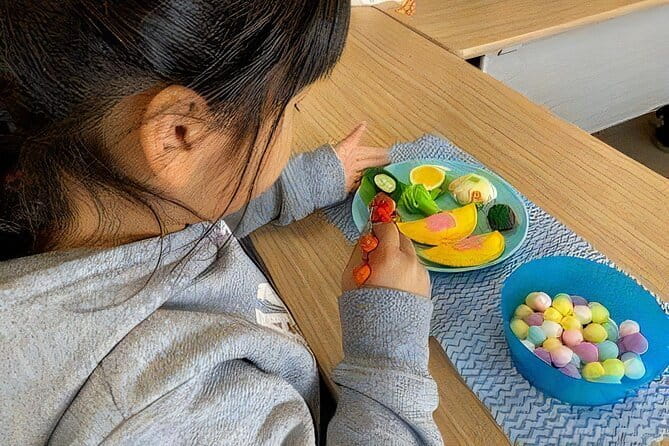
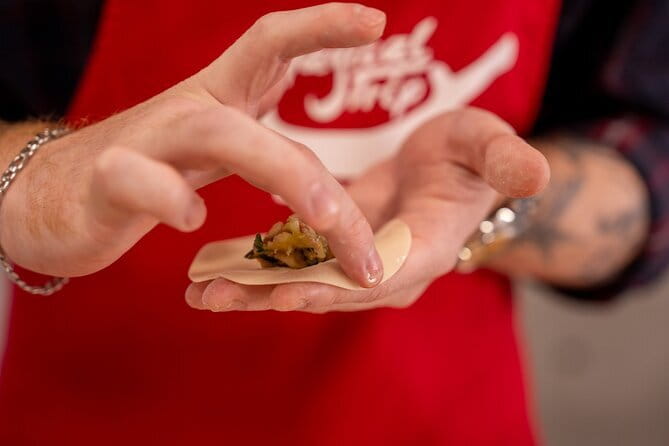
Gyoza is the most tactile part of the class. You work with the filling and wrappers, then practice folding the dumplings before cooking them.
This is where a small group helps. Folding gyoza can feel awkward the first time, and the guide can correct your technique as you go. The goal is not perfect restaurant presentation. It is learning a repeatable method and getting comfortable with the process.
The class includes yaki-gyoza, or pan-cooked gyoza, according to the cooking experience details. You get the satisfaction of making the dumplings yourself, then eating them soon after they are cooked.
If you are cooking with children, this is likely to be one of the most enjoyable tasks, though the adult in the group should handle any hot cooking equipment. The supplied details describe the class as suitable for families, but they do not give a minimum age or specific child policy, so check those points before booking if they matter to your plans.
Making okonomiyaki the Osaka way
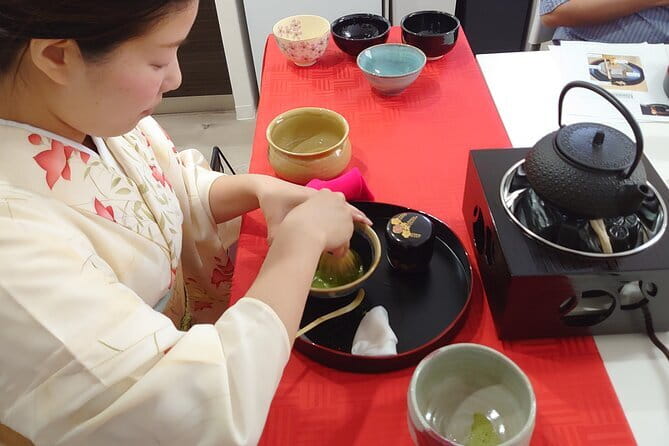
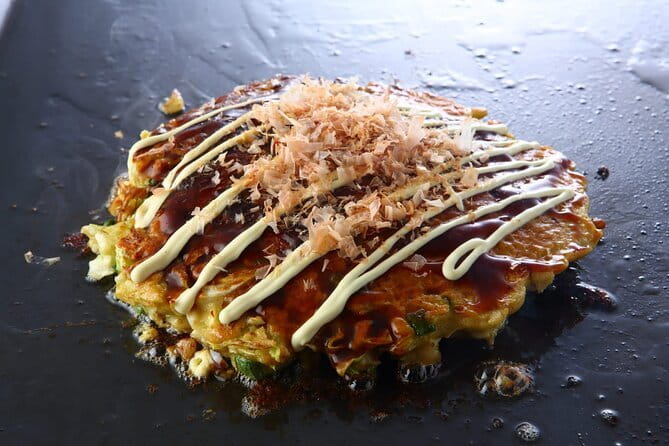
Okonomiyaki is the star dish for many visitors to Osaka. It is a savory pancake with a flexible approach to ingredients, and it gives you a chance to practice mixing, shaping, and cooking in one recipe.
The guide walks you through the process step by step. That is helpful because okonomiyaki looks simple, but the mixture needs careful handling if you want a good texture. Live instruction lets you ask questions and adjust as you work.
The dish also fits Osaka’s casual food culture. It is filling, social, and meant to be enjoyed without ceremony. You do not need advanced knife skills or professional equipment to understand the basic method.
One benefit of making it in class is that you can see how the ingredients behave before trying it at home. You also get a reference point for texture and seasoning. The exact toppings and ingredient brands are not listed, so expect the guide to explain the particular version prepared that day rather than promise a full restaurant-style menu.
Sake tasting adds a local drink to lunch
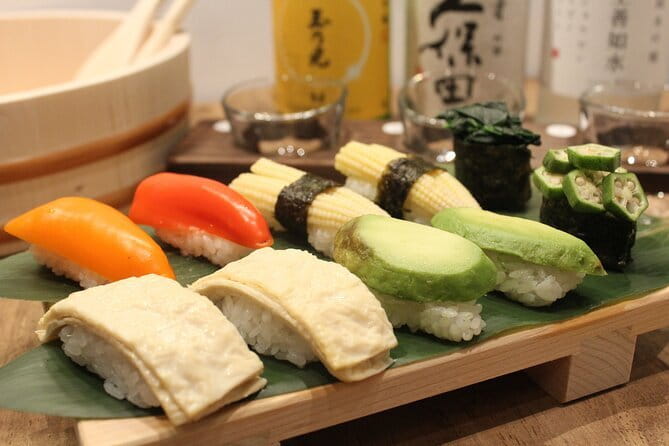
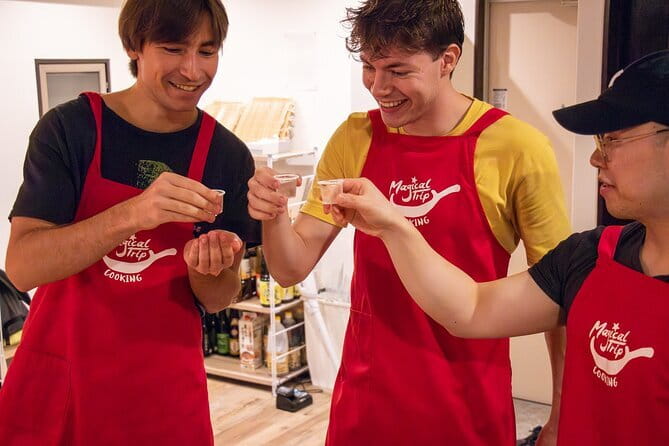
After or during the cooking, you can enjoy local sake, beer, or soft drinks with the food. The drink choice makes the meal feel complete and gives you a gentle introduction to sake without turning the activity into a formal tasting seminar.
If you already enjoy sake, this is a pleasant addition to the cooking. If you are unsure about it, having beer and soft drinks available keeps the meal comfortable. You are not required to make the drink the focus of the experience.
The information provided does not specify the number of sake samples, brands, or tasting notes. Think of it as a drink pairing with your homemade dishes rather than a specialist sake course.
That distinction helps set expectations. You are paying for a combined cooking and food culture experience, with sake included as part of the meal, not for a long lesson covering every major sake region in Japan.
What the small group means for your experience
The maximum group size is seven people. That is small enough for the guide to watch your technique and answer questions, while still giving the session a social feel.
The personal help matters most during gyoza folding and the first stages of cooking. If a class has too many people, you may spend much of the time waiting for a turn. A seven-person limit reduces that risk.
The guides named in the available feedback are Yuka and Mari. Yuka received particular praise for explaining the supermarket ingredients and guiding the full four-hour session. Mari was also highlighted for explaining what to buy and keeping the cooking hands-on for everyone.
Guide quality can shape a class like this more than the menu does. A patient instructor makes the recipes easier to follow and helps you understand why a method works. You should still remember that guide assignments can vary by date.
Is $92.50 a good value?
At $92.50 per person, this is not a budget lunch. You could eat okonomiyaki or gyoza for much less, especially if you choose a casual Osaka restaurant.
The comparison is not quite fair, though. The fee covers about four hours, a supermarket visit, instruction, ingredients, several dishes, and sake, beer, or soft drinks. You also leave with cooking methods that you can use again.
I would consider the price reasonable for someone who wants an activity with real participation. It is less convincing for someone who simply wants to sample Osaka food. In that case, a food walk or a few inexpensive restaurant meals could offer more variety for less money.
The value also improves if you plan to cook Japanese food at home. Learning how to shop for the ingredients and fold gyoza may save you from guessing later. If you only have one free morning in Osaka, this class gives you a meal and a skill-based cultural activity in the same block of time.
Who will enjoy this four-hour class most?
This experience suits you if you like to keep your hands busy. It is a good match for couples, friends, solo visitors, and families who want more than a sightseeing stop.
It also works well for first-time cooks. The class does not expect professional skills, and the guide provides step-by-step instruction. You can ask for help as you prepare the food instead of trying to copy a fast demonstration from across a large room.
Food-focused visitors will appreciate the supermarket stop. It gives you a better sense of how Japanese cooking begins, before the ingredients arrive on a restaurant plate.
You may want to choose another activity if you dislike group cooking, have very limited time, or want a specialist sake education. The class is practical and social, not a private chef lesson or a dedicated tasting course.
The available information does not list dietary substitutions, allergy procedures, or accessibility details. If you have food restrictions or mobility needs, ask the provider before booking. That is especially important for a menu built around beef, dumplings, and several prepared ingredients.
Booking details and cancellation timing
You receive confirmation at booking, and the activity uses a mobile ticket. Public transportation is nearby, with the stated meeting point at Minami-morimachi Station.
Free cancellation is available if you cancel at least 24 hours before the 10:00 a.m. start time. A cancellation made less than 24 hours before the activity is not refunded, and changes inside that window are not accepted.
Keep the local Osaka time in mind when changing plans. Since the activity ends at the original meeting point, you can make later plans in the area, but leave yourself a sensible buffer after the four-hour class.
Should you book the Osaka cooking class?
Book it if you want to understand Osaka food by shopping for it, preparing it, and eating it. The mix of supermarket guidance, three classic dishes, live instruction, and a drink with the meal gives you more substance than a quick cooking demonstration.
I especially like the combination of niku-sui, okonomiyaki, and gyoza. You get a soup, a savory pancake, and dumplings, so the class covers different cooking tasks and textures. The group limit of seven and the strong praise for guides Yuka and Mari add confidence that you will receive useful help.
Skip it if your main goal is the lowest-cost meal, a large sake tasting, or a private cooking lesson. At $92.50, the value comes from the time and participation, not from the amount of food alone.
For most visitors who want a friendly, practical introduction to Osaka cooking, this is a good four-hour use of a morning. Bring an appetite, arrive at the FamilyMart on time, and expect to do the work rather than simply watch it.
FAQ
How long does the Osaka cooking class and sake tasting last?
The activity lasts approximately four hours.
Where does the activity begin?
It begins at the FamilyMart on the south side of Minami-morimachi Station, at Japan, 530-0041 Osaka, Kita Ward, Tenjinbashi, 2-chome 3-10, 1F.
What time does the class start?
The stated start time is 10:00 a.m.
Where does the activity end?
The activity ends back at the original meeting point.
How many people can join the class?
The activity has a maximum of seven participants.
What food will I prepare?
You will prepare niku-sui, okonomiyaki, and gyoza, including yaki-gyoza as part of the cooking experience.
Are drinks included?
You can enjoy local sake, beer, or soft drinks while eating the dishes you prepare.
Can I cancel for a full refund?
Yes. You can cancel for a full refund at least 24 hours before the experience start time. Cancellations or changes made less than 24 hours before the start are not accepted for a refund.
More Sake Tastings in Osaka
- Ramen and Sushi Cooking Class with Sake Pairing Set in Tokyo
★ 5.0 · 291 reviews - Tokyo: Sushi and Ramen Cooking Class with Sake Pairing Set
★ 5.0 · 81 reviews - Tokyo: Sushi Cooking Class with Sake Tasting
★ 4.8 · 55 reviews - Nishiki Market, Private Sushi class & Sake Tasting in Townhouse
★ 5.0 · 6 reviews
More Hands-On Workshops in Osaka
- Sushi Making Osaka Roll and Authentic Japanese Sushi Class
★ 5.0 · 1,220 reviews - Osaka: Ramen and Gyoza Cooking Class in Dotonbori
★ 5.0 · 378 reviews - Osaka Cooking Class: Okonomiyaki &Japanese cuisines experience
★ 5.0 · 261 reviews - Osaka: Roll and Authentic Sushi Making Class in Dotonbori
★ 4.9 · 239 reviews
Just added around Osaka
- Osaka Street Food Festival :Takoyaki&Okonomiyaki for Families★ 5.0 · 13 reviews
- Three Types of Ramen Cooking Class in Osaka★ 5.0 · 119 reviews
- Takoyaki DIY Cooking in the Heart of Osaka★ 5.0 · 7 reviews
- SUSHI Making Experience at Restaurant★ 5.0 · 8 reviews
- Sushi Making Osaka Omakase Cooking Class in Japan★ 5.0 · 4 reviews
- Cooking Class for Ramen and Gyoza in a Quiet Old Osaka House★ 5.0 · 3 reviews
- Sushi and Japnese foods cooking class in Osaka★ 5.0 · 51 reviews
- Ramen and Gyoza Cooking Class in Osaka Dotonbori★ 5.0 · 73 reviews
Cooking Classes, compared.
Half-Day Thai Cooking Class at Organic Farm in Chiang Mai
Read our review →
Florence: Pasta Cooking Class with Unlimited Wine
Read our review →
3 in 1 Cooking Class near Navona: Fettuccine, Ravioli & Tiramisu
Read our review →
Hanoi Cooking Class: Culture, Local Market & Meaning CSR Impact
Read our review →
5 Traditional Dishes Hanoi Cooking Class with Market Trip
Read our review →
Cooking Class and Lunch at a Tuscan Farmhouse with Local Market Tour from Florence
Read our review →
Chiang Mai: Cooking Class, Market & Thai Herbs Garden Tour
Read our review →Browse the lists this tour appears in