
Review · VEGAN & VEGETARIAN
Vegan/Vegetarian Ramen and Gyoza by Bentoya cooking
Tokyo’s vegan ramen and gyoza class tackles a real food problem: many Japanese dishes rely on dashi, a stock often made with bonito flakes. You’ll visit a local supermarket, learn what to look for, then prepare the soup and dumplings from scratch with a local instructor.
I like the small six-person limit and the useful supermarket stop. I also like that Kaori’s class is built for home cooking, with clear instructions and recipe files to use later. The main drawback is that the meeting point is in Komae, outside central Tokyo, so you’ll need to allow extra time for the train.
Key points
- A supermarket visit comes first: You’ll learn how Japanese ingredients are labeled and which products work for vegan or vegetarian cooking.
- The ramen soup is made from scratch: This is more useful than simply assembling noodles with a prepared broth.
- Gyoza is part of the meal: You’ll learn filling, folding, cooking, and presentation.
- Kaori hosts a personal, home-based class: Her friendly English and willingness to answer questions make the lesson easy to follow.
- The group is limited to six people: That gives the class a more personal feel than a large demonstration.
- You leave with repeatable skills: Recipe files and straightforward methods help you recreate the meal at home.
Why vegan ramen in Tokyo takes some planning
Japanese food can look vegetarian while hiding fish-based ingredients. The familiar stock called dashi is often made with bonito flakes, and fish-based seasoning can appear in soups, sauces, and prepared foods. That makes this class useful even if you already know your way around a kitchen.
The lesson focuses on vegan and vegetarian Japanese food, rather than treating plant-based cooking as an afterthought. You learn which basic ingredients matter, how to read the food choices in a local supermarket, and how to build a satisfying broth without relying on fish stock.
That practical focus is the heart of the experience. You are not simply watching someone make a bowl of noodles. You are learning why the dish works and how to make it again when you get home.
More Vegan Cooking Classes in Japan
- Ramen & Dumpling Cooking in Tokyo with Chef/Vegan possible
★ 5.0 · 107 reviews - Ramen Making from Scratch with Tokyo Mom(Vegan Option Available)
★ 5.0 · 39 reviews - Shibuya Tokyo: Sushi Making Class (Vegan/Vegetarian/Halal)
★ 4.7 · 29 reviews
Meeting Kaori near Komae Station
The class begins at Komae Station in Tokyo Prefecture, at 1 Chome-7 Motoizumi, Komae, Tokyo 201-0013. Komae is not one of the central sightseeing areas, so check your train route before booking and give yourself enough time to arrive for the 10 a.m. start.
The meeting point is near public transportation, and the activity returns to the same place at the end. That makes the morning easy to plan once you have reached the station. The total session runs from about 10 a.m. to 1 p.m., giving you the rest of the afternoon for other plans.
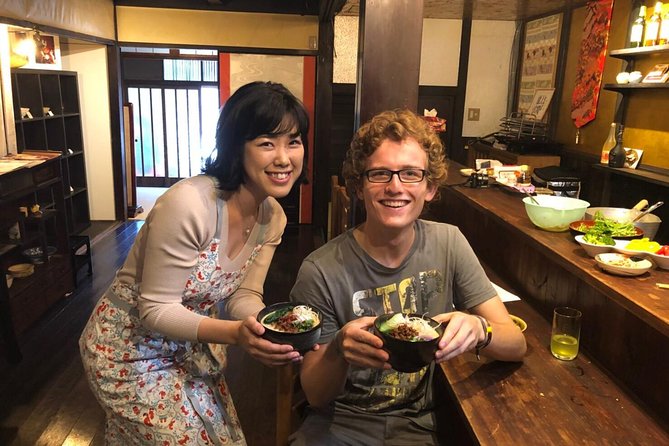
Kaori is the main host named in the class descriptions and personal accounts of the experience. She is described as friendly, welcoming, and comfortable speaking English. One account also mentions cooking with Kaori and Miwa, while another names Rina as the host. The exact staffing may vary, but the clear pattern is a local instructor who takes time to explain both cooking and everyday Japanese food.
The supermarket stop makes the class more useful
The first part of the morning takes you to a local supermarket. This is a smart addition because ingredients that seem obvious in a recipe can be difficult to identify in Japan, especially when labels are unfamiliar.
You can expect an introduction to basic Japanese ingredients and guidance on choosing products suitable for vegan or vegetarian cooking. The point is not only to buy food for the class. It is to help you understand what you are seeing in Japanese shops.
That matters for future meals. You may want to cook in an apartment, buy packaged noodles, choose a sauce, or check whether a soup base contains fish. A short supermarket lesson gives you a better chance of making the right choice.
I particularly like this part for first-time visitors who want more than a polished cooking demonstration. It connects the finished meal to the ordinary places where Japanese people buy food. The possible limitation is that the available information does not list the exact supermarket or ingredients, so you should expect a useful introduction rather than a fixed shopping tour with a published product list.
Making ramen broth from the beginning
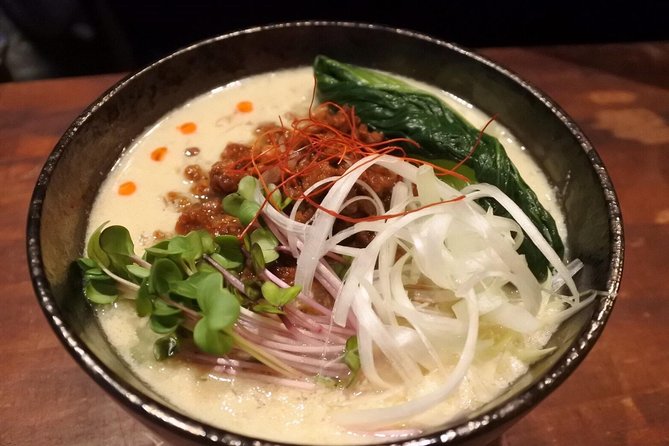
The main cooking lesson centers on ramen, including soup prepared from scratch. That phrase matters. A good bowl of ramen depends on its broth, and the class shows you how to create a plant-based version rather than simply adding noodles to a ready-made stock.
You’ll work with the ingredients introduced earlier and learn how seasoning and preparation shape the final bowl. The class is designed around vegan or vegetarian cooking, so the usual bonito-based dashi issue is handled directly.
The finished dish has been described as a vegan ramen or tantanmen-style ramen, though the exact preparation may vary. You should expect a flavorful noodle soup with toppings and a method that can be repeated at home.
This is where the $75 price begins to make sense. You are paying for instruction, ingredients, a supermarket introduction, and a meal, not just for a bowl of ramen. If you only want to eat vegan ramen, a restaurant will cost less. If you want to understand how to make the broth and adapt it later, the class offers more lasting value.
More Sushi and Japanese Classes in Japan:
- Sushi Making Tokyo Roll and Authentic Japanese Sushi Class
★ 5.0 · 3,971 reviews - Tokyo: Roll and Authentic Sushi Making Class in Asakusa
★ 4.9 · 1,957 reviews - Ramen Cooking Class at Ramen Factory in Kyoto
★ 5.0 · 1,937 reviews - Tokyo: Sushi Making Class in a Happi Coat near a Famous Spot
★ 4.9 · 1,377 reviews
Folding and cooking Japanese gyoza
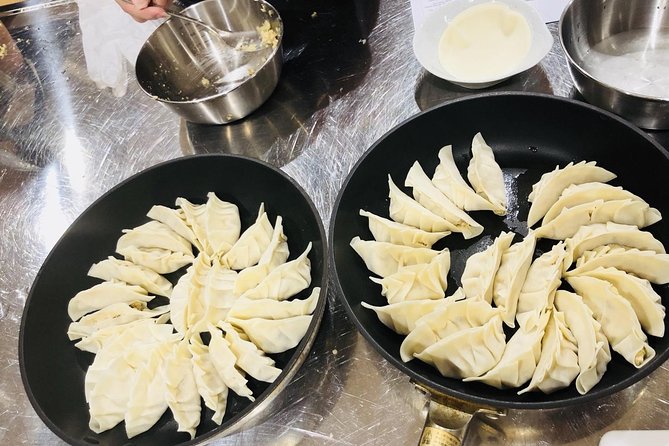
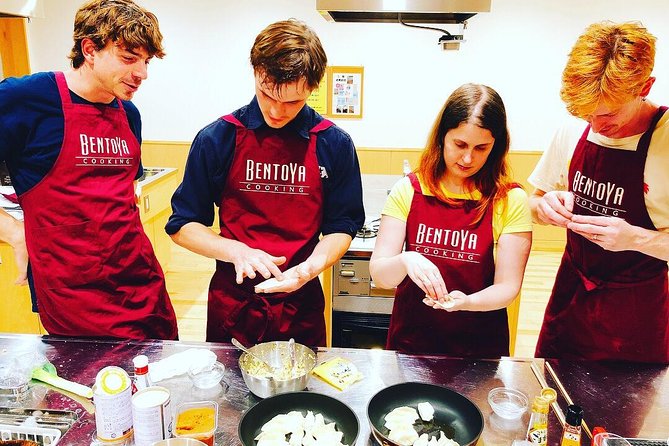
Gyoza adds a hands-on task that balances the soup lesson. These Japanese dumplings are made with wrappers and a minced filling, and the class teaches you how to prepare and shape them.
The cooking process also gives you a useful lesson in texture and presentation. You learn how to handle the filling, fold the wrappers, and cook the dumplings so they look and taste right. The class is not limited to soup preparation, so you come away with two dishes rather than one.
That variety suits people who want a full lunch and a few basic techniques to take home. Gyoza also tends to be an easy dish to make with family or friends later. The available details do not specify the exact filling or folding style, so do not book expecting a particular regional recipe. Book it for the wider skill set.
A home-kitchen lesson with room for questions
The cooking takes place in a personal kitchen setting, which gives the morning a more relaxed character than a formal culinary school. You can ask about Japanese food, daily life, ingredients, and cooking methods as you work.
Kaori is repeatedly described as patient and welcoming, and her English makes the lesson accessible to international visitors. One family used the class as a birthday treat, while another included a 13-year-old child. That suggests the format can work for couples, families, and small groups with different cooking experience.
The six-person maximum is important. A small class gives you a better chance to handle the ingredients and receive help with the details. It also keeps the event social without turning it into a loud group demonstration.
Still, a home kitchen is not the same as a large professional cooking studio. If you prefer a polished classroom with several workstations and a formal chef-led setup, this may feel more personal than expected. For many people, that is the appeal. You are welcomed into someone’s cooking space rather than placed in a tourist production line.
What you actually take away from the morning
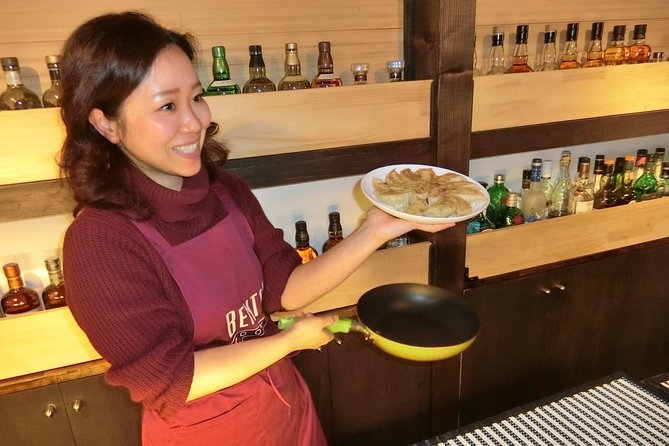
The meal is only part of the value. You learn how to identify ingredients, cut and season food, prepare soup, shape dumplings, and present the finished dishes. The class also covers basic cooking techniques, which means you are not left with a recipe that depends on one hard-to-find product.
Recipe files are provided afterward, according to the class information and firsthand accounts. That is a useful touch. Cooking from memory after a busy trip is difficult, especially when the recipe involves unfamiliar Japanese ingredients. Written instructions give you a better chance of making the dishes successfully at home.
The food is served as lunch at the end of the lesson. That timing works well: you cook through the morning, then sit down to eat what you made. It also means you should not schedule another major meal immediately afterward.
I like the fact that the meal is both the reward and the test. You can see whether the broth has enough flavor, whether the gyoza is properly cooked, and how the separate elements fit together. The class gives you a finished dish, but it also lets you judge your own technique.
Is $75 a fair price?
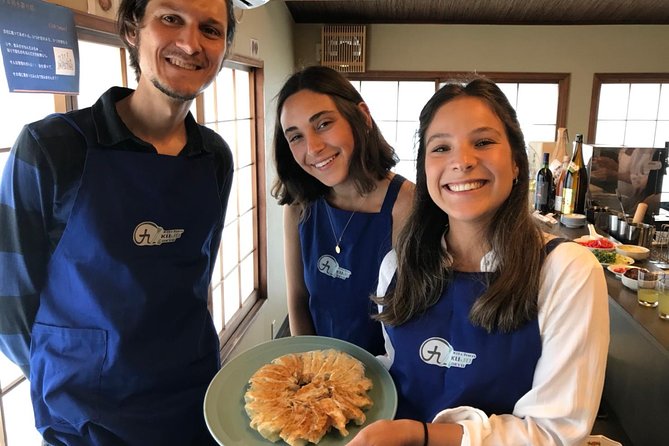
At $75 per person, this is not the cheapest way to eat lunch in Tokyo. It is also not priced like a short recipe demonstration. The fee covers roughly two and a half hours, food, instruction, a supermarket visit, and a small group capped at six people.
For a person who only wants a quick vegan meal, the price is hard to justify. For someone who wants a personal introduction to Japanese ingredients and a skill they can use later, it is more reasonable.
The strongest value comes from the combination of shopping guidance and cooking practice. Many classes teach you what to do but not what to buy. Here, you get help at both ends of the process.
Families and couples may also find the price worthwhile because the class creates a shared activity, not just a restaurant stop. The meal is made together, and the recipe files extend the experience beyond the morning in Tokyo.
Who should book this class?
I would recommend it most strongly to vegan and vegetarian visitors who are uncertain about Japanese food labels and hidden fish stock. It is also a good fit for anyone who wants to cook Japanese food at home rather than collect another sightseeing photo.
The class suits:
- Vegan and vegetarian diners
- People curious about dashi and Japanese seasoning
- Couples seeking a small, hands-on activity
- Families with older children
- Home cooks who want repeatable recipes
- Visitors who enjoy meeting local residents
- Anyone who wants a slower morning outside central Tokyo
It may be less suitable if you have limited time in Tokyo or dislike leaving the central sightseeing districts. The class begins at 10 a.m. and lasts until about 1 p.m., so it takes a solid half-day once you include the train journey to Komae.
You should also confirm your dietary needs when booking. The class is specifically presented as vegan and vegetarian, but the supplied information does not list allergy procedures, substitutions, or the full ingredient list.
Practical planning for your morning
The experience is available Monday through Sunday from 10 a.m. to 1 p.m. Confirmation is sent within 48 hours of booking, subject to availability. Since the class is often booked well ahead, planning about a month in advance is sensible, especially if your Tokyo dates are fixed.
The mobile ticket makes the booking easy to carry on your phone. The group limit is six people, so the small scale is part of the experience rather than a minor detail.
Free cancellation is available if you cancel at least 24 hours before the start time. Changes or cancellations inside that window are not accepted for a refund. The activity also requires good weather, and if poor weather causes cancellation, you are offered another date or a full refund.
The best reason to choose it
The strongest reason to book is not simply that ramen and gyoza are popular dishes. It is that the class explains how to make them fit a vegan or vegetarian diet in Japan, where fish-based dashi is common.
You get a local supermarket visit, a home-kitchen lesson, a freshly prepared lunch, and recipes to use later. Kaori’s friendly teaching style and strong English make the class approachable, while the small group keeps it personal.
Should you book Vegan Ramen and Gyoza by BentoYa Cooking?
Book this class if you want practical cooking skills, a local food connection, and a reliable way to handle Japanese ingredients without fish stock. The $75 cost is fair for a two-and-a-half-hour lesson with food and a supermarket visit, especially when the recipes can be repeated at home.
Skip it if your Tokyo schedule is packed, if you only want to eat ramen, or if reaching Komae feels inconvenient. For vegan and vegetarian visitors, though, this is one of the more useful food activities you can add to a Tokyo stay. It solves a real dining problem and leaves you with more than a full stomach.
FAQ
Where does the cooking class meet?
The class meets at Komae Station, at 1 Chome-7 Motoizumi, Komae, Tokyo 201-0013, Japan.
Where does the experience end?
The activity ends back at the meeting point near Komae Station.
How long does the class last?
The class lasts approximately two hours and 30 minutes, from 10 a.m. to 1 p.m.
What dishes will I learn to make?
You will learn to make vegan or vegetarian ramen and gyoza. The ramen soup is prepared from scratch.
Does the class include a supermarket visit?
Yes. The instructor introduces you to a local supermarket and explains basic Japanese ingredients used in vegan and vegetarian cooking.
How many people can join?
The maximum group size is six people.
Is the class suitable for vegans and vegetarians?
Yes. The experience focuses specifically on vegan and vegetarian Japanese food and addresses the use of dashi, which is commonly made from fish stock.
Is the class available every day?
The listed operating schedule is Monday through Sunday, from 10 a.m. to 1 p.m.
Can I cancel for a refund?
You can cancel at least 24 hours before the start time for a full refund. Cancellations or changes made less than 24 hours before the start time are not refunded or accepted. If poor weather cancels the activity, you are offered another date or a full refund.
More Food Experiences in Japan
- Small Group Cooking Class & Market Food Tour in Florence
★ 5.0 · 1,574 reviews - Athens: Food Market Visit and Cooking Class with Wine
★ 4.9 · 1,087 reviews - Undiscovered Charleston: Half Day Food, Wine & History Tour with Cooking Class
★ 5.0 · 948 reviews - Vietnamese Food Cooking Class in Hanoi with Market Experience
★ 5.0 · 778 reviews
Just added around Japan
- Shibuya Tokyo: Sushi Making Class (Vegan/Vegetarian/Halal)★ 4.7 · 29 reviews
- Ramen Making from Scratch with Tokyo Mom(Vegan Option Available)★ 5.0 · 39 reviews
- Ramen & Dumpling Cooking in Tokyo with Chef/Vegan possible★ 5.0 · 107 reviews
- Tokyo Haneda: Bento & Ramen Gyoza Cooking Class in a Local home★ 5.0 · 9 reviews
- Hands-on Japanese Cooking in a Shinjuku Home Kitchen with Satoru★ 5.0 · 19 reviews
- Private Home Cooking in Yanaka – Local Flavors in a Warm Setting★ 5.0 · 173 reviews
- Private Japanese Home Cooking Class in Kyoto with Michiyo★ 5.0 · 55 reviews
- Near Fushimiinari: Kyoto Home Cooking Class & Supermarket tour★ 5.0 · 100 reviews
Japanese & Sushi Cooking Classes, compared.
Sushi Making Tokyo Roll and Authentic Japanese Sushi Class
Read our review →
Tokyo: Roll and Authentic Sushi Making Class in Asakusa
Read our review →
Ramen Cooking Class at Ramen Factory in Kyoto
Read our review →
Tokyo: Sushi Making Class in a Happi Coat near a Famous Spot
Read our review →
Sushi Making Tokyo! Popular Maki Sushi & Japanese Sushi(+Recipe!)
Read our review →
Sushi Making Osaka Roll and Authentic Japanese Sushi Class
Read our review →
Tokyo Sushi Making Class in Tsukiji with Professional Chef
Read our review →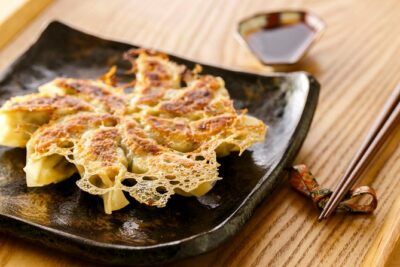
Ramen & Gyoza Cooking Class in Tokyo with Local Supermarket Visit
Read our review →Browse the lists this tour appears in