
Review · JAPANESE & SUSHI
Kanazawa: Sushi Making Experience at Oumicho Market
The best part of this Kanazawa activity is that you do not simply watch a chef work. At Sushi Enome in Oumicho Market, you handle the rice, fish, knife, and rolling mat yourself, then sit down to eat the finished sushi. It is a hands-on taste of one of Japan’s most important food traditions.
I like the setting, where market life carries on around you, and the generous menu of five nigiri, two gunkan-maki, and one roll. The main consideration is language: the instructor is Japanese, so communication may rely on demonstrations or translation support rather than fluent English instruction.
Key points
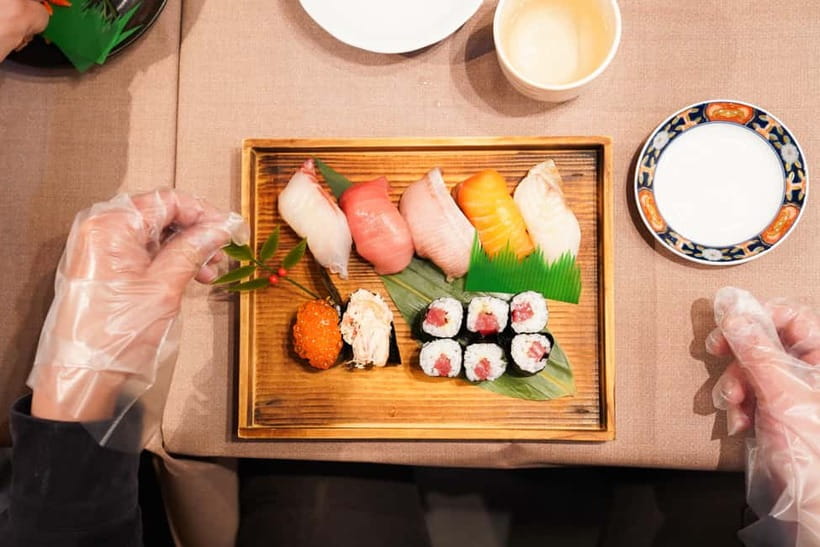
- Make eight pieces of sushi: Prepare five nigiri, two gunkan-maki, and one sushi roll.
- Work inside Oumicho Market: The lesson takes place at Sushi Enome in a market with more than 300 years of history.
- Use fresh Kanazawa seafood: The ingredients connect the class to the city’s coastal food culture.
- Learn from a professional chef: The lesson covers sushi history, culture, knife use, shaping, and rolling.
- Eat what you prepare: Your finished sushi becomes the meal, not just a cooking exercise.
- Plan extra time to find the restaurant: Enter through the Emza, or M’ZA, entrance and arrive 10 minutes early.
Making Sushi Where Kanazawa Buys Its Seafood
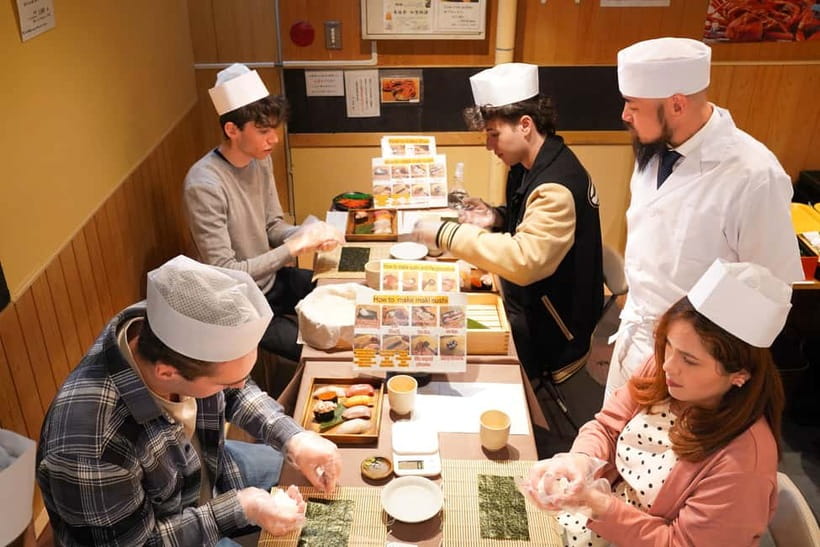
Oumicho Market is a fitting place for a sushi lesson. It has served Kanazawa for more than 300 years and remains a busy food market used by both local people and visitors. Rather than learning sushi in a quiet classroom removed from daily life, you make it in the middle of a working market.
That setting adds some welcome noise and movement. You might hear vendors, see shoppers carrying bags, and catch glimpses of seafood counters as you make your way to the restaurant. It also means the market can feel confusing at first, especially if you arrive in a hurry.
Your meeting point is Sushi Enome. Enter Oumicho Market from the Emza, also written M’ZA, entrance. At the first intersection, turn right and walk a short distance. The Sushi Enome sign will be on your left.
I would arrive at least 10 minutes early. One booking found the market slightly tricky to navigate, and that is easy to understand in a covered market with several entrances and intersecting lanes. Give yourself time to get oriented before the lesson begins. The class lasts two hours, and late arrival would cut into the part you paid to learn.
More Market Tour Cooking Classes in Japan
- Tsukiji Fish Market Guided Tour and Sushi Making with Pro Chef
★ 5.0 · 775 reviews - Tokyo: Tsukiji Fish Market Sushi Making Class with Pro Chef
★ 4.9 · 506 reviews - Tokyo Tsukiji Fish Market Tour and Sushi Making Lesson
★ 5.0 · 390 reviews
The First Lesson: Rice, Fish, and Sushi Culture
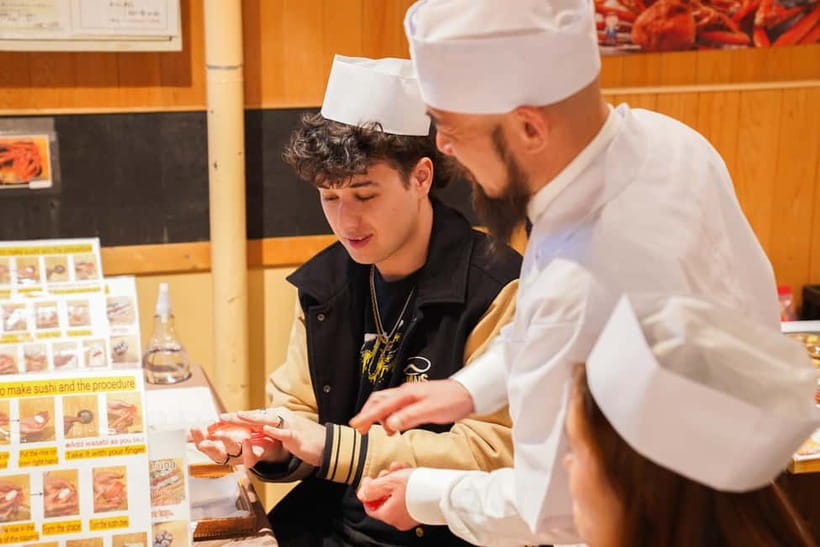
The chef begins by explaining sushi’s history and cultural role. This is useful because sushi is not just raw fish placed on rice. The shape, amount of rice, handling of the fish, and way the piece is eaten all matter.
You will also learn how to use a knife. The information provided does not give a precise knife routine or list each fish used, so you should expect a practical introduction rather than a professional sushi apprenticeship. The point is to understand the basic movements and respect the ingredients, not to leave ready to open a restaurant.
Instruction is listed in Japanese. That should not automatically put you off, since sushi-making is a visual skill and the chef can demonstrate each step. Still, you should be comfortable watching closely and following gestures if translation is not available for your session.
At least one recent booking included a second restaurant staff member who translated while the chef taught. That pairing was praised for patience, kindness, and clear teaching. Translation support may depend on the session, so if detailed English instruction is essential to you, confirm the language arrangement before booking.
The class is offered as a private group. That matters if you want a more personal pace or are booking with family and friends. It also gives you a better chance to watch the chef’s hands and ask for help while shaping your own sushi.
Five Nigiri: The Classic Sushi Skill
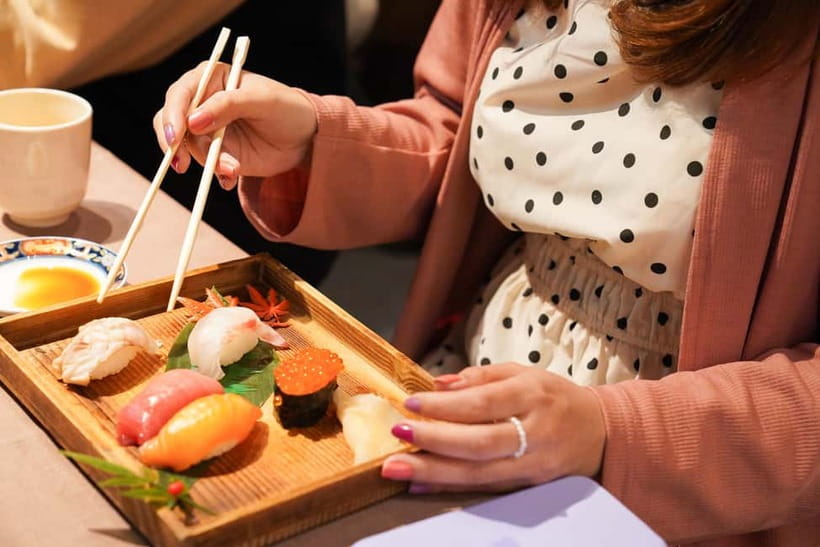
Nigiri is the familiar style of sushi made with a small mound of rice topped with fish or another ingredient. You will make five pieces. This is the clearest part of the lesson for learning how sushi chefs balance rice and topping.
The rice should be handled with care. Too much pressure can make it dense, while too little can cause the piece to fall apart. The chef shows you how to form it and place the topping, then you try the same movement yourself.
Five pieces give you enough practice to notice improvement. Your first piece may look more like a small rice block than restaurant sushi. By the fifth, you should have a better sense of how lightly to work and how much rice to use.
The fish is sourced from Kanazawa, which gives this part of the class a strong local connection. Kanazawa is known for its seafood, and making nigiri with fresh regional ingredients lets you taste the area through a simple preparation.
Do not expect every piece to look identical. That is part of the fun, and the chef is there to guide you. The reward is not perfect presentation. It is understanding how a few careful movements turn rice and seafood into a balanced bite.
Two Gunkan-Maki Pieces With a Different Shape
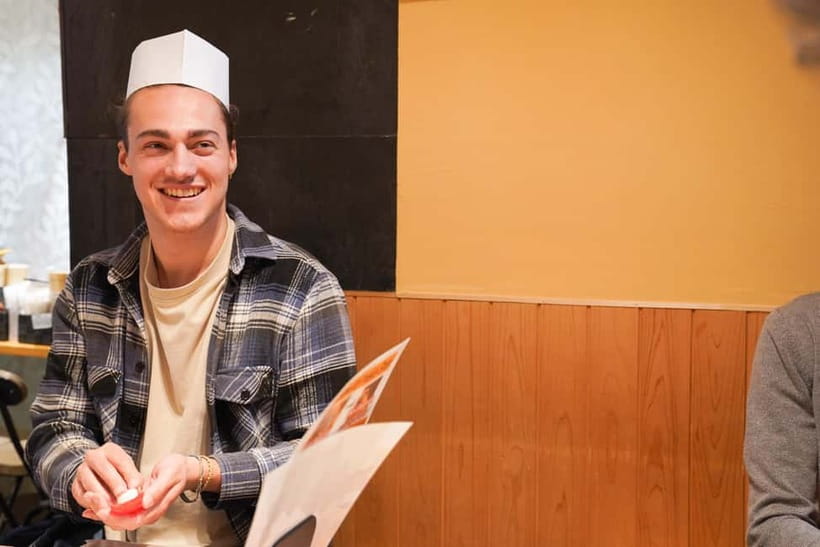
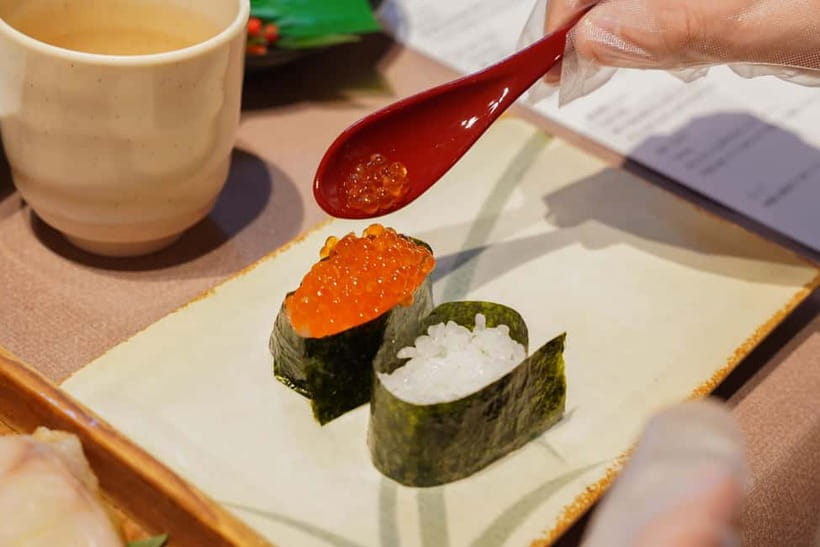
Gunkan-maki, often called battleship sushi, has a strip of seaweed wrapped around rice to form a small cup. The topping sits inside rather than lying flat on top. You will make two pieces.
This gives the lesson a useful change of pace. Nigiri teaches you to shape rice and place fish, while gunkan-maki requires you to build a firm seaweed border that can hold its filling. You will see why sushi chefs pay attention to structure as well as taste.
Two pieces are enough to learn the basic idea without making the class feel repetitive. As with the nigiri, the chef demonstrates the process before you attempt it. Follow the hand movements closely, especially when wrapping the seaweed and keeping the rice contained.
The finished gunkan-maki may be less tidy than the chef’s version. That is normal for a first attempt. The class works best when you treat the process as a skill lesson, not a test of restaurant-level presentation.
More Sushi and Japanese Classes in Japan:
- Sushi Making Tokyo Roll and Authentic Japanese Sushi Class
★ 5.0 · 3,971 reviews - Tokyo: Roll and Authentic Sushi Making Class in Asakusa
★ 4.9 · 1,957 reviews - Ramen Cooking Class at Ramen Factory in Kyoto
★ 5.0 · 1,937 reviews - Tokyo: Sushi Making Class in a Happi Coat near a Famous Spot
★ 4.9 · 1,377 reviews
Rolling One Sushi Roll
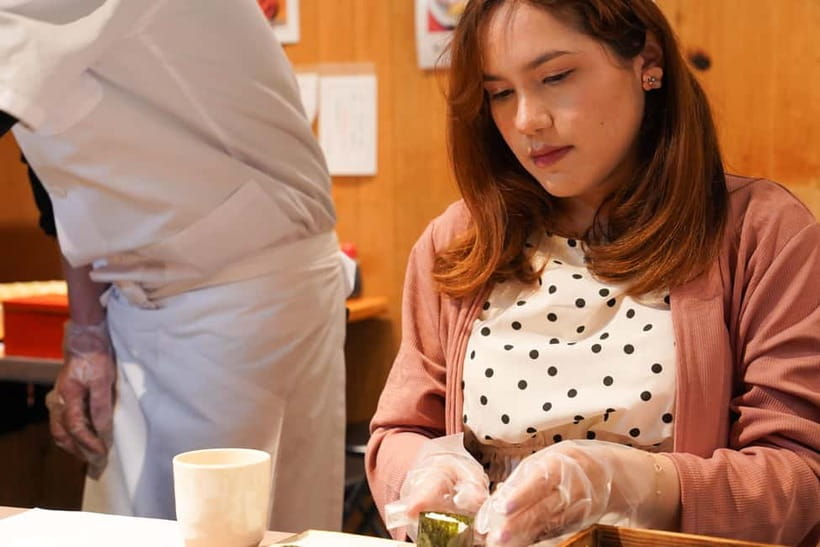
The final format is one sushi roll. Rolling sushi is often the movement people most want to learn, but it can also be the easiest place for a beginner to use too much filling or uneven pressure.
The chef shows you how to arrange the ingredients and use the rolling mat. You then roll it yourself and cut it into pieces. The lesson description does not specify the exact filling, so the focus is on the technique rather than a particular recipe.
This part can be especially useful if you want to repeat the activity at home. Nigiri depends on fish slicing and rice shaping, while a roll introduces a method you can practice with ingredients available outside Japan. You will leave with a clearer idea of how to spread, fill, tighten, and cut the roll.
Take a few photos before eating. The finished plate gives you a record of what you made, and the setting inside the market adds more character than a standard cooking-school room.
The Meal You Make Yourself
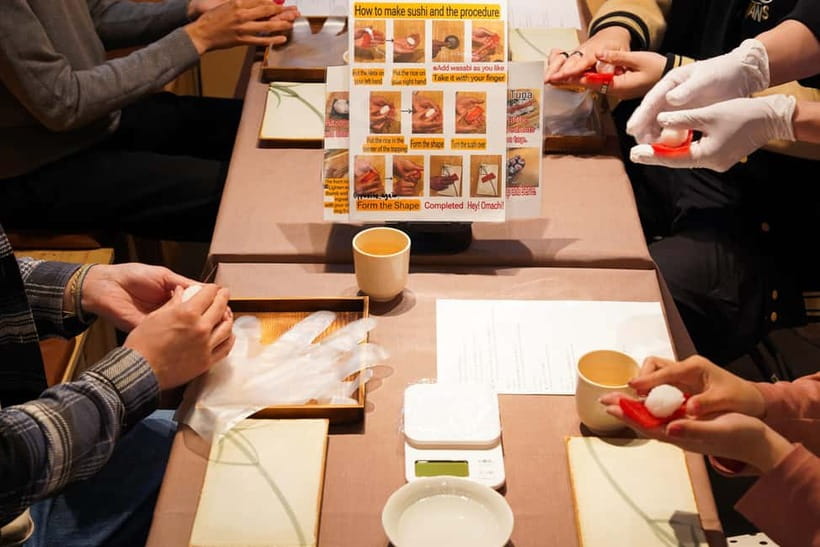
After the preparation, you taste your sushi. The included meal consists of the five nigiri, two gunkan-maki, and one roll you made during the class.
This is a satisfying arrangement because the food is both lesson and lunch. You do not watch someone else prepare a sample and then receive an unrelated meal. Your final plate shows the techniques you just practiced, including the pieces that may look a little uneven.
The seafood is the star, but rice matters just as much. The class gives you a chance to notice how fresh fish and properly prepared rice work together. A good piece of sushi is not only about the topping. It depends on proportion, texture, and the way the rice supports the flavor.
Drinks are not included. Plan to pay separately if you want one, and do not assume an included beverage is part of the meal. Alcohol is not allowed as part of the activity, and smoking is also prohibited.
The meal may feel light to some people, especially if you are used to a large lunch. The information provided confirms the number and types of sushi but does not promise soup, dessert, extra seafood, or additional dishes. Book this for the making and tasting, not for a long multi-course feast.
What the Two-Hour Schedule Feels Like
Two hours is a sensible length for this activity. It allows time for an introduction, explanations, demonstrations, hands-on preparation, photographs, and tasting without turning the lesson into an all-day commitment.
The class should feel active from start to finish. You are not spending most of the time listening to a lecture. The chef explains the background, demonstrates the movements, and then lets you work.
The market setting also makes the two hours feel tied to Kanazawa. You are not only learning a general sushi recipe. You are making it in one of the city’s best-known food markets, using local seafood and seeing the market operate around you.
Arriving early is important because the market itself can slow you down. Do not schedule a tight connection immediately afterward. The activity has a fixed two-hour duration, but you will enjoy it more if you are not checking the clock while trying to shape your last piece.
Wear comfortable clothes suitable for cooking. The instructions do not mention aprons or a change of clothes, so avoid anything you would dislike getting rice or food on. Comfortable clothing also makes it easier to work at the preparation area.
Price and Value at $70 Per Person
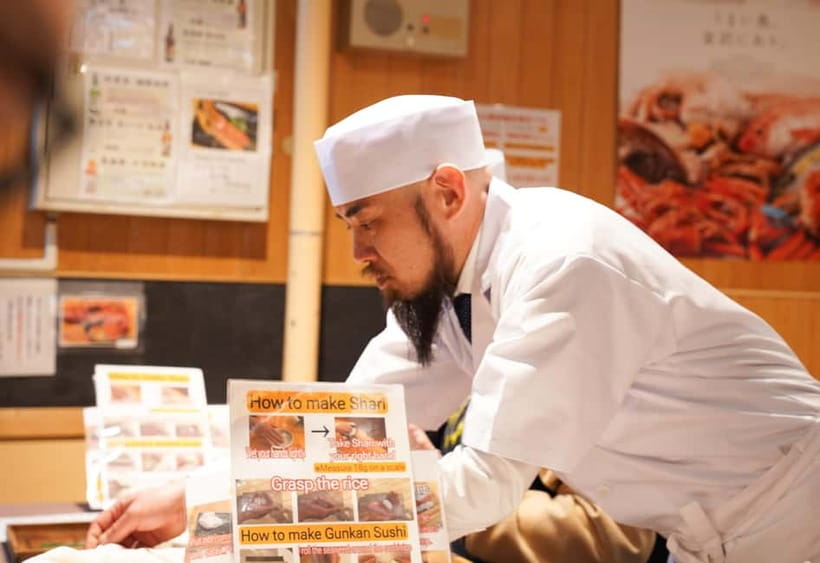
At $70 per person, this is not the cheapest way to eat sushi in Kanazawa. You could spend less on a casual market meal if your only goal is to fill up.
The value comes from the combination of food and instruction. You receive professional chef guidance, all ingredients, eight pieces of sushi in three styles, and the chance to prepare the meal yourself. You are also paying for access to a chef who can correct your technique, explain sushi culture, and show you how the pieces are built.
The setting adds value as well. Oumicho Market is not a generic venue, and the market location gives you a practical reason to visit one of Kanazawa’s major food areas. If you already plan to explore the market, this activity makes your visit more focused.
I would consider the price fair for people who enjoy cooking classes and want a personal food memory from Kanazawa. It is less appealing if you dislike raw seafood, want a large meal, or only want to sample sushi without doing any preparation.
The private-group format also affects the value. You are paying for a more personal session rather than joining a large public demonstration. That can matter for couples, families, or a small group of friends who want to learn together.
Language, Teaching Style, and Accessibility
The listed instructor language is Japanese. Expect the chef to demonstrate the actions, then guide you as you copy them. Sushi-making is visual enough that this can work well, but it is still worth setting realistic expectations about detailed verbal explanations in English.
Some sessions may include translation help from another restaurant staff member. A recent class involved a chef and a second team member who translated, and both were described as patient, funny, and kind. That combination sounds particularly helpful for beginners, though the available information does not promise a translator for every booking.
The activity is wheelchair accessible. That is an important practical point, although the information does not describe the exact route through every part of Oumicho Market or the height of the work surface. If you have specific mobility needs, contact the provider before arrival so you can confirm the setup.
The group is private, which should make it easier to ask for assistance. It also means the chef can focus on your group instead of trying to manage a large class.
Who Will Enjoy This Sushi Lesson Most
I would recommend this class to first-time sushi makers, food-focused visitors, couples, families, and small groups looking for something more active than a restaurant meal. It suits people who like learning by doing and do not mind that their first pieces may look homemade.
It is also a good choice for anyone who wants a meaningful activity in Kanazawa without giving up half a day. Two hours leaves room for more market browsing and sightseeing afterward.
Children may enjoy the shaping and rolling, but the provided information does not give a minimum age or child policy. Ask before booking if you are bringing young children.
This is less suitable for anyone who wants fluent English instruction, a large meal, or a relaxed tasting with no kitchen work. It may also be a poor fit if you dislike seafood or are uncomfortable using a knife, though the chef provides instruction.
Should You Book the Oumicho Market Sushi Class?
Book it if you want to connect Kanazawa’s market culture with a practical food lesson. The strongest reasons are the local seafood, the private format, the three sushi styles, and the chance to eat what you make.
I would be especially keen to book this at the start of a Kanazawa stay, then return to Oumicho Market afterward for more browsing. Arrive early, follow the Emza entrance directions, wear comfortable clothes, and confirm language support if you need English translation.
Skip it if you only want the lowest-cost sushi meal or if raw seafood and hands-on cooking are not your thing. For everyone else, $70 buys more than eight pieces of food. It buys a small lesson in Japanese technique, a market setting, and a meal you helped create.
FAQ
Where does the sushi-making experience take place?
It takes place at Sushi Enome inside Oumicho Market in Kanazawa, Honshu, Japan.
How do I find Sushi Enome?
Enter Oumicho Market through the Emza, also called M’ZA, entrance. Turn right at the first intersection and walk a short distance. Sushi Enome is on the left.
How long does the activity last?
The experience lasts two hours.
What sushi will I make?
You will make five pieces of nigiri sushi, two gunkan-maki pieces, and one sushi roll.
Can I eat the sushi I make?
Yes. Tasting your own sushi is included in the activity.
Is the seafood included?
Yes. All necessary ingredients are included, including the seafood used for the sushi.
Is the instructor fluent in English?
The listed instructor language is Japanese. Translation support was provided during at least one session, but English instruction is not guaranteed in the activity details.
Is the activity private?
Yes. It is offered as a private group activity.
Is the experience wheelchair accessible?
Yes. The activity is listed as wheelchair accessible.
More Shopping Trips in Japan
- Tokyo Washoku 4-hour Cooking Class: From Market to Table
★ 5.0 · 253 reviews - Tokyo: Tsukiji Market Walking Tour & Sushi Cooking Class
★ 4.6 · 122 reviews - Tokyo: Sushi Making with Pro Chef & Tsukiji Fish Market Tour
★ 4.6 · 49 reviews - Nishiki Market Food Tour with Cooking Class
★ 4.9 · 42 reviews
Just added around Japan
- Cooking Class: Make a Local Delicacy in a Japanese House★ 5.0 · 7 reviews
- Culinary Home Cooking with Grandmothers – Vegan Friendly★ 5.0 · 5 reviews
- Famous Inari Sushi Making Experience in Toyokawa★ 5.0 · 4 reviews
- Nagoya Super Market Tour & Home Cooking Class with a Local, Akiko★ 5.0 · 10 reviews
- Tokyo: Tsukiji Market Walking Tour & Sushi Cooking Class★ 4.6 · 122 reviews
- Tokyo: Sushi Cooking Class with Sake Tasting★ 4.8 · 55 reviews
- Sushi-Making Experience★ 4.7 · 4 reviews
- Tokyo: Tsukiji Market Guided Tour & Sushi-Making Experience★ 4.4 · 11 reviews
Japanese & Sushi Cooking Classes, compared.
Sushi Making Tokyo Roll and Authentic Japanese Sushi Class
Read our review →
Tokyo: Roll and Authentic Sushi Making Class in Asakusa
Read our review →
Ramen Cooking Class at Ramen Factory in Kyoto
Read our review →
Tokyo: Sushi Making Class in a Happi Coat near a Famous Spot
Read our review →
Sushi Making Tokyo! Popular Maki Sushi & Japanese Sushi(+Recipe!)
Read our review →
Sushi Making Osaka Roll and Authentic Japanese Sushi Class
Read our review →
Tokyo Sushi Making Class in Tsukiji with Professional Chef
Read our review →
Ramen & Gyoza Cooking Class in Tokyo with Local Supermarket Visit
Read our review →Browse the lists this tour appears in