
Review · USA
Sushi Making Class at a Local Brewery in Boston
Boston’s sushi-making class at Long Live Roxbury turns lunch into a hands-on lesson, a full meal, and a brewery outing in one. Chef Harold leads you through miso soup, hand rolls, and an inside-out spicy tuna roll, using fresh ingredients in a relaxed public taproom.
I like two things right away: you eat what you make, and the class covers more than one rolling style. I also like the setting. A brewery feels less formal than a cooking school, and you can buy a craft beer while you work. The main drawback is that the menu may feel simple for a $75 class, and Chef Harold does not use a microphone, so hearing him can be hard if you are seated far away.
Key points to know before booking
- Chef Harold brings more than 20 years of sushi experience, with practical tips you can use at home.
- You make both temaki and uramaki, so you learn a hand roll and an inside-out roll.
- The two-hour class includes a full meal, including miso soup, shrimp tempura, sweet potato, and spicy tuna.
- Long Live Roxbury gives the class a casual brewery setting, with drinks sold separately at the bar.
- The class accommodates several dietary needs, with gluten-free, nut-free, and dairy-free ingredients listed.
- The group can reach 25 people, so seating position matters because no microphone is used.
Starting at Long Live Roxbury in Boston
The class begins at noon at Long Live Roxbury, located at 152 Hampden Street in Boston’s Roxbury neighborhood. You return to the same place when the two-hour session ends, which keeps the plan simple and avoids a second meeting point.
The venue is part of the appeal. This is not a quiet culinary school with a formal dining room. It is a local brewery with craft beer, a laid-back feel, and a community-minded setting. You get the energy of a public food and drink venue while learning a dish that many people assume is too tricky to make at home.
The brewery setup also makes this a good choice for a date, a small group of friends, or a solo outing where you want an activity rather than a standard meal. You can order drinks at the bar, with prices listed from $3 to $20. Your drink is not part of the $75 class fee, so keep that extra cost in mind.
A practical tip: arrive ready to pay close attention during the demonstrations. Chef Harold does not use a microphone, and one participant found it difficult to hear from a less favorable seat. If you can choose where to sit, staying near the chef should make the instructions easier to follow.
More Sushi and Japanese Classes in the USA:
- Sushi Making Class at a Local Distillery in Boston
★ 5.0 · 22 reviews - Sushi Making Tokyo Roll and Authentic Japanese Sushi Class
★ 5.0 · 3,971 reviews - Tokyo: Roll and Authentic Sushi Making Class in Asakusa
★ 4.9 · 1,957 reviews
The first bowl: miso soup with dashi and wakame
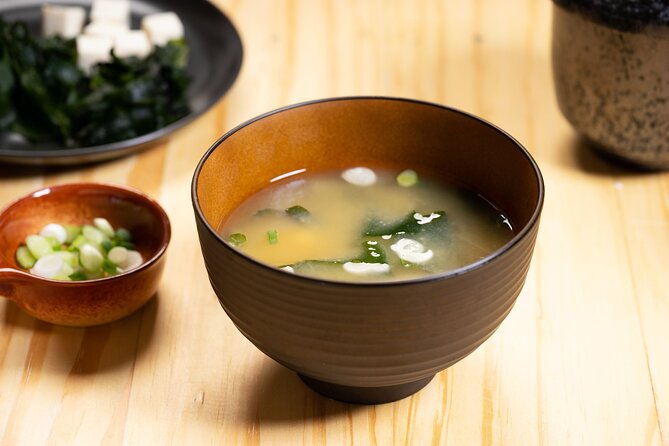
The class begins with miso soup. You prepare it with miso paste, dashi, and wakame seaweed, creating a warm starter before moving on to the sushi.
This opening course matters because it gives you a gentle introduction to Japanese ingredients before the rolling begins. Miso paste supplies the soup’s savory base, dashi adds depth, and wakame brings a soft seaweed texture. It is a short recipe, but it helps you understand how a few well-chosen ingredients can create a satisfying dish.
The soup also gives the class a natural rhythm. You are not asked to make several rolls at once. Instead, you begin with a warm dish, listen to the chef’s instructions, and get comfortable with the tools and ingredients.
Do not expect a long lesson on Japanese food culture. The focus is practical cooking. Chef Harold also shares his experience in the food industry, which adds a personal touch without turning the class into a lecture.
Making temaki, the hand-roll style
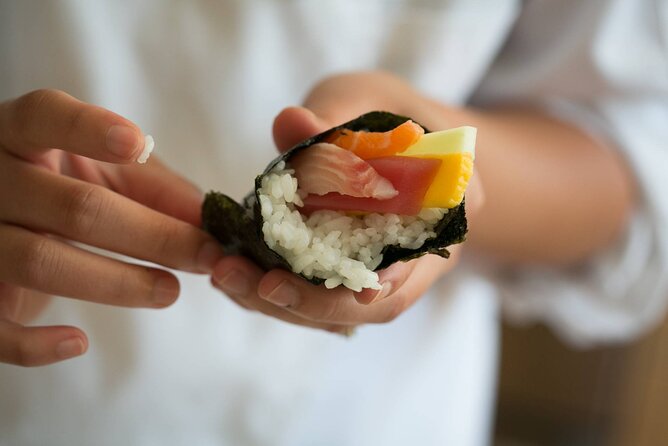
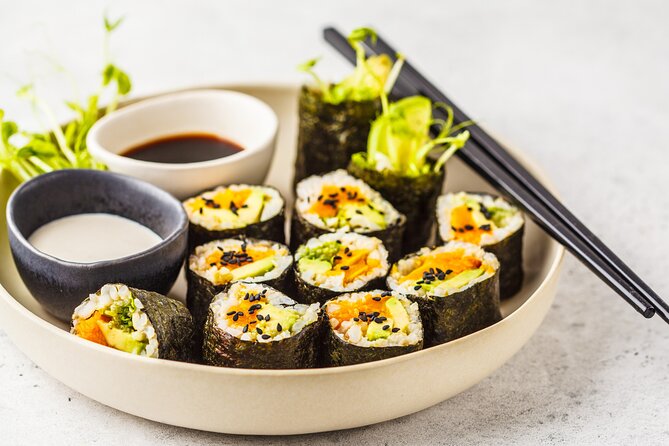
Next comes temaki, or the hand roll. You work with nori and sushi rice, then add fillings to form a cone-shaped roll that you can eat by hand.
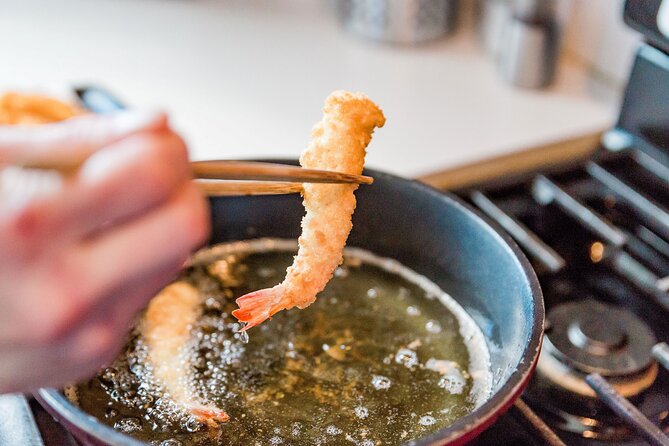
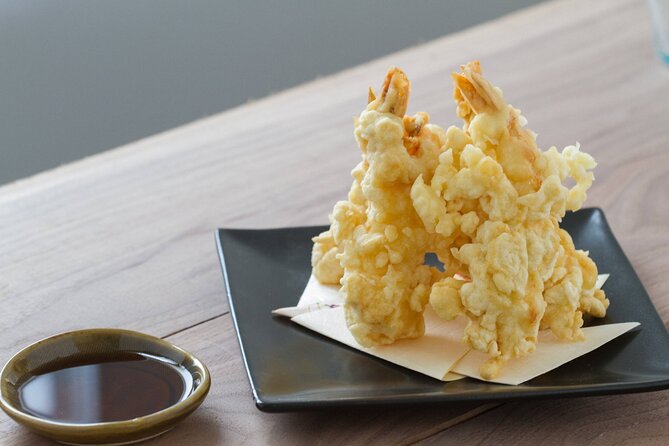
The class includes a shrimp tempura hand roll and a sweet potato hand roll. These give you two different fillings and two different flavor profiles. Shrimp tempura brings a familiar savory crunch, while sweet potato offers a softer, sweeter option.
The hand roll is often the friendliest place to start because it does not require the same neat, compact shape as a sliced sushi roll. You have room to practice how much rice to use, where to place the filling, and how tightly to bring the nori around it.
That does not mean the technique is automatic. Too much rice can make the roll hard to close, while too much filling can cause it to split. The value of having Chef Harold nearby is that he can show you the motion and offer small corrections as you work.
The finished food is part of the lesson. Instead of taking home a few practice pieces, you eat the hand rolls as part of the meal. That keeps the mood light and gives you an immediate reason to pay attention to each step.
Rolling uramaki with spicy tuna
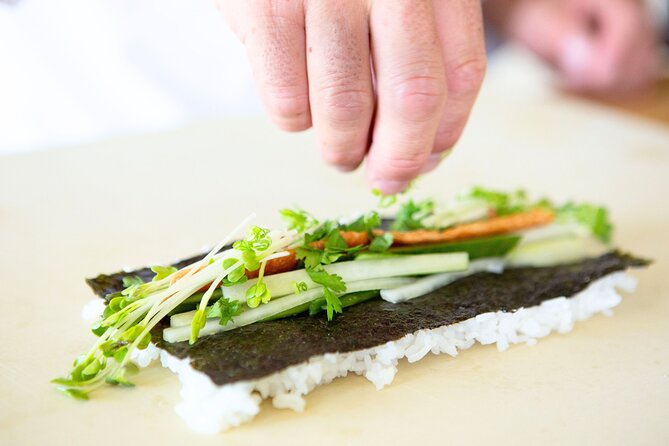
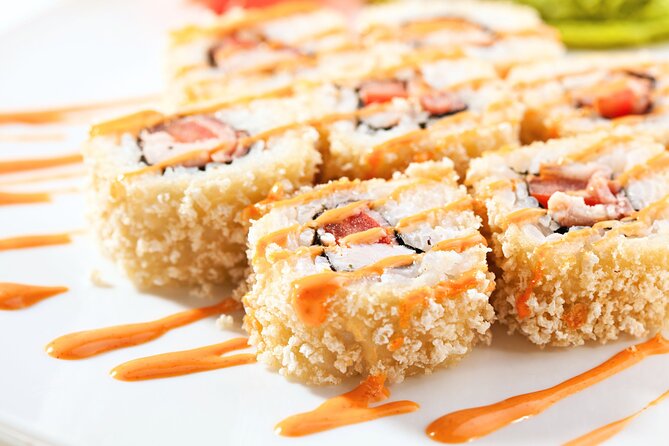
The spicy tuna roll shifts the technique. This is an uramaki, or inside-out roll, with the rice on the outside and the nori inside.
For many first-time students, this is the class’s trickier moment. The rice must cover the outside, and the roll needs enough structure to hold together when sliced. It is a useful contrast to the hand rolls because you see how the same basic ingredients can require a different method.
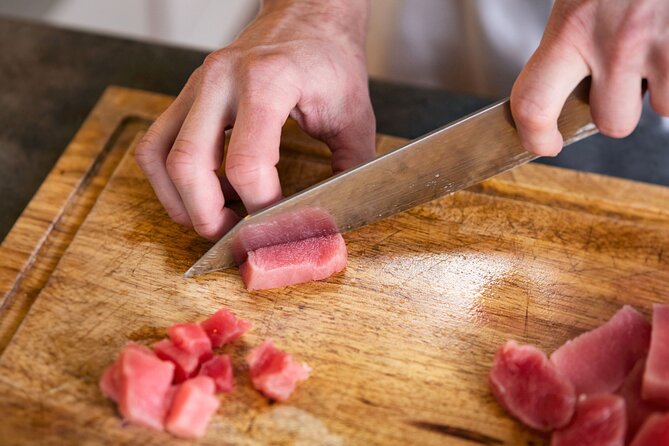
The listed menu keeps the roll straightforward: tuna, sushi rice, and nori. That simplicity lets you focus on the shape and handling instead of juggling a long list of fillings.
The menu is not designed as an ambitious chef’s tasting course. One person felt it could use more variety, even while enjoying the class and learning new skills. I think that is a fair point. At $75, you are paying for instruction, ingredients, venue, and the social activity as much as for the amount of food.
If your main goal is to learn the basics and eat a meal you prepared yourself, the menu makes sense. If you want advanced knife work, a large selection of fish, or a long series of complicated rolls, this class may feel modest.
More Drink Tastings in the USA:
- Ramen and Sushi Cooking Class with Sake Pairing Set in Tokyo
★ 5.0 · 291 reviews - Kyoto: Afternoon Japanese Izakaya Cooking Class
★ 4.9 · 241 reviews - Izakaya Style Cooking Class
★ 5.0 · 219 reviews - Osaka Sake Tasting with Takoyaki Cooking
★ 5.0 · 156 reviews
What the chef adds to the two-hour format
Chef Harold is the central reason to book this class. He has more than 20 years of sushi experience and explains his background in the food industry while teaching.
That kind of experience can help turn a recipe into a repeatable method. You are not only copying a shape. You are learning how to handle sushi rice, nori, and fillings in a way that you can try again later.
The instruction is described as hands-on, with cooking tools, ingredients, tips, and chef secrets supplied. You do not need to bring equipment or shop for ingredients before arriving. For a visitor with limited time in Boston, that makes the activity easy to fit into a day.
The two-hour length is also well judged for a casual class. It is long enough to prepare soup and several sushi styles, but short enough to leave room for other plans. Since the class starts at noon and ends back at the brewery, you can treat it as a substantial lunch rather than a full afternoon commitment.
There is one clear tradeoff: the class can hold up to 25 people. That is a fairly large group for a demonstration without a microphone. Chef Harold was praised for his teaching and the quality of the food, but your seat can affect how much you hear. I would treat a place near the chef as more than a minor convenience.
Fresh ingredients and dietary needs
The class uses fresh ingredients and is designed around gluten-free, nut-free, and dairy-free food. That makes it useful for people who often have to ask extra questions at cooking events.
You should still share your needs in advance. The provider says the class can accommodate a range of dietary restrictions and will try to tailor the experience when given notice. That is helpful, but it is not a reason to assume every possible allergy or preference can be handled on the spot.
The listed dishes include shrimp, tuna, rice, nori, miso, dashi, wakame, and sweet potato. Anyone with a seafood allergy should ask specifically about substitutions before booking. The class offers flexibility, but the menu is built around sushi, so some changes may affect what you can prepare.
The gluten-free, nut-free, and dairy-free setup is a strong feature for many people. It also keeps the menu clean and focused. You are working with a short list of ingredients rather than a crowded counter filled with sauces and toppings.
Is $75 a good value?
The $75 price is fair if you value instruction and the setting, not just the raw cost of the food. You receive about two hours of teaching, all ingredients, cooking tools, miso soup, three sushi preparations, and the chance to eat the finished meal.
The ingredients themselves would not cost $75 if you bought them for one meal. That is not the right comparison. You are also paying for Chef Harold’s time, the guided practice, the brewery venue, and the convenience of arriving without supplies.
The value becomes stronger for a date or small group outing. You get an activity that creates conversation and a shared meal at the end. The beer costs extra, but having a drink available at the bar lets you choose how much more to spend.
The value is less convincing if you already make sushi often or want a broad menu. The class is introductory and focused. Its strength is that most people can complete the rolls and leave with useful new skills, not that it offers a restaurant-sized spread.
A rating of 4.7 from three posted ratings suggests a strong early response, but the small number means I would not treat that figure as a guarantee. The specific praise is more useful: Chef Harold, the attractive venue, fresh food, and the fact that people managed to complete their rolls all point to a class that delivers its basic promise.
Who should book this Boston class?
I would recommend it to couples looking for an active date, friends who enjoy food and beer, and beginners who want a low-pressure introduction to sushi.
It also suits people who like to learn by doing. You are not sitting through a cooking demonstration and watching someone else handle every step. You prepare the soup, form the hand rolls, and work on an inside-out roll yourself.
It may suit families or mixed-skill groups, though the available information does not set a minimum age. If you plan to bring children, confirm the age policy before booking.
People with dietary restrictions may find the class easier than many food activities because gluten-free, nut-free, and dairy-free ingredients are part of the plan. Give advance notice, especially if you need seafood substitutions.
I would think twice if you need a quiet setting, have trouble hearing group instruction, or want an advanced sushi workshop. With up to 25 people and no microphone, the class is better for an informal brewery atmosphere than a precise, silent cooking studio.
Booking, cancellation, and other practical details
The activity is offered in English and uses a mobile ticket. Confirmation arrives within 48 hours, subject to availability, so do not assume your place is final until you receive it.
The class is free to cancel up to 24 hours before the start time for a full refund. Changes or cancellations inside that 24-hour window are not accepted for a refund. The cutoff follows Boston local time.
A minimum number of participants is required. If the class is canceled because that number is not reached, you receive the choice of another date or experience, or a full refund.
Service animals are allowed. The maximum group size is 25, and the meeting point and ending point are both Long Live Roxbury at 152 Hampden Street.
Should you book the sushi class at Long Live Roxbury?
Book it if you want a social, practical lunch where the food is part of the activity. The best reasons are Chef Harold’s long sushi background, the chance to make both hand rolls and an inside-out roll, and the easygoing brewery setting.
At $75, this is not a bargain meal, and the menu is fairly short. Still, you get a complete two-hour class, a full meal, supplied tools and ingredients, and a new skill you can use at home. Sit close to the chef, mention dietary needs ahead of time, and budget separately for beer.
If those details suit you, this is a sensible Boston choice for a date or friendly afternoon. If you want advanced techniques or a large seafood selection, spend your money elsewhere.
FAQ
Where does the sushi-making class take place?
The class takes place at Long Live Roxbury, at 152 Hampden Street in Boston, Massachusetts.
What time does the class start?
The class starts at 12:00 pm.
How long does the class last?
The class lasts approximately two hours.
How much does the class cost?
The price is $75 per person.
What food do you make during the class?
You prepare miso soup, a shrimp tempura hand roll, a sweet potato hand roll, and a spicy tuna roll.
Are drinks included in the price?
No. Drinks are available for purchase at the bar, with listed prices ranging from $3 to $20.
Are ingredients and cooking tools provided?
Yes. The class includes all ingredients and cooking tools, along with instruction from the chef.
How many people can join the class?
The class can accommodate a maximum of 25 people.
Can the class accommodate dietary restrictions?
The class is designed to accommodate a variety of dietary needs, and the ingredients are listed as gluten-free, nut-free, and dairy-free. You should provide your preferences or restrictions in advance.
Is cancellation free?
Yes. You can cancel at least 24 hours before the start time for a full refund. Cancellations or changes made less than 24 hours before the start time are not refunded or accepted.
More Hands-On Workshops in the USA
- New Orleans Demonstration Cooking Class with Meal
★ 5.0 · 3,000 reviews - New Orleans Hands-On Cooking Class with Meal
★ 5.0 · 1,183 reviews - Undiscovered Charleston: Half Day Food, Wine & History Tour with Cooking Class
★ 5.0 · 948 reviews - New Orleans: Cajun and Creole Cooking Class
★ 4.9 · 730 reviews
More Brewery Visits in the USA
- Santorini: Cooking Class with a Chef at the Ftelos Brewery
★ 4.8 · 33 reviews
Just added around the USA
- Authentic Asian Cooking Class in NYC (Includes 4-Course Meal)★ 5.0 · 8 reviews
- Sushi Making Class at a Local Distillery in Boston★ 5.0 · 22 reviews
- Hands-On Hawaiian Imu Cooking and Cultural Dining Experience★ 5.0 · 95 reviews
- Baumkuchen Campfire Baking Class★ 5.0 · 3 reviews
- Farm to Table Cooking Class at Kulaniapia Falls★ 4.5 · 36 reviews
- Thai Cooking Class in Fullerton, California★ 5.0 · 3 reviews
- San Francisco: Dumpling Cooking Class & 3-Course Dinner★ 5.0 · 10 reviews
- New Orleans: Cooking Class & Cocktail Walking Tour★ 4.7 · 16 reviews
Japanese & Sushi Cooking Classes, compared.
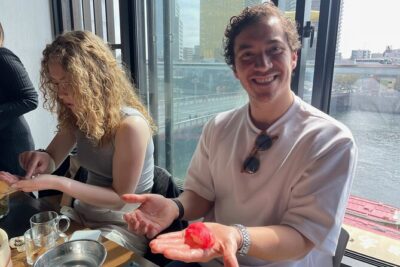
Sushi Making Tokyo Roll and Authentic Japanese Sushi Class
Read our review →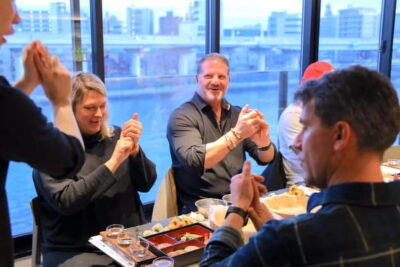
Tokyo: Roll and Authentic Sushi Making Class in Asakusa
Read our review →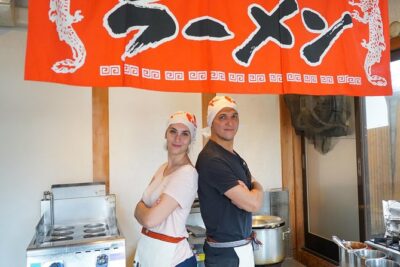
Ramen Cooking Class at Ramen Factory in Kyoto
Read our review →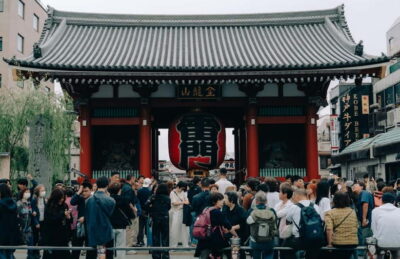
Tokyo: Sushi Making Class in a Happi Coat near a Famous Spot
Read our review →
Sushi Making Tokyo! Popular Maki Sushi & Japanese Sushi(+Recipe!)
Read our review →
Sushi Making Osaka Roll and Authentic Japanese Sushi Class
Read our review →
Tokyo Sushi Making Class in Tsukiji with Professional Chef
Read our review →
Ramen & Gyoza Cooking Class in Tokyo with Local Supermarket Visit
Read our review →Browse the lists this tour appears in